Cast Iron vs. Competition Kettlebells: Which Type Should You Buy for Your Home Gym?
Cast Iron vs Competition Kettlebells: What’s Actually Different?
Walk into any gym and you’ll spot two types of kettlebells: the black rugged ones with a flat bottom and the polished ones with a colored stripe on the handle. They look similar, but the way they’re built changes how they feel in your hands.
If you buy through our links, we may earn a commission.
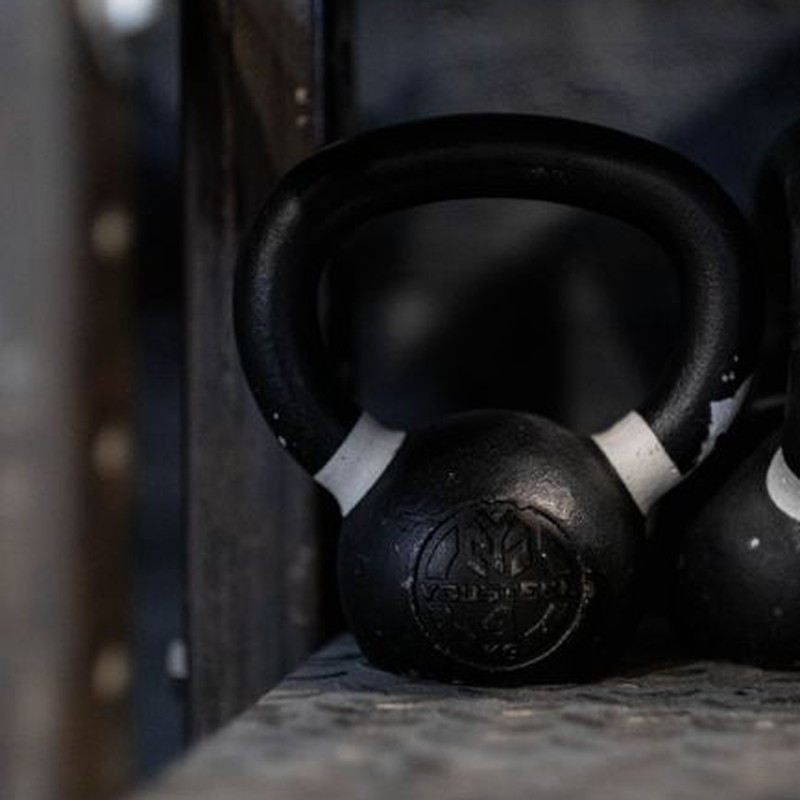
Cast iron kettlebells are made as one solid piece of metal. Each one weighs exactly what it says, no adjustment. As the weight goes up, the handle gets thicker. A 16kg bell has a comfortable grip, but a 32kg bell can feel like you’re holding onto a heavy pipe. The finish is usually rough and powdered, which helps with grip but can tear up your hands during high-rep snatches.
Competition kettlebells solve that problem. The shell size stays identical from 8kg to 48kg, so the handle window and thickness never change. Only the inner weight changes. That’s why they’re standard in kettlebell sport: athletes can practice with the same grip mechanics whether they’re swinging 12kg or 24kg.
That consistent handle matters more than beginners realize. When you clean a bell into the rack position, the handle rests diagonally across your palm. With a competition bell, that pressure point feels the same at every weight. So when you move up, your technique stays the same. With cast iron, a heavier bell means your hand has to spread wider and hold tighter. You’re not just lifting more weight—you’re also adapting to a different grip.
The coating also differs. Most cast iron kettlebells have a black enamel or powder-coat finish. It’s durable, but it can feel chalky and rough. Competition bells use a smooth paint that’s easier on the forearms during front rack holds. If you like doing high-volume cleans, that smooth coating is a huge comfort upgrade.
When you’re ready to buy, it comes down to your goals. If you’re on a budget and want a single fixed weight, a well-made cast iron bell gets the job done. The Kettlebell Kings Cast Iron Kettlebell has a clean cast-iron surface that’s less abrasive than cheaper enamel versions. But if you’re a beginner who wants a protected pair for learning at home, the Yes4All Vinyl Coated Kettlebell Set gives you two lighter bells without scratching your floor.
My advice: if your goal is to own several weights and build a home gym, competition-style kettlebells are worth the higher price. The consistent handle means you dial in your form once and carry it across all weights. If you only plan to use one weight for basic swings and goblet squats, cast iron is the practical pickup.
Check current prices on Amazon and let me know in the comments which style you prefer.
Cast Iron Kettlebells: Pros, Cons, and Who Should Actually Buy Them
Cast iron is the right starting point for most home gyms. It’s cheap, tough, and low-maintenance. My main training bell has been cast iron for six years now, and I’ve put it through the kind of abuse people usually reserve for more expensive gear. I’ve dropped it on concrete, left it in a cold garage, and used it for hundreds of snatches. The only damage is a few powder-coat chips and one rust spot on the base.
That’s it. The bell still works exactly like it did on day one, and that durability is why cast iron stays the best value per pound for home lifters.
What Cast Iron Does Well
- Value per pound. Cast iron is the cheapest way to buy kettlebells. A 16kg bell almost always costs less than a competition bell of the same weight.
- Durability. You can drop these on a garage floor, slam them between workouts, and bang them together without worrying about cracked paint or a damaged finish.
- Low maintenance. A few rust spots from chipped powder coat are cosmetic. Wipe the bell down when it’s dusty, and it’ll outlast everything else in your gym.
- Aids grip in the right movements. The rough coating gives your hands more friction, which keeps a bell planted during hard swings, loaded carries, and rows.
The Downsides Are Real, Though
Heavy cast iron bells have thick handles, so snatch-heavy sessions will cost you. The coating can also tear up your hands if you train without chalk or grip guards. For swings, carries, and floor work, those drawbacks barely show up. For high-rep cleans and overhead work, they’re harder to ignore.
The bigger limitation is weight selection. Most cast iron bells are fixed weights, so you’ll need several bells to progress. That’s not a problem if you’re building a set, but it’s one reason some people prefer an adjustable model.
Who Should Actually Buy Cast Iron
- Home lifters training for general strength and conditioning.
- People who plan to drop weights on unforgiving floors.
- Anyone who wants a starter set without paying competition prices.
- Gym owners or coaches who need a range of durable bells for group classes.
If that sounds like you, start with a set rather than a single bell. The BalanceFrom Cast Iron Kettlebell Set is a low-risk, multi-weight buy that lets you test different loads without blowing your budget. At the time of writing, the set is around $100 on Amazon. Prices move around with sales, but it’s still the easiest way to figure out which weights you actually use.
If you’d rather buy one premium bell for pressing and cleans, get the Kettlebell Kings Cast Iron Kettlebell. The handle is smoother, the coating is more consistent, and it feels better in the hand than cheaper options. You’ll pay more per bell, but the finishing matters when you plan to use that one weight for years.
Cast iron suits lifters who stick to the basics: swings, carries, rows, goblet squats, and floor presses. Those movements don’t require a bell to spin around your forearm or slide through your hand. A rough handle actually helps. If your main goal is kettlebell sport or snatch-heavy training, a competition bell makes more sense. For general fitness, cast iron handles about 90% of what you need.
One practical tip: buy chalk before you buy expensive grip guards. A small tub of chalk solves most torn-hand problems for a fraction of what you’d spend on gloves. Keep a towel nearby too, because sweaty hands plus powder coat is a recipe for blisters.
If you’re still on the fence, check current prices on Amazon by clicking the product links above. The BalanceFrom set is the best starting point for most people, and the Kettlebell Kings bell is the upgrade if you want a feel that matches a more expensive competition model. Let me know in the comments which route you choose and how it held up in your first training session.
Competition Kettlebells: The Uniform Build That Makes Sport Training Easier
Competition kettlebells were built for long sets. In kettlebell sport, lifters clean, jerk, and snatch for 10 minutes at a time, so the equipment has to get out of the way. Every competition-style bell has the same body height, the same bell diameter, and the same handle width. The external dimensions stay the same from 8 kg to 48 kg; what changes is the actual weight and the label printed on the side.
For me, that uniform build is the biggest selling point. When I first picked up a competition-style bell after months on cast iron, the narrower handle felt almost too easy. I thought I had grabbed a lighter bell by mistake. Then I did a 12-minute snatch test and realized that’s the whole point: you can focus on technique and volume instead of spending all your energy just hanging on.
The handle shape matters more than most beginners expect. A narrow, smooth powder-coated handle lets your hand rotate through cleans, jerks, and snatches with less skin tearing. That makes competition-style bells the go-to choice for kettlebell sport and high-volume conditioning blocks, where grip fatigue can end a session long before your legs do.
What do you give up? Price. A quality competition-style kettlebell costs more than a standard cast iron bell, and a full set can run a few hundred dollars. You’re paying for precision: a balanced center of mass, a consistent coating, and handles that feel identical whether you grab the 12 kg or the 24 kg.
The uniform size has another advantage. With cast iron, a heavier bell usually means a thicker handle. Move from a 16 kg bell to a 24 kg bell and your grip has to adapt to a completely different shape. Competition-style bells remove that variable. You train the same hand position at every weight, which is one reason athletes use them for technique work and skill sessions.
If you want that consistent handle feel without buying eight separate bells and without spending hundreds on a full set, look at the Bowflex SelectTech 840 Adjustable Kettlebell. It uses a dial to switch from 8 to 40 pounds in 5-pound jumps, and the handle stays fixed. The Titan Fitness Adjustable Kettlebell uses a screw-lock system with a similar weight range. Both give you the same handle feel no matter what weight you set, which is closer to a competition-style setup than buying three separate cast iron bells at different sizes.
Before you buy, check the current price on Amazon for the Bowflex SelectTech 840 and the Titan Fitness Adjustable Kettlebell. Already own a competition-style bell? Drop a comment about your experience, especially if you made the switch from cast iron.
How to Choose the Best Kettlebell Type for Your Home Gym
You know the structural differences now. The real question is which one fits your floor, your budget, and the workouts you actually want to do.
Start with your goal:
- General strength and typical home workouts: cast iron is simpler and cheaper.
- Kettlebell sport, snatch-focused work, or double kettlebell drills: competition-style or adjustable bells feel better at higher volumes.
- Small apartment or shared space: one adjustable bell does the job of a whole rack.
- Double kettlebell work: two identical adjustable bells beat a mismatched pair.
If you fall into the first group, you can stop overthinking it. A cast iron bell does the job. I started with a 16kg Kettlebell Kings Cast Iron Kettlebell and used it for swings, presses, carries, and Turkish get-ups for a year without wanting another bell. The enamel finish is smooth enough for high-rep work, and the handle is roomy even for larger hands.
If you need a few weights for different people in the house, the BalanceFrom Cast Iron Kettlebell Set gives you several bells for roughly the price of one adjustable model. It’s not fancy, but it works. And if you want to protect wood floors or you prefer a softer grip, the Yes4All Vinyl Coated Kettlebell Set is a budget-friendly middle ground.
Now, the higher-volume side. When your training is centered on snatches, cleans, or long sets, the handle matters more than the price tag. Competition bells use the same handle diameter from 8kg to 32kg, so your grip doesn’t have to recalibrate every time you change weight. Adjustable bells take a similar approach with a single handle frame and a stack of plates. The Bowflex SelectTech 840 and the Titan Fitness Adjustable Kettlebell are the two models I’d compare if you go this route. I swapped a small rack of fixed cast iron bells for one Titan adjustable in my own setup, and it cleared out a whole corner of my basement.
Before you order, match the weight to your current strength. Most beginner men should grab a 16kg (35 lb) bell, and most beginner women a 12kg (26 lb) bell. If you’re genuinely unsure, choose lighter. A kettlebell that’s too heavy won’t feel any safer once it’s swinging, and a light bell used with clean form will teach you more than a heavy one that rounds your back.
For double kettlebell work, two identical adjustable bells are the way to go. The Titan Fitness Adjustable Kettlebell and the Bowflex SelectTech 840 let you set both bells to the exact same weight, which keeps your rack position and timing even. With fixed cast iron, you’d have to buy two of the same brand and same weight, and then again when you’re ready to go heavier.
Here’s a quick reference table for the decision:
| Your situation | Best type | Start here |
|---|---|---|
| General strength, first kettlebell, small budget | Cast iron | BalanceFrom Cast Iron Kettlebell Set or Kettlebell Kings Cast Iron Kettlebell |
| Household with mixed strength levels, tight budget | Vinyl coated set | Yes4All Vinyl Coated Kettlebell Set |
| Kettlebell sport, high-rep snatches, double kettlebell drills | Competition-style or adjustable | Bowflex SelectTech 840 or Titan Fitness Adjustable Kettlebell |
| Limited floor space | Single adjustable | Titan Fitness Adjustable Kettlebell or Bowflex SelectTech 840 |
Whichever route you take, check the current price on Amazon and read recent buyer feedback before you commit. Prices shift, and new owners are quick to mention handle comfort or finish issues that photos don’t show. Then start light, practice your rack position, and put in a few honest weeks of work before you judge the bell. When you’ve trained with your pick, share your experience in the comments. That feedback is what helps the next buyer make the same call.

Medical & Editorial Review: This article was reviewed by Liam Smith, founder of Apexfito, for accuracy and safety. Content is for educational purposes and is not a substitute for professional medical advice. Consult your physician before starting any exercise or nutrition program.