Peptides for Recovery: What a Doctor Wants You to Know About the Risks
Full disclosure: Some links in this article are affiliate links. We may earn a small commission at no extra cost to you if you make a purchase through them. Our recommendations are based on what real users report, not on commission size.
Why Peptides Are Showing Up in Gym Locker Rooms
I hear it almost every week now: a guy in the squat rack telling someone his elbow finally stopped aching after four weeks on something he ordered from a website that also sells sarms and research-grade solvents. Two years ago that same conversation was about creatine timing.
Start with the word itself, because peptide is doing a lot of heavy lifting in that conversation.
A peptide is a short chain of amino acids. Proteins are the long chains. Peptides are the stubby ones, usually under about 50 amino acids, and your body builds thousands of them on its own. Insulin is a peptide. Glucagon is a peptide. The hormones that tell your pituitary to release growth hormone are peptides. Endorphins are peptides. Collagen, once your gut breaks it down, leaves peptide fragments behind.
That’s a real biological fact, and it’s why the phrase it’s natural works so well in marketing. Your body also makes cortisol, adrenaline, and stomach acid. Nobody is injecting those for recovery.

Two Products, One Word
The peptides you stir into coffee and the peptides you inject are not the same category, even though the label uses the same word.
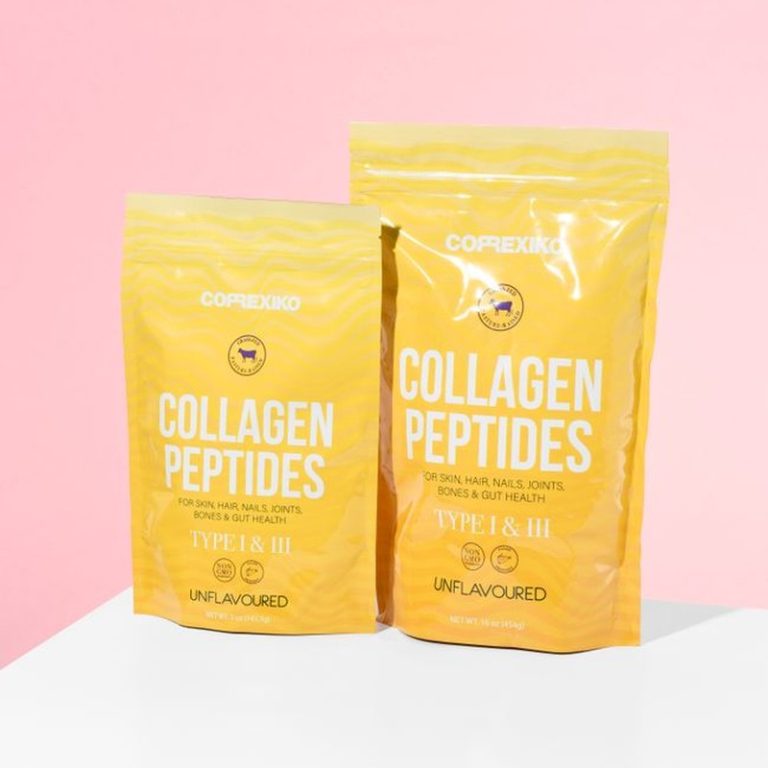
The tub at the grocery store holds collagen peptides. You mix a scoop into water, digestion breaks them into amino acids, and some of those go to work on skin, joints, and connective tissue. Modest effect, low price, and risk roughly equal to eating a chicken breast.
The injected kind is a different animal. Names that circulate in gyms include BPC-157, TB-500, and growth hormone secretagogues like ipamorelin and CJC-1295. None of them are FDA-approved for tendon healing, muscle recovery, or anything else a lifter cares about. They come through wellness clinics, telehealth outfits, and gray-market sites that ship vials with no prescription and no questions. Sterility isn’t guaranteed. The label dose isn’t verified. Sometimes the vial holds what the label says. Sometimes it holds a related compound. Occasionally it holds bacteria.
That’s the gap most people miss. The supplement aisle is regulated loosely, but at least it’s monitored. A vial from an overseas supplier arrives with a tracking number and nothing else.
The Chatter Is Louder Than the Demand
Google Trends data for the past year in the US puts search interest in peptides roughly flat: a recent 30-day average of 20.8 against a 12-month average of 24.6. Interest isn’t exploding. It’s drifting sideways, maybe even easing.
What is exploding is the ad spend. Podcast reads, clinic landing pages, influencer posts, all of it far louder than the search volume sitting underneath. That mismatch says something about who’s being sold to and why. In October 2026, a doctor writing for AOL.com walked through the risks of recovery peptides, and that piece landed because so many people had already been pitched.
How a Lifter Ends Up Holding a Vial
The path in is almost always the same, and it rarely starts with ambition.
It starts with a tendon. Lateral elbow, patellar, Achilles, rotator cuff. Grumpy for four months. You’ve done the eccentric loading, you’ve backed off the volume, and it still complains on every heavy set. Then a training partner mentions his protocol, you spend twenty minutes on a site with a chat box, and a package shows up at your door.
The appeal isn’t really the peptide. It’s the boredom of tendon rehab. Six to twelve weeks of progressive loading is slow, unglamorous, and hard to fit around a program you actually enjoy. A vial promises to skip that part.
What to Do Before You Order Anything
If you’re already halfway to checkout, run this filter first.
- Search the exact peptide name plus the words FDA warning letter. Several of these compounds have received one. It’s public record and takes thirty seconds.
- Ask for a certificate of analysis with a lot number, then ask whether it’s from the same batch as your vial. Vague answers mean you’re buying hope in a glass bottle.
- Ask the clinic for a written diagnosis and a documented reason for the prescription. A real physician puts it on paper. A sales funnel won’t.
- Compare all of that against the boring stuff: an actual tendon loading program, sleep, protein intake, and a realistic timeline. Tendons respond to load, not to novelty.
If amino acids are the only thing you’re after, collagen peptides on Amazon cost about the same as two days of coffee and carry none of this drama. Check current prices there before you entertain anything that requires a needle.
Before you decide anything, though, it helps to know what the human evidence actually covers for each of these compounds. That picture is thinner than the marketing suggests, and for a couple of them it’s close to empty. If you’ve been pitched something at your gym, or you’ve tried a protocol and have a story to tell, drop it in the comments. Real-world reports are how the rest of us figure out what’s actually circulating out there.
What the Human Evidence Actually Shows
Search any peptide forum and you’ll find a forty-page thread from a lifter who swears one vial fixed an elbow that had been angry for two years. Then search for the human trial behind that claim. The trail goes cold fast.
That gap is the whole story.
The bulk of the enthusiasm traces back to animals and cell cultures. Researchers damage a rat’s Achilles tendon, inject a peptide, and the tissue looks better under a microscope. Or they drip a compound onto fibroblasts in a petri dish and watch them multiply. That’s legitimate science. It was never designed to be a rehab protocol, and nobody ever claimed it was until a marketing team got hold of it.
Rodents aren’t small humans with smaller gym bags. A rat’s tendon heals on a completely different timeline. The injury gets created in a lab instead of accumulating over eight years of heavy pulling. And the doses used in those experiments don’t map cleanly onto whatever a clinic would hand you. Nobody has run the equivalent of a randomized trial where 200 lifters with partial patellar tendon tears get a standardized dose and get tracked back to heavy squats. That study doesn’t exist. If someone tells you it does, ask for the citation and watch what happens.
In an Oct. 4, 2026 report from AOL titled “Should You Take Peptides for Recovery? A Doctor Explains the Risks,” a physician walked through the same problem: the marketing has sprinted miles ahead of the human data. That’s the framing I’d carry with you. Not “peptides are fake.” More like “the sales pitch is running on fumes from studies that were never built to answer your question.”
Human trials that do exist tend to be small and short, and they measure things most gym-goers couldn’t care less about. A lab marker of inflammation. A scan. A pain score at six weeks. Rarely “how fast did you get back under a loaded barbell.” And almost never in trained athletes, whose tendons handle load patterns no general-population study ever touches.
Here’s the part people misread constantly: “not proven” cuts both ways. It doesn’t mean these compounds do nothing. It means you’d be guessing. Guessing on dose. Guessing on frequency. Guessing whether your specific problem, a partial tear or a cranky shoulder or a grumpy biceps tendon, even responds to the mechanism being sold to you. Guessing with a needle is a different category of guessing than guessing with a scoop of protein powder.
Anyone quoting a fixed injection schedule for a partial tendon tear is selling certainty that doesn’t exist. I’ve watched this play out in gyms for years, and the pattern never changes: confident protocol, no source. So when someone pitches you a stack, ask these five questions.
- How many people were in the human study? Under 40 participants is a signal, not a slam dunk.
- Were they athletes, or sedentary patients with an entirely different problem?
- What was actually measured, imaging, pain scores, or return to sport?
- Who funded the research, and did the authors have anything to sell?
- Was there a placebo or control group, or did everyone just get the treatment and feel better?
If the person selling you a $300 vial can’t answer those, you’re not buying medicine. You’re buying a story, and the story is very well written.
One more thing for anyone shopping around: these compounds aren’t FDA-approved for recovery, and a lot of what’s sold online carries a “research chemical” label, which is a polite way of saying nobody verified what’s in the vial. Purity varies, dosing labels can be wrong, and sterility isn’t guaranteed the way it is with an approved pharmaceutical. That’s not a scare tactic. It’s just the state of the market.
So what do you do with all that uncertainty? Stay boring a while longer. Tendon issues respond to progressive loading, isometric holds, controlled eccentrics, and enough sleep that your body can actually repair tissue. Protein intake matters. Deloading matters. Tracking your symptoms week to week matters more than most people want to admit. Those levers have human data behind them, they cost almost nothing, and you can check current prices on Amazon for the basics, collagen, protein powder, a decent set of bands, without any gray-market risk.
If you’ve already run a peptide protocol, or you’re weighing one right now, the comments are a good place to lay out what you actually experienced. Specifics help everyone here. If you’re still deciding, give the boring stuff a month first and see where you land.
The Risks Doctors Flag Most Often
In an October 2026 interview with AOL about peptide recovery, the physician’s first question wasn’t whether BPC-157 works. It was whether anyone using it actually knows what’s inside the vial. That gap — between a promising mechanism in animal studies and a product you can trust in your hand — is where most of the real risk lives.
Purity is a promise, not a standard
Pharmacy-grade drugs get tested for identity, potency, sterility, and endotoxin levels. Research peptides sold online don’t have to be. A vial labeled 5mg of BPC-157 can hold a partially degraded fragment, a different peptide altogether, or roughly double the stated dose. You’d never know from looking at it.
Independent testing is the exception in this market, not the rule. When a seller does post a certificate of analysis, plenty of those documents come from the same lab that supplied the powder, or get recycled across batches. I’ve watched people screenshot a COA from a forum and treat it like a passport. If the batch number on the certificate doesn’t match the vial in your hand, you’re trusting a stranger’s word, and no regulator is checking up on that word.
“Research use only” is a workaround, not a shield
BPC-157 is not an approved drug for recovery in the United States or Canada. Not for tennis elbow, not for Achilles pain, not for post-surgical healing. What you’ll find instead are vials stamped “research use only” or “not for human consumption.” That label lets a seller move a product regulators haven’t evaluated and pushes the responsibility onto you.
The practical consequence is ugly. If a contaminated batch sends you to urgent care with an abscess, there’s no pharmacy board complaint to file, no product liability path worth much, and no adverse event reporting system most sellers participate in. The sticker doesn’t mean the peptide was studied in humans. It means the seller found a loophole and used it.
Even a clean syringe carries risk
Injection complications are boring in a headline sense and very real in practice. Infection and abscess sit at the top of the list, especially when sterile technique slips. Nerve irritation and bruising happen when someone hits a spot they shouldn’t.
People reconstitute peptides on a bathroom counter, reuse needles because they bought a box of ten, skip the alcohol swab because they’re in a hurry, and reach for tap water instead of bacteriostatic water. None of that is exotic behavior. It’s what happens when a medical procedure gets handled like a supplement scoop. If you’re injecting anything, you’re performing a minor medical procedure on yourself — clean hands, clean surface, clean skin, single-use needles, and a plan for a site that turns red, hot, or swollen. A doctor can walk you through that. A forum thread can’t.
Nobody knows what two years of use looks like
Human safety data for peptides in healthy adults is thin. Most of the enthusiasm traces back to animal models, cell studies, and small trials that were never designed to answer long-term safety questions. Doctors raising concerns about immune effects or growth-related signaling aren’t describing proven harms — they’re describing open questions.
That distinction matters, because “we don’t know” is its own kind of warning when the plan is weekly injections for the foreseeable future. With BPC-157 specifically, there’s a real body of preclinical work on tendon and gut healing, and almost nothing comparable in healthy humans using it for gym injuries. You are the experiment, and nobody is collecting your data.
Say something before surgery
This is the part I’d underline twice. Tell your physician, surgeon, physiotherapist, or anyone managing your care if you’re using an injectable peptide. Wound-healing assumptions and drug interactions matter enormously before an operation. A surgeon planning a repair wants to know what might affect inflammation, blood clotting, or tissue remodeling. An anesthesiologist wants the full picture of what’s in your system.
Write down the peptide name, dose, frequency, and lot number, and bring it to the appointment. If you don’t know the dose because you eyeballed the scoop, say that too. It’s useful information for the person keeping you safe, and most clinicians would rather hear it from you than discover it in the recovery room.
What to do instead
If slow healing is the frustration, the boring stuff still outperforms a gray-market vial on every measure we can actually track: sleep, protein intake, progressive loading through a rehab protocol, and a physiotherapist who adjusts your dose of stress week to week. Tendons respond to isometric and eccentric work, not to mystery powder. Recovery is a training variable you can control without a needle.
If you want to put money into recovery, a food scale, a protein powder you trust, and one session with a sports physiotherapist will cost less than a month of peptides and come with evidence behind them. You can compare prices on Amazon, but the better move is asking your doctor about what you’re already considering before you buy anything.
That’s where this conversation belongs. Bring it up at your next appointment and share what you’ve tried in the comments — including the parts that didn’t work, because the honest version of this topic is a lot more useful than the highlight reel.
Recovery Habits That Hold Up, and How to Vet Anything Else
Before you spend money on a vial, spend a week on the boring stuff that has decades of human data behind it. Most lifters I talk to who are frustrated with slow healing are sleeping five and a half hours and treating protein like an afterthought. That is not a character flaw. It is a fixable gap, and it is cheaper to close than anything you can order online.
Sleep first. Seven to nine hours, roughly the same window every night, weekends included. Tissue repair, growth hormone pulses, glycogen refill, nervous system recovery — all of it runs on that schedule. Run on six hours plus forty minutes of scrolling in bed and no injection outruns that deficit. I tracked my bedtime instead of my macros for two months last year and my cranky elbow calmed down more than it had in the previous year of icing and ibuprofen. One person’s experience, sure, but it matches what every sports medicine physician I have spoken with says first.
Second: protein. Around 1.6 grams per kilogram of body weight daily, split across three or four meals instead of slammed into one post-workout shake. For a 180-pound lifter that lands near 130 grams. Muscle and tendon both want amino acids arriving steadily. Tendons especially, because they turn over slowly — they respond to consistent supply and consistent load, not one heroic session.
Load management beats total rest
Full rest feels productive and mostly is not. A sore tendon does not want zero stress. It wants less of the stress that aggravates it and more of the stress it can tolerate. Cut the volume that lights it up — heavy eccentrics, deep positions, the specific lift that made you wince — while you keep training the tissue around it. Then add load back in small steps measured in weeks, not days.
This is the part people resist: tendons adapt on a slower clock than muscle. Your biceps can add size in six weeks. Your patellar tendon is thinking in months. That mismatch is why comebacks go sideways, and it makes patience a training variable rather than a personality trait.
The supplement aisle, ranked honestly
- Creatine monohydrate. Cheap, well studied, useful for strength and lean mass. Three to five grams daily; timing barely matters.
- Protein powder. A convenience tool, nothing more. It helps you hit the daily number on nights when cooking is not happening.
- Vitamin D. Only if bloodwork shows you are low. Guessing wastes money, and your doctor can order the test.
- Collagen with vitamin C. The evidence is not overwhelming, but it is one of the few tendon-focused options with a plausible mechanism and some human data. Cheap enough to be a reasonable experiment.
Whatever you land on, scan the label for a third-party testing seal before anything else — NSF Certified for Sport or Informed Sport are the two to look for. Supplements do not get pre-approved for safety the way drugs do, so that seal is doing real work. Prices also swing constantly between brands and tub sizes, so compare current prices on Amazon before you commit. I have watched the same creatine bounce from 30 dollars to 22 and back inside a month.
If you still want to explore peptides
Reasonable. Curiosity is not a character flaw. But the October 2026 reporting on this subject, a physician walking through the risks of peptide use for recovery, lands on the same themes every time: thin human evidence, largely unregulated products, and unknowns that are genuinely unknown. Google Trends shows US searches for peptides have been roughly flat over the past year, which tells you this is a steady niche interest, not a trend everyone has already figured out.
So if you are going to do it, do it with a paper trail:
- Work with a licensed physician who knows your history, medications, and injury background.
- Ask exactly where the product comes from and who manufactured it.
- Ask whether it is third-party tested, and ask to see documentation — not a screenshot from a seller page.
- Get baseline bloodwork before you start, so months later you have a real comparison point instead of a feeling.
- Ask what side effects to watch for and what would make your doctor tell you to stop.
Anyone selling you a peptide without asking a single question about your health is selling a product, not a plan. That distinction matters more than whatever is printed on the vial.
One last thing. The most useful recovery information I have gotten came from other lifters describing what actually happened — the cost, the timeline, the stuff that did not work. Drop your experience in the comments. Honest reports from people who have been through it are worth more than another before-and-after photo.