Collagen Supplements for Joints, Skin, and Recovery: What the Evidence Says
Collagen 101: Types, Sources, and How Your Body Actually Uses It
Collagen is the protein that holds you together. It’s the main structural protein in skin, tendons, ligaments, cartilage, and bone: the scaffolding that gives those tissues strength and stretch. Your body makes its own, but production drops with age, sun exposure, smoking, and high sugar intake. That decline is one reason joints feel creaky and skin loses bounce.
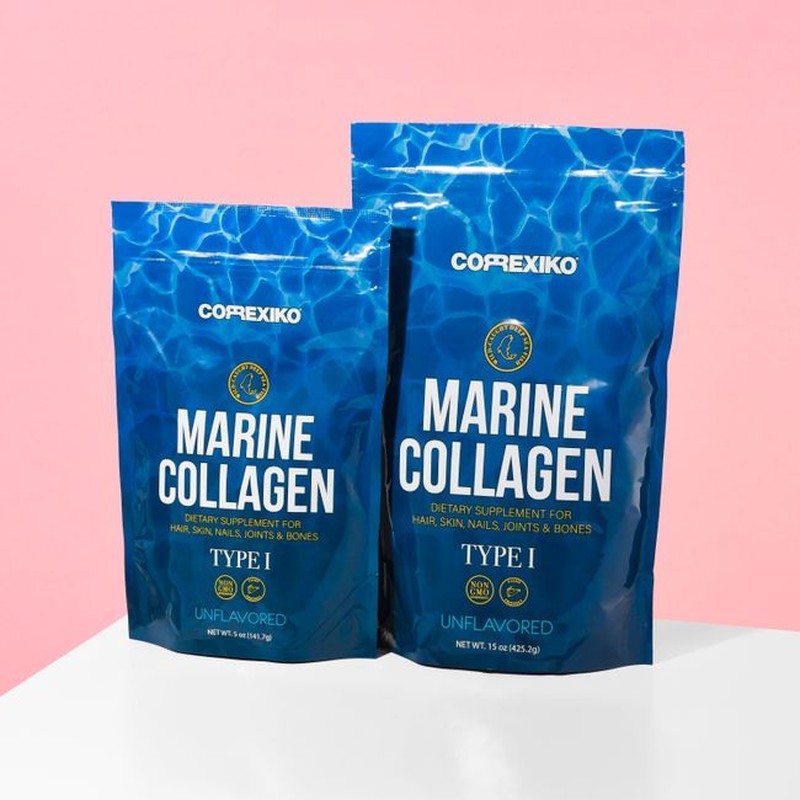
I’ve used collagen peptides in cold coffee and smoothies for years. They dissolve cleanly and add no flavor. Gelatin, a less processed form of collagen, behaves differently. It needs warm liquid and gels when it cools. That difference matters when you’re picking a product.
Supplements usually come from four sources: bovine (cow hide and bone), porcine (pig skin), marine (fish skin and scales), and eggshell membrane. Bovine and porcine products typically carry type I and type III. Marine collagen is mostly type I. Eggshell membrane supplies types I, V, and X. Chicken sternum cartilage is a common source of type II.
- Type I: Skin, bone, tendons, ligaments. Most common in powders and capsules; marine and bovine sources are rich in it.
- Type II: Cartilage. Usually from chicken sternum. Some products use undenatured type II, processed to keep its natural structure.
- Type III: Often paired with type I. Found in skin, blood vessels, and organs.
Labels commonly market type I and III for skin, tendons, and ligaments, and type II for cartilage and joint comfort. That’s the marketing logic, not a road map for where the protein actually ends up.
Hydrolyzed collagen, also called collagen peptides, is what you’ll find in most powders. Hydrolysis breaks the long protein into smaller peptides that dissolve in cold water and absorb faster than gelatin. If you want convenience, hydrolyzed wins. Gummies are another story. Many contain 1 to 2 grams per serving, well below what studies use.
Here’s the part that trips people up. Your digestive system doesn’t send intact collagen to your joints or skin. Stomach acid and enzymes break it into peptides and amino acids, which then enter your bloodstream. They don’t land on your knee cartilage like a patch. Instead, they can act as signaling molecules. Research suggests certain peptides may prompt fibroblasts in skin and chondrocytes in cartilage to produce more collagen. They also supply glycine, proline, and hydroxyproline, the raw materials your body uses to build its own.
That signaling effect is why a supplement can do something even though it never arrives intact. But it isn’t a free pass. Your body still needs vitamin C, copper, zinc, and adequate protein. Vitamin C is a cofactor for the enzymes that stabilize collagen, and without enough, synthesis stalls. Many products add it for that reason. You can also get it from citrus, bell peppers, strawberries, broccoli, or a basic multivitamin.
On dosing, about 10 g daily is a reasonable target, with studies ranging from 8 to 12 g. Timing isn’t critical. Some people take it 30 to 60 minutes before training, hoping for better delivery to tendons, which is plausible but unproven. Consistency beats the clock. Give it 8 to 12 weeks before judging results. You’re looking for gradual changes like less morning stiffness or easier recovery after heavy sessions, not the instant relief of a painkiller.
Joint Pain and Cartilage: What Clinical Trials Show for Collagen
Joint pain is why most people buy their first tub of collagen — not wrinkles, not post-workout soreness. It is the ache on the stairs, the cranky knee after squats. So do the trials back it up? For pain and function, modestly yes. For rebuilding cartilage, no.
Hydrolyzed Collagen: 10 Grams a Day, 8 to 12 Weeks
Almost all joint research uses hydrolyzed collagen, the tasteless powder that dissolves in coffee. The standard research dose is 10 grams daily, and the timeline that keeps repeating is 8 to 12 weeks before anything changes.
Three trials worth knowing by name. Clark and colleagues (Current Medical Research and Opinion, 2008) gave 10 g daily to athletes with activity-related knee pain for 24 weeks and found meaningful improvement in joint comfort. Benito-Ruiz and colleagues (International Journal of Food Sciences and Nutrition, 2009) ran a 250-person, six-month trial with similar results. Zdzieblik’s group (Applied Physiology, Nutrition, and Metabolism, 2017) used 5 g plus vitamin C alongside a knee exercise program and reported less pain than placebo.
Typical effect size: pain scores drop about 20% to 30% versus placebo. On a 0-10 scale, that is a 1.5-point improvement. If your knee sits at a 4 most mornings and it settles at 2 or 3, that is the gap between wincing on stairs and not thinking about it.
I have run 10 g of unflavored collagen in my morning coffee through two heavy squat blocks. By week 10 my knees felt less cranky. I was also sleeping more and squatting lighter, so I cannot hand the powder all the credit. Personal experience is messy that way, which is exactly why the trials matter more than my anecdote.
What the 2023 Meta-Analysis Found — and Where It Is Weak
A 2023 meta-analysis in Nutrients (Wang and colleagues) pooled 19 randomized trials and concluded collagen probably does improve joint pain and function, especially for knee osteoarthritis and activity-related knee pain. Individual trials do not all agree. Some found nothing at all.
The authors flagged real weaknesses: small trials, often 30 to 60 people; heavy industry funding; follow-up of only 3 to 6 months; and subjective pain measures with strong placebo responses.
That does not make the results fake. It means the average effect is probably modest. If you are expecting to drop your prescription anti-inflammatories two weeks in, that will not happen — and never change prescription medication without your doctor.
Undenatured Type II Collagen: A Different Route at 40 mg
Undenatured type II collagen is a different product at a very different dose: 40 mg daily, not 10 g. The theory is immune tolerance — tiny fragments of chicken sternum cartilage may teach the immune system to ease off its attack on your own cartilage. Some knee osteoarthritis trials show less pain and stiffness after 3 to 6 months at that dose. Promising, not bulletproof: the studies are small and a few found no benefit. Try the studied dose for 12 weeks. No change, stop.
It Will Not Rebuild Worn Cartilage
No supplement regrows cartilage. It has no blood supply, and no pill has reversed bone-on-bone osteoarthritis. What collagen might do is calm pain signaling and support the joint environment. Support, not structural repair.
Red flags that mean see a clinician, not a supplement aisle: locking, giving way, night pain that wakes you, rapid swelling, or a hot, red joint. Supplements can be part of the plan. They are not the plan.
Pair It With Loading
Trials that combine collagen with exercise or physical therapy tend to show better results than collagen alone. Loading stimulates tendon and cartilage cells; collagen supplies the amino acids. Practical timing: 10 g of hydrolyzed collagen 30 to 60 minutes before resistance training or physical therapy. The vitamin C dose used in the loading studies is 50 mg, roughly a small glass of orange juice. With type II, timing does not seem to matter. Take it daily with water.
Test It on Yourself
Rate your knee, hip, or hands 0-10 three times a day — morning, after activity, before bed — for one week before starting. Then take your dose daily for 12 weeks, keep training and diet steady, and re-rate in week 12.
A 1-point drop you notice on stairs counts as a win. A 2-point drop is a clear one. No change means you can stop buying it. If pain gets worse, stop and get checked.
Collagen is generally safe; mild bloating or heartburn is the most common complaint. If you are pregnant, nursing, or on blood thinners, ask your doctor first. Look for third-party testing — NSF Certified for Sport or Informed Choice — because supplements are not regulated like drugs in the US or Canada. Calibrate expectations to the data: modest pain relief, a little better function, no new cartilage.
Skin Elasticity and Muscle Recovery: What Actually Helps
Collagen marketing leans hard on skin and recovery claims. Some of that holds up in trials. A lot of it does not. Here is the honest split.
Skin: Real, But Small
Double-blind, placebo-controlled trials on skin aging follow a consistent pattern: 2.5 to 10 grams of collagen peptides daily for 8 to 12 weeks produced small improvements in elasticity, hydration, and roughness. The often-cited Proksch study in Skin Pharmacology and Physiology (2014) gave women 2.5 g or 5 g daily for 8 weeks and found measurable elasticity gains in both groups versus placebo. Interesting detail: the 5 g group did not clearly beat the 2.5 g group.
What that looks like in the mirror is skin that feels slightly smoother and more hydrated, maybe a touch less crepiness. Not a facelift. Not fewer wrinkles. If you are hoping a scoop replaces sunscreen or retinol, you will be disappointed. I have taken collagen daily for a couple of years now, and my honest read is that it is a quiet supporting player next to sun protection and sleep.
Two caveats worth knowing. Many skin trials are funded by collagen manufacturers, and blinding is imperfect because the powder has a distinct taste. That does not erase the findings, but treat the effect sizes as best-case estimates rather than guaranteed results.
Wound Healing: A Supporting Role, Not a Treatment
Collagen supplies glycine and proline, the raw materials your body uses to build its own. There is some evidence that supplemental collagen or gelatin helps in narrow clinical settings, like pressure ulcers and post-surgical wounds. That is a long way from a scoop fixing a torn tendon or a bad sprain. Get real injuries evaluated by someone qualified. Use collagen as an add-on if you want it, never as the plan itself.
Recovery: Mixed, But Not Nothing
This is the more interesting evidence for lifters and runners. Gelatin or collagen taken with vitamin C roughly an hour before loading has been shown to raise markers of collagen synthesis in tendons and ligaments, the connective tissue that starts nagging people in their 30s and 40s.
Soreness data is smaller and messier. A 2020 randomized trial from Clifford and colleagues found that 15 g of collagen with vitamin C before exercise reduced next-day soreness and creatine kinase, a muscle-damage marker, compared with placebo. Other trials have not replicated that as cleanly. My read: probably real, probably modest, most noticeable when you train hard several days a week or you are coming back from a layoff.
Dosing and Timing, Kept Simple
| Goal | Dose | Timing |
|---|---|---|
| Skin and general use | 2.5 to 10 g daily (most people land at 5 to 10 g) | Any time, with or without food |
| Tendons and soreness | 15 g plus 500 mg vitamin C | 30 to 60 minutes before training |
| Form | Hydrolyzed collagen peptides (powder) | Far cheaper per gram than capsules |
On the vitamin C question: 500 mg is the same number I used in the joint section, so stay there and stop. The original tendon research used far less, around 50 mg, which means 500 mg covers it with plenty of room. A glass of orange juice works fine too.
Consistency beats timing. The trials ran 8 to 12 weeks, so missing a pre-workout window is not a big deal while skipping whole weeks is. Marine collagen comes from fish skin, so if that is a problem, bovine and porcine versions exist.
Where It Falls Short
Collagen is an incomplete protein. No tryptophan, low leucine, which makes it a weak driver of muscle protein synthesis compared with whey, casein, or soy. Counting a scoop toward your daily protein total is fine. Treating it as your main muscle-building protein is not. If size is the goal, hit 1.6 to 2.2 g per kilogram of body weight, roughly 0.7 to 1.0 g per pound, from complete sources and let the collagen ride along.
If you are pregnant or nursing, check with your doctor before starting. Same goes if you take blood thinners. Collagen itself is generally well tolerated, but supplements can interact with whatever is already in your routine.
What I Would Do
If skin and joints are the focus, take 10 g daily and give it 12 weeks before you judge it. If you lift and want the tendon and soreness angle, take 15 g with 500 mg of vitamin C about 45 minutes before training, and keep taking it on rest days too. Then track how your knees and shoulders feel on a 1-to-10 scale every week. That habit has done more for my supplement decisions than any study summary I have read.
How to Buy and Use Collagen Without Wasting Money
I’ve cycled through about six brands over three years, and the gap between a good collagen purchase and a wasted one rarely comes down to marketing. It comes down to three things: independent testing, cost per gram, and whether you give it enough time to work.
Here’s the consolidated version of everything I wish I’d known when I started.
Start With the Label, Not the Flavor
Before you look at price or taste, run the label through this checklist:
- Third-party testing seal. NSF Certified for Sport, USP Verified, Informed Choice, or Informed Sport. These programs screen for lead, cadmium, arsenic, and mercury, contaminants that can concentrate in collagen made from bone, hide, and cartilage.
- Hydrolyzed collagen or collagen peptides. Hydrolysis breaks the protein into smaller pieces that dissolve in liquid and absorb faster than intact collagen.
- Grams per serving, stated plainly. A label reading 10 g collagen peptides is useful. One listing a proprietary blend with no numbers attached is not.
- An available certificate of analysis (COA). Plenty of brands post these on their websites. The document should show heavy metal levels below the limits set by California Prop 65 or the relevant regulator.
- Canadian labels: look for an NPN. A Natural Product Number means Health Canada reviewed the product and cleared it for sale. US supplements don’t get pre-approved the same way, since the FDA regulates them as food and mostly acts after a problem is reported, so the third-party seals carry more weight south of the border.
- Added sugar and fillers. Flavored tubs often carry 5 to 15 g of sugar per scoop. Fine if that’s what you want, but it isn’t free.
I bought a bargain tub once that tasted metallic and left me queasy. I have no idea what caused it and I won’t guess. What I do know is that I couldn’t find a certificate of analysis on the label or anywhere on their site, and that pairing was my red flag. I threw the rest out.
Powder vs. Capsules: Do the Math
Unflavored hydrolyzed powder almost always wins on price per gram. Here’s a worked example with round numbers:
- Powder: a 20-serving tub at $40 with 10 g per serving gives you 200 g of collagen. That’s $0.20 per gram, or $2.00 a day if you take the full 10 g joint dose.
- Capsules: a 200-count bottle at $25 with 500 mg per capsule gives you 100 g total, which is $0.25 per gram. To hit 10 g you’d swallow 20 capsules a day. The bottle empties in 10 days and runs about $2.50 daily.
Twenty pills a day isn’t realistic for most people, and that’s before you factor in cost. Capsules make sense for travel or for someone who genuinely can’t handle the powder. Unflavored powder disappears into coffee, smoothies, oatmeal, or soup without changing the taste. I’ve been stirring a scoop into my morning coffee for two years, and it’s the only version I’ve stuck with.
One more thing worth knowing: collagen is an incomplete protein, low in tryptophan, so don’t count it toward your daily protein target as if it were whey. Treat it as a targeted supplement, not a protein source.
Dose, Timeline, and How to Actually Track It
For joints, clinical trials tend to use 10 g per day. For skin elasticity and hydration, 5 g is the more common dose. Start there rather than doubling up. More isn’t clearly better, and the research doesn’t support loading.
Give it 8 to 12 weeks. I didn’t notice anything in my knees until roughly week 10, and that lines up with what the trials show. Quit at three weeks and you’ll never know either way.
Track something concrete so you’re not going on a vibe:
- Rate joint pain on a 0-10 scale once a week, same time of day, same activity context.
- Take a skin photo monthly in the same spot, same lighting, same time of day. Phone camera, no filters.
- Write down anything else that changes, like sleep or training load, so you don’t credit collagen for something else.
Buying Smart Without Chasing Deals Forever
Prices on collagen swing a lot. A tub that’s $30 in March can be $45 in July, and the same brand often varies by flavor and size. Compare cost per gram, not cost per container. A smaller 15-serving tub at $28 works out to about $0.19 per gram, which beats the 20-serving tub at $40 ($0.20 per gram), but only if you’d actually finish the smaller size before it goes stale.
Subscribe & Save and similar auto-ship programs typically trim 5 to 15 percent, which adds up if you’ve already confirmed you tolerate a brand. Don’t subscribe to something you’ve never tried. Buy one tub first.
Disclosure: some links on this page are affiliate links. If you buy through them, I may earn a small commission at no extra cost to you. It doesn’t affect which products I recommend. The testing seals and per-gram math above are the same criteria I use for myself.
If you want to see where prices sit today, check current prices on Amazon and compare a few brands side by side using the cost-per-gram math. Then come back and share your experience in the comments: which brand you tried, how long you stuck with it, and whether your joints or skin felt any different. Honest reports from people who actually finished a tub are worth more than any marketing page.