Hamstring Strains: How to Spot, Treat, and Prevent a Pulled Hamstring
Full disclosure: Some links in this article are affiliate links. We may earn a small commission at no extra cost to you if you make a purchase through them. Our recommendations are based on what real users report, not on commission size.
What a Hamstring Strain Really Is, and the Early Signs Most People Ignore
I pulled my right hamstring on a Tuesday tempo run back in 2019, and the odd part is that it didn’t feel like a pull at first. It felt like a knot. I finished the workout, iced it, and told myself I’d be fine by the weekend. Three weeks later I was still jogging at a pace that felt insulting, wondering what I had actually done.
Hamstring strains rank near the top of the injury list in any sport built on running or explosive hip movement, and they’re also among the most likely to come back. Knowing what’s happening in the back of your thigh separates a two-week nuisance from a wasted season.
The anatomy, minus the textbook fog
Your hamstrings are three muscles running down the back of your thigh. The biceps femoris sits on the outside. The semitendinosus and semimembranosus run down the inside. All three start at the ischial tuberosity, the bony bump you feel when you sit on a hard chair. Most of us call that the sit bone. They attach just below the knee.
Crossing two joints is what makes them so exposed. They extend your hip as you drive off the ground, bend your knee as the leg swings through, and do both at once during a deadlift or Romanian deadlift, holding your hips steady while your knees stay relatively fixed.
Two joints, one muscle group, constant load. That’s why it complains during hill repeats, late in a fast 5K, and on the third set of RDLs.
Why a strain happens while the muscle lengthens
Most hamstring strains happen while the muscle is stretching under load, not while it shortens. Sprinters tear hamstrings during the late swing phase of a stride, right before the foot lands. The leg is reaching forward, the hamstring is near its longest, and it is firing hard to slow the lower leg down. Stretch plus force at the same instant is the vulnerable position.
Hinge lifts create something similar. Push your hips back under a loaded bar, bring the hamstrings toward end range, and they act like a brake cable under tension. Ask for more than they’ve prepared for and something gives.
Tissue can start failing before pain shows up. Runner’s World reported in October 2026 that hamstring pain often builds quietly through a training block instead of announcing itself in one dramatic moment. The twinge you felt three sessions ago was already a message.
Grades 1, 2, and 3: what the difference feels like
- Grade 1 (mild): Tightness or a dull ache after a run or lift. Walking is normal; pushing the pace feels off, but nothing is sharp. Most settle within one to three weeks.
- Grade 2 (moderate): Sharp pain at the moment of injury, a limp for a day or two, and sometimes bruising later down the back of the thigh. Bending your knee against resistance feels weak.
- Grade 3 (severe): A tear. Marked weakness, sometimes a visible dent, and often trouble bearing weight. This one needs a physician or PT promptly, not a foam roller and hope.
Grade 2 and 3 injuries deserve a real assessment. A proper diagnosis will change your rehab timeline more than any home remedy can.
Early cues worth taking seriously
- A hamstring that feels tight for several sessions in a row, not one stiff morning.
- A pinching or catching sensation near the sit bone when you pick up the pace.
- A sudden drop in pace at the same effort, with no change in training.
- Discomfort that fades in the warm-up and returns harder at the end.
- Cramping on the back of the thigh during the last reps of a hinge lift.
Treat recurring tightness as information, not as an obstacle to bulldoze. I pushed through it for years because it always loosened up. It loosened up right until it didn’t.
When to see someone instead of waiting it out
If a strain looks like a grade 3 tear, or you have numbness or tingling running down the leg, get it looked at. Tingling can point to nerve involvement near a high hamstring injury rather than the muscle itself, which is a different problem with a different plan.
The First Week: What to Do Right After a Hamstring Pull
You feel the grab behind your thigh mid-stride, or the third set of Romanian deadlifts goes wrong in a way that stopping can’t fix. The next seven days matter more than the next seven weeks. Runner’s World covered hamstring strains in October 2026, framing them as something that builds quietly during training rather than announcing itself, and that matches what I see in the runners and lifters I coach.
I’ve pulled mine twice. The first time I kept testing it, stretching it, rolling it, and that one dragged on for close to two months. The second time I shut it down early and was jogging easy again in twelve days. That contrast is my own experience, not a study finding. And to be clear, everything below is general self-care for a mild strain, not a diagnosis. If you’re unsure what you’re dealing with, get it looked at.

Stop the activity that caused it
Not a slow jog to see if it loosens up. Not one more set. The tissue that just tore is the tissue you’re about to tear again, and the second tear is usually the worse one.
A few things push this past self-care: a pop you felt or heard, an inability to walk without limping, bruising that spreads down the back of the thigh within a day, or numbness and tingling. Those get a physician or a physical therapist, not an ice pack and optimism.
Relative rest beats total rest
Bed rest isn’t the answer either. Healing tissue tolerates gentle, pain-free movement well, so walk around the house and take the stairs slowly. Sitting for long stretches with the knee bent leaves the hamstring short and cranky, so stand up every 30 to 40 minutes. The line to respect: dull stiffness after activity is acceptable, sharp grabbing during activity is not.
Ice early, heat later
For the first day or two, ice can take the edge off, ten to fifteen minutes at a time with a cloth between the ice and your skin. Longer doesn’t add anything. Once the acute soreness fades, most people find heat more comfortable than cold, and a warm shower or a heating pad on low works fine. Both are comfort tools, not healing accelerators.
Compression and elevation
A light sleeve or wrap eases that heavy, full feeling in the back of the thigh, and propping the leg up while you sit helps too. Snug, not tight. Tingling, numbness, or toes that change color mean it’s too much, so take it off.
What to skip
Aggressive stretching and deep foam rolling right on the injured spot both feel productive and both can irritate healing tissue. My first pull got twenty minutes a day on a trigger point roller; it did nothing but make the spot sorer. And skip the urge to test it. No sprinting to check, no max-effort hinges. That impulse is what turns tweaks into tears.
The three-step check
Work through a ladder instead of guessing. Each step needs to feel normal before you move up.
- Slow, pain-free walking. No limp, no hitch, no hesitation on the injured side.
- A slow bodyweight hip hinge. Stand tall, push the hips back, keep the spine long, and stop short of any pain. If a bodyweight hinge hurts, resistance is out of the question.
- Light cycling. Ten easy minutes on a stationary bike at low resistance. If that’s clean, you’ve earned the next phase of rehab in the coming days.
Sharp, local pain at any step means dropping back to the previous one for another day or two. That’s calibration, not failure.
What week one should feel like
Pain usually peaks in the first 24 to 48 hours. Bruising can appear a day or two later and travel down the thigh, which looks worse than it is. That heavy guarding feeling tends to ease noticeably by day four or five with a mild strain. By the end of the week, you should be walking without a limp and getting through the day without thinking about the leg constantly. If nothing has changed in seven days, or it’s getting worse, see a physician or physical therapist rather than pushing on.
Over-the-counter pain relief is a personal decision. Check with a pharmacist or physician, especially if you take other medications. One tradeoff worth weighing: dulling the pain also dulls the feedback you need to know whether you’re doing too much.
Rebuilding Strength Without Re-Tearing: A Beginner-Friendly Return Plan
Before you run any of this: if bruising is still spreading, you can’t walk normally, or you have pain at rest, talk to a sports doctor or physical therapist first. This plan starts after that acute phase. And everything below can be done bodyweight — sliders, a light dumbbell, or a band are optional extras, not requirements.
The Oct. 4, 2026 Runner’s World piece on hamstring pain made a point worth repeating: these strains tend to creep up during training rather than announce themselves in one dramatic moment. Gradual onset is exactly why the return has to be gradual too. Four steps, in order, no skipping ahead because you feel good on a Tuesday.
Step 1: Isometric Holds
Lie on your back, knees bent, heels digging into the floor or a wall. Push at maybe 50 to 60 percent effort and hold 20 to 30 seconds while breathing normally. Rest a minute and repeat three or four times. You’re reminding the tissue it can handle load, not chasing a burn. A twinge means drop the effort.
Step 2: Slow Bridges and Single-Leg Bridges
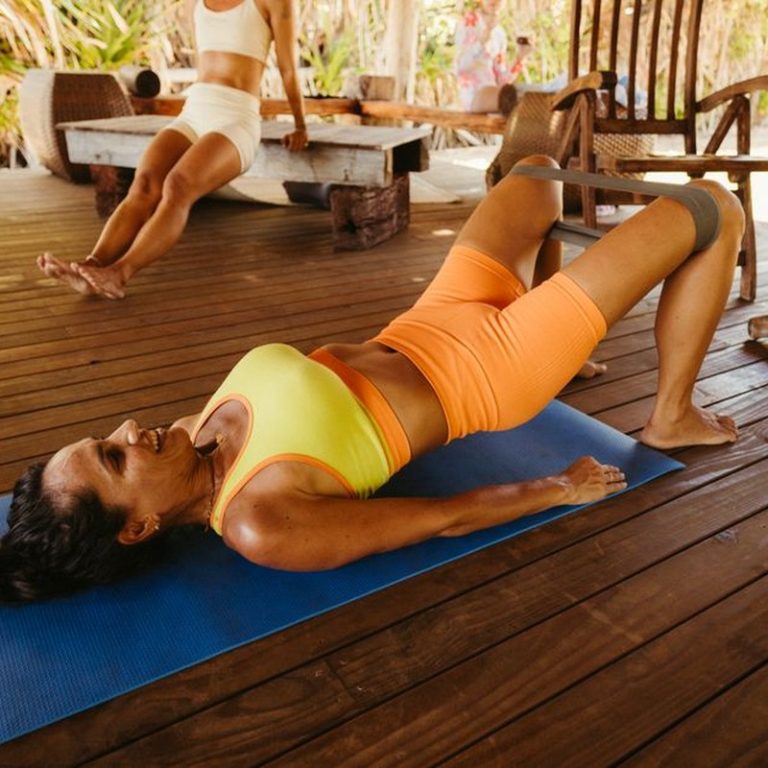
Drive through your heels to lift your hips, squeeze the glutes at the top instead of arching your low back. Two to three sets of 8 to 12 reps, stopping two reps short of any pain or fatigue that changes your form. When double-leg bridges feel easy, try one leg at a time. If the hamstring feels shaky, give it another session of double-leg work.
Step 3: Eccentric Work
Lowering under tension is where hamstrings actually get strong. Two options, both with a three-to-four-second lowering phase:
- Hamstring slides: heels on a smooth floor or sliders. Bridge your hips, slide the heels out until your legs are nearly straight, then pull back in. Two sets of 6 to 8.
- Romanian deadlift: light dumbbell or bodyweight. Hinge back, lower three to four seconds until you feel a stretch, return normally. Two to three sets of 8 to 10.
Skip Nordic curls here unless you’re doing a heavily assisted version, and understand that even assisted Nordics are an advanced progression. The unassisted version is not a beginner movement, in rehab or in prevention work.
Step 4: Faster, Shorter Efforts
Only move here when the slow work has been completely pain-free for several sessions in a row — not one good day. Start with strides: 4 to 6 reps of 20 seconds at 60 to 70 percent effort, walking back between them. If those feel clean, try short accelerations over 10 to 20 meters. Full sprinting comes weeks later, and a hamstring that isn’t ready will tell you with a sudden grab.
For Lifters: Keep the Hinge, Drop the Load
Don’t abandon deadlifts or RDLs. Cut to roughly 40 to 50 percent of your usual working load, or an empty bar, and prioritize range of motion and control over numbers. Add 5 to 10 percent per week only if you’re pain-free during the set and the next morning.
Red Flags That Mean Back Off
- Sharp pain during the movement — stop the set immediately and repeat only the previous step next session.
- Pain that’s worse the next morning — drop back one step and hold there for a week.
- Bruising returns or spreads — stop loading and get it looked at by a professional.
- A sudden pull or grab sensation — end the session, and if it lingers more than a few days, call a PT.
Sleep, Protein, and Training Volume
A dull ache fading within a day is generally acceptable. Healing also depends on what happens outside the exercises. Sleep is when tissue repair happens, so seven to nine hours beats any supplement. Aim for protein at each meal — a palm-sized portion of meat, fish, eggs, or beans. And the sneaky one for runners: piling on extra cardio while rehabbing backfires. Long runs and hard bike sessions steal recovery from a hamstring that’s already working. Keep everything else easy for a few weeks, then rebuild.
Preventing the Next Pull: Warm-Ups, Strength, and Load Management That Actually Work
Prevention isn’t one heroic habit. It’s a few boring ones stacked together, done often enough that your hamstrings stop being the weak link.
Warm Up With Movement, Not Stretching
If your pre-run routine is pulling your heel toward your butt and holding it, you’re spending that time on the wrong thing. Long static holds before speed work can briefly reduce how much force a muscle produces.
Five to eight minutes of easy movement, then drills that wake up the hamstrings and glutes together:
- Leg swings — 10 front-to-back and 10 side-to-side per leg, controlled rather than flailing.
- Walking lunges — 8 to 10 per leg; bodyweight is fine, and they load the hamstrings through a full range.
- Glute bridges — 10 to 12 reps with a one-second squeeze at the top.
- Easy strides — 3 to 4 x 60 to 80 meters at roughly 70 to 80 percent effort. This is the piece that prepares tissue for running fast.
Strength Work Twice a Week
Two sessions a week, 20 to 30 minutes each, is enough to move the needle. The staples that hold up in practice:
- Nordic curl variations. Start assisted: anchor your ankles, kneel on a pad, and lower forward as slowly as you can while a band or partner helps you back up. Expect soreness the first two weeks.
- Single-leg Romanian deadlifts — bodyweight or light dumbbell, three sets of 8 per side.
- Hip thrusts — glute-dominant, but they teach the hamstring and glute to fire as a unit.
- Cable or band leg curls — knee flexion is the other half of what your hamstring does, and a band on a door frame works fine.
Put these after an easy run or on a separate day, just not the day before a hard session or long run.
Build a Reserve, Then Progress Carefully
A hamstring that can handle more than your running or lifting asks of it is far less likely to fail when you push the pace. That reserve builds over a training block, and by six to eight weeks most people feel the difference before they can measure it.
Keep weekly mileage or training weight increases at roughly 10 percent or less — a common coaching guideline, and one to stay under when you’re unsure. For lifters, that means respecting deadlift and RDL volume.
The bigger trap is stacking. A long run, a hard hill session, and heavy deadlifts inside the same 48 hours is more than you can recover from. I’ve learned this the hard way: long run Saturday, heavy deadlifts Sunday, and by Tuesday my right hamstring felt like a guitar string. Nothing tore, but it took two weeks to settle.
Check Your Running Form Basics
- Overstriding. If your foot lands well in front of your hips, you’re braking every step and stretching the hamstring as it works hardest. Count steps for 30 seconds — an unusually low cadence for your height and pace usually means the stride is too long.
- Heavy heel strike far forward. Aim to land closer under your body.
- Weak glute drive. Your glutes should push you forward; when they don’t, the hamstrings cover work they weren’t built for.
If it still feels off after a cadence check, have a coach or physical therapist look at it.
Don’t Skip Hip and Core Work
Weak glutes shift more of the workload onto the hamstrings, which shows up late in a run when fatigue sets in.
- Single-leg bridges — 10 to 12 per side, slow.
- Clamshells with a band — 12 to 15 per side.
- Planks and dead bugs — 30 to 45 seconds, two rounds.
Two or three sets at the end of a strength session is plenty. You’re teaching your hips to carry their share so your hamstrings don’t have to.
Gear, and When to Get Help
Foam rollers, resistance bands, and compression sleeves won’t prevent a strain on their own. They make a routine easier to keep, and consistency is where prevention lives. I keep a cheap band clipped to a door frame for leg curls and a roller next to the couch, so using them takes no thought. Some runners find compression sleeves comfortable on long efforts; they’re a support act, not the headline.
If you’re picking any of this up, check current prices on Amazon before you buy — the good options aren’t expensive, but prices move around. If something worked for you, drop it in the comments so other readers can compare notes.
One more thing: if tightness keeps returning despite consistent training, strength work, and recovery, get assessed by a physical therapist. Recurring strains often trace back to a strength gap or a movement pattern that’s easy to miss on your own.
Do the warm-up. Do the strength work twice a week. Progress slowly and space your hard days. Your hamstrings will thank you — quietly, which is exactly how you want them.