Best Dumbbell Racks and Storage Solutions for Small Home Gyms: Save Floor Space
Full disclosure: Some links in this article are affiliate links. We may earn a small commission at no extra cost to you if you make a purchase through them. Our recommendations are based on what real users report, not on commission size.
Measure Your Floor Plan Before You Buy a Dumbbell Rack
Before you click add to cart on a rack, take ten minutes to measure your workout space. That sounds obvious, but I say it from experience: I once bought a horizontal rack that looked compact in the photos and turned out to eat half my 6-by-8 corner. The fix here is tape measure and a notepad.
Write down your workout area’s length, width, and ceiling height. If you’re in a basement or attic, measure from the floor to the lowest ceiling obstruction. A sloped roof or a duct run can instantly rule out a vertical rack that needs overhead clearance.
Pick Your Rack Orientation
Racks come in three basic orientations, and your floor plan decides which one makes sense.
Vertical racks. These hold dumbbells upright and take up almost no floor space. The catch: you need enough height to lift a dumbbell off the top tier without hitting the ceiling. If your ceiling is under 7 feet, check the rack’s height plus the dumbbell’s height before you buy.
Adjustable dumbbells make the height question less of an issue. The Bowflex SelectTech 552 Adjustable Dumbbells ship with a tray-style base, and the PowerBlock Elite EXP 5-90 Adjustable Dumbbells have a compact block footprint. They’re not racks, but they can save you from needing a tall one. If you already own adjustables or are planning to buy them, a full rack might be overkill.
Horizontal racks. These lay dumbbells flat on two tiers. They’re easier to grab but they eat floor space. If you own a fixed set like the CAP Barbell Coated Hex Dumbbell Set or the Amazon Basics Neoprene Dumbbell Set, a horizontal rack is usually the fastest way to get in and out of a workout. Measure the rack’s length and width against your floor space before you commit.
Wall-mounted racks. These keep the floor clear by hanging dumbbells on vertical posts bolted to the wall studs. Ideal for tiny spaces. I hung one in a 5-by-5-foot corner and it worked beautifully — but I had to skip it in another room because the stud spacing didn’t line up with the mounting brackets.
Account for Your Exercise Space
Your rack shares the room with your workout. Dumbbell presses, swings, and rows all need arm-swing clearance. Leave at least 24 inches of open space on each side of the rack. Less than that, and you’ll clip a handle on a weight stack mid-curl. That’s not just frustrating — it’s how dumbbells end up on toes.
Sketch It on Paper
Grab graph paper and sketch the floor plan to scale. Mark door swings, power outlets, and any existing equipment like a bench, treadmill, or fan. Then draw the rack in its planned spot. This ten-minute step prevents the two most common mistakes people make: buying a rack that blocks a door, and buying a rack that forces you to rearrange everything.
Once you’ve got your dimensions and orientation locked in, you can compare storage options with confidence. Check current prices on Amazon for storage-friendly adjustable sets like the NUOBELL Max 80 Adjustable Dumbbells or the Yes4All Adjustable Dumbbells 80LB if you’re leaning toward skipping a separate rack. And tell us in the comments which layout worked for your space.
Fixed Dumbbell Sets vs Adjustable Dumbbells: Which Storage Makes Sense?
If you’re building a home gym in a spare bedroom, apartment corner, or garage bay, the biggest decision isn’t brand. It’s fixed versus adjustable. That choice decides how much floor space you lose, how fast you move between sets, and whether the room still works for everything else you do in it.
Fixed Dumbbells: Fast to Grab, Slow to House
Fixed dumbbells are about as direct as training gets. The weight you want is already on the bar, so you grab it and go. No dials, no selector pins, no waiting. If you enjoy drop sets or running through a circuit without breaking stride, that convenience matters.
The catch is storage. A complete set from 5 to 50 pounds in 5-pound jumps means 10 pairs of dumbbells, and those pairs need a rack. Most racks run 4 to 6 feet long and sit about 2 feet deep. You also need enough space in front of the rack to stand, reach the middle pairs, and move through a workout. In a small room, that outline eats up a lot of usable floor.
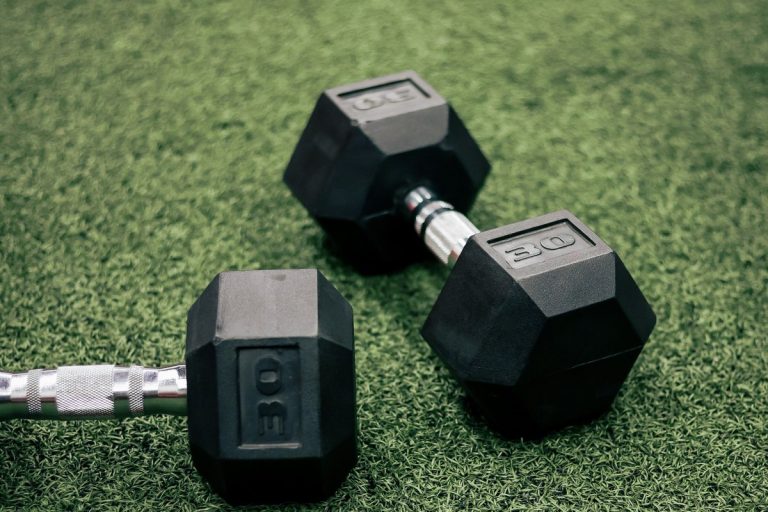
I used a fixed set like the CAP Barbell Coated Hex Dumbbell Set in a one-car garage, and it worked well. The hex heads don’t roll, the rubber coating protects the concrete, and the set comes with a rack. In a garage or a larger training area, that setup is hard to beat. In a bedroom, it’s a different story: I had to place the rack against the wall and angle my bench around it. Every warm-up started with a small furniture shuffle.
For lighter work, the Amazon Basics Neoprene Dumbbell Set stores easily on a shelf and doesn’t need a rack at all. That works if your top weight stays around 10 or 15 pounds, but most beginners will outgrow that range once they start adding load.
Adjustable Dumbbells: One Cradle, Many Weights
Adjustable dumbbells shrink the storage problem from an entire wall to a single cradle. That’s the main reason they make sense for most small home gyms. They also have tradeoffs: changing weight takes a few extra seconds, the mechanism adds moving parts, and the balance in your hand may feel a little different from a solid fixed dumbbell.
The Bowflex SelectTech 552 Adjustable Dumbbells are the easiest example. They replace 15 sets of weights and dial from 5 to 52.5 pounds per hand. The cradle is roughly the size of a pair of shoes. I used a pair in a narrow spare bedroom, and the setup still left room for a full-size bench—something a six-foot rack would not have allowed.
The PowerBlock Elite EXP 5-90 Adjustable Dumbbells use a block-style design that stores just as tightly. You slide a selector pin instead of turning a dial, and the range runs from 5 to 90 pounds per hand. If your pressing strength is already past the 50-pound mark, that extra top end makes PowerBlock worth a look.
The NUOBELL Max 80 Adjustable Dumbbells look like traditional hex dumbbells but dial to 80 pounds and collapse into a single cradle. The cradle is wider than the Bowflex base, but it still leaves most of your floor open. It’s a middle ground for people who want the familiar shape of a fixed dumbbell without dedicating a whole wall to it.
If price matters more than finish, the Yes4All Adjustable Dumbbells 80LB do the same space-saving job for less. The adjustment isn’t as smooth and the coating isn’t as refined, but the footprint is still a single compact base. That’s the important part when floor space is tight.
How to Decide for Your Space
Start with your heaviest working weight. If your top dumbbell press is 30 pounds per hand, you don’t need a fixed 5-to-50 set or a 90-pound adjustable. A Bowflex pair with a 5 to 52.5 pound range will cover you for years. If you’re already pressing 60 or 70 pounds per hand, look at the PowerBlock or NUOBELL.
Next, do the painter’s tape floor test. Mark the length and depth of a rack or cradle with tape. Put your bench where you’d normally put it. Walk through a real workout: grab water, change weights, get into position. If you keep bumping the tape, the bigger storage option doesn’t fit. If you have plenty of clearance, then a fixed rack may be worth the floor space.
Consider how you train, too. Fixed dumbbells can save time in a circuit or a drop set, because you don’t have to dial in a new weight between every set. But for a typical home session, those few extra seconds of adjusting are minor. Most people I’ve talked to would rather trade a little speed for a room that doesn’t feel like a storage closet.
One common concern is clutter. A fixed rack doesn’t automatically get messy, but pairs do end up scattered when they’re not re-racked. Adjustables are a little more forgiving because you have to put the weights back in the cradle to change the setting. Either system stays neat if you get into the habit of re-racking before you leave the room.
Use the links above to check current prices on Amazon. And if you’ve already made the fixed-versus-adjustable call, share your setup in the comments—what you chose, how much space you’re working with, and what you’d do differently.
Best Storage Racks and Cradle Options for Small Home Gyms
Dumbbells are the most versatile equipment in a home gym, and also the easiest way to create a floor hazard. I’ve tripped over a rogue 25-pounder more times than I want to admit. The right storage setup depends less on the brand and more on what kind of dumbbells you own and how much square footage you can sacrifice.
Here’s how to match a storage solution to your weights and your space.
Fixed-Weight Dumbbells: Two-Tier Rack Is the Workhorse
If you own a traditional fixed-weight set, a two-tier rack is the most practical move. These racks hold multiple pairs in a footprint of maybe two feet by two feet, and they keep every pair separated so you can grab the weight you want without digging.
The CAP Barbell Coated Hex Dumbbell Set is a good example of a set that often includes a two-tier rack right in the box. If your package came with one, use it. If you bought loose dumbbells and need a rack, a basic two-tier model costs anywhere from $60 to $150 depending on how many pairs it holds and whether it’s rated for heavy iron.
One safety rule matters no matter which rack you pick: keep the heaviest pairs on the bottom level. That lowers the center of gravity and keeps the rack from tipping when you pull a weight off the top. I’ve seen a loaded rack lean forward after someone grabbed a top pair too fast, and it’s not something you want in a small space.
If you think you’ll add more pairs later, buy the rack with more capacity than you need today.
Adjustable Dumbbells With Cradles: Don’t Waste Money on a Separate Rack
Owners of the Bowflex SelectTech 552 Adjustable Dumbbells already have the best storage solution for those dumbbells. The cradle is shaped to catch the dials and hold both dumbbells in alignment, so they stay put between sets and at the end of the day.
The NUOBELL Max 80 Adjustable Dumbbells work the same way, with one cradle per dumbbell. I’ve seen people buy a separate rack for these, and it’s almost always wasted money and floor space. The included cradle does the job. Add another storage rack only if you’re also stashing kettlebells, bands, or a bench in the same spot.
PowerBlock Elite EXP 5-90: Use the Tower
The PowerBlock Elite EXP 5-90 Adjustable Dumbbells come with a sturdy tower when you buy the full package. That tower stores the dumbbells, the expansion kits, and the spacer plates together in one vertical unit. It keeps the floor clear and holds the entire 5-to-90-pound range in a footprint about the size of a small end table.
Leave the expansion kits in place. If you pull them off and set them aside, you lose the neat nesting and end up with loose plates. Assembled as intended, the tower is one of the few true all-in-one storage solutions for a compact home gym.
Yes4All Adjustable Dumbbells 80LB: The Tray Works Better Than a Rack
For budget-minded lifters, the Yes4All Adjustable Dumbbells 80LB take a simpler route. The plates slide onto the handle, and the included storage tray holds the system in a neat stack. No rack needed — just a shelf, a sturdy workbench, or a heavy-duty utility cart.
I tried this on a standard garage workbench and it fit without crowding anything else. The tray keeps the plates organized, and because the whole thing nests together, you never have to juggle loose plates when you want to change the load. In a small apartment gym, that beats a fixed-weight set plus a separate rack.
Light Dumbbells: Skip the Rack and Get Creative
If your home gym only has lighter weights, skip a traditional rack entirely. The Amazon Basics Neoprene Dumbbell Set stacks easily in a rolling organizer or a simple wooden crate. The neoprene coating protects floors and furniture from scratches.
In my first apartment gym, I kept a neoprene set in a canvas tote under the couch. Not glamorous, but it cleared the floor and made it easy to move the weights from the living room to the bedroom. Storage should fit your space, not the other way around.
Match Storage Height to How You Lift
A waist-high rack makes it easy to grab a weight and start working. You don’t bend, you don’t break your rhythm, and you can swap loads between hard sets without losing focus.
A low cradle saves vertical space, which matters in rooms with low ceilings or overhead shelving. But it forces you to bend more between sets. That’s fine for occasional use; for drop sets or quick transitions, the extra bending gets old fast.
- Waist-high rack: best for frequent weight changes and people who don’t want to bend.
- Low cradle or tray: best for tight vertical space and lighter dumbbells.
Before you buy anything, check today’s price on Amazon — dumbbell storage prices move around a lot more than you’d think. And if you’ve built a clever rack setup in a small space, tell us in the comments. Real-world solutions are always worth stealing.
Space-Saving Tips and Rack Alternatives That Actually Work
Rack shopping isn’t the only answer to a messy dumbbell pile. In a small room, wall hooks, a plywood tray, or a rolling cart can free up more floor space than a floor-standing rack—and cost a fraction of the price. Here are the storage methods I’ve tried, with the safety details that matter.
Mount Fixed Dumbbells on the Wall
Fixed dumbbells don’t have to sit on the floor. A heavy-duty shelf or a set of dumbbell-specific wall hooks can hold them vertically, using empty wall space instead of floor space. What matters most is mounting into studs and checking the rated weight first. The shelf or hooks need to be rated for the total weight you’ll hang, not just the heaviest pair. I always put the heaviest dumbbells closest to the wall studs and spread pairs across multiple studs so the mounting points share the load.
Safety note: before you load anything, press on the empty shelf to make sure it doesn’t flex, and use hardware rated for at least twice the weight. A shelf rated for 200 pounds might be fine for a set of 50s, but don’t push it to the edge.
For a clean look, a set like the CAP Barbell Coated Hex Dumbbell Set works well because the flat hex heads sit flush against the wall and don’t roll around.
Build a Custom Plywood Dumbbell Tray
Don’t want to pay $150 for a rack that holds five pairs? A 3/4-inch plywood tray takes an afternoon and does the same job. Cut slots to match the dumbbell heads, mount the tray to wall studs or the side of a workbench, and you’ve got a dedicated spot for every pair with zero floor footprint.
The most important detail is matching the slot width to your dumbbell heads. Measure the widest part of each head before you cut. Round heads vary, so cut individual openings for each pair. I built one for my Amazon Basics Neoprene Dumbbell Set and it freed up a whole closet shelf. Neoprene-covered heads slide in easily, and the tray keeps every pair separated.
Safety note: use structural screws and hit a stud for each mounting point. If the tray is above a bench or door, give it a firm tug before you trust it with weight.
Store Adjustable Dumbbells Against a Wall
Adjustable dumbbells take up more room than people expect. The cradle alone can eat a foot of floor space. Push the whole unit flat against the wall or into a corner. I’ve used the NUOBELL Max 80 Adjustable Dumbbells in a corner of my garage, and the base is low enough that it doesn’t block the walkway. It acts as its own stand, so you don’t need a separate rack.
Other adjustable sets work too, but the footprint varies. The Bowflex SelectTech 552 Adjustable Dumbbells sit flat against a wall, though their cradle is wide. The PowerBlock Elite EXP 5-90 Adjustable Dumbbells can stand more vertically, which helps in tight corners. The Yes4All Adjustable Dumbbells 80LB is a budget-friendly choice that also fits in a corner; make sure the floor is level and give the cradle a light push before you start lifting.
Safety note: place any adjustable cradle on a level surface, and measure the clearance needed to change weights. If the dial side faces the wall, you may have to pull it out each session, which defeats the space-saving purpose.
Use a Rolling Cart for Fixed Sets
A utility cart rated for gym weights turns into a mobile dumbbell rack. Load it with the pairs you use most, wheel it out for a workout, and tuck it under a bench or into a closet when you’re done. This is the best option for shared living rooms or rental spaces where drilling into walls isn’t allowed.
I use a heavy-duty cart with rubber casters, and it holds a full set of fixed hex dumbbells without shaking. If you go this route, buy casters that lock. You don’t want the cart rolling away when you set a dumbbell down.
Safety note: check the cart’s weight limit and stay under it. Load the heaviest pairs on the bottom shelf to keep the center of gravity low.
Label Every Slot
Labels are the cheapest storage upgrade you’ll make. Ten minutes of colored tape or a marker tells everyone in the house where each pair goes. I tape a strip of red on the lighter pairs and blue on the heavy ones. That simple system stopped the ‘where does this go?’ argument for good.
Safety note: labels don’t fix an overloaded shelf. If you can’t reach a pair without climbing or shifting other weights, move the heavy stuff lower and keep the most-used pairs at waist height.
Set a One-In, One-Out Rule
Clutter always returns when you keep buying without editing. Make a hard rule: if a new dumbbell or set doesn’t fit in your designated storage zone, you have to replace an old piece. That keeps every square foot usable and stops the dumbbell pile from becoming a permanent obstacle course.
Safety note: when you bring in a new set, clear the landing zone first. Moving heavy iron into a cluttered room is a good way to drop a weight on your foot.
Pick the Storage Method That Fits Your Day
Before you order another floor rack, try this: measure the wall space, find your studs, and decide what you’d rather do with the floor you’re about to reclaim. A wall-mounted tray or a rolling cart usually costs less than a rack and does the same job. The best storage setup is the one that keeps dumbbells off the floor and you in your workout.
The product links above are current if you want to compare prices on Amazon. If you’ve got a storage trick that keeps your weights from turning into a permanent clutter pile, I’d love to hear it in the comments.

Medical & Editorial Review: This article was reviewed by Liam Smith, founder of Apexfito, for accuracy and safety. Content is for educational purposes and is not a substitute for professional medical advice. Consult your physician before starting any exercise or nutrition program.