The 6 Best Dumbbells for Small Hands and Wrists: Grip-Friendly Picks That Won’t Slip
Why Handle Size and Grip Comfort Matter for Small Hands
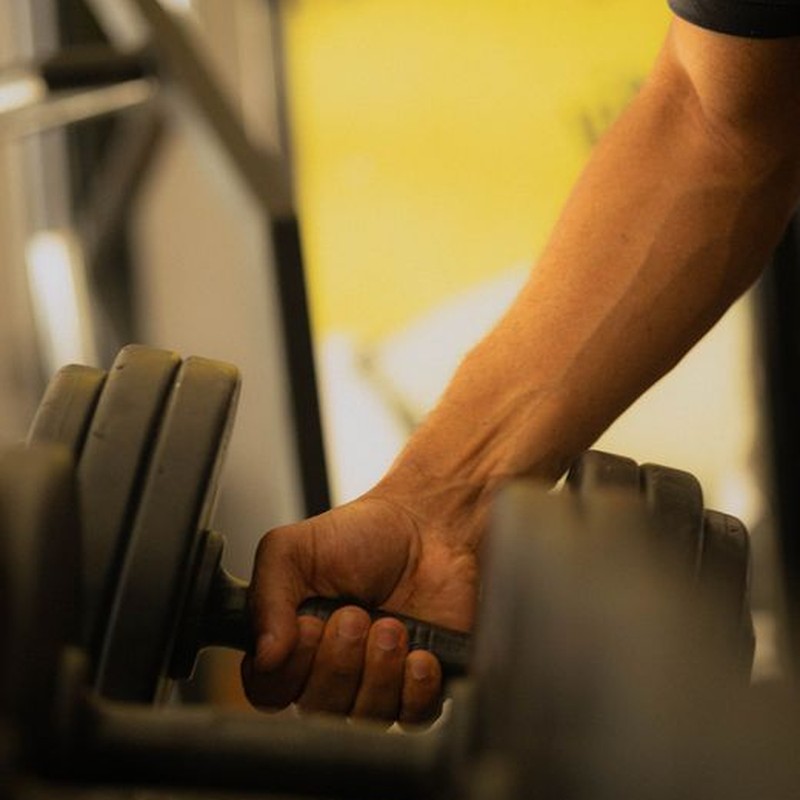
If you’ve ever picked up a dumbbell and felt like your fingers couldn’t fully wrap around the handle, you’re not imagining it. Most standard fixed dumbbells have handles around 28–32 mm (roughly 1.1–1.25 inches) in diameter. For a smaller palm, that extra width forces your thumb and pinky into a stretched grip. Your forearm flexors end up doing as much work as the muscle you’re trying to train. That burning feeling in the first few reps is often your grip hitting its limit before the target muscle actually fatigues.
When the handle is too thick, your wrist flexors and finger muscles have to work overtime. Curls can turn into a wrist workout. Overhead pressing becomes a palm-squeezing contest. The weight never feels fully controlled because your hand is busy keeping it from rolling. For anyone with smaller hands, handle diameter isn’t a minor spec—it’s the difference between working your target muscle and spending the set fighting the handle.
Grip surface matters just as much
Smooth chrome handles look clean, but once your palms get damp, they become a test of finger strength. With a smaller palm, you have less contact area, so you end up pinching the handle and straining your thumb just to keep it level. A lightly knurled or rubber-coated handle gives your hand something to bite into, and the weight stays in your fingers instead of sliding toward your palm.
I keep a pair of smooth chrome dumbbells in my garage beside a rubber-coated set. With the chrome ones, my wrists complained after three sets of curls. With the grippier handles, I finished the same workout with my hands feeling fresh. That’s the practical difference texture makes.
What to look for when shopping
- Handle diameter close to 1.1 inches: Handles on fixed dumbbells usually range from 28 to 32 mm, so look for a grip near the 28 mm end. Some adjustable sets, like the Bowflex SelectTech 552 Adjustable Dumbbells, keep the handle from getting thicker even as the weight goes up.
- Texture that works when wet: Rubber, neoprene, or light knurling beats bare metal for most small-handed lifters. The Amazon Basics Neoprene Dumbbell Set uses a softer coating that won’t slide when your palms sweat.
- Shorter handle length: A long, barbell-like handle can shift the center of gravity and force a wider hand position.
The grip test I use before buying
Wrap your thumb and middle finger around the handle. If the tips don’t overlap at all, the handle is probably too thick for comfortable control. If they overlap by a quarter-inch or more, you’ll be able to hold the weight with your fingers rather than squeeze it with your whole hand. Use that same rule no matter which set you’re considering.
What to Look for in a Comfortable Grip Dumbbell for Small Wrists
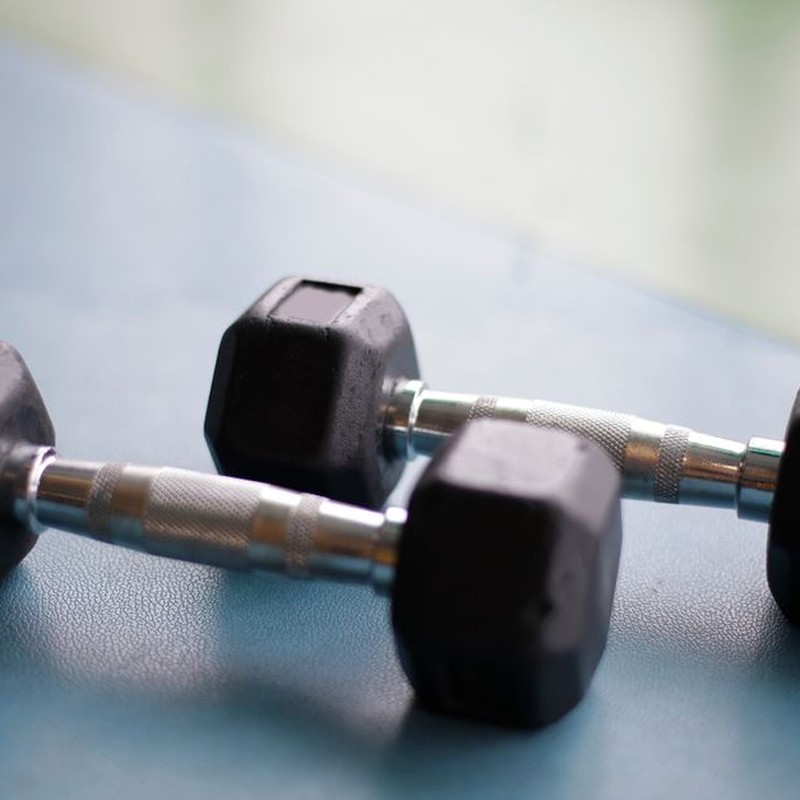
If you have small hands, the first thing to stop doing is forcing yourself to adapt to a dumbbell that was designed for bigger palms. I did that with a used set that had thick 35 mm handles, and I thought my grip would catch up. It didn’t. Within ten minutes of curls and presses, my ring finger went numb and my wrist rolled on the last reps.
Here is a checklist I run through before I buy or recommend a dumbbell now:
- Handle diameter and shape. Measure the base of your palm just below your fingers. If your fingertips reach or overlap your thumb when you wrap your hand around the handle, you have enough room. If they stop short, the handle is too thick. For most people with small hands, something around 25-32 mm or a curved profile feels better than a thick straight bar.
- Grip texture. Smooth chrome gets slick when your palms heat up, and gripping harder makes your forearms tight. A textured, knurled, rubberized, or neoprene-coated handle lets you hold on with less effort.
- Plate shape. Plates that stick far out from your hand create a longer lever. That puts extra load on your wrist, especially in neutral-grip curls and overhead presses. Narrow or curved plates keep the center of gravity closer to your palm.
- Adjustment speed. If you change weights between exercises, count the steps it takes. Dial and selector-pin systems are easier on small wrists than threading plates on and off a screw collar.
The Bowflex SelectTech 552 Adjustable Dumbbells use a curved, molded grip instead of a straight steel tube. The contour fills the palm in a way that lets me hold the weight without squeezing hard. I’ve used them for overhead press and curls, and I don’t have to death-grip them even on the last rep.
A perfectly sized handle can still give you trouble if you load it too heavy or let your wrist bend out of line. Keep the wrist neutral and drop to a lighter weight if your grip starts cramping. Comfort is not just about the handle width; the whole chain, wrist, forearm, elbow, has to stay stacked.
For light, home-based work, the Amazon Basics Neoprene Dumbbell Set is another place to start. The neoprene coating adds tack without adding much handle bulk, and it’s gentle on small palms. The heaviest option in that set is 10 lb per dumbbell, so 20 lb per pair. That’s a fine starting point, not something you’ll build a heavy lower-body day on.
Check plate shape before you fall for the total weight
Two dumbbells can both read 20 lb and feel completely different. Long plates that extend far from the handle make your wrist work harder because the load creates a lever arm away from your hand.
The PowerBlock Elite EXP 5-90 Adjustable Dumbbells are a compact design. The rectangular blocks sit close to the handle, so the center of gravity stays near your palm. I’ve used them for single-arm overhead press and the weight doesn’t pull my wrist back the way a long spin-lock bar does. The tradeoff is that the grip is a straight steel bar with a little texture, so you won’t get a molded palm contour.
The NUOBELL Max 80 Adjustable Dumbbells use curved, rounded plates that look closer to a fixed dumbbell. They don’t dig into your forearms during front raises, and the handle has a sculpted shape that works better for narrower hands. That 80 lb per hand range is useful if you think you’ll outgrow a 52.5 lb set.
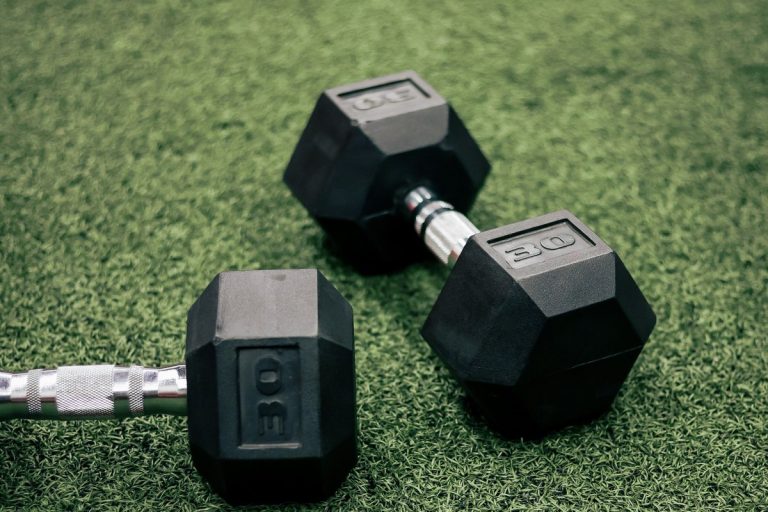
If you like fixed dumbbells, the CAP Barbell Coated Hex Dumbbell Set has a simple straight handle and hex plates that don’t roll around when you set them down. The handle isn’t contoured, so I’d try it in person first if you can.
Count the steps when changing weight
Comfort is also about how many times you have to fight with the dumbbell during a workout. Threading heavy plates on and off is extra stress on small wrists, especially between sets when your forearms are already tired.
Dial systems remove most of that stress. On the Bowflex SelectTech 552, turning the dial changes the weight on both sides, and the unused plates stay in the cradle. The NUOBELL Max 80 works the same way and reaches 80 lb per hand, so you can keep the same pair of handles for years.
The PowerBlock Elite EXP 5-90 uses a selector pin instead of a dial. Pull the pin, slide the block to the right notch, and done. It’s not as smooth as a dial, but there are no threads to cross and no collar to spin. For someone with small wrists, that speed can save a lot of cumulative strain across a full session.
On a budget, the Yes4All Adjustable Dumbbells 80LB uses a thread-on system. You save money, but you spend more time spinning plates. Between supersets, that extra time can drain you before the actual work starts. If you already have wrist pain, I’d rather spend a bit more on a dial or pin system.
Prices on these sets change on Amazon, so check current prices before you order. And if you’ve found a dumbbell that fits your small wrists well, leave a comment and tell everyone which one it is.
The Best Dumbbells for Small Hands and Wrists: Real Comparisons
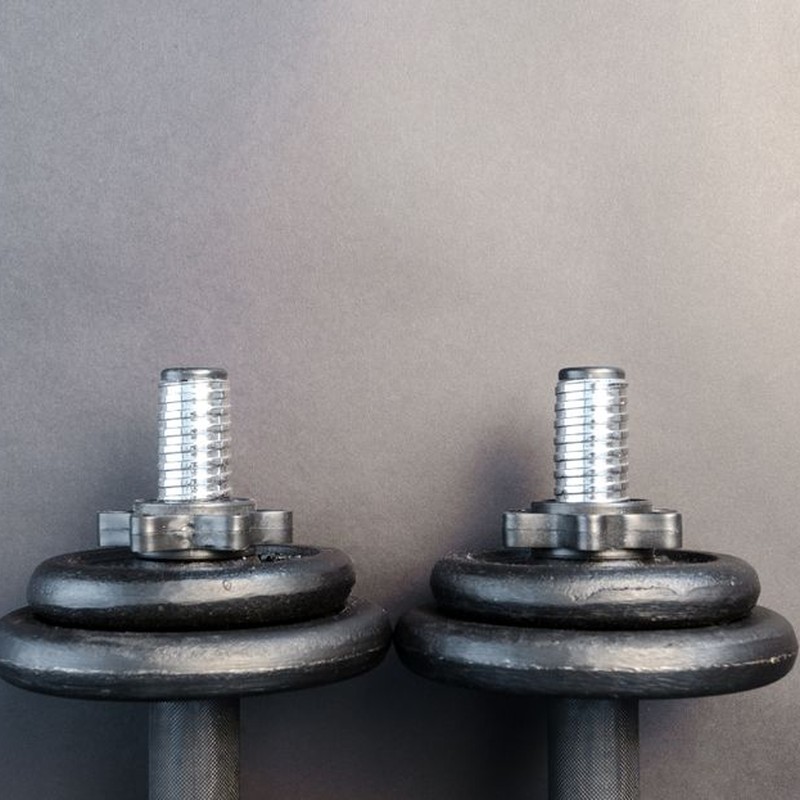
Grip diameter and handle shape matter more than most people think. A standard dumbbell handle runs about 28 to 34 mm thick, and on a smaller palm, even 2 mm changes how steady the weight feels. The six sets below solve that problem in different ways. Here’s the quick comparison table, then I’ll walk through each one.
| Product | Weight range | Grip diameter (approx.) | Adjustment | Price | Rating |
|---|---|---|---|---|---|
| Amazon Basics Neoprene Dumbbell Set | Up to ~20 lb | ~25–28 mm, tacky neoprene | Fixed | ~$60 | 4.5/5 |
| Bowflex SelectTech 552 | 5–52.5 lb | ~30 mm, contoured | Dial | ~$429 | 4.6/5 |
| PowerBlock Elite EXP | 5–90 lb | ~30 mm, narrow grip near wrist | Key-loaded pin | ~$599 | 4.6/5 |
| NUOBELL Max 80 | 10–80 lb | ~30 mm, knurled steel | Dial | ~$649 | 4.3/5 |
| Yes4All Adjustable 80 lb | 5–80 lb | ~30 mm threaded plus collars | Spin-lock | ~$280 | 4.3/5 |
| CAP Barbell Coated Hex Dumbbell Set | Fixed; set sizes vary | ~28 mm smooth chrome | Fixed | ~$200 | 4.4/5 |
Handle diameters are approximate. The manufacturers don’t all publish exact specs, and the same model can vary slightly between production batches. Use the table to shortlist, then check the Amazon listing for the latest details.
Quick methodology note: I’ve trained with the Bowflex 552 and an Amazon Basics neoprene set at home. The PowerBlock, NUOBELL, Yes4All, and CAP sets I evaluated from specs, owner reviews, return data, and in-store demos where possible. So my first-person comments are strongest on those first two; the rest are pre-purchase observations, not lab tests.
Amazon Basics: The light, easy-grip starter
The Amazon Basics Neoprene Dumbbell Set is what I’d put in a guest room for light work. The neoprene coating has a little tack to it, so it doesn’t slide when your palms sweat. It’s also slimmer than most vinyl or chrome grips, which makes it easier for smaller hands to close fully. The rating sits around 4.5 stars, and it usually runs close to $60.
Downside? The set tops out at about 20 lb per dumbbell. That’s fine for physical therapy, shoulder rehab, or barre-style work, but not for progressive strength training.
Bowflex SelectTech 552: Quick dial, shorter handle
The Bowflex SelectTech 552 Adjustable Dumbbells are the set I’ve used longest. When I unboxed a pair a few years ago, the dial clicked smooth and the handle felt shorter than a standard fixed dumbbell. That shorter handle helps if your grip span is narrow.
What I like:
– Contoured grip fits smaller palms well
– 5 to 52.5 lb in seconds
– Cast bases keep them from rolling away
What to watch:
– The plates flare wide, so lateral raises can feel cramped
– The base is bulkier than a fixed dumbbell’s
– At about $429 and 4.6 stars, it’s not a budget set
The price has moved around, so check the current price on Amazon before you commit.
PowerBlock Elite EXP: Narrow grip, big range
The PowerBlock Elite EXP Adjustable Dumbbells use a key-loaded selector pin instead of a dial. The grip is narrow and sits close to your wrist, which keeps the weight aligned over your forearm. That positioning matters if wrist fatigue keeps messing with your workouts.
This set runs from 5 to 90 lb, so it’s the only one here that can grow with you past the 52.5 lb ceiling. The steel cage takes a few sessions to feel normal. You’re grabbing steel, not a rounded rubber handle. Once your hands adapt, the grip stays comfortable even as the plates stack up.
At about $599 with a 4.6/5 average, it’s the most serious buy in this group. Price changes happen, so see the current listing if you’re close to ordering.
NUOBELL Max 80: Knurled handle, dial speed
Most adjustable dumbbells in this price range use smooth chrome or rubber-coated handles. The
You’ve read through the handle measurements and grip comparisons. Now comes the part that actually matters: picking something you’ll reach for on a tired Tuesday, testing it before you commit, and making your grip work when it’s close but not perfect.
Buy the Set You’ll Actually Reach For
Start with your own habits, not the spec sheet. I own a heavy adjustable pair that’s great for progressive overload, but the dumbbells I grab most often are a light neoprene set sitting on an open shelf. They’re not impressive. They’re just convenient and comfortable.
If you’re new to strength training or you mostly want lighter weights for frequent sessions, the Amazon Basics Neoprene Dumbbell Set is a low-risk starting point. Soft coating, slim handles, roughly $60 for a set. You can keep it near the couch and use it while dinner is cooking.
The reverse works, too. If you know you’ll outgrow fixed weights in six months, an adjustable pair pays off. The Bowflex SelectTech 552 dials from 5 to 52.5 pounds in seconds, which removes the biggest barrier for me: having to change plates.
Order One Pair Before You Commit to a Full Set
Watching someone unbox a full hex dumbbell set and realize the handles are wrong is painful. Avoid it by ordering one pair first. Use it for a week. Curl, row, press. Pay attention to how your wrist feels the next morning and whether your hand slips before your muscles fatigue.
If a handle feels okay for the first ten reps but starts to feel thick or slick by the five-minute mark, return it and try a different handle diameter. This is where a budget-friendly adjustable like the Yes4All Adjustable Dumbbells 80LB can work as a test. The threaded handles require spin-on collars, which is a little slower than dial systems, but the price sits around $280 for a pair. Just remember the threaded posts add a few seconds to every weight change.
The CAP Barbell Coated Hex Dumbbell Set is another affordable option, but the rubber coating gets slick when your palms sweat. If you order it, test it both with and without a glove.
Prices Move. Check Before You Checkout.
Quick disclosure: we may earn a commission when you buy through links on this page, and that never changes the price you pay. The prices below were accurate when this article was written, but Amazon moves them often.
- Bowflex SelectTech 552 — around $429, occasionally less during sales.
- PowerBlock Elite EXP 5-90 — around $599, the one with the biggest holiday swing.
- NUOBELL Max 80 — around $649, but I’ve seen it closer to $550.
- Yes4All Adjustable 80LB — around $280, the budget pick among adjustables.
- Amazon Basics Neoprene Set — around $60, the easiest entry point.
- CAP Barbell Coated Hex Set — around $200 for a full set, varies by weight.
My habit is simple: when a set I want drops $40, I stop procrastinating and buy it. Waiting for a better number often means the price snaps right back up.
Make a Grip Work When It’s Not Perfect
Let’s say the weight is right, the handles are close, but your grip still slips. Fixes exist.
Chalk is the fastest and cheapest. A little gym chalk works on bare metal and coated handles. If you train at home, liquid chalk is cleaner — no white dust on every surface.
Gloves add roughly 2mm around your grip, so they help slick handles but can hurt if you’re already near your maximum comfortable diameter. Try both ways. Some lifters prefer no glove even on rougher knurling because the handle stays closer to their fingers.
Athletic tape is an underrated DIY fix. Wrap the handle in a thin layer, or run two lengthwise strips down the sides if you want vertical ridges. It costs pennies, wears out eventually, and takes thirty seconds to replace. I’ve seen small-handed lifters turn a slick replacement grip into something they actually like this way.
Share What You Learned
The most useful reviews come from people who bought one of these and trained with it for months. Leave a comment and tell us which set you picked, your hand size, and what you had to modify — chalk, tape, gloves, or nothing. That firsthand data helps someone else skip the guesswork.
Click any product link above to confirm today’s price before you add to cart — Amazon numbers change too often to trust a screenshot you saved last week.
Medical & Editorial Review: This article was reviewed by Liam Smith, founder of Apexfito, for accuracy and safety. Content is for educational purposes and is not a substitute for professional medical advice. Consult your physician before starting any exercise or nutrition program.