The Best Cardio Workouts for People Who Hate Running
Full disclosure: Some links in this article are affiliate links. We may earn a small commission at no extra cost to you if you make a purchase through them. Our recommendations are based on what real users report, not on commission size.
Why Cardio Doesn’t Have to Mean Running
If the thought of lacing up for a three-mile run makes your stomach drop, you’re not alone. I’ve spent years in the gym watching people grind through treadmill sessions with faces that look like they’re serving a sentence. Somewhere along the way, we all got the message that running is the gold standard for cardio, that anything less doesn’t count.
That message is wrong.
Here’s what cardio actually is: any activity that makes your heart and lungs work harder. Your cardiovascular system doesn’t care whether your feet are pounding pavement or pushing pedals. It doesn’t check your GPS watch. It responds to the demand you place on it, plain and simple.
Steady-state cardio, interval training, cycling, swimming, rowing, hiking, dancing, even carrying groceries up three flights of stairs — all of it counts. The moment your breathing deepens and your heart rate climbs, you’re doing cardio.
The Talk Test: Your Built-In Fitness Gauge
Forget heart rate monitors and fitness trackers for a second. The most reliable tool for knowing whether you’re in the cardio zone is already built in: your ability to talk.
Here’s how it works. If you can sing the chorus of your favorite song while working out, you’re moving too easily. That’s a warm-up pace. If you can hold a conversation but need to pause for a breath every few words, you’re exactly where you should be — the moderate-intensity cardio zone. And if you can’t get more than a couple of words out before gasping, you’re working at high intensity, which is great for short bursts but not sustainable for a full session.
I’ve used the talk test with clients for years, and it never fails. It removes the guesswork and the pressure. You don’t need to hit a specific number on a screen. You just need to listen to your own breathing.
Why Running Isn’t the Only Answer
Running has one major drawback that rarely gets discussed honestly: impact. Every foot strike sends a shockwave through your ankles, knees, hips, and lower back. For some people, that’s fine. For a lot of people — especially beginners, older adults, or anyone carrying extra weight — that impact causes real joint pain and can turn cardio into a painful chore.
The research here is solid. One large study followed more than 48,000 runners and walkers for over six years and found that when total calorie burn was similar, walking produced the same reductions in high blood pressure, high cholesterol, and diabetes risk as running. Randomized trials comparing moderate-intensity cycling and swimming with running have also found comparable gains in aerobic fitness and blood pressure, with far less joint discomfort.
There’s a catch, though. Those comparisons work because the total effort matches — and matching it takes longer with gentler activities. A 15-minute easy stroll isn’t the same workout as a 15-minute run, and your fitness tracker’s “calories burned” readout is only an estimate, often off by 20 percent or more. Use it to spot trends, not to keep score.
Running also deserves credit for one thing cycling and swimming can’t fully replicate: the impact helps build bone density. So this isn’t about trashing running. It’s about taking away its title as the only exercise that counts.
That’s freeing. It means you can choose cardio you actually enjoy. And the best cardio for you is the one you’ll actually do more than once.
If you love the idea of gliding through a pool, swim. If you want to crush hills on a bike, cycle. If you’d rather crank up a dance playlist in your living room, do that. All of these raise your heart rate, build your endurance, and protect your joints while they’re at it.
Start with a 10-minute session of whatever activity you want to try, and use the talk test to find your pace. That’s it. No need to plan a 45-minute workout or buy fancy gear. Ten minutes of honest effort, three or four times a week, is a legitimate starting point. Once that feels comfortable, bump it to 15 minutes. Then 20.
The version of cardio that sticks is the version you don’t have to talk yourself into. Give yourself permission to drop the running agenda and move in a way that feels good. Your heart doesn’t know the difference — but your hips, knees, and motivation definitely will.
When you’re ready to try something new, it helps to have the right gear without overspending. A quick look at current prices on Amazon for a jump rope, a recumbent bike, or a swim training buoy will show you what fits your budget. And after you’ve tried one of these workouts, come back and leave a comment — your experience might be the nudge someone else needs to find their version of cardio.
The Best Low-Impact Cardio Options That Don’t Feel Like Work
Cardio doesn’t have to mean pulling on running shoes and forcing yourself to jog. I spent years treating the treadmill like a punishment, and all that did was make me avoid cardio altogether. Then I tried a few no-running options and found out my heart was working just as hard, while my joints were a lot happier. These four are the ones that stuck.
If you’re new to any of these, start on the easy side. Use a lower incline or lighter resistance, aim for just 10 to 15 minutes, and build up once it feels manageable. This is about making cardio a habit, not proving something on day one.
1. Incline Walking
Put a treadmill on a steep incline and keep the speed reasonable, and a boring walk turns into a posterior-chain burner. I set my home treadmill to 10 percent at 3.2 mph. After 15 minutes, my quads are working, my breathing is deep, and I can still follow a podcast without hating life. On a 10 percent grade, a brisk walking pace can burn close to the same calories as a slow jog on flat ground, but without the landing shock. The difference is your body weight: every step lifts you upward.
- Start at 5 to 6 percent for your first few sessions if you’re new to inclines. Give your back and calves time to adjust.
- Use a speed you can maintain for at least 20 minutes before adding more incline.
- Stay tall and don’t lean on the handrails. Let your glutes and hamstrings do the work.
- Outside, find a hill that takes 60 to 90 seconds to climb. Walk up hard, walk down easy, and repeat for 8 to 10 rounds.
2. Cycling
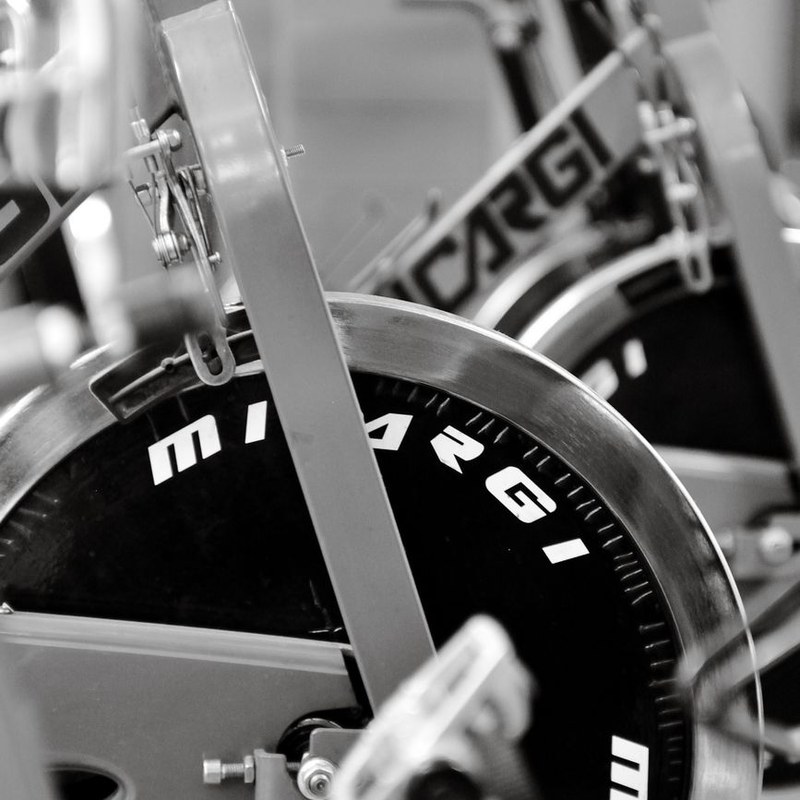
Cycling is the closest thing to recess that I can do on a regular basis. On a spin bike, you control the resistance, so you can dial it back when you’re just starting. Light resistance with a fast pedal stroke raises your heart rate without crushing your legs. Crank it up and stand for a few seconds, and you’ve got a leg-focused interval. When you ride outside, the scenery changes and time moves faster. I’ve done 45-minute rides that felt like 20 because I was too busy looking at trees and front porches to think about effort.
- If you’re new to spinning, start with low resistance. Work on a smooth, quick pedal stroke before adding tension.
- Try 5 rounds of 1 minute fast spin, then 2 minutes easy spin.
- On a real bike, shift to a lower gear on hills instead of forcing the pedals.
- Sit tall with a flat back and let your legs carry the work.
3. Rowing
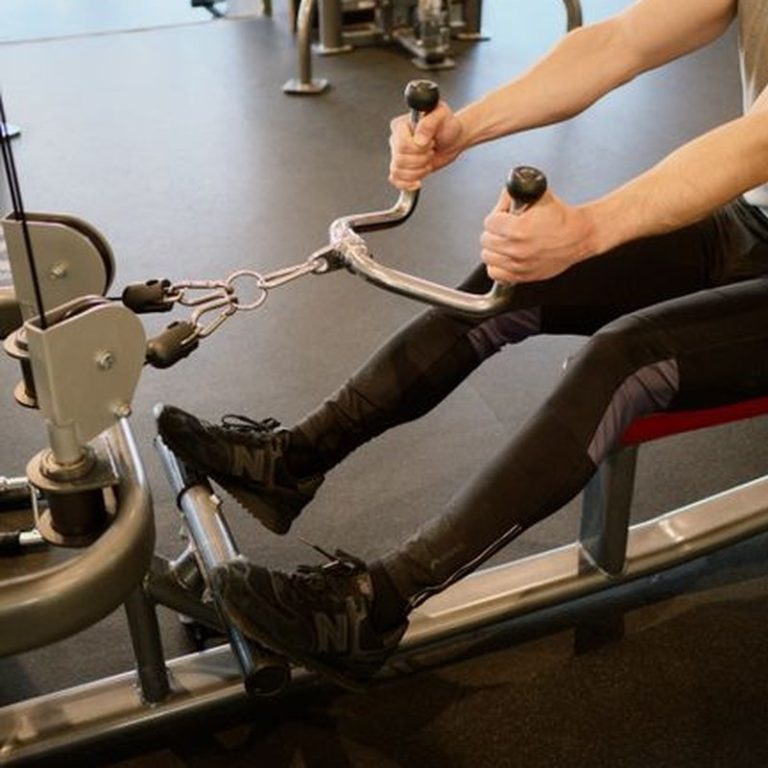
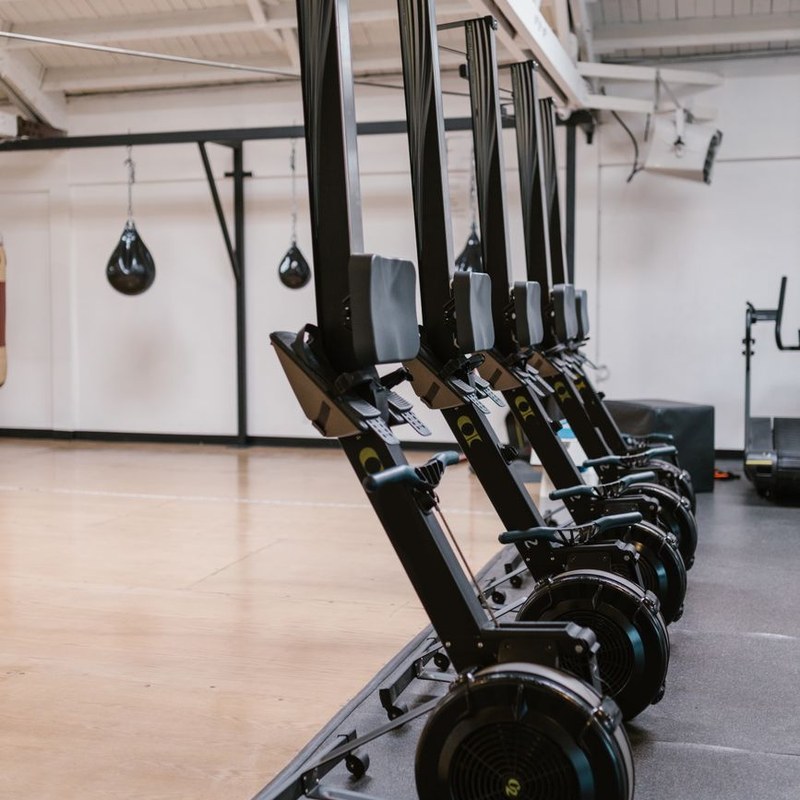
Rowing looks simple, but the rowing motion is a full-body sequence. You push with your legs, swing your torso back, then bend your arms to pull the handle to your sternum. On the way forward, you reverse the order. Each stroke recruits your quads, hamstrings, glutes, core, and upper back. That’s why a 10-minute row can feel as demanding as a 25-minute jog, with zero impact. I got hooked on rowing during a winter when my knees were angry and I could set up the erg in front of a TV and do intervals without pain.
- Start with a low damper setting and prioritize smooth strokes over hard pulls.
- Begin every stroke by pushing with your legs, not yanking with your arms.
- Keep the chain level and pull the handle to your chest, not your stomach.
- Keep the effort in a range that lets you hold 22 to 24 strokes per minute.
4. Swimming
Swimming takes the impact away completely because water supports your whole body. It works your heart and lungs while taking the compression off your joints. That makes it an excellent pick if you have back pain, sensitive knees, or just don’t want to end up drenched in sweat by your warm-up. The pool also keeps you cool. I swam twice a week when my knees flared up, and I came out feeling loose instead of beat up.
- Swim in short chunks (25 meters or 25 yards) instead of forcing yourself to do continuous laps from the start.
- Use a pull buoy between your thighs to focus on your upper-body pull.
- Rest 20 to 30 seconds between laps, then slowly shorten that rest as your stamina builds.
You don’t have to pick just one. Try a different activity each week and see which one you don’t want to skip. If you need gear, check current prices on Amazon for a treadmill with adjustable incline, a spin bike, a rowing machine, or a simple pull buoy. Then come back and share in the comments which option felt least like work. I want to know which one surprises you.
Fun Cardio Workouts That Sneak in the Conditioning Work

If the sight of a treadmill makes you want to turn around and walk out, running probably isn’t the answer for you. I spent years forcing myself to jog because I thought it was the only real cardio. Then I discovered jump ropes, dance classes, pickup games, and hiking. Those workouts made me stop looking at the clock, and they improved my conditioning more than the slow treadmill slogs I used to suffer through.
Find something that keeps your attention and your feet moving. When you care about learning the choreography or getting the ball back, your brain takes over. The next thing you know, twenty minutes have passed and your heart has been working the whole time.
Jump Rope: The Cheapest Interval Machine You Own
Jump rope intervals are one of the fastest ways to get winded without leaving your driveway. Thirty seconds on, thirty seconds off, and repeat for ten to fifteen minutes. That simple setup builds serious conditioning, and you don’t have to entertain a single other person or wait for equipment at a gym.
I keep a basic speed rope in my backpack and use it whenever I have a spare ten minutes outside my apartment door. Start with a gentle bounce and keep your elbows close to your sides. If jumping for thirty seconds feels like a lifetime, jump for twenty seconds and rest for forty. Add five seconds every few sessions until you can handle the full thirty. After five rounds, take a longer break, then repeat for another five rounds if you’re still feeling good.
Because it’s so short, you can honestly do this on a work break. Change into a pair of shoes with decent cushioning, find a flat section of driveway, and go. The rope is cheap, and it fits in a pocket. If you’d rather work up a sweat indoors, the same interval works on a lightweight mat or a garage floor with enough ceiling height.
Dance Cardio: The Workout That Hides in the Choreography
Dance cardio classes work because you’re too busy trying to nail the steps to think about how hard your body is working. There’s a big difference between a slow choreography practice and a dance cardio session. The second one is built to keep your heart rate up: wide lunges, quick side steps, punches, jumps, and lots of arm work. You’ll be laughing when you mess up, and you’ll still leave drenched in sweat.
Start in your living room with a free video or an app. I tried one of the popular dance routines while my kitchen timer ran in the background, and I completely missed the halfway beep. That’s the sign it’s working. Give yourself permission to be bad. The people in the class, or on the screen, are too focused on not tripping to worry about what you’re doing.
If you prefer a live class, look for one with the words ‘dance fitness’ or ‘rhythm cardio’ rather than a technical style. The teacher should cue the steps clearly and offer easier versions of jumps. Modify whatever you need. The goal is not perfect choreography; it’s a heart rate that stays up for thirty or forty minutes. If that means you do the side steps while everyone else runs around in a circle, that’s still cardio.
Pick-Up Sports: Interval Training in Disguise
Basketball, soccer, and ultimate frisbee deliver natural bursts of sprinting, jogging, stopping, and recovering. The pattern mirrors interval training, but you don’t have to plan it. The game does that for you. You’re also moving in every direction, which is something a treadmill can’t offer.
Pick-up games are fine at any skill level if you find the right group. I used to show up to a weekend basketball game where the only requirement was ‘try on defense.’ Nobody cared if you missed a shot. The effort was enough. When a game isn’t available, you can create your own version. Shoot hoops by yourself with a rule: after every shot, sprint from the free throw line to half court and back. Kick a soccer ball against a wall and chase it like a dog. For ultimate frisbee, look for a local beginner group and tell them you’re new. The social side makes you forget that you’ve been running around for an hour.
Hiking on Uneven Trails: The Cardio That Comes With a View
Hiking on uneven terrain is different from walking on a flat road. Your legs and lungs have to keep adjusting to constant changes in the ground. You’re stepping over roots, pushing up short climbs, and balancing on rocks. That works your balance and ankle strength while still giving you a full endurance session. On a steep enough trail, you can get your heart rate just as high as a run, without the pounding impact.
Pick a trail with some elevation change instead of a flat rail trail if you really want your heart working. Start with twenty or thirty minutes of walking or slow hiking. Add a backpack with water and maybe a light jacket to make the effort slightly harder. The beauty of hiking is that the grade and the speed decide how difficult it is. Last spring, a downhill stretch that looked easy forced my legs to brake constantly. The next day my ankles and calves were telling me I’d found new muscles.
Hiking also works well for people who don’t consider themselves athletes. All you need is decent shoes and a trail that matches your fitness level. You’re not competing with anyone, and you can pause to look at a view without losing the benefits.
A Four-Session Week That Comes Later
If you’re new to regular cardio, start with two or three sessions a week instead of jumping into a full schedule. Choose one activity from the options above and do it twice or three times, with a day of rest or an easy walk in between. Once that feels manageable, this four-day version can help you build more conditioning:
- Monday: Jump rope intervals. Warm up with two minutes of easy bouncing, then do 5 rounds of 30 seconds on and 30 seconds off. Rest two minutes, then repeat.
- Wednesday: Thirty minutes of dance cardio in your living room or at a class. Don’t worry about getting the steps perfect. Shoot for getting breathless at least a few times.
- Friday: Forty-five minutes of pick-up basketball, soccer, ultimate frisbee, or a solo sports drill with sprints and rest periods.
- Saturday: A one-hour hike on a trail with hills. You can walk at a brisk pace and still call it cardio.
That schedule mirrors the mix you’d get from a running plan: interval work, longer moderate effort, and one session that works your coordination and top speed. The only difference is you may actually have fun.
If four days feels like too much, cut Friday or Saturday and keep the rest. The point is to notice that movement you enjoy still counts as conditioning. You don’t need to suffer to make progress.
Before you buy any gear for these, check current prices on Amazon. Jump ropes, hiking shoes, and even small hand weights for dance workouts often have price changes you can catch. And if you’ve tried any of these and surprised yourself, drop your experience in the comments. Which one made you forget you were working out?
How to Start a Cardio Routine Without Running (and Stick With It)
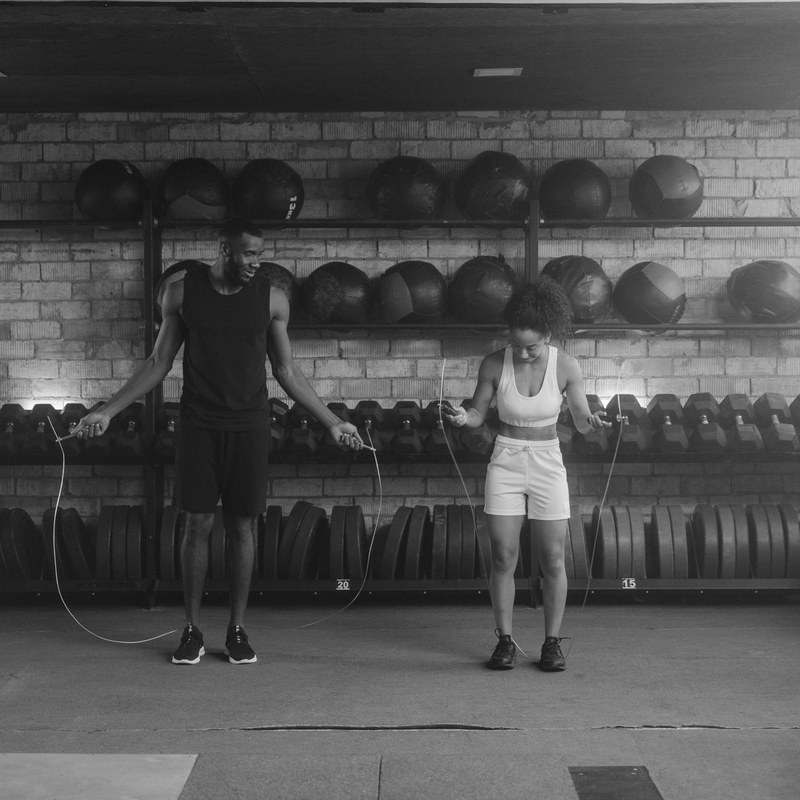
Starting a cardio routine without running is less about willpower and more about removing friction. I spent years avoiding cardio because I assumed it meant treadmill intervals or jogging in the dark. The minute I swapped in activities I actually wanted to do, my whole attitude shifted. No 5K required.
Start with Two or Three Sessions a Week
If you’re brand new to regular cardio, two or three sessions a week is the default plan. If you’re starting from total zero, begin with two and add the third after a couple of consistent weeks. Most people I know who quit cardio did it by trying to go hard too fast. Don’t do that. The goal for the first month is to show up two or three times and let your body adjust. Consistency beats intensity every single time.
For the first two weeks, keep each session around twenty minutes at an effort level of 5 or 6 out of 10. That effort level means you can say a short sentence but not carry a comfortable conversation. It should feel manageable, not like you just fought a bear. After two weeks, bump the time to twenty-five minutes and let your effort drift up to 6 or 7. This gradual ramp is what builds a habit without creating soreness that makes you want to skip.
Keep at least one rest day between cardio sessions in those first few weeks. Your body gets stronger while you recover, not while you’re in every session. A short walk or easy stretching on rest days is fine if you want to move.
Pick One Activity You Enjoy and One You Can Tolerate
You don’t need to fall in love with cardio. You just need one activity that feels like a treat and one that doesn’t make you sigh. For me, rowing was the treat. I genuinely looked forward to the rhythmic pull and the way it worked my legs and back. My tolerable backup was an incline walk on the treadmill, which I could do while listening to a funny podcast without watching the clock.
If you’re still looking, try dance cardio, cycling, swimming, kickboxing, basketball, hiking, jumping rope, or a stair climber. Pick one that you would actually move your schedule around for. Then pick a second activity that you can tolerate on a day when the first isn’t possible. Swap them during the week. Having two options kills the boredom excuse before it starts.
Track the Little Wins
Tracking your progress doesn’t need a spreadsheet or a fancy app. I use a small notebook and it works beautifully. After every session, write three things: the time, your effort level from 1 to 10, and how you felt afterward. Maybe you noticed your legs were heavy before you began, or you felt surprisingly clear-headed after twenty minutes on the elliptical. That is valuable data.
Your progress doesn’t have to be measured in miles, calories, or split times. After a few weeks, scroll back through the pages. You will likely see that a session that once felt like a 7 now feels like a 5. That is progress no treadmill can measure. Last winter, I logged every no-running workout in a notebook. Seeing that string of small wins was the reason I kept going during a week when I would have rather stayed under my blanket.
Invest in Decent Shoes and Gear
Good gear won’t make you love cardio, but bad gear can make you resent it. One spin class in old running sneakers gave me a foot ache that lasted days. Running shoes have too much squish for cycling; cross-trainers or flat-soled shoes work far better. The same goes for any activity. If you’re doing dance cardio, wear shoes that let you pivot. If you’re hiking, get shoes with solid grip. A jump rope with proper weighted cables feels completely different from a cheap one from a random bin.
You don’t have to buy everything at once. Find the one thing that irritates you most and fix that first. A better water bottle, padded bike shorts, or shoes that don’t rub can all make showing up easier.
A Simple Six-Week Progression
Here is a realistic progression for someone starting from zero or coming back after a long break. If you have been active recently and the sample week in the previous section felt manageable, you can use that sample week as your base and treat this plan as a fallback. For everyone else, start here.
- Weeks 1-2: Two sessions per week, 20 minutes each, effort 5-6 out of 10.
- Weeks 3-4: Three sessions per week, 25 minutes each, effort 6-7 out of 10.
- Weeks 5-6: Three sessions per week, 30 minutes each. If you want a fourth session, add it only after completing three consistent weeks.
- After week 6: Add 3-5 minutes or one short interval (30 seconds faster, 90 seconds easy) every other session.
Keep at least one rest day between cardio sessions during these six weeks. If a session feels closer to 8, give yourself an extra recovery day before your next one. There’s no award for grinding through soreness.
This might feel slower than you expect. That’s a feature, not a bug. Slow progression lets you wake up the next morning and actually want to exercise again. If you miss a session, don’t try to make up for it with a twice-as-long workout the next day. Just get back on your normal schedule and let the habit keep its rhythm.
Mindset Tricks That Keep You Showing Up
Approach cardio as an experiment, not a punishment. Before each session, tell yourself you will do just five minutes. If you still want to stop after five, you can. In my experience, most people keep going once they have started. And on the days you don’t, you’ve still moved your body for five minutes, which is better than zero.
Another approach is to make the next step stupidly obvious. Lay out your workout clothes before work. Put the jump rope next to your favorite chair. Pre-book a weekly class and let the calendar hold you accountable. Motivation usually shows up after you begin, so make starting the only thing you have to think about.
Remember, this routine is yours. You don’t need to run, you don’t need to prove anything, and you don’t need to follow a rigid plan. You just need to move your body in a way that makes you feel alive, and then do it again. If I can go from hating cardio to actually looking forward to my rowing sessions, you can find something that works for you.
What no-running workout finally made cardio click for you? Drop a comment below. Your story might be exactly the push someone else needs.
Medical & Editorial Review: This article was reviewed by Liam Smith, founder of Apexfito, for accuracy and safety. Content is for educational purposes and is not a substitute for professional medical advice. Consult your physician before starting any exercise or nutrition program.