Best Deadlift Shoes: Flat, Firm, and Stable (2026)
Best Deadlift Shoes: Flat, Firm, and Stable (2026)
Why Your Footwear Actually Matters for Deadlifts
You can have the perfect program, the right coach, and a dialed-in nutrition plan
, but if you’re pulling heavy deadlifts in cushioned running shoes, you’re leaving
pounds on the bar. That thick EVA foam in your sneakers absorbs force like a shock
absorber, which is great for jogging, but terrible when you’re trying to drive force
into the floor during a heavy pull.
>The American College of Sports Medicine emphasizes that force production starts at
the ground. When you deadlift, you need a stable base that lets you recruit posterior
chain strength without energy leaking through compressible soles. A soft shoe creates
a wobbly foundation, forcing your body to compensate with altered mechanics. Over
time, that instability can creep upstream, affecting knee tracking, hip position
, and even low back neutrality.
>Many busy adults stepping back into the gym after a break make this mistake without
realizing it. You grab the athletic shoes you already own, the ones you wear for
weekend errands and light cardio, and you jump straight into barbell work. The problem
isn’t effort; it’s physics. You cannot push effectively into a surface that gives
way beneath you. So what should you wear instead? The answer is simpler than the
marketing departments want you to think: flat, firm, and stable.
What “Flat, Firm, and Stable” Actually Means
Let’s break this down because these terms get thrown around without much context.
Flat means minimal heel-to-toe drop. Running shoes often have 8-12mm of drop,
which pitches your weight forward and changes your starting position. For deadlifts
, you want zero drop or close to it, keeping your center of mass balanced over mid
-foot. The National Strength and Conditioning Association notes that starting position
directly affects bar path and lumbar stress, so even a small heel lift can shift
mechanics in ways that add up over months of training.
Firm refers to midsole compression, or rather, the lack of it. You want a sole
that doesn’t squish under load. Materials like dense rubber, hard canvas, or thin
leather transfer force directly from your feet to the floor. If you can press your
thumb into the sole and feel it give significantly, it’s too soft for pulling heavy
weight.
Stable combines the two and adds a wide base. A deadlift shoe should have minimal
side-to-side movement. Your foot shouldn’t roll within the shoe, and the shoe shouldn’t
roll on the platform. The International Society of Sports Nutrition and related exercise
science literature consistently ties stable proximal bases to better distal output
. In plain terms: steady feet, stronger pull. When your base is secure, your nervous
system can devote full attention to producing force rather than correcting balance
.
The Three Categories Worth Your Money
You don’t need $200 specialized deadlift shoes. Most experienced lifters fall into
one of three categories, and two of them are budget-friendly.
Minimalist Shoes and Barefoot Trainers
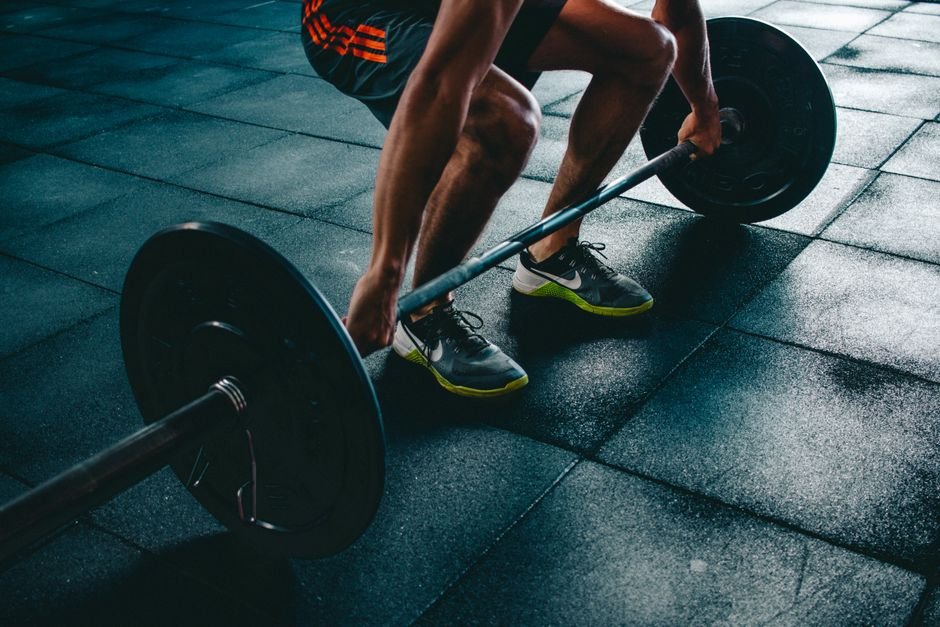
Zero-drop minimalist shoes with thin, non-compressible soles are the closest thing
to lifting barefoot while keeping your gym membership active. Brands like Vivobare
foot and Xero Shoes make options with wide toe boxes that let your feet spread naturally
under load. The thin sole puts you closer to the ground, slightly reducing the range
of motion and giving you a better feel for floor contact.
The downside? Some gym chains frown on toe shoes or anything that looks too much like
a sock. And if your gym floor is cold concrete, you’ll feel it. Transitioning to
minimalist shoes also requires patience if you’re used to heavily cushioned footwear
. Your feet and calves need time to adapt to the reduced support. But from a mechanics
standpoint, this category is as good as it gets for raw force transfer.
Wrestling and Boxing Shoes
This is the original powerlifting secret that predates the current fitness gear boom
by decades. Wrestling shoes have been popular in strength circles since the 1970
s because they check every box: flat rubber soles, zero drop, ankle support, and a
snug fit. They’re also relatively cheap, often running between $40 and $80 depending
on the brand and model.
The thin sole gives excellent ground feedback, and the high-top design adds a feeling
of security without restricting ankle mobility. Many elite powerlifters still pull
in wrestling shoes because they do exactly what they need to do and nothing else
. There’s no gimmicky technology, no proprietary foam formulas, just a thin layer
of rubber between you and the floor. If you’re on a budget and want a dedicated lifting
shoe, start here. Look for classic models from Asics or Adidas, which tend to run
true to size and last for years.
Budget-Friendly Cross-Training Options
Not everyone wants a shoe only for deadlifts. If you need one pair for lifting and
light conditioning, look for cross-trainers with firm, low-profile soles. Avoid anything
marketed for “running” or “cushioning.” Check the specs carefully: you want heel
-to-toe drop under 4mm and minimal midsole give.
Some budget options from major brands work fine if you know what to look for. Search
for firm rubber outsoles and avoid air pockets, gel inserts, or thick foam. When
in doubt, press test the sole in the store. If it compresses under your thumb, it’ll
compress under 300 pounds. For busy adults who want one shoe that handles squats
, deadlifts, and sled pushes, a firm cross-trainer is the practical compromise. Just
be honest about the sole. If it’s soft, it’s wrong for pulling days.
Common Mistakes When Choosing Deadlift Footwear
You’d think picking a shoe would be straightforward, but people consistently mess
this up. Here are the traps to avoid.
Wearing running shoes because they’re comfortable. Comfort is relative. Running
shoes feel good because they’re designed for impact absorption, not force transfer
. That same squish that protects your knees on a jog robs you of power on the platform
. Save the cushioned trainers for the treadmill and track workouts.
Assuming weightlifting shoes are better. Olympic lifting shoes have a raised heel
, usually 0.75 inches, which is fantastic for squats and cleans. For deadlifts, that
heel lift pushes you forward, increasing the demand on your low back and altering
your pull mechanics. Keep your Romaleos in the bag on deadlift day.
Ignoring fit around the forefoot. A shoe can be flat and firm but still fail if
your foot swims inside it. Excess room at the front lets your foot slide, creating
micro-movements that destabilize your base. You want a snug fit through the midfoot
and toe box without cramping your toes. If your foot moves inside the shoe, the shoe
is too big, no matter what the size chart says.
Overthinking brand names. There is no magic fabric that makes a deadlift shoe
work. A $50 pair of wrestling shoes outperforms a $180 pair of trendy trainers if
the latter has compressible soles. Focus on construction, not logos. Your feet don’t
know what logo is on the side; they know whether the surface beneath them is solid
.
Buying for looks instead of function. This one is especially common among younger
lifters, but it applies to anyone. A shoe that looks good with gym wear but fails
the press test is a waste of money. Function comes first. If it happens to look good
, that’s a bonus.
How to Test Your Current Shoes
Before you buy anything, test what you already own. Place your shoe on a hard floor
and press down hard with your hand. Watch the midsole. If you see compression, measure
how much. Anything over a few millimeters of give is too much for heavy pulling.
Next, check the heel-to-toe drop. Place the shoe on flat ground and look at it from
the side. If the heel sits noticeably higher than the forefoot, it’s adding unnecessary
forward lean to your setup.
Finally, do a single-leg balance test. Put the shoe on, stand on one foot, and close
your eyes. If your ankle wobbles excessively or you feel like you’re balancing on
a pillow, the sole is too soft or too narrow for reliable lifting. You should feel
grounded, not perched.
Putting It All Together
You don’t need a complicated setup to deadlift well. The best shoe for the job is
the one that gets you closest to the ground, doesn’t compress under load, and lets
you push through your whole foot without shifting around.
For most lifters, especially busy adults juggling work, family, and training, the
practical choice is a wrestling shoe or a budget minimalist trainer. They’re cheap
, effective, and durable enough to last years. If you already own a zero-drop shoe
with a firm sole, you’re probably set. Don’t fall into the trap of buying gear to
fix technique. Fix the foundation first.
Remember that footwear is a tool, not a replacement for good movement. A flat, firm
shoe gives you the base to pull efficiently, but you still need proper bracing, solid
hip hinge mechanics, and appropriate loading for your current strength level. The
shoe removes a barrier. It doesn’t build the pull for you.
Train smart, pull heavy, and don’t let soft soles steal your strength.
About the author: Liam Smith for accuracy and safety. Content is for educational purposes only.
Related reading: