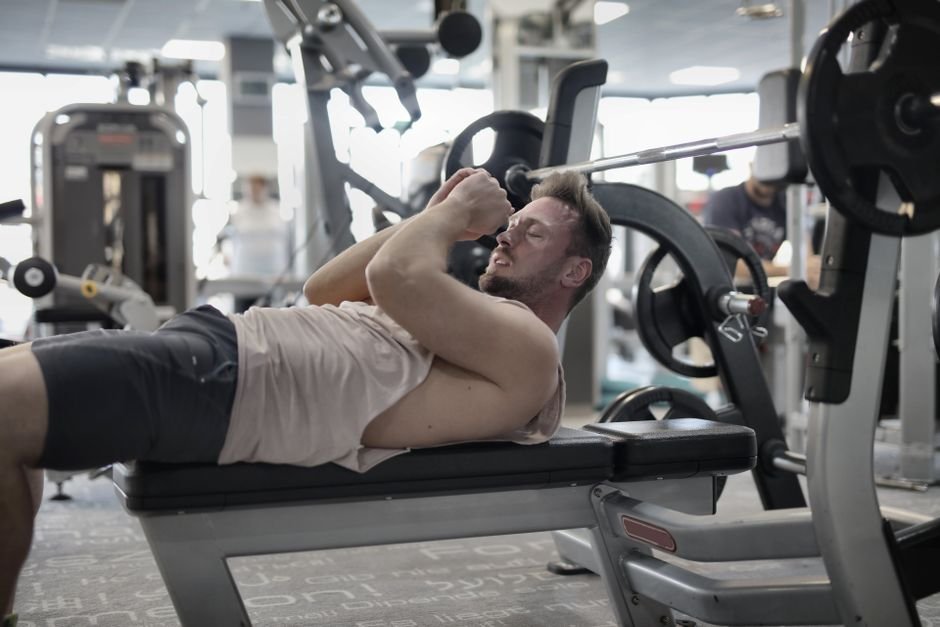
Dumbbell Vs Barbell Bench Press
Dumbbell vs Barbell Bench Press: Which Should You Do?
Walk into any gym and you will see the same scene: one person loading plates onto a barbell, another grabbing a pair of dumbbells from the rack. Both are about to bench press. Both think they are doing the best version of the exercise. But the barbell and dumbbell bench press are not interchangeable. They load your body differently, produce different results, and suit different goals.
If you train in a home gym, this decision matters even more. You only have so much space and money. Picking the right tool determines whether you build the chest and strength you want or stall out wondering why your shoulders ache and your numbers barely move.
Let us break down what each variation actually does, where each falls short, and how to choose based on what you are trying to achieve.
Strength: Why the Barbell Still Wins
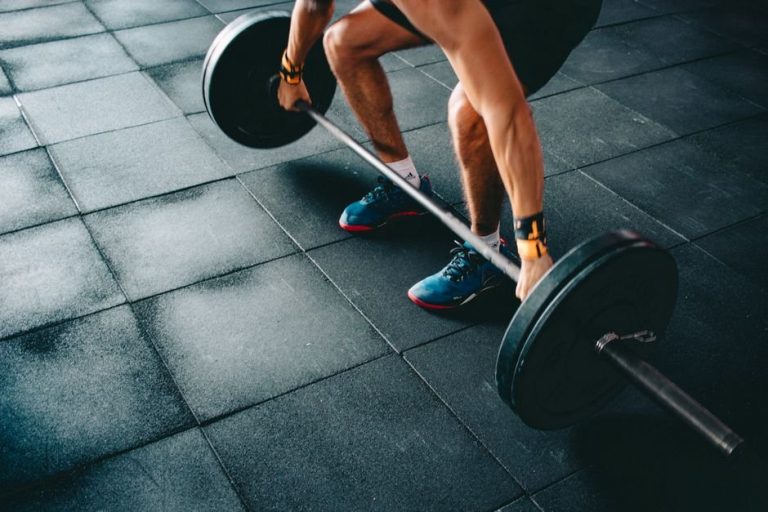
>If your primary goal is to press the heaviest possible weight, the barbell bench press is the better choice. The American College of Sports Medicine notes that multi-joint, bilateral exercises allow for greater absolute load because both limbs work together through a fixed path. A barbell locks your hands into position, which reduces the demand on smaller stabilizer muscles and lets your pecs, front delts, and triceps focus purely on producing force.
That fixed path is a feature, not a bug, when strength is the target. You can brace harder against a stable object, drive through your legs, and push more total pounds. Powerlifters and strength athletes barbell bench for a reason: it is the variation tested in competition, and it is the most efficient way to move maximum weight from your chest to lockout.
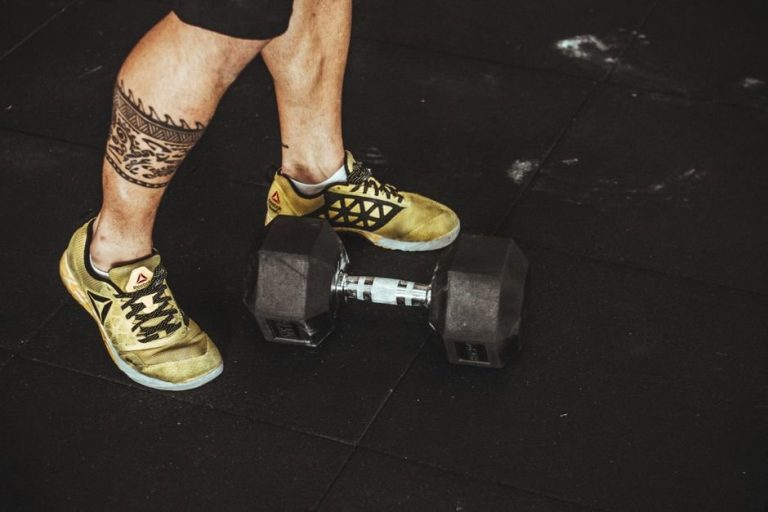
Dumbbells, by contrast, force each arm to work independently. Your body must stabilize two separate weights in space, which limits how much total load you can handle. You might barbell bench 225 pounds for reps but struggle to get a pair of 100-pound dumbbells into position. The strength ceiling is lower. For pure force production, the barbell is hard to beat.
Muscle Growth: The Dumbbell Advantage
>Hypertrophy does not always follow the heaviest weight. The National Strength and Conditioning Association emphasizes that muscle growth depends on mechanical tension, metabolic stress, and a full range of motion. Dumbbells check all three boxes in ways a barbell cannot match.
First, range of motion. With dumbbells, your hands are not fixed to a bar. At the bottom of the rep, you can lower the weights past chest level, getting a deeper stretch through the pecs. Research from the International Society of Sports Nutrition and related exercise science literature consistently links loaded stretching under tension to favorable muscle-building signals. A barbell stops at your chest. Dumbbells can keep going.
Second, the neutral grip option. Turning your palms to face each other reduces shoulder strain and shifts emphasis onto the pecs. Many lifters find they feel their chest working harder with dumbbells because the arms move more freely.
Third, each side works independently. If your right arm dominates during a barbell press, your left side can slack off. Dumbbells expose and fix those imbalances. Over time, more balanced development means better muscle symmetry and often healthier shoulders.
The trade-off is load. You will not move as much total weight. But if building chest size is your goal, dumbbells often provide a better stimulus per rep.
Stability and Shoulder Health
Your shoulders pay the price for poor exercise selection. The barbell bench press locks your shoulder blades into a specific position and fixes your grip in pronation. For some lifters, especially those with limited mobility or a history of shoulder impingement, that fixed position creates joint stress over time.
Dumbbells offer freedom. You can rotate your wrists, adjust the angle of your arms, and let your shoulders find a safer path. The International Sports Sciences Association teaches that unilateral loading and free movement at the shoulder joint often reduce chronic compression issues compared to fixed-bar pressing.
That said, dumbbells demand more from your rotator cuff and shoulder stabilizers. If those muscles are weak, you might wobble through each rep or struggle to control the descent. The barbell gives you stability; dumbbells force you to earn it.
For aging lifters or anyone returning from a shoulder injury, the dumbbell variation is usually the smarter starting point. Build control and range of motion there, then reintroduce the barbell once your shoulders feel bulletproof.
Home Gym Practicality
This is where the gap widens. If you train in a commercial gym, you have access to both. At home, you must choose.
A barbell setup requires a rack or bench with uprights, a bar, and weight plates. It takes up space. It is loud when you re-rack. You need room to safely fail a rep, ideally with spotter arms or safety pins. Good equipment costs money, and you cannot easily stash a 7-foot barbell in a closet.
Dumbbells are more forgiving. An adjustable dumbbell set takes up almost no room. You can bench on a simple flat bench without a rack. If you fail a rep, you drop the weights to your sides without getting pinned under a bar. For small apartments, garage gyms with low ceilings, or anyone training alone without a spotter, dumbbells are the safer, more practical choice.
There is also the cost factor. A quality barbell and plate set often runs higher than a good pair of adjustable dumbbells. If you are building a home gym on a budget, dumbbells give you more exercise variety for less money. You can use them for rows, curls, lunges, and overhead work. A barbell is specialized.
The downside? Adjustable dumbbells top out around 90 to 100 pounds each in most consumer sets. If you get strong, you will outgrow them. A barbell and iron plates scale to virtually any strength level. Plan for the long term. If you see yourself eventually pressing well over 200 pounds, a barbell setup becomes necessary.
Common Mistakes to Avoid
Regardless of which tool you choose, execution matters. Here are the errors that waste your time and invite injury.
Bouncing the bar off your chest. This is usually a barbell problem. Using chest rebound to sling the weight up kills tension in your pecs and risks rib or sternum stress. Pause lightly on your chest, then press.
Letting your elbows flare to 90 degrees. Whether you use a barbell or dumbbells, your upper arms should sit around 45 to 75 degrees from your torso. Flaring to a full right angle puts your shoulders in a vulnerable position. Tuck your elbows slightly and keep your shoulder blades pulled back.
Neglecting your upper back. A strong bench press starts with strong scapular retraction. If your shoulders round forward during the set, you lose stability and power. Before every rep, plant your feet, arch your upper back slightly, and squeeze your shoulder blades together as if you are trying to hold a pencil between them.
Using dumbbells you cannot control. Ego lifting with dumbbells looks like shaky reps, incomplete range of motion, and dangerous lowering speeds. If you cannot bring the weights down under control and feel a stretch at the bottom, they are too heavy. Strength on dumbbells builds more slowly than on a barbell. Respect the process.
Skipping leg drive. Your bench press is a full-body exercise, not an upper-body isolation move. Drive your feet into the floor on every rep. With dumbbells, this is harder because your body is less fixed, but you can still create total-body tension by bracing your core and pressing through your heels.
How to Decide: A Simple Framework
Stop overthinking this. Your choice depends on two things: your primary goal and your training environment.
If you want to maximize pressing strength, compete in powerlifting, or eventually handle very heavy loads, prioritize the barbell. Train it twice a week, use progressive overload, and treat dumbbell work as a secondary accessory.
If you want to build chest size, improve shoulder comfort, correct imbalances, or train in a cramped home gym without a spotter, prioritize dumbbells. Use a full range of motion, squeeze at the top, and do not worry about the total weight on the floor.
If you have access to both, rotate them. Many effective programs use barbell bench as the main strength lift and dumbbell bench as the higher-rep hypertrophy accessory. That combination gives you the best of both worlds: heavy loading and deep stretching, fixed stability and free movement, maximal strength and muscular development.
Summary
The barbell bench press is the king of absolute strength. It lets you move the most weight, progresses easily, and belongs in every serious powerlifting program. The dumbbell bench press is the better muscle-builder for many lifters. It offers greater range of motion, more shoulder freedom, and safer solo training.
Neither is wrong. The wrong choice is the one that does not match your goal, your space, or your body. Pick the tool that fits your life, execute it with discipline, and you will build a stronger, more muscular chest either way.
About the author: href=”https://www.apexfito.com/liam-smith-author-founder-of-apexfito/”>Lia m Smith is the founder of Apexfito and writes evidence-based training guides and gear reviews.
Medical & Editorial Review: This article was reviewed by Liam Smith for accuracy and safety. Content is for educational purposes only.
Related reading: