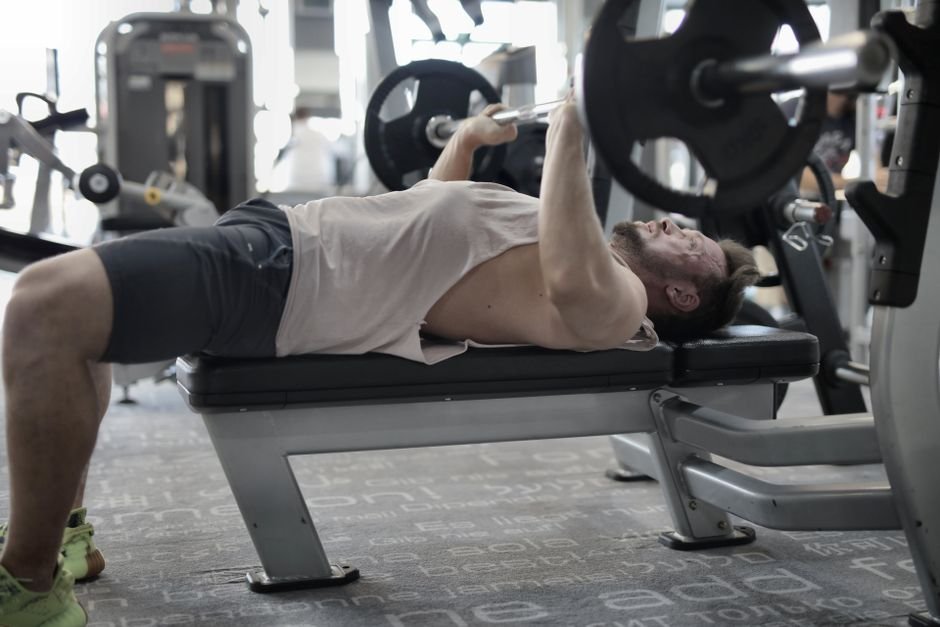
Best Dumbbells For Bench Press
Best Dumbbells for Bench Press (Adjustable vs Fixed)
You walk into your garage, ready to knock out a chest workout, and there they are. Two dumbbells. Maybe they adjust with a dial. Maybe they don’t. Either way, you’re about to find out if your purchase was worth it.
Bench pressing with dumbbells isn’t just a barbell alternative. It’s a staple movement that forces each side of your body to work independently, which helps correct strength imbalances and demands more stability from your shoulders and core. The American College of Sports Medicine emphasizes unilateral and bilateral training for balanced muscular development, and the dumbbell bench press delivers both. But the dumbbells you choose can make or break your progress.
Adjustable vs Fixed: What’s the Real Difference?
>Fixed dumbbells are the cast iron or rubber-hex pairs you see racked at commercial gyms. You grab a pair of 50s, press them, and put them back. Simple. Adjustable dumbbells use a mechanism—dial, pin, or twist-lock—to load plates onto a handle, letting one dumbbell serve as many.
For bench press specifically, fixed dumbbells offer zero setup time. You pick them up and go. The weight is compact, the handles are often knurled steel, and the balance feels predictable because the load is fixed at the ends. If you have the space and budget for a full rack from 20 to 100 pounds or more, fixed dumbbells are tough to beat.
Adjustable dumbbells are built for people who don’t have room for a full rack. One set can replace 15 or more pairs. For busy adults training in a spare bedroom, basement corner, or living room, that’s the difference between having a gym and not having one. The National Strength and Conditioning Association recommends progressive overload—systematically increasing stress on the muscle—for continued strength gains. Adjustable dumbbells make that progression easy because you can move up in small increments without buying new equipment.
The catch? Adjustable dumbbells are longer than fixed pairs of the same weight. That extra length changes the mechanics of the bench press. When you press from the bottom position, the dumbbells may contact each other near your chest or force your wrists into an awkward angle. Some models use a bulky cradle system that makes it harder to set up for your first rep. Fixed dumbbells, by contrast, have a shorter overall length and typically feel more natural in the bottom position.
How Heavy Do You Actually Need to Go?
>Here’s where most people guess wrong. You don’t need 100-pound dumbbells on day one, but you will outgrow light pairs faster than you think.
For the average man training for general strength and muscle size, a pair of adjustable dumbbells that tops out at 50 or 55 pounds per hand will carry you through your first six to twelve months. After that, you’ll want more. The International Society of Sports Nutrition and broader exercise science literature support training within the 6 to 12 repetition range for hypertrophy, and the 3 to 6 range for maximal strength. If your dumbbells only go to 40 pounds and you’re pressing them for 20 reps, you’re building endurance, not strength or size.
Women and lighter-framed men often make excellent progress with dumbbells topping out at 25 to 40 pounds, especially when using tempo work, deficit presses, or slow eccentrics to increase time under tension. But if your goal is to build a strong, muscular chest, plan for growth. Buy a system that expands, or budget for heavier fixed pairs down the line.
A practical target for most home gyms is a maximum load of 70 to 90 pounds per hand. That gives you room to grow without turning your workout into an endurance circuit. If you eventually press 100-pound dumbbells, you’re in serious territory and probably already know what gear you prefer.
What to Look for in Adjustable Dumbbells
Not all adjustable dumbbells handle bench press well. Before you buy, check three things.
First, the handle length and shape. Rounded, contoured handles tend to feel better in your palms during pressing than sharply squared ones. Look for a handle diameter between 28 and 34 millimeters. Too thin and it digs in; too thick and your grip fatigues before your chest does.
Second, the locking mechanism. Dial systems like Bowflex and Core Home Fitness are fast, but the expanded length can be annoying at the bottom of a press. Plate-loaded systems with spin-locks, like Ironmaster or old-school threaded handles, are shorter and feel closer to fixed dumbbells. The trade-off is speed. Changing weight takes 30 to 60 seconds instead of five. If you superset or train with limited time, that adds up.
Third, the cradle or stand. Some adjustable dumbbells require you to lift them from a narrow cradle. If the cradle wobbles or the dumbbell sticks when you pull it out, your setup becomes frustrating. For bench press, you need a clean lift-off. A flimsy base means you waste energy before the rep even starts.
Durability matters too. Dumbbells get dropped. Not from overhead, hopefully, but they hit the floor after that last tough rep. Plastic mechanisms break. Metal plates chip your floor but survive. If you’re training on concrete or rubber mats, metal-plated adjustables are the smarter long-term buy.
Budget Reality Check
Fixed dumbbells cost roughly a dollar to a dollar-fifty per pound new, sometimes more for rubber-coated or urethane sets. A full rack from 5 to 50 pounds runs $600 to $1,200. Going up to 100 pounds per hand pushes that well past $2,000. That’s why commercial gyms exist.
A quality set of adjustable dumbbells runs $300 to $600 and covers the same range. Premium metal systems like Ironmaster or PowerBlock can reach $700 to $900 with expansion kits, but they’ll last decades. Budget Amazon brands often cost $150 to $300 and work fine for a year or two before the mechanism loosens or plates rattle.
For most busy adults building a home gym, adjustable dumbbells are the right starting point. They give you a full weight range for less money and almost no floor space. If you train consistently for two years and find yourself cursing the length of your adjustables, then you can invest in fixed pairs at the weights you use most.
Common Mistakes When Benching with Dumbbells
People butcher the dumbbell bench press in predictable ways. Avoid these and you’ll get more from every set.
Going too light too long. If you can press a weight for 20 clean reps, it’s too light for strength and size. Move up, slow down the tempo, or add a pause at the bottom. Your muscles adapt to stress. Remove the stress and you remove the reason to grow.
Pressing with the dumbbells too far forward. Your elbows should tuck roughly 45 to 75 degrees from your torso, not flare straight out. NSCA guidelines on shoulder-safe pressing emphasize scapular retraction and controlled elbow angles to protect the rotator cuff. Letting the dumbbells drift toward your head or flare wide turns a chest exercise into a shoulder impingement test.
Setting up from the floor. If your adjustable dumbbells sit on the floor, you’re doing a weighted crunch just to get into position. Use a rack, boxes, or your thighs to bring the bells to your starting height. Save your energy for the actual press.
Ignoring the negative. Lowering the dumbbells fast and bouncing them off your chest is a bad rep. Control the eccentric phase for two to three seconds. The ISSN and related sports science research consistently highlight the value of controlled lengthening contractions for muscle damage and subsequent growth. This doesn’t mean you need to move slow on every rep, but treat the lowering phase with respect.
Buying based on marketing, not mechanics. A dumbbell set looks great in an Instagram ad. But if it’s 18 inches long per hand and you’re 5’8″ with a narrow grip, pressing those things is going to feel like doing a chest fly with broomsticks. Read real reviews from people who actually bench press with the model you’re considering.
The Bottom Line
If you have space, money, and a permanent home gym setup, fixed dumbbells feel better and last forever. But for the majority of busy adults training at home, adjustable dumbbells are the smarter entry point. They let you train heavy, progress in small jumps, and stash your entire weight collection in a corner when you’re done.
Choose a set with a high enough weight ceiling, a handle that feels right in your hand, and a locking mechanism that doesn’t rattle or slip. Bench press with control, tuck your elbows, and don’t be afraid to load the weight as you get stronger. The best dumbbells are the ones that let you train hard without getting in your way.
About the author: href=”https://www.apexfito.com/liam-smith-author-founder-of-apexfito/”>Lia m Smith is the founder of Apexfito and writes evidence-based training guides and gear reviews.
Medical & Editorial Review: This article was reviewed by Liam Smith for accuracy and safety. Content is for educational purposes only.
Related reading:
2 Comments