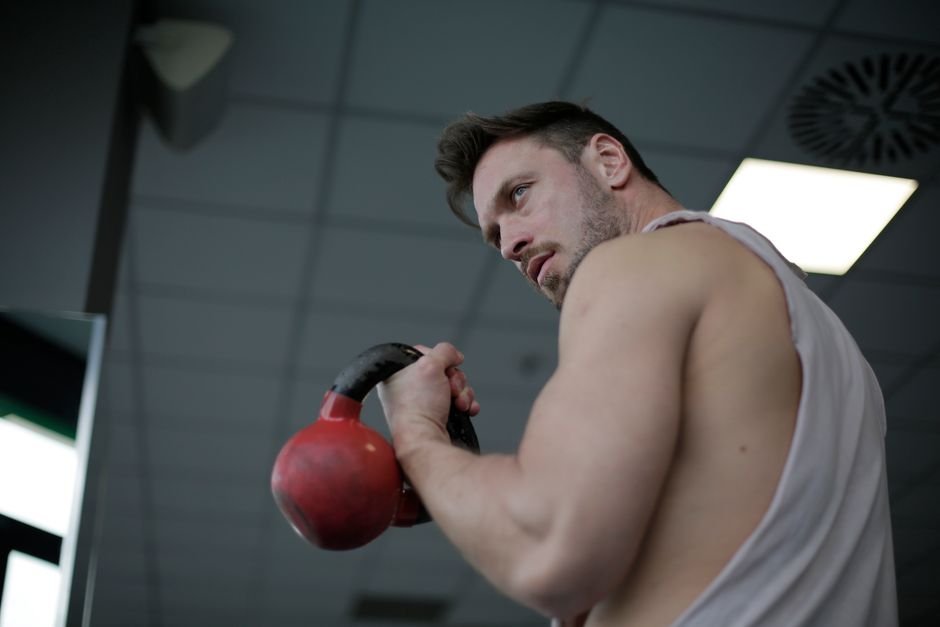
Kettlebell Swing Form Guide
Kettlebell Swing: Complete Form Guide (Hinge, Not Squat)
Why the Swing Still Matters
>If you only had ten minutes and one piece of equipment, the kettlebell swing would be one of the smartest choices you could make. It trains power, grip, and posterior chain endurance all at once. According to the American College of Sports Medicine, exercises that integrate multiple joints and large muscle groups offer superior metabolic and functional returns compared to isolated movements. The swing fits that description perfectly.
But here is the problem: most people squat the kettlebell instead of hinging. That small change turns a powerful hip extension exercise into an awkward front raise for your shoulders and quadriceps. You lose the glute and hamstring emphasis. You put unnecessary stress on your lower back. And you miss the snap that makes the swing effective.
This guide breaks down exactly how to hinge, where your arms should go, and which mistakes to avoid.
What the Swing Actually Trains
>The National Strength and Conditioning Association classifies the kettlebell swing as a ballistic exercise. That means the goal is rapid, explosive force production rather than slow, controlled tension. The primary movers are your glutes, hamstrings, and erector spinae. Your core stabilizes. Your shoulders stay relaxed but engaged. Your arms act like ropes, not levers.
When performed correctly, the swing builds:
- Hip extension power for sprinting, jumping, and deadlift lockout
- Grip endurance from holding a dynamic load
- Aerobic and anaerobic capacity due to the high muscular demand
- Core bracing patterns that transfer to squats, presses, and daily lifting
The International Society of Sports Nutrition has noted that compound, high-effort movements like swings create significant metabolic disruption. That makes them useful for conditioning without long treadmill sessions.
The Hip Hinge vs. The Squat
Before you touch a kettlebell, you need to feel the difference between a hinge and a squat.
The Squat Pattern: Your knees travel forward. Your hips drop straight down. Your torso stays relatively upright. The knee angle changes more than the hip angle.
The Hip Hinge Pattern: Your knees bend slightly, but they stay over your ankles or shift back. Your hips move backward, not down. Your torso tilts forward. The hip angle closes and opens aggressively.
The swing lives in the second category. Think of it as a horizontal jump without leaving the ground. Your hips load like a spring and then snap forward. If your knees drift far forward and your hips drop below parallel, you have turned the swing into a squat with a front raise.
To practice the hinge, stand a foot away from a wall and reach your hips back until your glutes touch it. Your shins should stay nearly vertical. That backward hip travel is the motion you will use for every rep.
Step-by-Step Setup
Foot Position
Stand with your feet between shoulder-width and hip-width apart. Angle your toes out slightly if that feels natural for your hips. The kettlebell should sit about a foot in front of you on the floor.
The Hike Pass to Start
Do not deadlift the bell into position. Hinge down, grip the handle, and hike the kettlebell back between your legs like a football snap. This loads your hamstrings immediately and sets your rhythm.
The Backswing
As the bell descends, hinge deeply. Let your forearms contact your inner thighs near the groin. Your chest stays above your hips. Your back is neutral, not rounded. Your eyes look forward, not up at the ceiling.
The Snap
Drive through your heels and snap your hips forward. Squeeze your glutes hard at the top. The power comes from your hips, not from lifting with your arms or arching your lower back.
The Float
At the top, the kettlebell should float momentarily between your navel and chest height. Your arms are relaxed but straight. Your shoulders are pulled down, not shrugged. Your body forms a straight line from head to heels.
The Return
As the bell falls, hinge immediately. Do not squat to meet it. Let it travel back through your legs, reload your hamstrings, and repeat.
Arm Position: What Your Arms Should Actually Do
Your arms are not lifting the weight. They are transferring force from your hips to the bell. That is a critical distinction.
Keep your elbows soft but not bent. Think of your arms as two ropes attached to your shoulders. If your elbows flex and extend to raise the bell, you are using your biceps and front delts instead of your posterior chain. That limits load and turns the swing into an endurance test for the wrong muscles.
At the top of the swing, your arms should stay connected to your ribcage, not flared out wide. The handle should feel like an extension of your centerline. If the bell pulls your shoulders forward, you may be gripping too loosely or overextending at the top.
Grip pressure matters too. The NSCA recommends maintaining a secure but not white-knuckle hold during ballistic lifts. Excessive grip tension fatigues your forearms prematurely and can shift your posture. Hold the handle firmly enough that the bell does not twist, but do not squeeze the life out of it.
Common Mistakes and How to Fix Them
Squatting Instead of Hinging
If your knees travel forward and your thighs approach parallel, you are squatting. Fix it by practicing wall hinges and reducing your range of motion until the pattern feels natural. Start with lighter swings and focus on feeling your hamstrings stretch during the backswing.
Using Your Arms to Raise the Bell
If your shoulders burn before your glutes do, you are arm-swinging. Fix it by relaxing your arms and exaggerating the hip snap. Try the towel drill: tuck a small towel under your armpits and keep it pinned throughout the set. If you rely on your arms, the towel drops.
Hyperextending the Lower Back
Some lifters thrust their hips so far forward that their spine arches behind neutral. That compresses the lumbar vertebrae. Fix it by finishing with glute tension and a vertical torso, not by pushing your belly forward. Brace your core as if someone were about to punch you in the stomach.
Looking Up
Cranking your neck to stare at the ceiling strains the cervical spine and often leads to rib flare. Fix it by keeping your head neutral and your gaze on the floor about ten feet ahead of you.
Incomplete Hip Extension
If you stop short of full extension, you leave power on the table. The bell rises lower, so you compensate by shrugging or using your back. Fix it by practicing standing vertical jumps before your swing sets. That primes your nervous system for full hip extension.
Going Too Heavy Too Soon
A heavy kettlebell forces bad mechanics. You squat. You round. You muscle it with your arms. Fix it by mastering the hinge with a moderate weight. The ACSM emphasizes technical proficiency before progressive overload. When your form breaks down, the set is over.
Programming the Swing
For general conditioning, three to five sets of fifteen to twenty swings with moderate rest works well. For power development, keep sets shorter—eight to twelve reps—and rest longer so each rep stays explosive. The NSCA suggests that ballistic exercises lose their power output after ten to fifteen seconds of continuous work, so adjust accordingly.
You can use swings as a finisher, a warm-up primer, or a standalone workout. Pair them with push-ups or rows for a simple full-body session. If you are new to the movement, start with two-handed swings. Once your hinge is solid, progress to one-handed swings to challenge anti-rotation.
Actionable Summary
- The swing is a hip hinge, not a squat. Your hips travel backward, not downward.
- Power comes from a violent hip snap and glute squeeze, not from your arms.
- Keep your arms relaxed and straight. They transfer force; they do not generate it.
- Hike the bell back to start. Do not deadlift it into position.
- Finish tall with a neutral spine. Do not arch your lower back or shrug your shoulders.
- Master the hinge before adding weight. Form comes first, always.
The kettlebell swing rewards patience. A light bell swung well is more valuable than a heavy bell squat-muscled to eye level. Nail the hinge, feel the snap, and let your arms hang on for the ride.
About the author: href=”https://www.apexfito.com/liam-smith-author-founder-of-apexfito/”>Lia m Smith is the founder of Apexfito and writes evidence-based training guides and gear reviews.
Medical & Editorial Review: This article was reviewed by Liam Smith for accuracy and safety. Content is for educational purposes only.
Related reading:

2 Comments