
Best Kettlebells 2026
Best Kettlebells for Home Workouts (Tested 2026)
You walk into your garage, coffee in hand, and there it sits: the one piece of equipment that can replace half a gym floor. A kettlebell. Swings, squats, presses, Turkish get-ups, carries—done right, a single bell gives you full-body conditioning, grip work, and posterior chain strength in twenty minutes flat.
But scroll through any fitness retailer and the options blur together. Cast iron, competition steel, adjustable, rubber-coated, ergonomic handles. Prices range from forty bucks to two hundred-plus. If you are going to drop money on home gym gear, you want the right tool for your body, your goals, and your floor.
Here is what actually matters after years of coaching clients and testing gear in real garages, not showrooms.
What the Research Says About Kettlebell Training
>The American College of Sports Medicine (ACSM) recognizes kettlebell training as a valid modality for improving muscular strength, cardiovascular endurance, and body composition when programmed with appropriate volume and intensity. The National Strength and Conditioning Association (NSCA) emphasizes that kettlebell ballistic movements—swings, cleans, snatches—generate high rates of force development, making them useful for athletes and general population trainees alike. Meanwhile, the International Society of Sports Nutrition (ISSN) notes that metabolic conditioning tools like kettlebells, when paired with adequate protein intake and progressive overload, support lean mass retention during fat-loss phases.
In plain terms: kettlebells work, but only if you actually use them. And you are far more likely to use a bell that feels right in your hands and fits your space.
Cast Iron vs. Competition Kettlebells: Which One Belongs in Your Home?
>This is the decision that trips people up first. Both have merits. The right choice depends on how you train.
Cast Iron Kettlebells
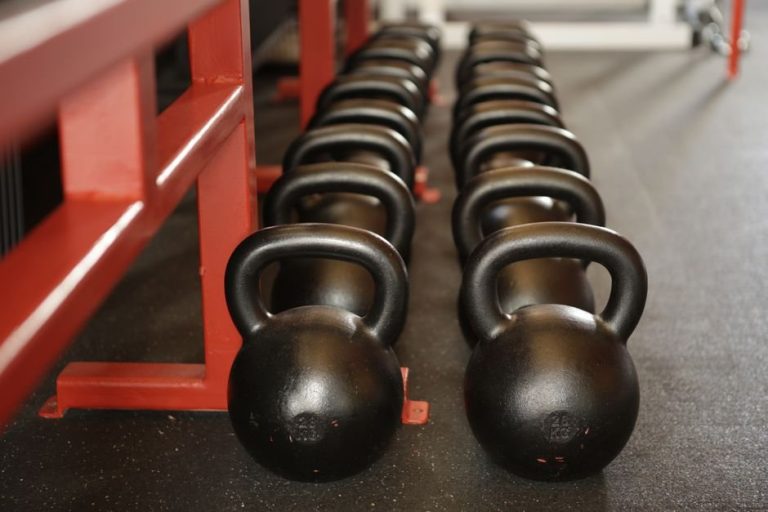
These are the classic bells you picture: black iron, varying sizes, the larger the weight the bigger the bell. The handle diameter and window size change as you go up in weight. A 16 kg bell has a smaller handle than a 32 kg bell.
Pros:
- Usually cheaper per pound
- Traditional feel for general fitness and hypertrophy work
- Widely available from many manufacturers
- Great for two-handed swings, goblet squats, rows
Cons:
- Handle size changes with weight, so your grip position shifts
- The larger 32 kg and 40 kg bells can feel bulky for certain body types
- Less standardized, so dimensions vary brand to brand
Competition Kettlebells
Competition bells—often steel, sometimes with color-coded handles—are uniform in size regardless of weight. A 12 kg competition bell is the same dimensions as a 32 kg bell. Only the internal fill changes.
Pros:
- Consistent technique across weights because the handle and window stay the same
- Ideal for high-repetition work, sport-style lifting, and one-handed drills
- Easier to transition between weights during progressive programs
- Flat bottom sits stable for pistol squats, renegade rows, and overhead presses
Cons:
- Higher price point
- The larger shell on lighter bells can feel awkward for very small-framed beginners
- Overkill if you only plan to do two-handed swings and basic squats
The verdict: If you are training for general fitness, fat loss, and strength with a mix of swings, squats, presses, and carries, a quality cast iron bell is perfectly fine. If you are drilling kettlebell sport techniques, doing high-volume snatch or clean-and-jerk cycles, or you want perfectly consistent feel as you progress, invest in competition style.
Handle Geometry: The Detail That Determines Everything
You can forgive a lot in a kettlebell. A slightly thick paint job. A minor casting seam. But a bad handle will ruin your training.
Here is what to look for:
Window Size
The space between the handle and the bell body needs to fit your hand comfortably without scraping your knuckles. For one-handed work, you want enough clearance that your forearm does not get chewed up during cleans and snatches. For two-handed swings, the handle needs to be wide enough for both hands side by side without overlap. A window that is too narrow forces an awkward grip and limits your wrist mobility.
Handle Diameter
Thicker handles build grip strength but fatigue your forearms faster. Thinner handles let you train longer and heavier but do not challenge your grip as much. For most adults, a handle diameter between 33 mm and 35 mm hits the sweet spot. Anything over 38 mm becomes a specialized grip tool rather than a general training bell.
Finish and Texture
Smooth, glossy paint looks nice in photos. It is a nightmare in a sweaty garage. Look for a textured powder coat or e-coat finish that chalk adheres to without tearing your palms. Avoid bells with thick seams running under the handle; they will blister you within a week.
No Welded Handles
Some budget bells weld the handle onto the body. Do not buy these. Welded handles are failure points. A single solid cast is safer and will last decades.
How Many Kettlebells Do You Actually Need?
Start with one. Seriously.
A single moderate-weight kettlebell—typically 16 kg for most men and 12 kg for most women who have some training background—lets you learn the movements, build work capacity, and see if you will stick with it. If you are completely new to resistance training, drop down to 12 kg for men or 8 kg for women and focus on mechanics.
Once you have outgrown your starter bell, the next purchase depends on your goals:
- Strength focus: Buy the next weight up. You want a heavy bell you can swing for sets of 5 to 10 and press for 3 to 5 reps per side.
- Conditioning focus: Consider a lighter second bell for high-rep snatches, double cleans, or complexes. Many people find a 4 kg or 8 kg gap works well.
- Double kettlebell work: Eventually, you will want two bells of the same weight. This opens up front squats, double presses, rows, and carries. Buy your second bell only after you have proven you will train consistently.
Adjustable kettlebells exist, and some are decent. They save space and money upfront. The trade-off is that they take longer to change weights between exercises, and the mechanisms can loosen with high-volume ballistic work. If you live in an apartment and space is the limiting factor, a high-quality adjustable bell is a reasonable compromise. If you have even a corner of a garage, fixed bells are more pleasant to use.
Budget Picks That Do Not Suck
You do not need to spend a fortune. Here is how to shop smart:
Under $60: Look for basic cast iron bells from established fitness brands that sell direct. Avoid unknown Amazon-only labels with welded handles. At this price, you are usually buying a single 8 kg to 16 kg bell. The finish may be rougher, but the tool will work.
$60 to $120: This is the sweet spot for most home gym owners. You get better powder coats, more consistent casting, and handle geometry that will not chew up your hands. Many reputable manufacturers fall in this range.
$120 and up: Competition bells, specialty coatings, and premium brands live here. You are paying for precision and longevity. If you are doing sport-specific training or you want a bell that still looks new in ten years, the premium is worth it.
One practical tip: check the return policy before you buy. A kettlebell is a personal tool. What feels perfect in my hands might feel off in yours. Some retailers let you return unused bells within thirty days. That safety net is worth a few extra dollars.
Common Mistakes Home Trainees Make
Buying Too Heavy, Too Soon
Ego is the enemy of good kettlebell training. A 24 kg swing done with poor hip hinge mechanics strains your lower back instead of building your posterior chain. Master the movement with a weight you can control, then load it. The bell will still be there when you are ready.
Ignoring the Setup
Kettlebells are dense chunks of iron. Drop a 16 kg bell on tile and you will remember it. If you train indoors, get a few puzzle mats or a dedicated platform. If you train in a garage, the concrete is fine, but your neighbors will appreciate a rubber mat to dampen the clang when you set the bell down.
Skipping the Warm-Up
Ballistic kettlebell work is explosive. Cold hips and a stiff thoracic spine do not play well with snatches and get-ups. Spend five to ten minutes on ankle, hip, and shoulder mobility before you touch the bell. Your joints will thank you.
Neglecting Rest Days
Because kettlebell sessions often feel more like conditioning than traditional lifting, people stack them daily without recovery. According to NSCA guidelines, high-velocity and high-force movements need 48 hours between hard sessions for tissue repair and nervous system recovery. You can grease the groove with light technique work daily, but hard swing and snatch days need rest.
Putting It All Together
You do not need a rack of bells to start. You need one good bell, a small space, and a program you will follow.
If you are a general fitness trainee building a home gym, grab a solid cast iron kettlebell with a 33 to 35 mm handle and a powder coat finish. Start with 12 kg to 16 kg depending on your background. Learn the swing, the goblet squat, the Turkish get-up, and the press. Do those four movements consistently for three months and you will be stronger, leaner, and more mobile than most gym members.
If you are chasing kettlebell sport or you want competition-standard technique, save for a steel competition bell. The uniform dimensions will keep your groove consistent as you progress.
Either way, pick a bell that feels good in your hands. The best kettlebell for home workouts is the one you actually pick up.
About the author: href=”https://www.apexfito.com/liam-smith-author-founder-of-apexfito/”>Lia m Smith is the founder of Apexfito and writes evidence-based training guides and gear reviews.
Medical & Editorial Review: This article was reviewed by Liam Smith for accuracy and safety. Content is for educational purposes only.
Related reading:



3 Comments