Leucine: How Much You Actually Need to Trigger Muscle Growth
Full disclosure: Some links in this article are affiliate links. We may earn a small commission at no extra cost to you if you make a purchase through them. Our recommendations are based on what real users report, not on commission size.
What Leucine Does That Other Amino Acids Don’t
Leucine is one of the nine essential amino acids. Essential, in nutrition terms, means your body can’t manufacture it from anything else. You eat it or you go without. It also belongs to the branched-chain group alongside isoleucine and valine, the same trio printed across the front of every BCAA tub on the shelf.
So why does leucine get its own headline while threonine gets a footnote? Because it does two jobs at once. Every amino acid is raw material for new muscle tissue. Leucine is that, and it also carries a signal that tells your cells to start building. The signaling job is what separates it from the rest of the amino acid pool.
That signal runs through a pathway most lifters know as mTOR. You don’t need the biochemistry to use the idea. mTOR decides whether your muscle cells commit to building new protein, and among the amino acids in food, leucine is the most potent activator of it. Isoleucine and valine feed into related machinery, but neither pulls the lever the way leucine does.
Here’s where the story got wider. An October 2026 ScienceDaily piece ran under the headline “Leucine does more than build muscle. It powers up your cells,” pointing to a role in how cells handle energy, not just how they repair tissue. If your mental model of leucine is “ingredient in a tub,” that framing is worth sitting with for a second.
Public curiosity followed. Google Trends shows US search interest in leucine tracking above its 12-month average over the past year, which matches what I hear from people who ate protein for a decade without thinking about it and now want to know whether their intake stacks up. Fair question. The answer is usually less about buying something new and more about auditing what’s already on your plate.
That audit starts with protein quality, and for muscle purposes, protein quality is largely a leucine question. Whey and dairy pack more leucine per gram of protein than most plant sources, which is the main reason they keep showing up in head-to-head comparisons. That doesn’t make plant protein useless. It means dose and blending carry more weight when leucine density is lower.
One piece gets skipped constantly: amino acids only work as a complete set. Leucine can send the signal, but assembling new tissue still requires the other eight essential amino acids to be on hand. A signal by itself doesn’t build anything. That’s the structural problem with BCAA powders — they hand you three amino acids and leave the other six out.
What I’d actually do with this: open your fridge before you open a browser. Count how many of your daily meals contain a full protein source rather than a partial one. A scoop of whey in water, Greek yogurt with berries, eggs, chicken, fish, a solid tofu or lentil portion with rice. If most of your meals already carry one of those, you’re covering the signaling side without spending anything extra. If half your meals are oatmeal, a piece of fruit, and coffee, that’s not a supplement problem yet. It’s a meal composition problem.
Fix the meals first and the leucine math tends to sort itself out.
How Much Leucine You Need Per Meal, and Where to Get It
Ask ten coaches how much protein you need per meal and you’ll get ten answers. Ask how much leucine, and the range tightens up fast. The number that keeps surfacing in the literature is 2.5 to 3 grams of leucine in a single sitting for healthy younger adults. In food terms, that’s somewhere around 25 to 40 grams of a high-quality protein source.
Sound low? It is, for most people. A palm-sized chicken breast clears it without much effort. A large scoop of whey isolate clears it too. Where lifters actually fall short isn’t the daily total. It’s the distribution.
The per-meal threshold: 2.5 to 3 grams for younger adults
That figure floats around because it’s the dose that has repeatedly been shown to push muscle protein synthesis near its ceiling in healthy young men and women. Below it, the response is only partial. Well above it, the response doesn’t grow much — the switch is already flipped.
One rule of thumb worth carrying around: leucine makes up roughly 8 to 10 percent of the total amino acids in most animal proteins. So 30 grams of whey or 30 grams of chicken both land near 2.5 to 3 grams of leucine, no database required.
Per-meal beats per-day for the signal itself
Twenty grams of protein at breakfast, twenty at lunch, then a dinner carrying 80 grams. That’s 120 grams for the day, which looks great on a tracker. Physiologically it’s one strong leucine pulse and a long stretch of background noise.
Run the same total as three 40-gram meals and you get three pulses. Identical daily number, completely different signal pattern.
I moved 30 grams of protein from my dinner to my breakfast a few years back — eggs, Greek yogurt, whatever was quick — and my morning sessions improved inside a month. Nothing else changed. The food was already in my kitchen. It was just sitting in the wrong meal.
Older lifters need a bigger push
Muscle gets less responsive with age. The same leucine dose that maxes out synthesis in a 25-year-old produces a flatter response in someone in their 60s, a pattern researchers describe as anabolic resistance. In practice, the per-meal target climbs to roughly 3 to 4 grams of leucine, which usually means 35 to 50 grams of quality protein at a sitting.
Consistent lifting keeps older muscle more responsive than a sedentary lifestyle does. I’ve watched clients in their 60s hold onto size on doses that would have been borderline for them ten years earlier. The bar still sits higher, though. If you’re over 50 and training for size, aim for the top of every range in this section.
What it looks like on a plate
Rough leucine content for portions you probably already eat:
| Source | Portion | Leucine |
|---|---|---|
| Whey isolate | 1 large scoop (about 30 g protein) | About 2.5 to 3 g |
| Chicken breast, cooked | 3.5 oz (100 g) | About 2.5 g |
| Lean beef, cooked | 3.5 oz (100 g) | About 2.5 g |
| Salmon, cooked | 3.5 oz (100 g) | About 2 g |
| Plain Greek yogurt | 1 cup (8 oz) | About 2 g |
| Two large eggs | 2 eggs | About 1 g |
| Milk | 1 cup (8 oz) | About 0.9 g |
| Firm tofu | 3.5 oz (100 g) | About 0.6 g |
| Soy milk | 1 cup (8 oz) | About 0.5 g |
A couple of things jump out of that table. Two large eggs on their own sit well under the threshold — about a gram — which is why an egg-only breakfast rarely produces much of a signal. Add a cup of plain Greek yogurt and you’re sitting near 3 grams, which clears the bar for a younger lifter and gets close for an older one.
Greek yogurt deserves a caveat, though. The number moves a lot by brand. A strained Icelandic-style cup can push 2.5 to 3 grams of leucine, while some thinner tubs marketed as Greek-style carry less protein and land closer to 1 gram. Read the protein line on the panel and assume roughly a gram of leucine per 10 grams of dairy protein.
For meat, the portion math is simple. A 3.5-ounce (100-gram) serving gets you around 2.5 grams of leucine. Most people’s actual palm-sized chicken breast runs 5 to 6 ounces (140 to 170 grams), which is closer to 3.5 or 4 grams — enough to clear the older-adult target on its own.
If you eat plant-based, the math shifts
Plant proteins generally carry less leucine per gram of protein, and the gap isn’t small. Soy sits closest to animal sources. Pea, rice, wheat, and most nuts trail further behind. A 25-gram protein meal built on rice and beans may not clear the threshold that whey or chicken would.
You have three levers. Raise the total dose, so 40-plus grams of protein per meal instead of 25. Blend sources so the amino acid profile fills out. Or use a powder formulated with leucine in mind. Soy combined with pea and rice gets you closer than any single source alone, and it’s cheap to do — a scoop of each in the same shaker.
Two powders, same protein, different leucine
A Yahoo Health report from October 2026 on protein powder shopping raised a point that’s easy to carry into the supplement aisle: the big number on the front of the tub is only the headline. Two products can both list 25 grams of protein per scoop and still deliver different amounts of leucine, because protein isn’t one substance. It’s a bundle of amino acids in different proportions.
Whey isolate is leucine-dense. Collagen is the opposite — a 20-gram scoop of collagen peptides carries barely a gram of leucine, which makes it a reasonable joint supplement and a poor muscle-building one. If leucine is your target, check the amino acid breakdown on the panel or the leucine figure the brand publishes, not just the protein gram count.
Build your meals around the per-meal threshold and stop auditing only the daily total. Three feedings that clear 2.5 grams of leucine — 3 to 4 grams if you’re over 50 — will do more for your training than one oversized dinner ever will. And if two tubs on the shelf have the same protein number and different leucine, you know which one goes in the cart.
Myth-Busting: Leucine Pills, BCAAs, and the Trigger Trap
Leucine gets sold two ways: as a magic switch that turns on muscle growth, or as supplement-industry noise you can safely ignore. Neither holds up. The October 2026 ScienceDaily piece “Leucine does more than build muscle. It powers up your cells” is a decent snapshot of how much biology this one amino acid touches. What it does not do is work the way a BCAA jug implies.
Here are the four claims I hear most, and what is actually behind them.
Myth 1: leucine on its own builds muscle
Leucine is a trigger. It is not a brick.
That distinction does most of the work here. Leucine nudges mTOR and briefly raises muscle protein synthesis, a real and well-documented signal. But a signal is not material. The other eight essential amino acids are the material. Take leucine alone and you get the spike with nothing to build with, which is roughly why isolated leucine studies rarely show meaningful growth on their own.
I ran this on myself for a few weeks: plain leucine powder before fasted morning sessions. Taste was fine. Training was not different. Swapping it for a normal breakfast with eggs and Greek yogurt felt the same in the gym and better everywhere else. One try was enough, and it is why I stopped treating food and pills as interchangeable.
Myth 2: BCAAs are a smarter protein
Branched-chain amino acids cover leucine, isoleucine, and valine. Three of the nine essential amino acids. The other six are simply absent. A partial blueprint.
If you already eat enough total protein across the day, the extra you get from a BCAA drink lands close to zero. The training partners I have watched make steady progress were hitting roughly 1.6 to 2.2 grams of protein per kilogram of bodyweight daily and treating BCAAs as a bonus, not a backbone. The ones who used a BCAA jug to cover a protein gap stalled out, every time.
The Yahoo Health piece from October 2026, “Every Person Buying Protein Powder Should Know This Specific Amino Acid,” lands in the same place: leucine matters inside a complete protein package, not instead of one.
Myth 3: if some leucine is good, more is better
The dose-response curve bends. Past roughly 3 grams in one sitting, extra leucine does not buy proportionally more muscle protein synthesis. You are paying for a longer receipt, not a bigger stimulus. Large isolated doses also tend to upset the gut, and cramping or a sudden bathroom sprint mid-session is a real cost.
Three grams is a cup of Greek yogurt. A chicken breast. A scoop of whey. Two or three eggs. If you eat regular meals with protein in them, you cross that line without thinking about it.
Myth 4: there is a tiny anabolic window and only leucine fits through it
The window is wider than the supplement aisle wants you to believe. Total protein across the day and your calorie status, surplus or deficit, move the needle more than the clock does. Timing is a small dial. Intake and training quality are the big ones. I used to plan entire afternoons around a post-workout shake; once I started tracking daily protein instead and stopped watching the clock, nothing changed except my stress level.
What leucine cannot do
- Rescue a protein deficit. Sixty grams of protein a day plus random workouts does not become a hypertrophy plan because a leucine capsule showed up.
- Rescue a program that does not progress. No amino acid fixes sessions that never add reps or load.
- Burn fat. What leucine does, and this part is worth keeping, is help you hold onto muscle while you are in a calorie deficit. That is a genuine benefit during a cut. It is not a fat-loss shortcut.
One medical caveat: if you have been diagnosed with maple syrup urine disease, where the body cannot process branched-chain amino acids properly, total leucine intake needs to be managed with your physician. That is a clinical conversation, not a forum thread.
If you still want to buy a leucine product
Look for third-party testing on the label, such as NSF Certified for Sport or Informed Sport, so the contents match what is printed. And if you take medication, have kidney or liver issues, or are managing a metabolic condition, talk with a clinician before adding any isolated amino acid. Most people eating enough protein do not need the bottle at all, but that call belongs to you and your context.
If you want to compare what is out there, check current prices on Amazon and see how the labels stack up. Then come back and tell me in the comments whether it changed anything for you, or whether food quietly did the job.
Building Leucine-Aware Meals: A Practical Day
The target is roughly 2.5 to 3 grams of leucine in a single sitting, and spreading your protein across three or four meals beats saving all of it for dinner. That is the whole theory. What follows is the version you can actually run this week without weighing rice or cooking twice a day.
Anchor each of your three main meals around a protein source that lands you in the 25-to-40-gram range of complete protein. A palm-to-two-palm portion of chicken, beef, fish, or tofu gets most people there. When time is short, a shake does it in about thirty seconds, which is not a shortcut so much as a scheduling decision.
Here is a normal day in my house. Nothing fancy, nothing that requires a food scale.
- Breakfast: 1 cup (8 oz) of plain Greek yogurt with a scoop of whey stirred in and a handful of berries. That lands around 35 grams of protein and close to 3 grams of leucine. No stove, no pan, five minutes.
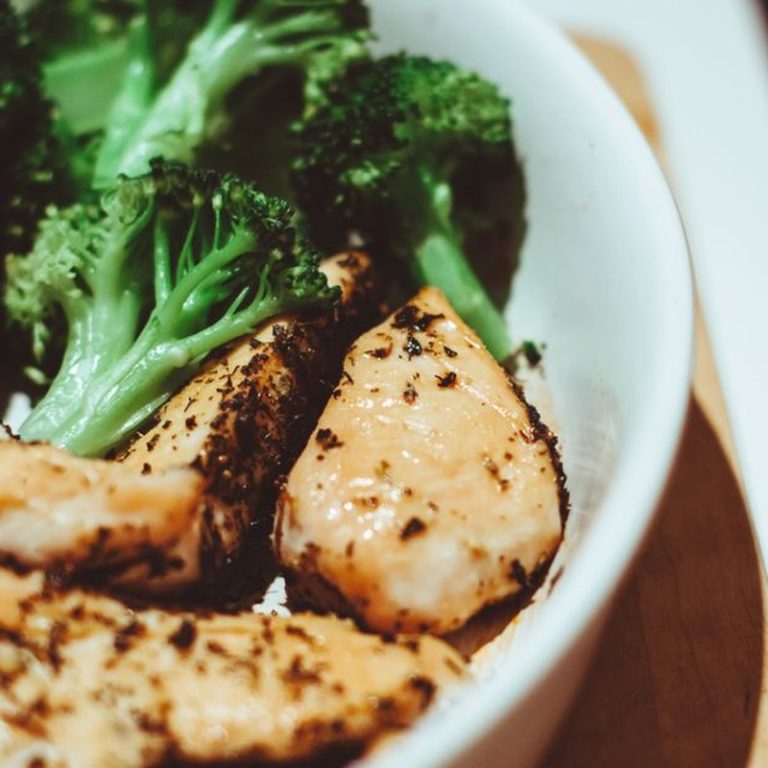
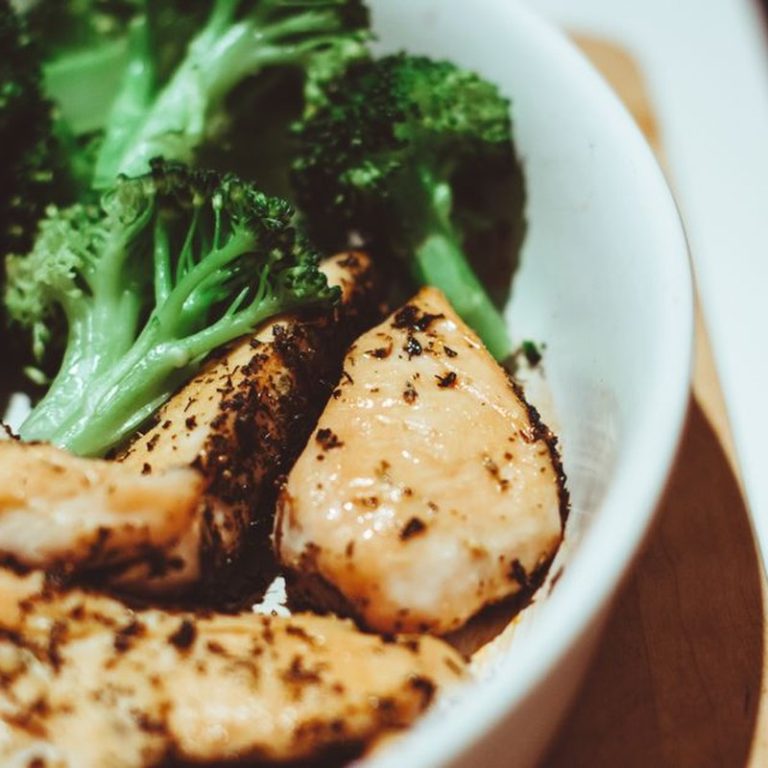
- Lunch: 4 to 5 ounces (roughly 120 to 140 grams) of grilled chicken over a cup of rice with whatever vegetables are in the fridge. That is about 35 grams of protein, so it sits inside the band rather than blowing past it. If you are over 190 pounds or training twice a day, 6 ounces is reasonable, but be honest about what a 3-ounce portion of chicken actually is: a garnish, not a meal. Cook the chicken in batches on Sunday and lunch becomes assembly.
- Dinner: 5 to 6 ounces (140 to 170 grams) of salmon or 4 to 5 ounces of lean beef with a potato and a green vegetable. Same math, different flavor.
Two of those three meals clearing the threshold is a realistic goal. Not perfect. Realistic. If dinner ends up being a lighter plate of pasta and a salad, you still logged two solid leucine doses, and that counts as a good day. Chasing a flawless three-for-three every single day is how people quit by week three.
If you train fasted in the morning, protect the meal right after. That is the one worth getting a full dose into, not a banana and a coffee on the way to work. Hit it properly, then eat normally for the rest of the day. I have run fasted morning sessions for stretches, and the days I skimped on that first meal were the days my recovery felt flat for the next 24 hours.
Plant-based adjustments. Plant proteins run lower in leucine, so the fix has two parts. Build the plate from soy or a pea-rice blend, then add beans, lentils, or seitan alongside it. Bump the portion size by about 20 to 30 percent, which means 6 to 8 ounces of tofu where you would have used 5. If you keep coming up short on paper, a leucine-rich plant protein powder is the simplest correction. It is not a compromise. It is arithmetic.
Budget version. Eggs, cottage cheese, canned tuna, milk, chicken thighs, and firm tofu cover the same ground for less money than most people expect. Whey concentrate is the standout here, because once you compare cost per gram of leucine instead of cost per tub, it is one of the cheapest sources on the shelf. You do not need a specialty isolate for any of it, and chicken thighs are usually half the price of breasts with a bit more leucine per ounce.
If you are shopping for powder, read the label differently than you used to. Compare leucine per scoop, not just protein per scoop, and check whether the brand publishes an amino acid profile at all. A company that will not tell you how much leucine is in the tub is telling you something, and it is not flattering. Then ignore the parts that do not mean anything: front-of-tub claims like “leucine boosted” with no number attached, proprietary blends that hide individual amino acid amounts, and single-ingredient leucine pills priced as if they replace a protein source. Search interest in leucine has climbed over the past year, so expect more loud labels with thin contents. A published amino acid breakdown is the only claim you can check.
Track this loosely for one week. Estimate protein per meal, note which meals feel like a full portion and which are basically garnish, then change one meal at a time. Rebuilding your entire diet on a Tuesday afternoon never sticks; swapping breakfast does. If you train hard four or more days a week and weigh over 180 pounds, a fourth feeding in the afternoon (cottage cheese, a shake, leftover chicken) makes the daily target much easier to reach.
Leucine is a trigger, not a substitute, so total daily protein, consistent training, and enough sleep still do the heavy lifting. If you want to stock up, check current prices on Amazon before committing to a tub or a leucine product, since the same powder can sit twenty dollars apart depending on the brand and the week. Then come back and share what worked for you in the comments. A real report from someone hitting the same wall beats another label claim every time.