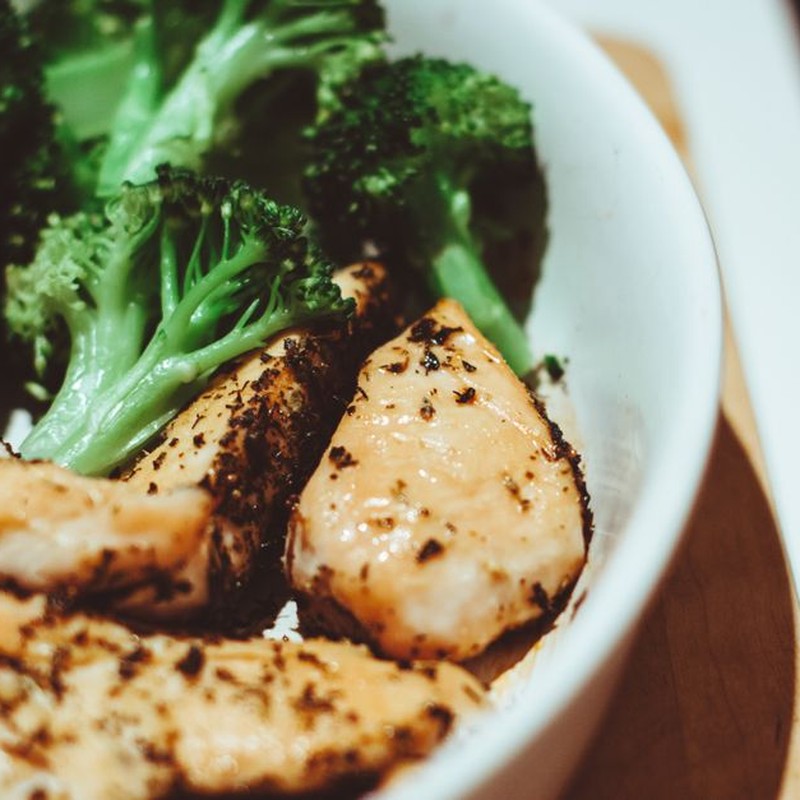
How Much Protein Can Your Body Really Absorb in One Meal? The 30g Myth, Debunked
Full disclosure: Some links in this article are affiliate links. We may earn a small commission at no extra cost to you if you make a purchase through them. Our recommendations are based on what real users report, not on commission size.
Where Did the 30g Protein Limit Actually Come From?
Ask ten people in the gym why they stop at one chicken breast, and you’ll hear the same line: “Your body can only absorb 30g of protein per meal.” It sounds like basic anatomy. It isn’t. That 30g rule actually comes from a group of muscle protein synthesis studies that got reduced to a soundbite on social media.
The research behind it was real. In 2009, Moore and colleagues at McMaster University gave healthy young men 0, 10, 20, or 40 grams of egg protein after a leg workout, then biopsied their thigh muscles to measure muscle protein synthesis. The result was a dose-response curve that jumped sharply at 20g and didn’t climb much further with 40g (Moore and colleagues, 2009). A follow-up from Witard and colleagues at the University of Stirling tested whey protein and found a similar plateau around 20g in both rested and exercised muscle (Witard and colleagues, 2014). Somewhere between the PDF and the Instagram captions, “20-40g no longer boosts muscle protein synthesis” became “your body can’t use more than 30g of protein.”
Here’s the part that got lost: those studies never measured absorption. They measured muscle protein synthesis, one specific biological process in one tissue. The participants weren’t hooked up to tubes, their urine wasn’t collected, and no one tracked whether the extra amino acids in the 40g drink went somewhere else. A muscle biopsy taken a few hours after eating tells you about muscle protein synthesis in that slice of muscle. It doesn’t tell you what your whole body did with the rest of the protein.
Your digestive tract handles protein differently from how the Instagram version sounds. Protein gets broken down into amino acids and small peptides along your stomach and small intestine. Those are absorbed through the gut wall and enter the bloodstream gradually as the meal moves through your system. A 60g steak doesn’t hit your bloodstream like a freight train; it gets absorbed over several hours. For most healthy adults, dietary protein digestibility is high. The amino acids don’t just line up at the colon waiting to be discarded.
And “protein use” means more than “muscle protein synthesis.” Amino acids are needed to make collagen, immune cells, enzymes, hormones, and countless other proteins. When you eat more protein than your muscles can use for building, the extra amino acids are still put to work. Some are oxidized or used to replace old body proteins. That doesn’t show up in a post-workout muscle biopsy, so it’s easy to assume the extra was wasted. It wasn’t.
Does that mean 60g at one sitting is just as good as 20g for muscle? Not necessarily. There likely is a practical upper end for how much of one meal can nudge muscle protein synthesis higher. But the ceiling isn’t a wall. Splitting protein into 25-50g meals is a reasonable approach, and meals around 45-50g are fine. Some research in older adults suggests bigger doses, around 40-50g, may be better when recovery is harder. The data doesn’t support panic if your post-dinner protein works out to 48g.
The main variable for most lifters is the daily total. Aim for 1.6 to 2.2 grams of protein per kilogram of body weight per day, split into whatever meal pattern is realistic for you. If you end up eating 35g at lunch and 60g at dinner, you’ll still hit your targets. I’ve done exactly that on days when dinner was the only meal I could prep, and my progress didn’t stall because of the distribution.
If you’re restocking protein powder, prices on Amazon bounce around weekly, so it pays to check before ordering. And I’m genuinely curious: how much protein do you normally eat in one sitting? Have you ever been told you were “wasting” the extra? Share your experience in the comments.
What Happens When You Eat 50g or More of Protein at Once
You’ve probably heard the rule: only 30g of protein per meal, anything more goes to waste. That rule sounds precise, but it’s built on a misunderstanding of a few research findings. Tracer studies, which label amino acids with isotopes and track them through the body, tell a different story.
In those studies, healthy adults swallow a test meal with labeled protein. Blood samples and muscle biopsies show that amino acids keep entering circulation for up to four to five hours afterward. Boirie and colleagues (1997) used this method with milk proteins and saw a slow, sustained release of amino acids rather than an all-or-nothing switch. You don’t digest a 200g steak and suddenly stop at 30g. The steak keeps digesting until it’s done.
What the 30g number refers to is muscle protein synthesis, not absorption. Moore et al. (2009) found that in young men, muscle protein synthesis climbs with protein dose and then plateaus at around 20-25g of whey protein. Add more and the acute signal stops getting bigger. But that doesn’t mean the extra amino acids are wasted. Split-dose studies, like Areta et al. (2013), show that spreading moderate portions across the day gives a bigger cumulative muscle-building response than fewer huge doses. Yet a single large meal still contributes to your daily protein balance, because those amino acids are never simply discarded.
So what does your body do with the leftover amino acids from a 50g meal? It oxidizes them for energy, uses them to make other molecules, or sends them to tissues that need repair. Turning protein into stored body fat is possible, but it’s an expensive, inefficient process. The old “it turns straight to fat” line ignores how much energy it takes to convert amino acids into fatty acids.
Practically, this means you can stop treating 30g like a hard ceiling. A useful starting target is 0.3 to 0.5 grams per kilogram of body weight per meal. For an 180-pound adult, that’s about 25 to 40g per meal. A 50g dinner is safe, normal, and nowhere near wasted.
I’ve had mornings where a 50g shake carried me until a late dinner. It was filling, but digestion was not an issue. The only thing that felt off was when I tried to force a second 50g shake later the same day, and even that was more about my stomach than my muscles.
If you’re tracking protein, use your daily total as the main target: about 1.6 to 2.2 grams per kilogram of body weight. You can hit that with three or four meals using the 0.3-0.5g/kg range. Your next step is simple. Try a 50g+ meal if you want, or don’t. If you shop for protein powder, check current prices on Amazon to find something that fits your budget. Then come back and tell us in the comments how your one large meal worked.
Daily Protein Intake Matters More Than Perfect Meal Timing
I used to be the guy who put half a chicken breast back in the fridge. A friend had told me my body would only use 30g of protein per meal, so I arranged every plate around that number. That habit unraveled after I read the actual research. In a 2013 meta-analysis published in the Journal of the International Society of Sports Nutrition, Schoenfeld, Aragon, and Krieger pooled 23 studies on protein timing and found that once daily protein intake was matched, timing around workouts mattered little for muscle growth (JISSN). My exact per-meal number stopped feeling like a survival rule.
The 30g myth grows out of experiments that measure muscle protein synthesis after a single meal. Eat a steak, and muscle protein synthesis rises with protein dose until about 20-35g. Above that, the response plateaus. Some people read that as the body wasting anything more. That’s a misread. Your gut absorbs almost all the amino acids from that big steak. The ones not used for immediate muscle building are still used for other proteins, brain chemicals, and energy. There is no 30g ceiling on digestion.
Once you step back from single meals, meal frequency becomes a minor variable. A 2015 meta-analysis of meal frequency in the Journal of Dietary Supplements found that when total protein and calories were fixed, eating fewer or more meals had no meaningful effect on lean mass (study). Morton’s 2018 meta-analysis of 49 protein supplementation trials in the British Journal of Sports Medicine then showed that daily intakes above about 1.6g per kilogram stopped adding much more muscle (BJSM). Both analyses point to the same lever: the total protein you consume in a day.
Here’s a concrete comparison: two 80kg people both aim for 160g of protein a day. Person A eats four 40g meals. Person B eats two 80g meals. If they train similarly and keep calories matched, the research says muscle outcomes will be similar for most people. That makes meal planning easier if you don’t want to carry chicken and rice around all day.
That doesn’t mean meal size is irrelevant for everyone. Older adults often need a higher per-meal dose to get the same muscle-building response, so a 35g breakfast beats a 10g one. Athletes training twice a day may want protein near both sessions. If you have digestive issues, large meals can be tough. Those are real reasons to adjust, but they’re not evidence for a universal 30g limit.
Practical advice for people tracking protein:
- Set a daily target in grams first. For most active people, that means 1.6 to 2.2 grams per kilogram of body weight per day.
- Split that into two to four eating occasions. The right number is the one you can do consistently.
- Don’t treat a 50g or 80g meal as wasted food. It all counts toward the day.
- If most of your protein lands in dinner, add some earlier in the day. A high-protein breakfast or lunch shortens the long gap between dinner and breakfast.
I stopped doing the 30g split ritual after reading those meta-analyses, then tried three bigger meals instead of five small ones. My digestion is better, meals feel more satisfying, and I’ve kept my strength. The daily total is the number I track, and it took one week to feel normal.
The same logic applies to protein timing around workouts. A shake after training can help if it fits your day, but the research doesn’t support a tiny anabolic window. Eat a protein-containing meal within a few hours before and after your session, and your daily total does the rest.
Before you redesign your meal plan, take a snapshot of your current intake. Write down what you eat for three normal days. If you’re already hitting 1.6 to 2.2 grams per kilogram, you can stop worrying about meal frequency. If you’re not, adding one bigger protein portion at lunch will do more than splitting your meals into smaller pieces.
Tracking protein gets simpler when you stop chasing a per-meal limit. A food scale or a tub of whey helps, and you can look up current prices on Amazon if you need them. But the real test is your own schedule: try two or three larger meals for a week and see if you hit your target more easily. I’d like to know how it goes. Tell me in the comments how many meals you eat per day, and whether the 30g limit ever made you hold back on dinner.
Use These Science-Backed Protein Targets Instead of Obsessing Over 30g
So where does that leave you? The 30g-per-meal rule sounded clean, but it created a lot of unnecessary stress. People I’ve trained spent more time counting grams per meal than actually lifting. When they shifted focus to their total daily intake, everything got simpler.
Here’s what the evidence actually supports, along with a few practical ways to apply it without turning every meal into a math problem.
Set Your Daily Target First
For muscle gain or maintenance, research consistently points to 0.7 to 1 gram of protein per pound of body weight (1.6 to 2.2 grams per kilogram). That range shows up across studies using different measurement methods, and it’s held up well as the standard recommendation.
For a 180-pound person, that’s 126 to 180 grams per day. To avoid rounding confusion, that example uses the pound-based calculation. The kilogram equivalent gives essentially the same target—roughly 130 to 180 grams per day after conversion—so use whichever unit feels natural. The point is the daily total.
Beginners and people at maintenance can stick to the lower end. If you’re in a calorie deficit, training with high volume, or over 40, lean toward the upper end.
Use a Per-Meal Range, Not a Ceiling
For individual meals, research on muscle protein synthesis indicates that 0.4 to 0.55 grams per kilogram of body weight reliably stimulates a response. These numbers come from dose-response studies, including the well-known work by Moore and colleagues, where participants ate different amounts of protein at one meal and researchers measured the resulting rise in muscle protein synthesis. The response plateaus around that zone for most people—not because the body closes a valve at 30g, but because there’s an upper limit to the acute anabolic signal from any single meal.
That’s a wide window, and it covers both a 120-pound person eating 25 grams and a 220-pound person eating 50 grams.
For most adults, that works out to roughly 30 to 60 grams per meal.
The old ’30g max’ idea came from studies that measured a single spike and generalized too far. Your body processes protein over several hours, and larger meals get broken down and used efficiently. So don’t fear a big steak or a double scoop shake.
For our 180-pound example, each meal lands between 33 and 45 grams. You don’t need a fancy split or a timer.
Don’t Force Meals
I know people who set alarms to eat every two hours because they worried their muscle would vanish between feedings. They were miserable, their digestion complained, and their results were no better than anyone else eating normal meals. Unless you’re being coached for a specific competition phase, there’s no evidence that you need to eat when you’re not hungry.
Just make sure your total daily protein is met and include a good protein source at each main meal. Three meals plus a shake works for a lot of people. Four smaller meals works if you prefer smaller portions. Your appetite, schedule, and digestion should shape the plan.
A Realistic Day at 150 Grams
Here’s a sample day that hits roughly 150 grams of total protein in three meals plus a snack:
- Breakfast: 3 eggs scrambled with cheese, plus 1 cup of Greek yogurt (about 40g)
- Lunch: 6 oz of chicken breast with rice and vegetables (about 40g)
- Dinner: 7 oz of lean beef or salmon with a baked potato and salad (about 45g)
- Snack: One scoop of whey protein (about 25g) or a cup of cottage cheese (about 25g)
No weird food combos, no protein shots between meetings. Just normal meals with a protein source at the center.
Start Today
If you’re new to tracking protein, begin with the daily target and adjust meals around your schedule. The numbers are simple enough that you can roughly track from your head: a standard chicken breast is about 40 grams, a cup of Greek yogurt is about 15, and a scoop of most protein powders lands around 20 to 25. If you’re eating a palm-sized portion of protein at each meal, you’re probably in the right zone.
One practical ask before you go: check current protein powder and food prices on Amazon. They shift constantly, and a few seconds of comparison can save you money on staples you already buy. Then drop a comment below and tell me how many meals it takes you to hit your target. I answer these comments myself, and reading about your actual routine helps me keep future articles grounded in what people really do.
Medical & Editorial Review: This article was reviewed by Liam Smith, founder of Apexfito, for accuracy and safety. Content is for educational purposes and is not a substitute for professional medical advice. Consult your physician before starting any exercise or nutrition program.