Stair Climbing for Fitness: Is It Better Than Running?
Full disclosure: Some links in this article are affiliate links. We may earn a small commission at no extra cost to you if you make a purchase through them. Our recommendations are based on what real users report, not on commission size.
Why Compare Stair Climbing and Running?
If you’ve ever stood in front of a stair climber at the gym or eyed a set of stadium steps while jogging past, you’ve probably wondered: which one gives you more bang for your sweat? Both are time-efficient cardio options that require almost no equipment—just a staircase or a machine—and can be done indoors or out. They’re popular because they fit into busy schedules and deliver serious cardiovascular work in a short time.
The choice often comes down to practical factors. Maybe you have cranky knees and want to avoid the pounding of pavement. Maybe your goal is building glute strength, and you’ve heard stair climbing is superior. Or perhaps you simply live in a walk-up apartment and want to turn your daily commute into a workout. These are real decisions people face, and there’s no universal answer.
What this comparison will do is break down the physiological differences—things like calorie burn, muscle activation, and impact on joints. I’ll also cover practical tips for combining both into your weekly routine, so you don’t have to pick just one. That way you can match the workout to your body, your goals, and your schedule. I’ve tried both extensively, and I can tell you that the best choice depends on what you want to prioritize. For example, if you’re after a quad-dominant burn with less shock to the knees, stairs might win. But if you want a full-body endurance boost and don’t mind a little impact, running is hard to beat.
Let’s get into the specifics so you can decide which one deserves a spot in your weekly routine.
Calorie Burn and Cardiovascular Demand
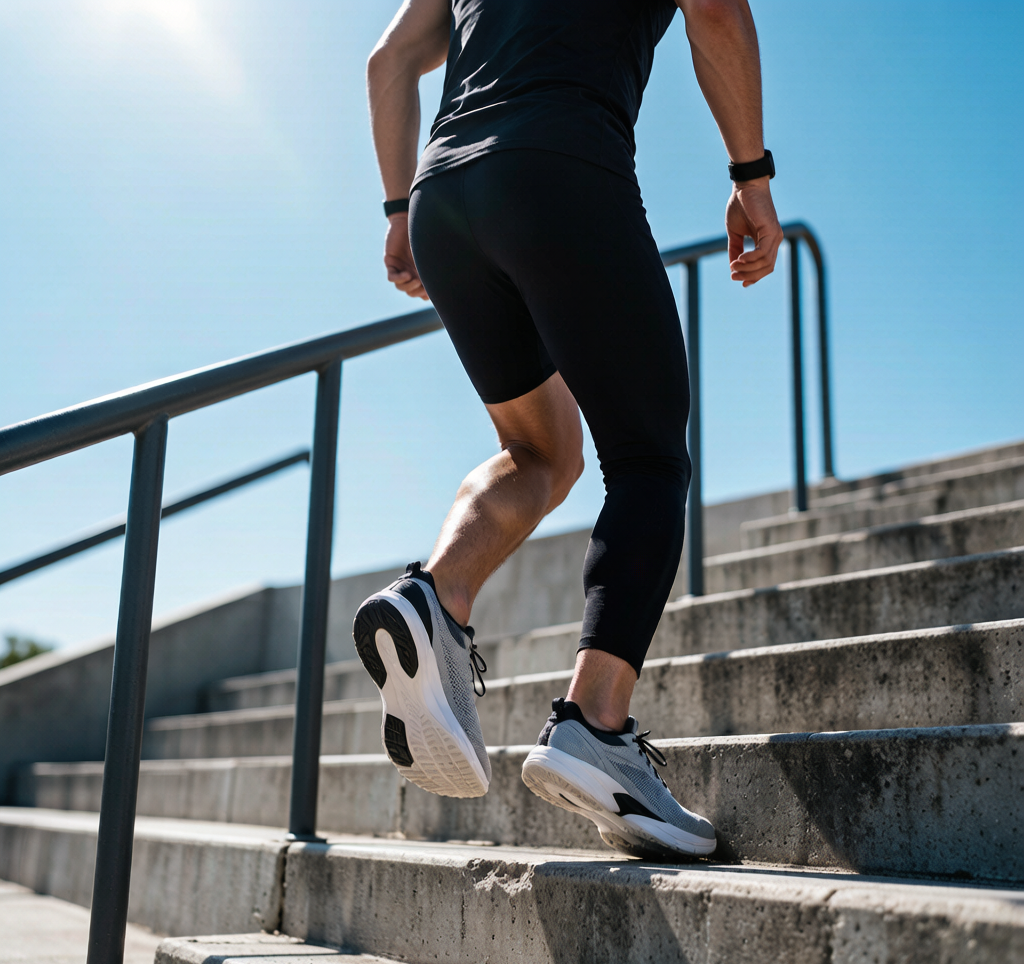
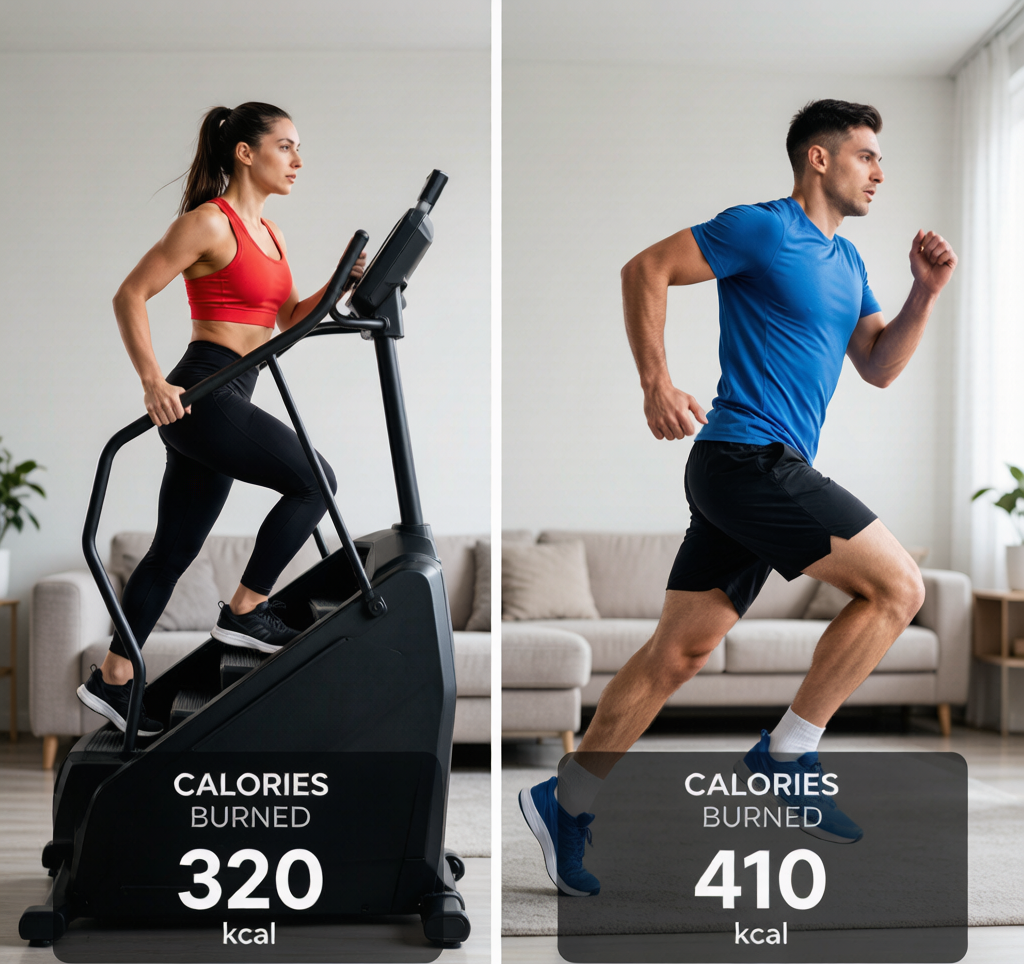
If you’re trying to decide between stair climbing and running, the first thing most people want to know is: which one burns more calories? The short answer is that both work well, but the numbers depend heavily on how hard you push and your individual physiology. For a 155-pound person, running at a moderate 6 mph pace burns about 100 calories per mile—roughly 10 calories per minute if you maintain that speed. Stair climbing on a stair machine, at a steady moderate pace, typically burns 9–12 calories per minute. Crank up the intensity to an aggressive climb, and you can hit 12–15+ calories per minute. The vertical component makes a real difference.
I’ve used both in my own training, and what I’ve noticed is that stair climbing gets my heart rate up faster. A study in the Journal of Sports Sciences backs this up: climbing stairs elevates heart rate more quickly per minute than running on flat ground. That means you can get a high-intensity session in less time. For someone trying to fit a workout into a lunch break, stairs win on efficiency.
But keep in mind that calorie burn varies with body weight, intensity, and individual metabolism. A 130-pound person will burn less per minute; a 200-pound person will burn more. So these numbers are guides, not gospel.
Equal duration isn’t the only way to compare. If you run a 5K at an easy pace versus 20 minutes of aggressive stair climbing, the stairs will likely torch more calories. But you can sustain a jog for longer than you can push hard on stairs. So for total calorie burn over a longer period, running at a steady pace tends to add up. For sheer per-minute output, stair climbing is tough to beat.
Here’s the practical takeaway: if your goal is max calorie burn in minimal time, do intervals on the stair machine. If you prefer a longer moderate session, go for a run. Both are excellent for cardiovascular health, but they stress the body differently. Running pounds the joints more; stairs keep the impact low while still hammering your legs and lungs.
If you’re considering adding a stair machine to your home setup, check current prices on Amazon. And if you’ve tried both stair climbing and running for calorie burn, drop a comment—I’d love to hear which one you found more effective.
Muscle Activation and Joint Impact
Stair climbing and running both torch calories and build cardio, but they work your muscles in very different ways. Every step up a stair demands a powerful concentric contraction from your glutes and quads—you actively lift your entire body weight against gravity. Running, on the other hand, relies more on your hamstrings and calves for propulsion, especially during the push-off phase. Biomechanically, stair climbing is a vertical displacement movement that maximizes hip and knee extension, while running is horizontal and emphasizes hip flexion and eccentric knee control. I’ve had clients who swear their glutes never felt as sore as after a solid stair session. That’s because the glutes are the primary driver of hip extension on the stairs, whereas running tends to emphasize the posterior chain differently.
Stair climbing demands more from the quadriceps. Each step requires your quads to extend the knee under load. Running involves more eccentric loading on the quads when you land, but the concentric demand is lower. If your goal is to build stronger legs, stairs can deliver faster results than flat running.
Now let’s talk joints and impact. Running generates ground reaction forces of 2–3 times your bodyweight with every footstrike. That repeated pounding is a major contributor to shin splints, stress fractures, and knee pain. Stair climbing produces far less impact because you’re stepping vertically rather than pounding down. The force is more controlled and distributed. For people with patellofemoral pain or a history of shin splints, swapping a few running sessions per week for stair climbing can keep your cardio intense without aggravating those issues. But if you have existing knee pain, check with a healthcare professional before starting any new exercise program.
Don’t take the low impact as a free pass to ignore form. I’ve seen plenty of people lean on the handrails and turn the step machine into an upper body workout—that kills the muscle activation in your legs and can actually strain your shoulders. Keep your hands light on the rails, engage your core, and take full steps without skipping steps. Place your entire foot on the step to reduce shear forces on the patella. That’s how you get the most muscle bang for your buck while protecting your knees.
Practical tip: If you’re dealing with knee discomfort, start with 10 minutes of steady stair climbing at a moderate speed, three times a week. Progress by adding 2–3 minutes per session, not by cranking up the speed. This gives your joints time to adapt. But be smart: if pain persists, stop and talk to a doctor. For runners looking to cross-train, swap one easy run per week for a 20-minute stair climb. Your quads and glutes will thank you, and your knees will feel the difference.
Have you tried stair climbing as an alternative to running? Let me know in the comments—I’m always curious what’s working for other people. And if you’re shopping for equipment, check current prices on Amazon for a sturdy step platform or a stair climber machine to try at home. Your lower body might never look the same.
Practical Tips to Integrate Stair Climbing Into Your Routine
Getting started with stair climbing doesn’t require a gym membership or expensive equipment. All you need is access to a set of stairs, a stair machine, or a compact stepper. Here’s how to build your routine without overcomplicating it.
Start Small, Stay Consistent
If you’re new to stair climbing, begin with 10–15 minutes on a stair machine at a comfortable pace. Keep your torso upright and avoid leaning on the rails—that defeats the purpose of core engagement. Focus on steady, controlled steps. I’ve seen beginners rush and end up gasping after three minutes. Slow down, find a rhythm, and gradually increase duration or speed each week.
For outdoor stairs, try this: walk up two steps at a time for 1 minute, then jog down as recovery. Repeat 5 to 10 rounds. That’s a quick, high-reward workout that builds power and gets your heart rate up. I do this at a local stadium’s steps and it fits easily into a lunch break.
Progressions to Keep Challenging
Once 10–15 minutes feels manageable, spice it up. Add intervals: 30 seconds fast stepping, 60 seconds slow recovery. Increase total time to 20–30 minutes. Carry light dumbbells (5–10 lbs) for extra load on legs and core, but only if your balance is solid. Another option: skip steps entirely—take every other step for a deeper squat-like movement. That hits glutes harder than standard steps.
Switch between stair machine and real stairs if possible. The real thing forces more balance and range of motion. I alternate between my apartment stairs and a gym stepper to keep things interesting.
When to Pick Stairs Over Running
Stair climbing shines when your joints ache or you want to build lower-body strength without pounding pavement. If you’re nursing shin splints, knee pain, or just want a change, stairs are a smarter choice that day. It’s also a time-efficient alternative: 20 minutes of stair climbing torches roughly 200–300 calories depending on your weight and intensity, comparable to a 20-minute run at moderate pace, but with less ground impact.
I recommend using stairs on days when you feel sluggish but want a real sweat session. It’s harder than walking but easier on the body than running. For variety, combine both: run three days a week, stair climb two days. That balances fatigue across muscle groups and reduces overuse injuries.
The short version: choose stairs for low-impact quad and glute work, and running for endurance and overall cardiovascular conditioning. Use both for the best of both worlds.
Check current prices on Amazon for a compact stair stepper if you want to train at home. Share your favorite stair workout in the comments so others can try it. I’m curious what combinations you’ve found effective.
Medical & Editorial Review: This article was reviewed by Liam Smith, founder of Apexfito, for accuracy and safety. Content is for educational purposes and is not a substitute for professional medical advice. Consult your physician before starting any exercise or nutrition program.