What Is Hyrox? A Beginner’s Guide to the World’s Fastest-Growing Fitness Race
What Is Hyrox? The Race Format Explained
I remember watching my first Hyrox event online and thinking this is just a gym workout you have to survive. Then I saw an athlete finish, collapse for three seconds, high-five a stranger, and go find her family. That image made more sense once I learned the format. Hyrox is not a 5K with obstacles. It is 8K of running, broken into eight separate 1K laps. After each lap, you stop and complete one of eight fixed functional stations. You do that eight times, and then you cross the finish line.
The exact layout looks like this:
- 1K run, then 1,000m SkiErg
- 1K run, then 50m Sled Push
- 1K run, then 50m Sled Pull
- 1K run, then 100m Burpee Broad Jumps
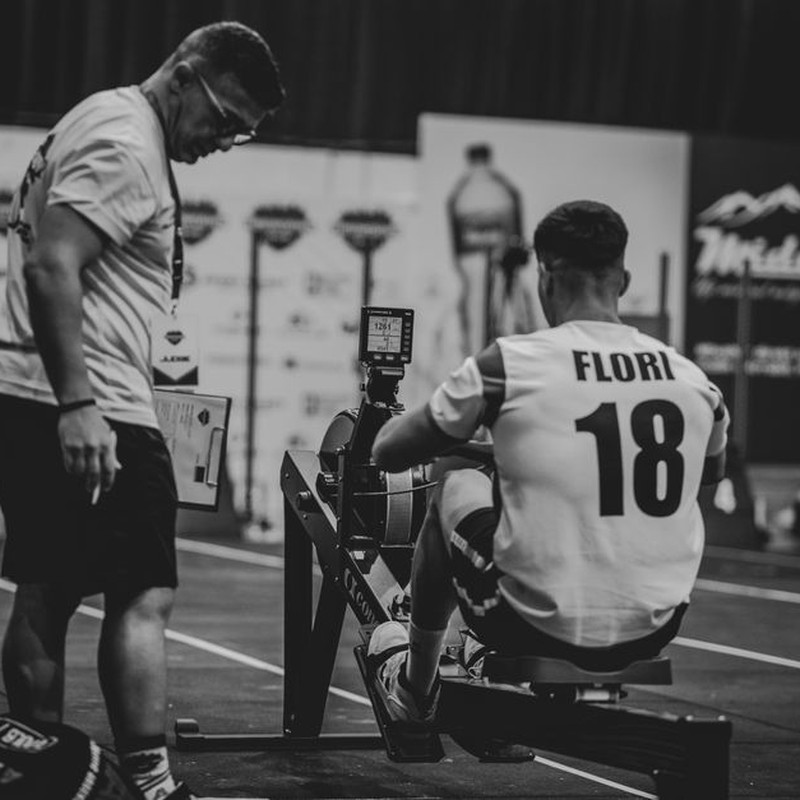
- 1K run, then 1,000m Row
- 1K run, then 200m Farmers Carry
- 1K run, then 100m Sandbag Lunges
- 1K run, then 100 Wall Balls
Those distances and movement orders stay the same at every Hyrox event. That might sound boring to some people. I call it considerate. You can prepare for exactly what is coming, and your finish time means something real even if you raced in a different city.
Hyrox takes place indoors in convention centers and arenas, so rain, heat, and wind never get to cancel or ruin your race. The course is flat, measured, and set up with wide transition zones between each run lap and the next workout station. Those buffer areas give you room to slow down, catch your breath, and set up for the movement. Volunteers and event staff check reps, count meters on the erg screens, and make sure you do not take a shortcut on the sled push.
One thing that surprised me when I tried a local Hyrox-style session was how much the transitions matter. You jog into a station, do the work, and jog out again. The first few stations feel fine. By lap five, your legs are heavy, and even standing up from a sandbag lunge demands more concentration than I could spare for small talk. That is why coaches push you to keep a warm-up effort going between stations instead of walking the whole course. A slow jog is still faster than a walk.
You have options when you enter. Most beginners choose Open division, which uses lighter loads for the sleds and lunges and lets you race as an individual. If you want a bigger challenge, Pro division uses heavier implements. You can also sign up as a doubles team or a four-person relay team, so you and your training buddies can split the running and station work. That makes the race feel like a group project, which is a much more fun way to suffer.
If you are new to Hyrox, my advice is simple: choose Open, train for about eight weeks, and do a few practice rounds of run then movement, run then movement. You do not need to be a fast runner, but you do need to be okay with running when your legs are already tired. That is the exact skill Hyrox rewards.
Before race day, decide on a consistent pace for each 1K lap. Most beginners feel great on the first lap and then pay for it on the SkiErg. Aim for a pace that lets you say a short sentence during the run, and adjust after the third lap. The station reps are not going to magically get easier, but your ability to recover on the run will improve if you practice it.
Hyrox vs. Other Fitness Races: Where It Fits
When I first watched a Hyrox recap, I thought it was a running race, except the runners kept disappearing into a warehouse. After a few weeks of training for one, I get why that confuses people. Hyrox isn’t exactly like Spartan, a CrossFit competition, or a 10K. It borrows from all three and adds a pacing puzzle of its own.
On a Spartan or Tough Mudder day, the weather often decides how hard the course is. Mud, cold, rain, and unexpected obstacles can eat up your energy before you’ve covered half the distance. Hyrox removes that. It’s entirely indoors, on flat floors, with eight defined workout zones. No mud pits, no barbed wire, no climbing walls. That doesn’t make it easier, but it makes it predictable. You can train with precision instead of hoping for good weather.
The format is a repeating loop: run one kilometer, hit a station, run one kilometer, hit another station. You do that eight times. The stations are always the same in the same order. So you can rehearse each transition in training. Run to the ski erg, pull, run back out. Push a sled, run again. There are no surprises hidden around a corner.
Compare that to an obstacle race. In a Spartan or Tough Mudder, you have to react to the course, learn climbing tricks, and deal with surfaces that change after every rainstorm. At Hyrox, the test is simpler: you know exactly what you’ll face, so the question is whether you’ve practiced doing those eight movements while your legs are already tired.
CrossFit competitions are another animal. They often reward heavy lifting and technical gymnastics under fatigue. A local event might throw clean complexes, deficit handstand push-ups, or max lifts at you when your heart rate is maxed. Hyrox keeps the movement list simple: ski erg, sled push, sled pull, burpee broad jumps, row, farmer carry, sandbag lunges, and wall balls. The weights are fixed and manageable, especially in the Open division.
In the Open division, men push a 50-kilogram sled, and women push 35 kilograms. The farmer carry uses 24-kilogram kettlebells per hand for men and 16 kilograms for women. The Pro division uses considerably heavier loads. That means you don’t need elite strength to finish your first Hyrox. You need enough strength to move those objects after two or three runs have already tired you out. The bigger test is your aerobic engine and your ability to keep your breathing controlled while your body is under stress.
If your background is lifting, this is the hardest mental shift. Heavy squats and deadlifts will help with the sandbag lunges and sled pushes, but they won’t help you run 8 kilometers. The front-runners in Hyrox are strong, but they’re also fit aerobically. You need both.
A standard running race is one sustained effort. A 10K doesn’t force you to jump off a ski erg and settle back into a rhythm. Hyrox does. It’s closer to a hard interval session than a road race. If you start at your 10K pace, you’ll probably blow up before station two. That doesn’t mean you need to be a fast runner. A comfortable 10K pace is a reasonable foundation. What matters is holding that pace when your quads are fried from a sled push and your upper back is burning.
The fix is to practice running after strength work. Do a set of farmer carries, then a brisk 400-meter jog. Push a sled, then run 200 meters. Repeat. That teaches your brain to hold your stride together while your muscles are screaming.
Hyrox also offers doubles teams and relay options, so you can spread the work across more people. For your first race, Open is the usual starting point. If you can already run a 10K at a comfortable pace and handle a basic gym circuit with split squats, farmer carries, and light wall balls, you have a realistic foundation. You don’t need a huge squat max. You need pacing, patience, and a willingness to keep moving.
What stops many beginners isn’t strength. It’s starting too fast. The first kilometer feels light, then the ski erg and sled push take more than you expected. By the third run, you’re paying for early adrenaline. Run the first two kilometers at around 80 percent effort, or RPE 7. At the third station, reassess. If you still feel fresh, push. That approach lets you pass people in the final kilometers.
For a runner, the biggest fix is adding two gym sessions per week. Focus on farmer carries, sled pushes, lunges, and wall balls. Do those before short runs in the same workout, so you learn to run with tired legs.
For a lifter, add two running sessions per week. One easy 5K, and one interval session like 6 x 1K at a 7 or 8 RPE with 90 seconds of easy jogging between reps. If that feels aggressive, start with 6 x 600 meters at a 6-7 RPE. The goal is to teach your legs to turn over quickly after a station, not to run a personal best.
Practice transitions, too. Set up a mini circuit in your gym with a carry, a push, and a 400-meter run. Move from one to the next as if a timer is going to start. Learning the wall ball rhythm is another way to save energy. Catch, absorb, squat, explode up. Smooth wall balls are faster than strong wall balls because you don’t waste time on the catch.
One more drill I like: Use the sled before your runs. Push it 20 to 30 meters, recover for 20 seconds, and repeat six to eight times. Then run a 400-meter jog. It’s the best way I know to get the feeling of running with fatigued legs, and it makes the actual race feel almost familiar.
Here’s a beginner weekly schedule that works if you already have a running base:
- Monday: easy 5K with four 100-meter strides at the end.
- Tuesday: gym session: farmer carries, sled push, wall balls, then a 1K run.
- Thursday: interval run: 6 x 1K at 7-8 RPE with 90-second easy recoveries.
- Saturday: long run of 8 to 10K, or a Hyrox simulation if you have access to a ski erg and sleds.
That structure keeps your running strong while building the muscular endurance for the stations.
Hyrox is a great addition to an endurance-focused year because it gives you a fixed set of movements, a concrete goal, and an indoor race day free from weather. If you’re thinking of signing up, check race fees and any gear you might want, like a heart rate monitor or a sled. Prices on Amazon change often, so a quick look there before you buy is a smart way to avoid overpaying. And if you’ve tried another race and wondered how it compares, leave a comment below. I’d love to hear about your first Hyrox or the one you’re planning.
Your First 8-Week Hyrox Training Plan
The first time I watched a Hyrox race, I thought it looked like someone had mixed a 10K with a barbell circuit and forgot to add rest days. Then I actually trained for one and realized the format is beautifully predictable: 1km run, station, 1km run, station, eight times. That predictability means you can rehearse almost everything before race day.
This plan is built for beginners who can already run 30 minutes without stopping and have access to a gym with a wall ball, sandbag, and some kind of sled or heavy push object. No sled? A heavy tire, a prowler, or even a loaded sled on grass works. You’ll do three or four runs a week and two strength sessions. There’s also a three-day version below if your schedule is tight.
Before we start, here’s the effort scale I’ll use. Conversational means you can say a whole sentence without gasping. Steady means you’re working but could answer a quick question. Hard means you’re down to one-word answers. On a 1-10 RPE scale, conversational is about 3-4, steady is 5-6, and hard is 7-8. Strength sessions should also feel like RPE 7-8, meaning you could grind out one or two more reps but not five.
Weeks 1-2: Build Your Base
For the first two weeks, your only job is to make easy running feel easy and to start loading the movement patterns you’ll meet on race day. Run three times per week at a conversational pace. If you can’t hold a chat while running, slow down. Seriously.
A simple week looks like this:
- Monday: 30-minute conversational run (RPE 3-4)
- Tuesday: 45-minute full-body strength session (RPE 7-8)
- Thursday: 35-minute conversational run (RPE 3-4)
- Saturday: 45-minute full-body strength session (RPE 7-8)
- Sunday: 40-minute conversational run (RPE 3-4)
- Wednesday and Friday: rest days. Walk if you want, but don’t run.
In those strength sessions, focus on the movements you’ll meet in Hyrox. Do 3 sets of 8-12 goblet squats, 3 sets of 10 walking lunges per leg, 3 sets of 8 push presses, and 3 sets of 30-second farmer carries. Add one plank or dead bug finisher. The goal is to feel strong and fresh at the end, not wrecked. If you’re sore for more than a day, dial the loads back.
Weeks 3-4: Connect Running to Work
Now you start doing what Hyrox actually feels like. Keep two of your runs easy and one strength session focused on lower-body power. On the third run, turn it into a combo day. After a 10-minute warm-up, do four rounds of 400m run into 25 wall balls or 20 sandbag lunges. Rest 60 seconds after each round.
Before you panic about reps, here’s the Hyrox context. The race standard for wall balls is 100 reps, so 25 is a quarter of the set. Use a ball that lets you keep a full squat and a strong hip extension; most women use 6kg and most men 9kg, but go lighter if your form breaks. For sandbag lunges, the race standard is 100m, so 20 total lunges (10 per leg) is a short practice interval. If you prefer to think in distance, grab a 20kg bag and walk 20-30m while lunging.
If 25 wall balls sounds like a lot, drop to 15 reps or use a lighter ball. Keep the effort steady-to-hard (RPE 6-7) on the run and the station. The point is to feel your legs get heavy and still find energy to keep moving.
Keep your other two runs easy (RPE 3-4) and your two strength sessions at RPE 7-8. Add a little more load to your squats and presses compared to weeks 1-2, but keep the rep ranges similar.
Weeks 5-6: Make Your Running Specific
This is where race pace enters. After a 10-minute easy jog warm-up, do one session of 1km repeats:
- 4-6 x 1km at target race pace (RPE 7-8)
- 90-120 seconds easy jog or walk between reps
- 10-minute cool-down at RPE 3
What’s your target race pace? Use the pace you think you can hold for the full 8km, not the pace you could run for one fast kilometer. If you’re unsure, start with your current 5K pace plus 30-45 seconds per kilometer. That’s a crude formula, but it works for most beginners. If your pace drops during the last reps or your form falls apart, shorten the repeats to 800m or dial the pace back by 10-15 seconds per km. Quality beats grinding.
During these weeks, touch each Hyrox station movement once per week. Split them across your two strength days so you don’t overload one session. For example, Tuesday: wall balls, sandbag lunges, rowing, and farmer carries. Thursday: sled pushes, sled pulls, burpee broad jumps, and goblet squats. Keep loads moderate, around 60-70 percent of your max, and stop each set while your technique still looks clean. Strength effort stays at RPE 7-8.
Weeks 7-8: Simulate the Race and Taper
In week 7, give yourself one full simulation day. Do four rounds of 400m run followed by one practice station. Here’s a sample:
- Round 1: 400m run, then 25 wall balls
- Round 2: 400m run, then 20 sandbag lunges total steps (10 per leg)
- Round 3: 400m run, then 40m sled push
- Round 4: 400m run, then 20 burpee broad jumps
Rest 60-90 seconds after each round, and keep the work continuous. The run should feel steady-to-hard (RPE 7-8). This is the closest you’ll get to the race without race-day nerves. Take the next day completely off. That’s not optional.
Then comes race week. Cut your total volume in half. Do one short run with two 200m strides at race pace (RPE 7), some light mobility, and skip heavy lifting 48 hours before. You won’t lose fitness in a few days. You’ll just show up fresh.
Short on Time? Try the Three-Day Version
If you can only manage three sessions per week, use this structure:
- Day 1: 30-40 minute conversational run (RPE 3-4), then 10 minutes of squats, lunges, and carries at RPE 6-7
- Day 2: 45-minute full-body strength session (RPE 7-8)
- Day 3: Hyrox-style interval (weeks 3-8) or another easy run (weeks 1-2)
Follow the same two-week progression. Weeks 1-2 keep Day 3 easy. Weeks 3-4 make Day 3 the 400m combo. Weeks 5-6 make Day 3 1km repeats. Week 7 make Day 3 your simulation. Week 8 cut the volume in half and rest hard.
This version won’t build quite as much race-specific endurance, but it’s enough for your first Hyrox if you’re short on time.
This plan is the one I’ve given to friends who said they’d never do a race. The first four weeks build your engine and get you comfortable moving between runs and work. The last four sharpen your pace and simulate the race. Stick to the structure, and you’ll be surprised how different the same 400m loop feels by week 7.
If you need a sandbag or wall ball and want to compare prices before you buy, check current prices on Amazon. I don’t want anyone paying double for gear. And if you give this plan a try, come back and tell me how the 1km repeats went. I read every comment.
Station Skills: How to Train Each Movement Without a Full Hyrox Setup
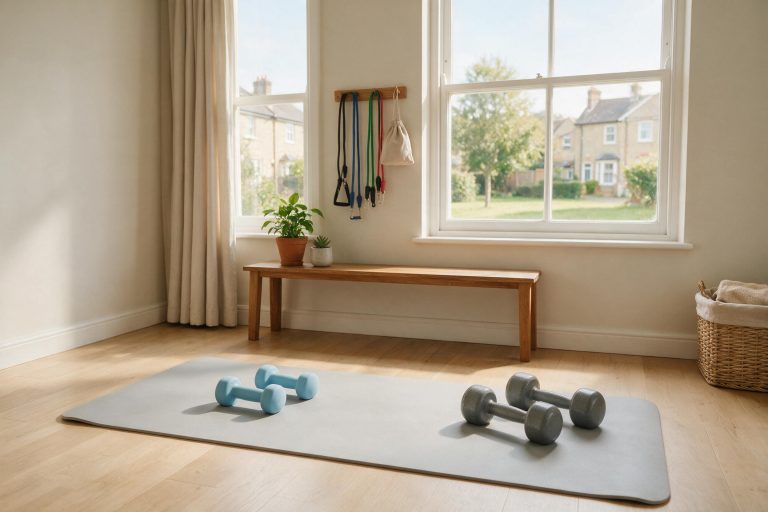
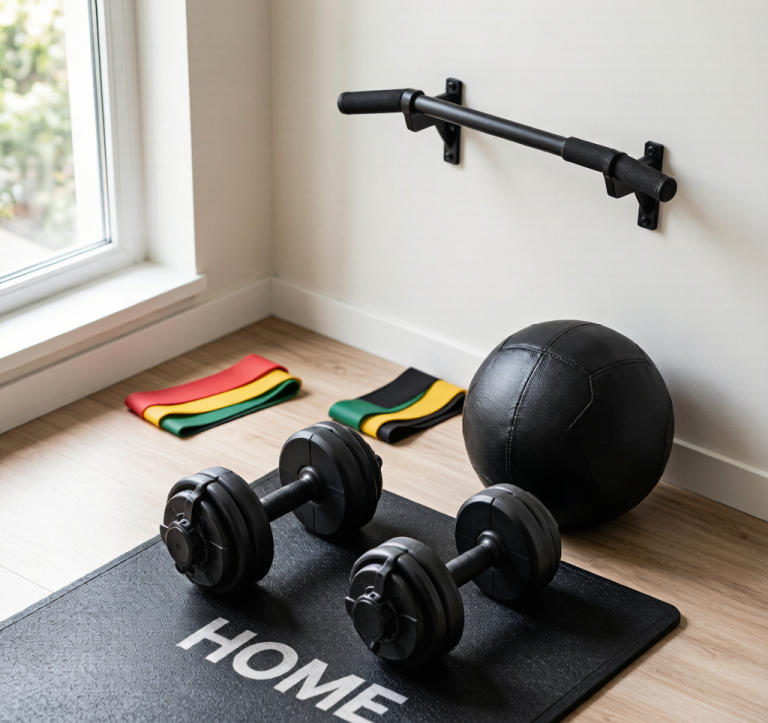
You don’t need a warehouse full of competition-grade gear to get ready for Hyrox. In fact, most of the station work can be recreated with a heavy backpack, a pair of dumbbells, a resistance band, and a little floor space. I’ve spent months coaching athletes in a regular commercial gym, and the equipment was rarely the limiting factor. The real challenge is learning to handle heavy, awkward movements while your running legs are already tired.
Hyrox pairs 1km runs with eight stations: SkiErg, sled push, sled pull, burpee broad jumps, rowing, farmers carry, sandbag lunges, and wall balls. That means you’ll be switching from a hard run straight into a loaded carry or a pushing movement. Your training should copy that demand.
SkiErg and Rowing: Build Your Breathing Rhythm
If your gym doesn’t have a SkiErg or a rower, use battle ropes, a jump rope, or a treadmill set to a steep incline. The goal is to match the timing you’ll feel on the machine: a few seconds of explosive effort, then a short recovery while you keep moving.
On a treadmill, set the incline to an 8-10% grade and walk at a brisk pace for 2 minutes. Drop to 0% and jog easy for 1 minute. Repeat for 15 minutes. It’s not a direct copy, but it trains your body to recover while still moving — exactly what you need before a sled push.
With a jump rope, do 30 seconds of fast singles or double-unders, then 15 seconds rest, for 8 rounds. That interval pattern mirrors the rhythm of hard pulls and short glides.
Farmers Carry and Sandbag Lunges: Load Up a Backpack
These two stations are all about keeping your body stiff while your grip and legs do the work. Grab a sturdy backpack and load it with books, a dumbbell, or water jugs. Start at a weight you can carry for 40 meters without your form falling apart.
During the farmers carry, stand tall, squeeze your glutes, and take short, quick steps. Resist the urge to heave the load upward. I like to keep my elbows slightly bent and my shoulders pulled down, as if I’m carrying a heavy suitcase and trying not to look rushed.
For the sandbag lunges, hold the backpack at your chest (or overhead if you want a brutal variation) and step forward, keeping your front heel down and your back knee soft. Don’t rush. Do 20 total reps — 10 per leg — with a controlled pause at the bottom. That will light up your quads and glutes far more than 50 rushed ones.
Progress the weight every two weeks. If you can finish a set with perfect posture, add a couple of books. Your grip will catch up faster than you think.
Burpee Broad Jumps: Master Pacing Early
This is the station that will spike your heart rate fastest, so practice it in short, controlled sets. Do 10 burpee broad jumps, then rest for 45 seconds. Repeat 5 times. The goal is to keep the same distance and rhythm on the last set as the first. If you launch yourself across the floor on round one, you’ll be crawling by round three. I’ve seen it happen — and done it myself.
Focus on landing softly with your knees tracking over your toes. Jump forward, then drop your chest to the floor, do a push-up, and jump again. The jump is a horizontal leap, not a vertical one. Many beginners over-jump and lose balance on the landing.
Sled Push and Pull: Use a Sled, Prowler, or Resistance Band
If your gym has a sled or prowler, use it for 50-meter pushes and pulls. A weighted cart with handles works too. The simplest option is a resistance band. Loop it around a sturdy pole or rack at waist height. Before you lean into it, check that the anchor is solid and won’t shift.
For the push, face away from the anchor, put the band around your hips, and walk forward with short, powerful steps. For the pull, face the anchor, hold the band handles at your chest, and walk backward while staying low. That simulates the sled pull nicely.
Sled work isn’t about the weight — it’s the constant tension. Your legs have to keep driving for the entire distance. With a band, the tension builds as you move away from the anchor, so keep your steps controlled and avoid bouncing.
Wall Balls: Dumbbell Squat Press Substitute
The race version uses a heavy medicine ball thrown at a target. If you don’t have one, hold a dumbbell at your chest and do a squat press. The movement pattern is the same: squat down, then drive up and press the weight overhead. The ball version requires you to catch and absorb, so use a light ball (6-10 lbs) if you haven’t done them before. Aim for 20 reps in a row before you rest.
Put It Together: One Weekly Station Session
Here’s a simple way to slot this into your weekly plan. On a day between your running sessions, do this after a 10-minute easy jog:
- 200m rowing (or 30 seconds battle ropes / jump rope fast)
- 40m farmers carry with your loaded backpack
- 20 sandbag lunges (10 per leg)
- 10 burpee broad jumps
- 30 seconds band sled push or pull
- 20 wall balls (or dumbbell squat presses)
Rest 2 minutes between rounds. Start with 3 rounds, and each week add one round until you can complete 5 rounds with solid form. That’s one station-skills workout, but it mimics the exact feeling of a Hyrox race: running, then immediately handling heavy, awkward movements while your heart rate is elevated.
Try it and you’ll quickly see which stations are going to be your strong ones and which need extra work. If you’re thinking about picking up any gear — a weight vest, resistance bands, or a good jump rope — prices on Amazon change constantly, so do a quick search before you commit. And after you’ve tried this session, come back and tell me in the comments how it felt. Did you underestimate the backpack lunges? I know I did the first time.
Race Day Strategy, Recovery, and Next Steps
You’ve done the training. Race morning is here. The nerves are normal, but they’re a sign you care. The Hyrox finishers who look strong at the end aren’t always the fittest people in the building. They’re the ones who paced smart, kept transitions tight, and had a plan for the final hour.
Here’s the pacing advice that matters most for your first Hyrox: start each 1km run slower than it feels natural. Yes, even while people bolt past you. The first three laps should feel almost boring. If you can’t speak a short sentence, you’re going too fast. Wall Balls and Sandbag Lunges punish you hard in the back half. I’ve watched strong athletes blow up on run four because they ran the first two at a pace they couldn’t hold.
There are eight 1km runs total, each one followed by a workout station. Use this pacing structure:
- Runs 1-3: Conversational speed. If you can’t string two full sentences together, slow down.
- Runs 4-5: Move from easy to steady. You’re working, but you’re still in control.
- Runs 6-7: Push into uncomfortable. This is where you pass the people who started too fast.
- Run 8: Give a solid effort, but save a little for the final station. The race isn’t over until that last workout is done.
Now let’s talk transitions. In a standard running race, you can grab water and pause without thinking twice. In Hyrox, the clock never stops. Make every transition quick. Walk briskly to the water, take a sip, and keep moving. Don’t stop to catch your breath. Once you’re on the next lap, your rhythm settles back in.
Before race day, check the venue rules on personal bottles. Some races let you keep a bottle at the end of the run lane, others don’t. If personal bottles aren’t allowed, use the aid station — just grab water there and keep moving. Don’t wait for your breathing to return to normal.
I learned the hard way that transition time adds up. In my first Hyrox, I lost at least 30 seconds at each station trying to find my bottle. Now I know the station order so well that my hand finds the bottle before I’ve fully stopped moving.
- Know the station order before you arrive so you don’t waste mental energy on what’s next.
- Keep your bottle at the station exit if the venue permits it, or plan to hit the aid station on the way out.
- The moment you finish a station, start jogging again. Even ten seconds of movement keeps your heart rate from crashing.
After you cross the finish line, keep moving. Walk for at least 10 minutes and let your heart rate come down gradually. If you drop straight into a chair, you might feel lightheaded or dizzy. So walk first, breathe deeply, and give your body a chance to reset.
Within two hours, eat a meal with protein and carbs. It doesn’t have to be big. A protein shake and a banana, a turkey sandwich, or a yogurt parfait all work. Protein rebuilds your muscles, and carbs refill the energy you just burned. I once waited three hours after a race to eat, and I felt miserable the next day. Don’t repeat that.
Then take a full rest day. Not an active recovery day with a light bike ride. A full rest day. Your nervous system is spent, your muscles have microtears, and your joints took a beating. Give yourself permission to do nothing. Here’s a recovery schedule that works for a first Hyrox:
- Day after race: Complete rest. Sleep as much as you can. Short walk only if you feel like it.
- Two days after: Easy 20-minute walk or gentle cycling. No strength training.
- Three days after: Mobility work or slow yoga. Spend extra time on hips, shoulders, and calves.
- Four days after: If you’re pain-free, try a very light version of your normal workout. If anything hurts, take another rest day.
So what’s next? You might already be thinking about race two. That’s the Hyrox effect. After a few days of recovery, look back at your splits and see where you lost time. Was it the runs, the wall balls, the sled push, or the transitions? Pick one weak link and spend at least two weeks in your next training block focusing on that station. If you want a better overall time, give yourself about twelve weeks before race two.
Tell me how your race went. Drop your questions or results in the comments — I read every single one. And if you’re thinking about gear for race two, check current prices on Amazon for a heart rate monitor, grip straps, and a hydration vest. Those three make race morning easier without turning you into a gear junkie. (I may earn a commission from purchases.)