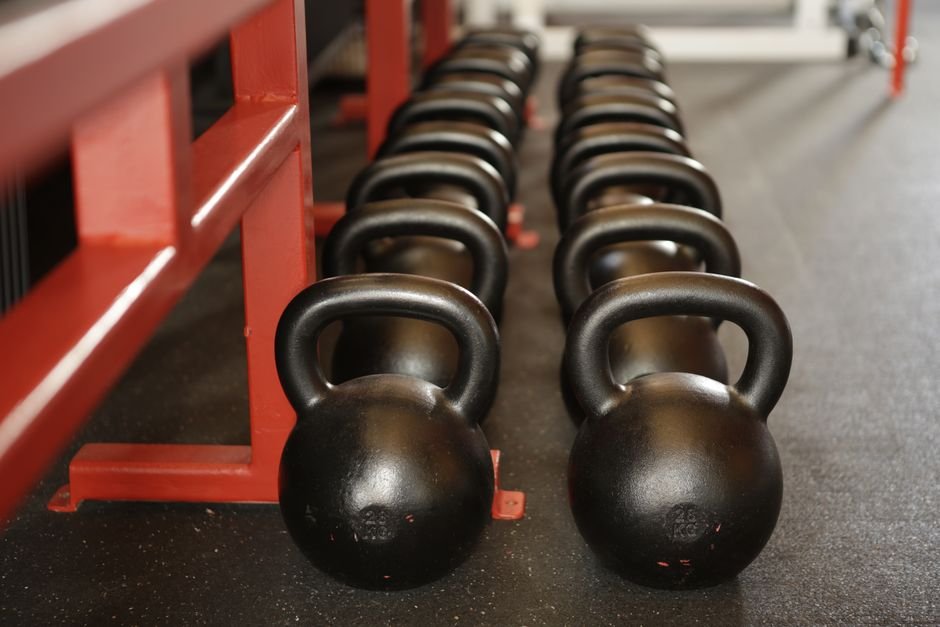
Kettlebell Weight Guide
What Weight Kettlebell Should You Buy?
You walk into a gym or scroll through an online store and see kettlebells ranging from 9 pounds to 106 pounds. The question seems simple, but the answer depends on what you are actually trying to do. Strength? Conditioning? Learning the swing for the first time? Your training goal determines the weight, not your ego.
How Kettlebell Training Actually Works
>Kettlebell work is not barbell work. The American College of Sports Medicine notes that many loaded movements with a kettlebell emphasize power endurance and posterior-chain recruitment because of the ballistic nature of swings, cleans, and snatches. The National Strength and Conditioning Association classifies kettlebell training as a form of resistance exercise that can improve strength, power, and aerobic capacity when programmed correctly. What that means for you: a kettlebell you can strict-press overhead is probably too light for swings, and a kettlebell you can swing is probably too heavy to press.
The mechanics matter. A swing uses your hips as the engine. A Turkish get-up is a slow, controlled grind that demands shoulder stability and core tension. A goblet squat sits somewhere in between. One weight does not fit every movement, which is why experienced lifters often own several. If you can only buy one to start, you need to pick the weight that gives you the most useful range across those patterns.
The Starting Weight for Most Men
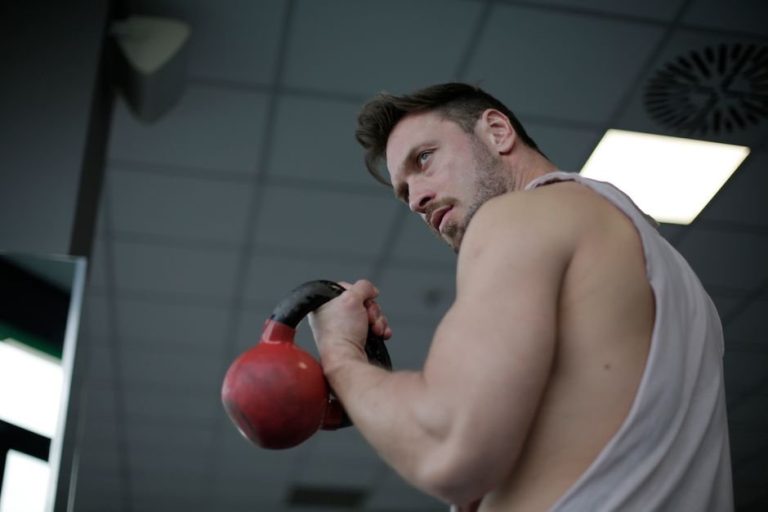
>For men with some baseline strength training experience, a 16 kg (35 lb) kettlebell is the most common starting point. It is heavy enough to teach you to generate force from your hips during swings, but light enough that you can still learn cleans and presses with acceptable form. If you have never touched a barbell and your background is mostly running or desk work, a 12 kg (26 lb) kettlebell is the smarter buy. You will learn faster when the weight does not fight you on every rep.
For the swing specifically, which is the foundation of most kettlebell programs, a 20 kg (44 lb) kettlebell is workable if you are already comfortable deadlifting your bodyweight or more. But do not start there if your hinge pattern is shaky. Bad swing mechanics loaded too heavy turn a posterior-chain exercise into a lower-back stress test. The International Society of Sports Nutrition and related exercise-science literature consistently show that movement quality predicts long-term outcomes better than early intensity.
The Starting Weight for Most Women
For women, the equivalent entry point is usually 8 kg (18 lb) or 12 kg (26 lb). An 8 kg kettlebell works well for learning the movements, practicing Turkish get-ups, and doing overhead work. A 12 kg kettlebell is the standard recommendation for swings if you have any background in strength training. If you are deconditioned or returning from injury, start with the 8 kg and progress to 12 kg once you own the technique.
Some women worry that 12 kg will feel too heavy. In a well-executed swing, the hips do the work, not the arms. Most women who can perform a bodyweight squat can swing 12 kg within a few sessions once they learn to hinge properly. The weight should challenge you, not dangle from your hands like a purse.
One Kettlebell or Two?
A single kettlebell is the right call for beginners. Most foundational exercises—swings, get-ups, goblet squats, cleans, presses, snatches—are designed as unilateral or single-kettlebell movements. You learn to stabilize against an offset load, which builds real-world strength more effectively than the bilateral symmetry of a barbell.
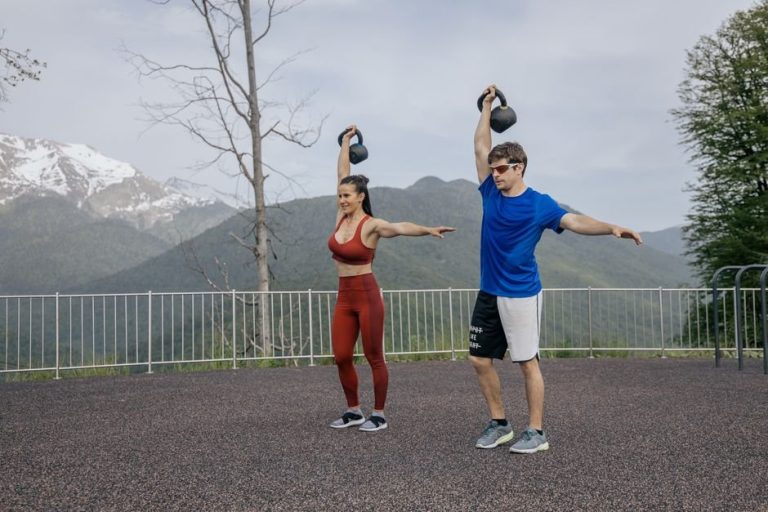
Double kettlebell work comes later. Once you can press a single kettlebell confidently overhead, squat with it in the rack position, and swing with clean mechanics, adding a second kettlebell of the same size opens up front squats, double cleans, push presses, and complexes. Do not rush to doubles. A single heavy kettlebell gives you more training options than two light ones you outgrow in a month.
If your budget allows for two purchases, buy one weight now and a heavier one in three months. A common progression for men is 16 kg to 24 kg. For women, 12 kg to 16 kg. That gap gives you a clear target and enough room to grow without skipping stages.
How to Know When to Move Up
The standard progression rule in most strength and conditioning circles is simple: when you can complete all prescribed reps with solid form and the last few no longer feel challenging, it is time to add load. For kettlebell swings, that might mean you can do five sets of ten with the same weight and finish breathing hard but not gassed. For presses, it means you can strict-press the kettlebell for sets of five without leg drive or backward lean.
Do not jump too soon. The jump from 16 kg to 24 kg is a 50 percent increase in load. That is significant. If 16 kg swings feel easy, try one-arm swings, increase the volume, or shorten rest periods before you grab the 24 kg. Technique first. Load second. Conditioning third.
Common Mistakes That Waste Money and Time
Buying the same weight your friend uses. Your training age, bodyweight, and injury history are not your friend’s. The guy who squats 315 pounds for reps can handle a heavier starting kettlebell than someone who has only done yoga. Match the weight to your current ability, not your ambition.
Going too heavy because “I want to grow into it.” A kettlebell that is too heavy sits in your garage. You cannot learn the snatch with a weight you cannot safely overhead. You cannot learn the swing with a weight that pulls you out of position on every rep. Start where you are, not where you want to be in six months.
Ignoring the handle width and finish. Not all kettlebells are shaped the same. Competition-style kettlebells have uniform dimensions regardless of weight, which matters if you plan to progress through a consistent technique. Cast-iron kettlebells get larger as they get heavier. Neither is wrong, but know what you are buying. A handle with thick paint or a rough seam will tear your hands during high-rep sets.
Buying adjustable kettlebells to “save money.” Adjustable kettlebells work, but they are slower to change between weights and often bulkier in the rack position. If you are training at home and space is tight, one adjustable bell is a reasonable compromise. If you are serious about consistent training, fixed-weight kettlebells win on durability and feel.
Skipping the fundamentals and jumping into random online workouts. The internet is full of high-rep kettlebell circuits that look hard and teach nothing. A hundred sloppy swings is not better than thirty good ones. Learn the hinge. Learn the rack position. Learn how to absorb the weight safely. Then add volume and intensity.
A Simple Summary
If you are a man with some strength background, buy a 16 kg kettlebell. If you are newer to training, buy a 12 kg. If you are a woman with some strength background, buy a 12 kg kettlebell. If you are newer to training, buy an 8 kg. Own the movements with one bell before you worry about doubles. Move up in weight when your current bell stops challenging you at the rep ranges your program demands, not because you are bored.
The best kettlebell is the one you actually use. Pick a weight that lets you train today, progress next month, and still be swinging correctly a year from now.
About the author: href=”https://www.apexfito.com/liam-smith-author-founder-of-apexfito/”>Lia m Smith is the founder of Apexfito and writes evidence-based training guides and gear reviews.
Medical & Editorial Review: This article was reviewed by Liam Smith for accuracy and safety. Content is for educational purposes only.
Related reading: