Squat Vs Leg Press
Squat vs Leg Press: Which Builds More Muscle?
You walk into the gym on leg day and face the same question again. The squat rack sits empty on one side of the floor. The leg press machine gleams on the other, loaded and ready. You only have forty-five minutes before your next meeting, and you want the biggest return on your effort. Which one actually builds more muscle?
The answer is not as clean as the internet wants it to be. Both movements work. Both can drive serious leg growth. But they do not work the same way, and choosing the wrong one for your body or your goal can stall your progress for months. Let us break down what actually matters.
What the Research Says About Muscle Activation
>If you are chasing quad growth, the barbell squat and the leg press both light up your rectus femoris and vastus muscles. Electromyography data referenced by the NSCA shows high quadriceps activity in both exercises, especially when you squat to parallel or press through a full range of motion. The difference shows up once you look past the front of your thigh.
The squat demands far more from your glutes, hamstrings, and adductors. Because you are standing under a load, your entire posterior chain has to fire to keep your torso upright and your hips stable. Your core braces hard to protect your spine. Even your upper back and traps contribute just to hold the bar in place. The squat is a full-body stressor that happens to punish your legs the most.
The leg press removes most of that. Your back is supported. Your core does not have to fight for position. The movement becomes knee-dominant, and while your quads still work hard, your glutes and hamstrings contribute less. According to ACSM guidelines on resistance training, multi-joint free-weight movements generally produce greater overall muscle activation across multiple groups than their machine counterparts. That does not make the leg press useless. It just means the squat creates a bigger systemic demand.
For muscle growth, total volume and progressive overload matter more than any single session. But if you are trying to build your entire lower body, not just your quads, the squat gives you more muscle per rep.
Safety: The Argument That Actually Holds Up
>The leg press exists for a reason. If you are recovering from a lower-back injury, if your shoulder mobility will not let you hold a bar comfortably, or if you are training alone without a spotter, loading a heavy leg press makes sense. The fixed path and back support reduce the risk of spinal compression. You can push close to failure without worrying about getting stapled under a barbell.
That said, the leg press carries its own risks. The most common one is ego lifting. Because the machine feels stable, people load every plate in the gym, unlock their knees at the bottom, and turn a leg press into a lower-back destroyer. Allowing your hips to roll off the pad at the bottom of the movement puts dangerous shear force on your lumbar spine. ISSN position stands on injury prevention consistently warn against sacrificing form for load, regardless of the equipment.
The squat, when performed correctly, is not inherently dangerous. Decades of strength and conditioning research back this up. The key is learning the pattern before you chase numbers. A squat with poor depth, valgus knees, or an exaggerated forward lean is risky. A squat with a braced core, controlled descent, and proper depth is one of the safest compound lifts you can do. The risk comes from rushing the learning curve, not from the movement itself.
For healthy adults with no major mobility restrictions, the squat is safe and effective. For those with structural limitations, the leg press is a legitimate alternative. Do not let internet dogma force you under a barbell if your body is not ready for it.
Which One Should Beginners Start With?
If you have never strength trained before, the leg press feels more approachable. You sit down, place your feet, and push. There is less to think about. That low barrier to entry makes it a decent first step for building some baseline leg strength and confidence.
But here is the problem. If you stay on machines too long, you never learn to stabilize your own body under load. When you eventually try to squat, deadlift, or even pick up a heavy box from the floor, your core and stabilizers will lag behind your prime movers. ACSM recommendations for novice trainees emphasize learning fundamental movement patterns early. The squat is one of those patterns.
The best approach for most beginners is to start with a goblet squat or a light barbell squat to learn the mechanics. Use the leg press as an accessory movement at the end of your session to add volume without the technical demand. This builds both the movement skill and the muscle.
If the squat feels impossible right now because of mobility, do not abandon it forever. Spend six to eight weeks addressing ankle and hip flexibility while you build strength on the leg press. Then revisit the squat. The machine is a tool, not a permanent replacement.
How to Program Each Movement
If your goal is maximal leg hypertrophy, you do not have to choose one. The strongest legs in the gym are usually built with both.
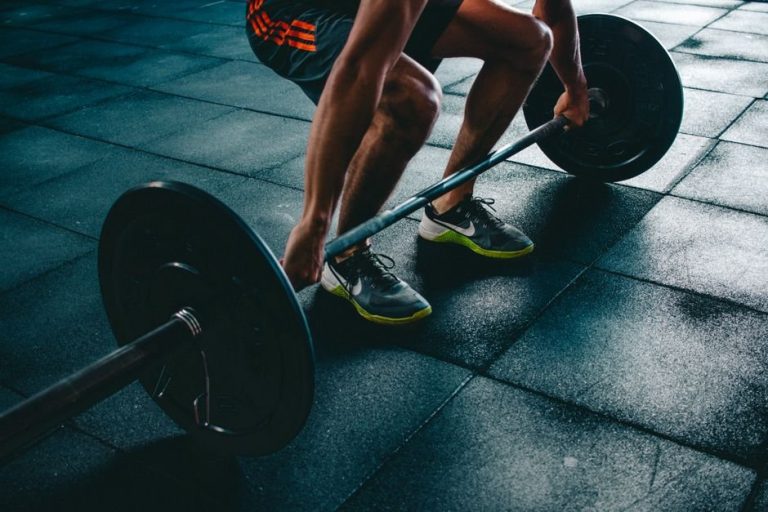
Use the squat as your primary compound lift. Work in the five to ten rep range with controlled tempo. Focus on depth you can own without your lower back rounding or your heels leaving the floor. Add weight only when the current load looks clean for every rep.
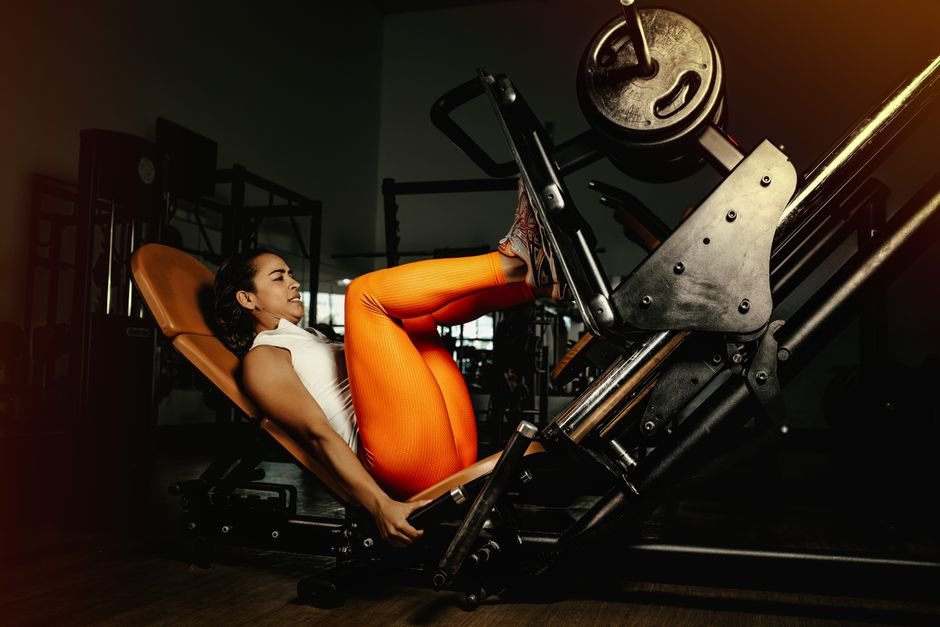
Follow it with the leg press for volume. Because the machine removes the stability requirement, you can push closer to failure safely. Higher rep ranges, anywhere from ten to twenty, work well here. Adjust your foot position to target different areas. A lower, narrower stance hits the quads harder. A higher, wider stance brings more glutes and adductors into play.
If you train legs twice a week, you might squat both days and leg press on one. If you only have one leg day, squat first and leg press second. This gives you the systemic benefits of the free-weight compound and the localized volume of the machine.
Common Mistakes That Kill Your Results
On the squat, cutting depth is the biggest offender. Half squats load your knees heavily without fully engaging your glutes or hamstrings. They also let you move more weight, which strokes your ego and wrecks your joints. Squat to parallel or just below unless a qualified coach has told you otherwise for a specific reason.
Another squat error is letting your knees cave inward on the way up. This is usually a sign of weak glutes or poor foot pressure. Drive your knees out and grip the floor with your entire foot. If they still cave, drop the weight and build the pattern.
On the leg press, the classic mistake is loading too much weight and turning the movement into a quarter-rep hip thrust. If the sled only moves four inches, you are not building muscle. You are just testing your knee cartilage. Use a full range of motion. Your knees should bend to at least ninety degrees without your hips rolling under.
Breathing matters on both. Do not hold your breath randomly. Brace your core before each rep, exhale through the sticking point, and reset before the next one. Proper intra-abdominal pressure protects your spine on squats and keeps your lower back pinned to the pad on leg presses.
The Bottom Line
The squat builds more total-body muscle and carries greater carryover to athletic performance and daily strength. It teaches your body to work as a system, and the research consistently favors compound free-weight movements for functional hypertrophy. If you are healthy, have the mobility, and want the most efficient leg exercise available, the squat wins.
The leg press still has a place. It is excellent for adding volume, training around injuries, and isolating the quads when your lower back or core is already fatigued. It is not a inferior exercise. It is a different tool with a different job.
For busy adults who need results in limited time, start with the squat. Master it. Load it progressively. Then use the leg press to fill in the gaps. That combination will build bigger, stronger legs than either exercise alone.
About the author: href=”https://www.apexfito.com/liam-smith-author-founder-of-apexfito/”>Lia m Smith is the founder of Apexfito and writes evidence-based training guides and gear reviews.
Medical & Editorial Review: This article was reviewed by Liam Smith for accuracy and safety. Content is for educational purposes only.
Related reading: