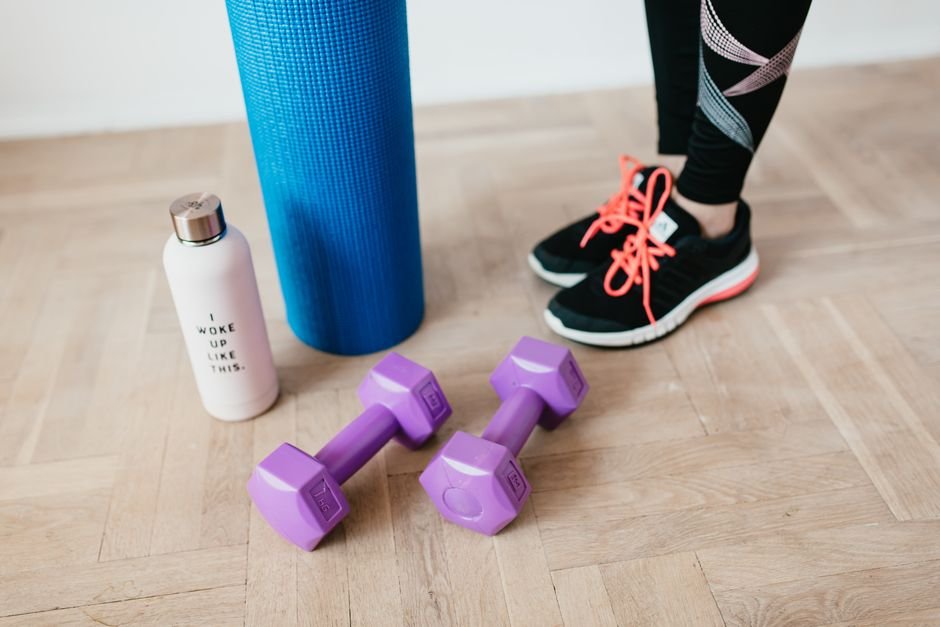
Dumbbell Bench Press Mistakes
5 Dumbbell Bench Press Mistakes That Stall Your Progress
You walk into the gym, grab a pair of dumbbells, and knock out three sets of bench presses before moving on. But months later, your chest looks the same, your shoulders ache, and your numbers barely budge. The dumbbell bench press seems simple— lie back and push— yet small errors turn it from a mass-builder into a joint grinder.
If you are busy and can only train three or four days a week, every rep needs to count. The American College of Sports Medicine emphasizes movement quality and progressive overload as the twin pillars of strength development. You do not need more volume; you need better reps. Here are five mistakes that waste your time, plus how to fix them today.
1. Letting Your Wrists Collapse Backward
>When the load gets heavy, your wrists naturally want to bend so the weight drifts behind your forearms. It feels easier for a second, but it shifts stress from your pecs and triceps to the small joints and ligaments in your wrists. Over time, this causes nagging pain and limits how much weight you can handle.
The National Strength and Conditioning Association recommends maintaining a neutral wrist position so the force travels in a straight line through your forearm and into the dumbbell. That means your knuckles should point toward the ceiling, not behind you.
How to fix it: Before you press, align the dumbbell handle directly over your wrist joint. Grip the metal close to your palm, not up in your fingers. If your wrists still cave, drop the weight by five or ten pounds and treat wrist position as a non-negotiable part of the lift. Some lifters find that gripping the dumbbell slightly tighter helps keep the joint rigid without overthinking it.
2. Losing Scapular Position on the Bench
>Your shoulder blades should stay pulled back and down throughout the set. When they round forward or shrug toward your ears, your front deltoids take over and your rotator cuff gets pinched. This is one of the fastest ways to develop chronic shoulder irritation from pressing.
The International Society of Sports Nutrition and leading strength coaches both tie long-term training consistency to joint health. You cannot build a bigger chest if you are constantly managing shoulder pain.
How to fix it: Before you even pick up the dumbbells, stand tall and squeeze your shoulder blades together. Hold that tightness as you sit on the bench and lie back. Imagine you are trying to put your scapulas in your back pockets. If you feel your shoulders shrug during a set, reset at the top, take a breath, and re-tighten before the next rep.
3. Cutting Your Range of Motion Short
Many lifters stop when their upper arms hit parallel to the floor. At that point, your elbows are roughly at ninety degrees, and you have not given your pecs a real stretch. The dumbbell bench press shines because it lets you lower the weights past your chest, creating a loaded stretch that barbells cannot replicate safely. Shortening the motion robs you of that advantage.
Research aligned with ACSM guidelines shows that resistance training through a full, pain-free range of motion produces greater hypertrophy than partial reps when total volume is matched. You are already doing the work; you might as well get the full benefit.
How to fix it: Lower the dumbbells until you feel a solid stretch across your chest, usually when the handles are slightly outside and below chest level. Your elbows should dip just below the bench line. If you cannot do this without shoulder discomfort, check mistake number two first— your shoulder blades are probably not set. Never force depth by bouncing. Control the descent over one to two seconds, pause lightly where the tension peaks, then press.
4. Flaring Your Elbows Out to Ninety Degrees
This one is everywhere in commercial gyms. You lower the weights, your elbows drift straight out to the sides, and your shoulders internally rotate under load. The position looks like a barbell bench press, but dumbbells are not a barbell. With dumbbells, your arms move independently, so you have the freedom to tuck your elbows and protect your joints.
NSCA programming texts consistently recommend keeping the upper arm angle around forty-five to sixty degrees from your torso for shoulder-friendly pressing. That lets your pecs do the work while your rotator cuff stays stable.
How to fix it: As you lower the weights, keep your elbows angled forward slightly, pointing roughly toward your hips. Think about pushing yourself into the bench rather than pressing the weight to the ceiling. If you are unsure about your angle, film yourself from the front. If your elbows line up with your shoulders at the bottom, bring them in closer.
5. Bouncing the Dumbbells Off Your Chest
A little bounce feels like a cheat code. You get the weight back up without grinding through the sticking point. The problem is that momentum replaces muscle tension, and tension is what builds strength and size. The International Society of Sports Nutrition highlights mechanical tension as a primary driver of muscle protein synthesis. If you bounce, you are turning a strength exercise into a physics trick.
Bouncing also wrecks your shoulder stability. Each bounce jars your scapula loose and lets your elbows flare as you recover.
How to fix it: Treat the bottom of each rep like a controlled landing. Lower the dumbbells over one to two seconds, pause for a half-second when the weights are near your chest, then drive up explosively. If you cannot pause without losing the rep, the weight is too heavy. Drop it, own the tempo, and watch your numbers climb faster than they would with sloppy cheating.
Putting It All Together
Here is what a clean set looks like from start to finish. Lie back with your shoulder blades squeezed together and your feet flat on the floor. Grip the dumbbells so they sit over your wrist joints, not behind them. Lower the weights with your elbows tucked at roughly forty-five degrees. Feel your chest stretch as the dumbbells descend just below chest level. Pause. Press in a straight line, keeping your shoulders pinned to the bench and your wrists solid.
You do not need to overhaul your entire program. You need to fix these five details and load them progressively. The ACSM recommends adding small amounts of weight or reps once you can complete your target sets with solid form. That only works when your joints are positioned to handle the stress.
Busy adults do not have time to rehab injuries caused by careless reps. Nail your setup, respect the range of motion, and press with intention. Your chest, your shoulders, and your schedule will thank you.
About the author: href=”https://www.apexfito.com/liam-smith-author-founder-of-apexfito/”>Lia m Smith is the founder of Apexfito and writes evidence-based training guides and gear reviews.
Medical & Editorial Review: This article was reviewed by Liam Smith for accuracy and safety. Content is for educational purposes only.
Related reading:



One Comment