How Fast Should You Walk? A Harvard Study on Pace and Lifespan
Full disclosure: Some links in this article are affiliate links. We may earn a small commission at no extra cost to you if you make a purchase through them. Our recommendations are based on what real users report, not on commission size.
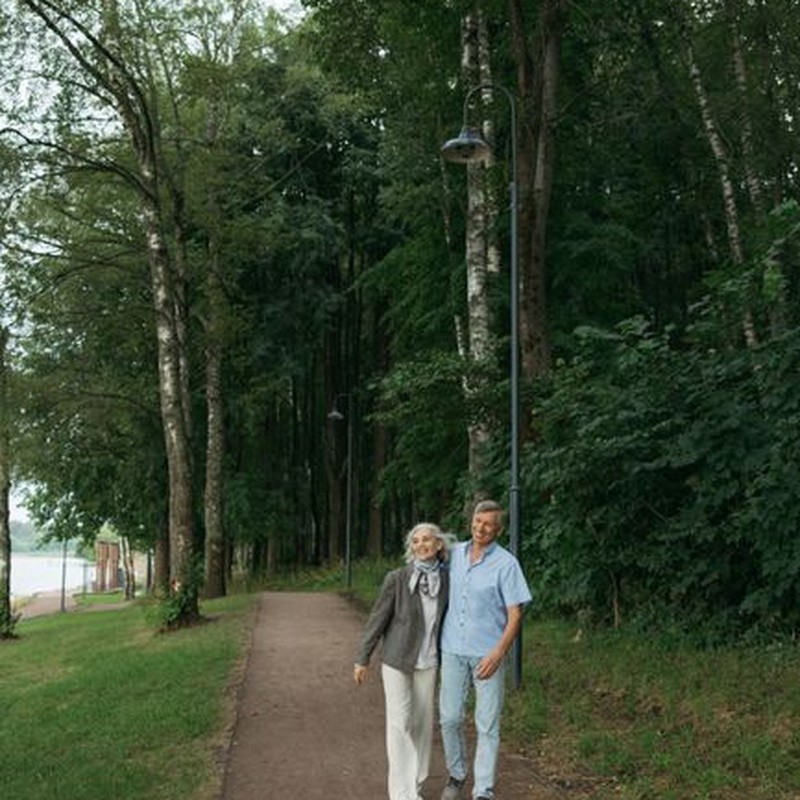
Why Walking Pace Is Getting Attention Now
On October 5, 2026, Firstpost published a headline that stopped a lot of daily walkers mid-stride: a Harvard study had pointed to a target walking pace for lifespan. Short headline, straightforward question, and it landed because most of us have never actually asked it. We count steps. We almost never count speed.
That split shows up in search behavior too. Step count still pulls far more attention than walking pace in the US, and neither term has moved much over the past year. The number of steps is the thing people chase.
Makes sense. A step count is easy to understand and easy to win. Your watch buzzes at 10,000, you get a little celebration animation, and you feel finished. Pace gives you none of that feedback. It’s invisible unless you’re paying attention to your breathing.
But pace is the part of a walk that actually changes your heart rate and your breathing, and based on a growing stack of research, possibly how long you stick around. It’s also the part you can adjust on the spot with zero equipment. No gym, no wearable, no new shoes. You walk a little more purposefully for part of the route you were already doing.
That’s why the conversation is worth having now. Most of us already walk. Many of us walk the way we talk to a neighbor across the fence: comfortable, slow, easy to hold for an hour. Turning fifteen or twenty minutes of that into something brisker costs nothing except a little discomfort.
What brisk actually means
One definition, and it works without a heart rate monitor. While you’re walking, try talking out loud.
- Too easy: you can sing a full song, or hold a long phone conversation without pausing for air.
- Brisk: you can speak in short sentences, but you’d rather not. You could not sing if you tried.
- Too hard for a longevity walk: you can only get out a word or two. That’s a run or a hill sprint.
Public-health cadence guidance sometimes uses roughly 100 steps per minute as a marker of moderate-intensity walking, which for most adults looks like a purposeful stride rather than a stroll. You don’t need to count anything. The talk test gets you into range in about ten seconds.
What brisk is not: racing. It isn’t power-walking with clenched fists and locked elbows, and it isn’t chasing a pace that leaves your shins sore for two days. On group walks I’ve watched someone read a number somewhere, decide they had to hit it, and turn a pleasant evening loop into a stress test. Two weeks later they’re not walking at all.
One honest caveat before we go further. Studies like the one behind the Harvard coverage are observational, meaning they show a link between faster walking and better outcomes rather than proving that speed itself causes the benefit. Faster walkers may simply be healthier to begin with. The finding does point the same direction as a lot of other walking research, and brisk walking is about as low-risk as exercise gets for most healthy adults. If you have a heart condition, unmanaged blood pressure, or joint problems, run it past your doctor first.
The rest of this article covers what the study suggests about pace and lifespan, how to find your own brisk gear without staring at a watch, and a beginner-friendly way to build brisk minutes into the walk you already take, even if that walk is right now a slow lap around the block.
What the Harvard Study Actually Says About Pace and Lifespan
The Firstpost coverage from October 5, 2026 reported on Harvard-affiliated research that looked at walking pace and lifespan together. The finding, as reported: people who habitually walk at a brisker, more purposeful speed tended to live longer than people who move slowly. The piece framed this as a target pace worth aiming for.
I have read a lot of these stories, and the useful part is never the headline. It is the part that still holds up a week later. To get there, you have to separate three things: what the research measured, what it found, and what it cannot tell you.

What the research actually measured
Walking speed is one of the easiest things to record in a large study and one of the most revealing. It quietly captures heart function, leg strength, balance, joint health, and how much reserve a body has left when it is tired. Clinicians have treated it as a rough vital sign for years for exactly that reason.
What the study did not do is put people on a speed program and watch them live longer. It looked at people as they already were, measured how fast they walked, and compared that against how long they lived. The reporting described a pace band tied to better longevity. I am not going to quote a figure here, because I have seen this same story retold with several different numbers, and a fabricated target is worse than no target at all. If you want the exact pace the reporting cited, take it from the Firstpost article rather than from anyone summarizing it, including me.
Association is not causation
Faster walkers lived longer. That is a relationship, not a mechanism, and nothing in this body of work proves that deliberately speeding up adds years to your life.
Think about who walks fast without trying. They usually have healthier hearts, stronger legs, better balance, less chronic pain, and fewer conditions that make a slow shuffle the only available option. A brisk pace is often a sign of good health as much as a contributor to it. When a fast walker outlives a slow one, you are partly watching health show its work.
None of that makes pace useless. It makes it a marker, and markers are worth having because you can train them.
What the finding does mean
- Walking pace reflects cardiovascular fitness, leg strength, and mobility, and it is easy to track without any equipment.
- A faster habitual pace showed up alongside longer lifespans in the research the coverage described.
- Pace responds to training. More hills, a few faster stretches, more total distance, and your comfortable speed tends to creep up over months.
What it does not mean
- Slow walkers are not doomed. Plenty of people move slowly and live long, healthy lives.
- Speeding up on purpose does not come with a promised number of extra years. Nobody has measured that.
- Pace is not a pass or fail test. A slow walk you actually take beats a fast walk you keep putting off.
I have watched this in my own neighborhood loop. The people who got faster over a couple of years were not chasing a number from a news story. They added a hill, they added ten minutes, they kept showing up. The pace was a side effect, not the project.
How to use this without overthinking it
Treat pace as a dial you can turn rather than a score you have to hit. My own rule is simple: on most walks, I want to be working hard enough that talking is possible but singing is not. That single check tells me more than any speed figure, and it adjusts automatically on days when I am tired or the weather is ugly.
If you are starting from zero, ignore pace entirely for the first month. Your only job is to get out the door and build the habit. Distance and duration first. Speed later. Going from inactive to active is the biggest health upgrade available to you, and it happens long before pace enters the picture.
The honest summary: this research adds solid evidence that how fast you walk says something real about how long and how well you live. Use it as a nudge to put a little more intention into your walks. Do not use it as a reason to worry about the speed you are at today.
Pace vs. Steps: How to Measure Brisk Walking
When the Harvard study on walking pace made headlines in October 2026, firstpost.com reported on a target pace for longevity. The study did not hand out one magic speed that works for every body. That is actually useful. It means you can measure brisk walking with tools you already own: your breath, your effort, a landmark, and maybe your phone. No lab coat required.
The talk test is still the simplest check. Use the same brisk definition from section 1: you should be able to talk in sentences, but singing should feel impossible. If you are gasping between words, ease off. If you could belt out a chorus, pick up the pace. This works on a sidewalk, a treadmill, or a mall walk. I use it on my own loop because it never needs charging.
Next, try the 0-to-10 effort scale. Aim for a 5 or 6. You are breathing harder, you feel warm, and you could still answer a question, but you would rather not give a speech. A 3 is a stroll. An 8 is a jog or a steep hill. I checked my default pace on a familiar loop last week and realized it was sitting at a 3. Bumping it to a 6 made the walk feel like exercise without making it miserable.
If you have a phone or watch, cadence can be a rough checkpoint. Count your steps for 30 seconds and double it. Brisk walking usually feels quick but controlled. There is no official steps-per-minute number that fits everyone, so do not turn this into a scorecard. Use it once a week to confirm that your quick pace is actually quicker than your default. If the number is higher than your usual stroll and you can still pass the talk test, you are in the right neighborhood.
Landmarks are my favorite low-tech trick. Pick a neighbor’s house, a mailbox, or a tree down the street. Try to pass it faster than you normally do. Or walk a familiar loop 1 to 2 minutes faster than usual without breaking into a jog. That small push is often enough to shift you from a stroll into a brisk walk. It also gives you something to aim at besides a screen.
Steps and pace do different jobs. Steps measure volume, or how much you move. Pace measures intensity, or how hard you are working. A 30-minute brisk walk can do more for your cardio fitness than a slow 45-minute stroll, but both beat sitting on the couch. If you only have 20 minutes, make them brisk. If you have 45 minutes and want to mosey, fine, but add a few brisk minutes in the middle. Your heart does not need a perfect plan. It needs a reason to work a little harder than usual.
One wearable tip: do not chase a perfect number. A heart rate monitor is actually useful when you already know your max heart rate or when you want to keep easy days easy and hard days honest. For brisk walking, it can show whether you are drifting into a stroll or pushing too hard. But most beginners do not need one. The talk test and the effort scale will get you close enough, and they cost nothing.
If you do want a simple tracker to check your pace, check current prices on Amazon. And if you have a pacing trick that works for you, share it in the comments. I read every one.
A Simple Brisk Walking Plan for Beginners
If the Harvard research covered in October 2026 makes one thing clear, it’s that how fast you walk matters, not just how far. Knowing that and actually doing it are two different things. Most of us already walk to the car, the mailbox, the dog. Turning that into purposeful brisk walking takes about six weeks of small, repeatable steps.
Three walks a week, 15 to 20 minutes each
Three is enough. Not five, not seven. Each walk follows the same simple shape:
- Warm up 3 to 5 minutes at an easy pace. Your normal wandering-around speed. This isn’t a formality. Cold calves and stiff ankles don’t enjoy sudden speed, and skipping the warm-up is the fastest way to make week two hurt.
- Pick up the pace for 8 to 12 minutes. Faster than comfortable, but you can still speak a full sentence out loud. If you’re gasping for air, back off. That middle block is the part doing the work; everything else is a runway.
- Cool down 3 to 5 minutes easy. Let your breathing settle before you walk back through the door.
That’s 15 to 20 minutes total, three times a week. It sounds too easy. It’s supposed to. Beginners quit when the first week feels like punishment.
If continuous brisk walking feels hard, use intervals
Plenty of people can’t hold a brisk pace for ten minutes straight on day one, and that’s fine. Swap the middle block for intervals: 1 minute brisk, 2 minutes easy, repeat 5 to 6 times.
Short efforts also keep your form from falling apart, which matters more than most beginners realize. One minute is short enough that you finish each round still walking tall instead of slumped forward and shuffling.
Add five minutes a week to the brisk portion
Once the first week feels routine, extend the brisk block by about 5 minutes per week. Ten becomes fifteen, fifteen becomes twenty, and so on. The target is holding 30 minutes at an effort of 5 or 6 out of 10 — a pace that feels purposeful and slightly uncomfortable, where talking is possible but not effortless.
For most beginners that takes six to eight weeks, and it’s not a straight line. Some weeks you’ll feel great, others you’ll feel like you’re dragging a piano. Both are normal. Progress shows up in the average of your weeks, not in any single walk.
And when life intervenes, don’t start over. Miss a week for travel, a cold, or a brutal stretch at work, and simply restart at the last week that felt manageable rather than trying to make up the lost ground.
Make it stick with placement, not willpower
Timing beats motivation every time. Walks scheduled right after a meal, or during a lunch break, survive busy weeks far better than walks penciled in for later in the day.
Two small habits help more than any app. Keep your shoes by the door, and set out your reflective vest or jacket the night before if you walk early or after dark. When the gear is already there, the decision is made for you.
Two 10-minute strength sessions support the walking
Walking is a full-body chain, and the weak links show up first in the calves, hips, and ankles. Twice a week, spend 10 minutes on:
- Bodyweight squats — 2 sets of 10, slow and controlled.
- Calf raises — 2 sets of 15, pausing at the top.
- Hip stretches — a hip flexor stretch and a figure-four stretch, about 30 seconds per side.
That’s it. No gym, no equipment. These few minutes make faster walking feel smoother within a couple of weeks, especially on hills.
One safety note before you begin
Build gradually and let the plan feel almost too easy during the first two weeks. If you have heart disease, joint issues, or balance problems, talk to your doctor for clearance before you start pushing the pace. A brisk walk is a wonderful thing to add to your life. It’s a bad thing to add all at once.
You don’t need much gear either — supportive shoes that aren’t worn flat, a simple pedometer if you like seeing numbers, and a reflective vest if you walk in low light. Prices on Amazon shift often, so check current prices before you buy. Then come back and share your pace or your routine in the comments: did three straight walks fit your week better, or the interval version? That’s how the next beginner figures out where to start.