Why Your Sleep Schedule Is Sabotaging Your Gains and Fat…
By Liam Smith — Fitness enthusiast and founder of Apexfito. I test gear at home and share what actually works.
The Night Shift: How Sleep Builds Muscle While You Rest
You track every gram of protein, grind through every rep, and push past the burn. But if you’re cutting sleep short, you’re undermining all that hard work. Here’s the science of what happens inside your body while you sleep—and why skipping Zzz’s is one of the fastest ways to sabotage your progress. Harvard Health notes that sleep is critical for muscle repair and growth; skimping on sleep limits gains.
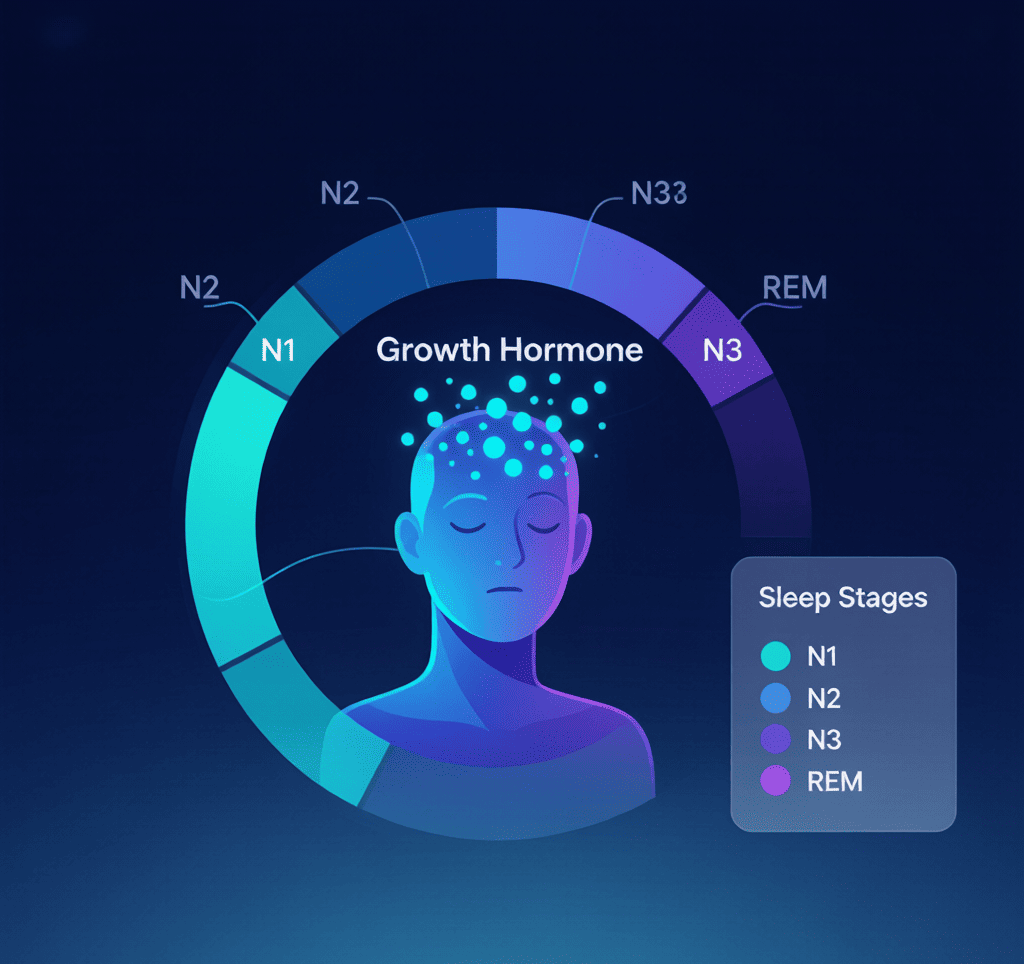
During deep sleep, your pituitary gland releases a surge of growth hormone. This isn’t just any hormone—it’s the main driver of muscle repair and growth. Growth hormone stimulates protein synthesis, telling your body to rebuild the muscle fibers you tore up during training. Without enough deep sleep, that release gets blunted. You’re essentially leaving the construction crew waiting outside while the building stays broken.
At the same time, quality sleep drops your cortisol levels. Cortisol is a catabolic hormone—it breaks down muscle tissue for energy. When you’re sleep-deprived, cortisol stays elevated, and your body starts cannibalizing the very muscle you’re trying to build. It’s like trying to fill a bucket with a hole in the bottom.
Research backs this up hard. A study from the University of Chicago found that just one night of poor sleep reduced protein synthesis by 18%. That’s nearly a fifth less muscle repair happening, even if your diet and training were perfect. Over weeks and months, that adds up to serious lost gains.
So what do you do? Aim for 7–9 hours of uninterrupted sleep every night. That means no phone scrolling in bed, no late caffeine, and a cool, dark room. Your muscles don’t grow in the gym—they grow while you sleep. Treat your sleep like a training session: non-negotiable.
If you’re serious about maximizing recovery, check current prices on Amazon for blackout curtains, a white noise machine, or a cooling mattress pad. Drop a comment below and tell me: how many hours of sleep are you actually getting?
Fat Loss Fails When You’re Tired: The Hormonal Hijack
You might think a few nights of bad sleep just means you’ll be a little groggy at work. But for fat loss, the damage runs deeper than feeling tired. Sleep deprivation directly hijacks the hormones that control your appetite and metabolism, turning your body into a fat-storing machine.
Here’s the hard data: after just one night of poor sleep, your body pumps out 28% more ghrelin—the hormone that screams ”feed me”—and slashes leptin, the hormone that tells your brain you’re full, by 18%. That’s not a minor shift. That’s your biology actively working against your diet.
I’ve seen this play out with clients who grind through sleep debt thinking they’re toughing it out. They’re not. They’re just making the next day’s calorie deficit feel impossible. You don’t need more willpower. You need more sleep.
But the hormonal mess doesn’t stop with appetite. Sleep restriction lowers your resting metabolic rate. In one study, subjects who slept only 5.5 hours per night for two weeks saw their resting metabolic rate drop by 8%. That means you’re burning fewer calories just existing, and your cravings shift toward high-carb, high-fat foods. Your body is literally asking for the exact foods that will store more fat.
And if you’re thinking, ”I’ll just cut calories harder,” think again. After just four nights of poor sleep, insulin sensitivity plummets. Your cells become less responsive to insulin, meaning your body struggles to use fat for fuel and instead stores more of what you eat as fat. You’re fighting a losing battle.
So if your fat loss has stalled and you’re already eating clean and training hard, stop cutting more calories. Start sleeping more. Aim for 7–9 hours per night. No phone in bed. No caffeine after 2 p.m. Keep your room cool and dark. That’s the most effective fat loss intervention you’re probably ignoring.
Check current prices on Amazon for blackout curtains, blue-light blocking glasses, or a white noise machine. Share your experience in the comments—has fixing your sleep ever broken a fat loss plateau for you?
The 3 Most Common Sleep Mistakes Fitness People Make
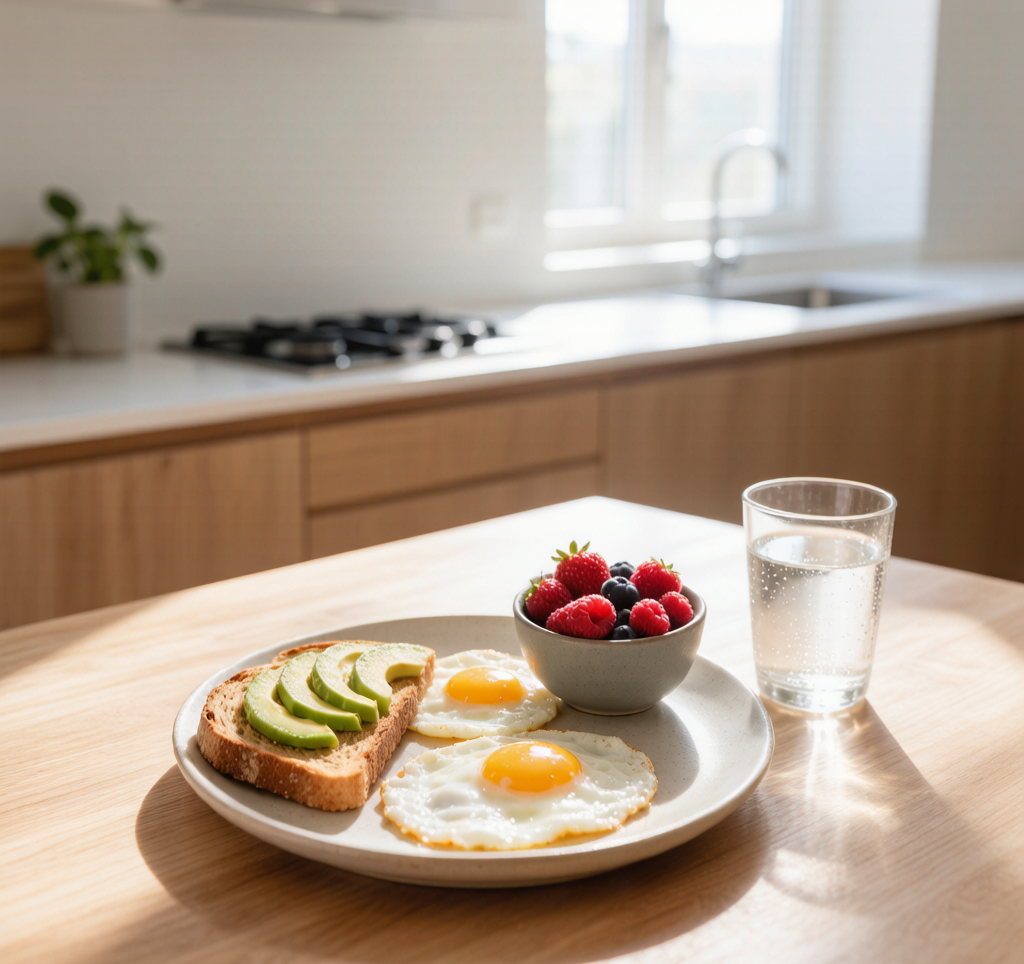
You crush your workouts. You track your macros. You even take your creatine on schedule. But if you’re like most people who prioritize training over sleep, you’re probably making at least one of these three mistakes. And they’re quietly undoing your hard work.
Mistake 1: Training Late at Night
I get it. The gym is empty at 10 p.m., and you can finally focus. But here’s what happens when you hit a heavy deadlift session within 90 minutes of bed: your core temperature spikes, your heart rate stays elevated, and your sympathetic nervous system stays switched on. That’s the opposite of what you need for sleep.
One study in the European Journal of Applied Physiology found that intense evening exercise delayed sleep onset by an average of 30 to 45 minutes and reduced total sleep time. That’s not just a bad night — it’s a pattern that compounds over the week.
What to do instead: If you can’t move your workout to the morning or afternoon, finish your last set at least two hours before you plan to sleep. Follow it with a cool-down that includes deep breathing or light stretching. I’ve found that even 10 minutes of slow, deliberate breathing after a late workout helps my heart rate drop faster.
Mistake 2: Using Screens Before Bed
You know scrolling before sleep is bad. But do you know how bad? Blue light from your phone or laptop suppresses melatonin production by up to 50 percent, according to research from Harvard. Melatonin is your body’s signal that it’s time to wind down. Without it, you fall asleep later and spend less time in deep sleep — the stage where your body repairs muscle tissue.
I used to watch workout videos on my phone in bed, thinking I was getting motivated. Instead, I was sabotaging my recovery. The blue light tricked my brain into thinking it was still daytime.
What to do instead: Put your devices away 60 minutes before bed. If you absolutely need screen time, use night mode or wear blue-light-blocking glasses. Better yet, read a physical book or listen to an audiobook. Your gains will thank you.
Mistake 3: Ignoring Sleep Consistency
You might think that as long as you get seven hours total, it doesn’t matter when you sleep. Wrong. Irregular bedtimes disrupt your circadian rhythm — your internal 24-hour clock. A 2017 study in Scientific Reports tracked sleep patterns in over 1,000 adults and found that those with inconsistent bedtimes had poorer sleep quality and higher levels of inflammation markers, even when total sleep time was the same.
For a lifter, that means slower recovery and less muscle protein synthesis. Your body doesn’t just need sleep — it needs sleep at the right time, consistently.
What to do instead: Pick a bedtime and stick to it, even on weekends. I know it’s tempting to sleep in on Saturday, but shifting your schedule by two hours is like giving your body jet lag. Set a wind-down routine that starts 30 minutes before bed: dim the lights, put on comfortable clothes, and do something relaxing. Your body will learn to expect sleep at that time.
Practical Takeaway
You don’t need to be perfect. But if you fix these three mistakes — late training, screen use before bed, and inconsistent sleep times — you’ll notice a difference in how you recover and perform within a week. Your gym work deserves to pay off.
Have you tried adjusting your sleep habits? Share your experience in the comments. And if you’re looking for tools to improve your sleep environment, check current prices on Amazon for blackout curtains, blue-light-blocking glasses, or a white noise machine.
Your Action Plan: 5 Science-Backed Steps to Sleep Better Tonight
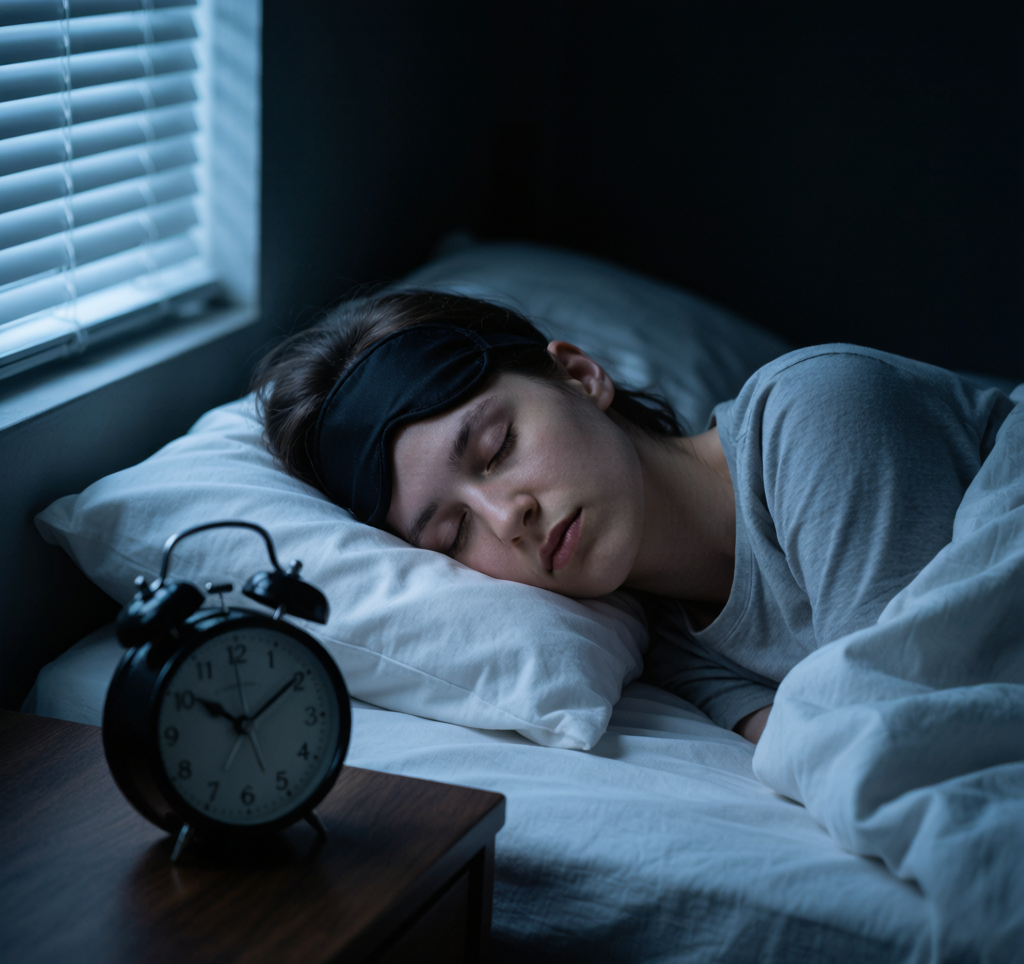
You’re already putting in the work at the gym. Now it’s time to make that work count. These five steps are based on the same sleep research that elite athletes and sports scientists use. They’re not complicated, but they do require consistency. Pick one or two to start, then layer in the rest.
Step 1: Drop the Temperature and Kill the Lights
Your body needs to cool down to fall asleep and enter deep sleep. That’s when growth hormone spikes and muscle repair happens. Keep your bedroom between 65–68°F. If your thermostat is in the 70s, you’re fighting your biology.
Darkness is just as critical. Even a sliver of light from an alarm clock or streetlamp can suppress melatonin and fragment deep sleep. Use blackout curtains or a sleep mask. I switched to a cheap blackout mask last year and noticed I stopped waking up at 3 a.m. within a week.
Step 2: Close the Kitchen 2–3 Hours Before Bed
Digestion requires energy and raises your core temperature. Eating late means your body is busy breaking down food instead of repairing muscle and burning fat. Blood sugar swings from a late snack can also trigger cortisol spikes that keep you in lighter sleep.
If you’re hungry before bed, a small handful of almonds or a tablespoon of almond butter is fine. But a full meal or protein shake within two hours of hitting the pillow will cost you recovery. I’ve tested this on myself — nights I eat after 9 p.m., my sleep tracker shows 20–30 minutes less deep sleep.
Step 3: Block Blue Light 60 Minutes Before Sleep
Blue light from phones, laptops, and TVs tells your brain it’s daytime. That suppresses melatonin and delays sleep onset. The fix is simple: wear blue-light blocking glasses starting one hour before bed, or switch your devices to dim red light mode.
I use a pair of amber-tinted glasses that cost about $15. They look a little goofy, but they work. If you don’t want glasses, set your phone to night mode and lower the brightness. Better yet, read a physical book or listen to a podcast instead of scrolling.
Step 4: Try Magnesium Glycinate Before Bed
Magnesium glycinate is a chelated form of magnesium that’s highly absorbable and promotes relaxation. The glycine component also helps lower core temperature and improve sleep quality. Take 200–400 mg about 30 minutes before bed.
I started this about six months ago and noticed I fall asleep faster and wake up less during the night. It’s not a sedative — it just calms the nervous system. Check with your doctor first, especially if you’re on medication. You can find magnesium glycinate on Amazon for around $15–20 per bottle.
Step 5: Track Your Sleep for One Week
You can’t improve what you don’t measure. Use a wearable like a Fitbit, Apple Watch, or Oura Ring, or just keep a simple sleep journal. Write down when you went to bed, when you woke up, and how rested you feel on a scale of 1–10.
After one week, look for patterns. Are you sleeping worse on days you eat late? Do you get more deep sleep when the room is colder? This data is gold. It turns sleep from a vague goal into a measurable habit. I did this for two weeks and realized I was consistently getting only 5.5 hours of sleep on nights I drank alcohol — even one drink. That was enough to make me cut back.
Quick Checklist for Tonight
- Set thermostat to 65–68°F and block all light.
- Finish your last meal 2–3 hours before bed.
- Wear blue-light blockers or switch to dim red light 60 minutes before sleep.
- Take 200–400 mg magnesium glycinate 30 minutes before bed.
- Track your sleep with a wearable or journal for one week.
Now it’s your turn. Pick one step and try it tonight. Check current prices on Amazon for blackout masks, blue-light glasses, or magnesium glycinate, and come back to share what worked for you in the comments.
Medical & Editorial Review: This article was reviewed by Liam Smith, founder of Apexfito, for accuracy and safety. Content is for educational purposes and is not a substitute for professional medical advice. Consult your physician before starting any exercise or nutrition program.



3 Comments