The Best Types of Exercise to Lower Inflammation
Full disclosure: Some links in this article are affiliate links. We may earn a small commission at no extra cost to you if you make a purchase through them. Our recommendations are based on what real users report, not on commission size.

What Chronic Inflammation Is and Where Exercise Fits
Type “inflammation” into Google and you land in a crowded neighborhood. Google Trends shows U.S. search interest in the term averaged 75.4 over the past 30 days, up from a 12-month average of 66.1. A lot of that traffic comes from people hunting for habits they can actually control: sleep, food, stress, and movement.
Movement is what this guide focuses on. Before the specifics, though, the word itself needs untangling. Inflammation is not one thing. It is two, and they behave nothing alike.
Acute Inflammation: The Short, Loud Kind
Acute inflammation is the body’s emergency response. You roll an ankle and within minutes it goes red, warm, and puffy. That is not a malfunction. Immune cells are flooding the area to clear damaged tissue and start repairs. The same sequence runs when you fight off a cold. It is temporary, it is localized, and without it, injuries would not mend and infections could spiral.
Chronic Inflammation: The Quiet Kind
Chronic inflammation is a different animal. It is low-grade, systemic, and it lingers for months or years. You cannot see it or poke at it the way you can a swollen ankle, but it shows up in blood markers like C-reactive protein (CRP) and interleukin-6 (IL-6). Over time, that constant immune activation is linked to heart disease, type 2 diabetes, rheumatoid arthritis, and other conditions. It is not a disease on its own. It is an underlying process that makes many diseases more likely or more severe.
What fuels it? Genetics and age play a role you cannot change. Stress, poor sleep, smoking, excess body fat, and diet are the levers you can. Exercise pulls on several of them at once.
What the Latest Reporting Says
On September 18, 2026, Verywell Health published “We Asked a Doctor the Best Types of Exercise to Reduce Inflammation.” No single workout came out on top, and no supplement did either. The takeaway was consistent: regular, moderate movement beats occasional all-out sessions.
I spent most of my twenties believing soreness was the receipt that proved a workout counted. Two-a-days, boot camps, whatever left me flat on the floor afterward. My knees filed complaints, my sleep got worse, and my resting heart rate never budged the way I expected. What actually moved the needle was boring: four brisk walks a week, two lifting sessions, and a stretching routine I did not quit. Consistency beat intensity every time.
That is not an argument against hard training. It is an argument against hard training as your only tool. Thirty brisk minutes four days a week will likely do more for your inflammatory markers than one brutal session followed by a week on the couch.
How Exercise Helps and What It Does Not Do
Exercise does not eliminate chronic inflammation. No workout flips a switch. What movement does is influence the conditions that keep inflammation simmering:
- Sleep. Consistent moderate activity improves sleep quality, and poor sleep keeps inflammatory pathways active.
- Stress. Movement blunts circulating cortisol, the hormone that can leave the immune system stuck on alert.
- Blood sugar. Working muscles pull glucose out of your bloodstream, which improves insulin sensitivity over time. Chronically high blood sugar promotes inflammation.
- Body composition. Visceral fat behaves like an endocrine organ, releasing inflammatory signals. Exercise chips away at it, though diet does more of the heavy lifting.
These are gradual effects measured in weeks and months, not in single sessions. They also stack on top of medical care rather than replacing it. If you have a diagnosed inflammatory condition such as rheumatoid arthritis, lupus, Crohn’s disease, or psoriasis, or if you take prescription medication like biologics or corticosteroids, run any new routine past your clinician first. Exercise can be a genuinely useful addition to treatment. It is not a substitute for it.
Where to Start This Week
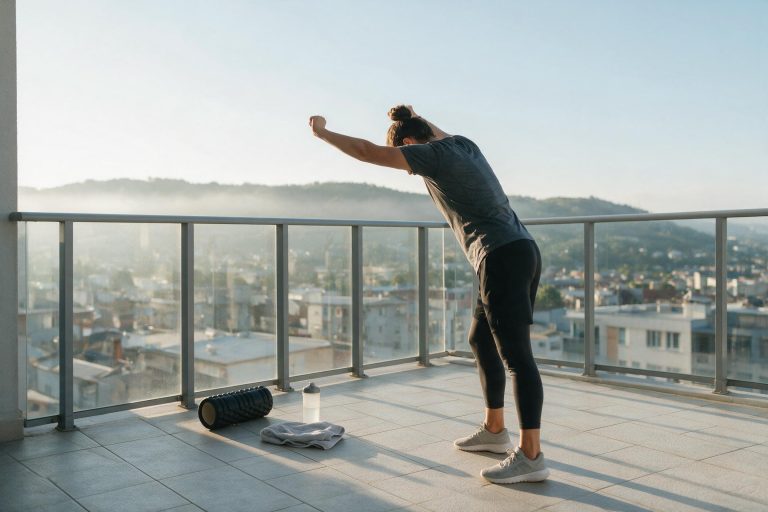
If you are inactive right now, do not rebuild your entire life on a Monday. Pick one behavior and repeat it for two weeks. A 10-minute walk after dinner. Five bodyweight squats while the coffee brews. A slow stretch before bed.
Two weeks of that teaches you more than two hours of planning will. Once it sticks, add a second piece. The next three sections break down aerobic work, strength training, and mind-body movement: how much to do, how hard to push, and where beginners usually overdo it.
Aerobic Exercise: The Most Reliable Place to Start
When Verywell Health asked a physician in September 2026 about the best types of exercise to reduce inflammation, aerobic activity sat near the top of the list. Ahead of anything fancy. Ahead of anything expensive.
That lines up with what the research keeps showing. Inflammation responds to repeated, moderate, whole-body movement you actually keep doing. It does not care about your gym membership or your new heart-rate strap.
Which brings us to the beginner version, and the version most people quit.
Start with ten minutes, not sixty
Ten minutes of brisk walking after a meal is a workout. Not a warm-up.
Three of those across a day adds up to thirty minutes of moderate aerobic activity, and for a lot of beginners it is easier on the knees and hips than one long session. You reset posture and load three times instead of grinding through one block, so your form holds up better. If you have joint pain, afternoon swelling, or a body that gets cranky past the twenty-five-minute mark, splitting it up is not cheating.
Post-meal timing has a practical bonus. Walk within roughly fifteen to thirty minutes of eating and your working muscles pull glucose out of your bloodstream while it is still elevated. That is why a short walk after dinner tends to feel more useful than the same walk three hours later.
Use the talk test instead of a heart-rate zone
Here is the whole intensity guide, no wearable required:
- Too easy: you can belt out a song lyric and hold a phone call comfortably.
- Moderate, the target: you can speak in full sentences, but singing is out of the question. Your breathing is deeper, you are slightly warm, and you could keep going for a while.
- Vigorous: you can only get out a few words at a time.
Moderate is where public health guidance for general health points, and it is the intensity most adults can repeat five or six days a week without wrecking their recovery. I have watched people torch themselves with hard intervals in week one and then disappear for a month. The person walking at a chatty-but-not-singing pace is the one still moving in March.
Build toward 150 minutes a week
Public health agencies in the United States and Canada both land on roughly 150 minutes of moderate aerobic activity per week for adults, spread across most days rather than crammed into a weekend. That is about 30 minutes on five days, or three ten-minute walks on five days using the format above.
Get there in steps:
- Weeks 1 to 2: one 10-minute walk after your largest meal, daily.
- Weeks 3 to 4: two 10-minute walks on at least four days.
- Weeks 5 to 8: push one walk to 20 minutes and add a third short one. Bigger days now run 40 to 50 minutes.
- Beyond that: hold 150 minutes a week for a month before adding intensity. Frequency first, duration second, speed last.
Shoes that do not hurt are the only equipment you need.
Pick the modality you will do on a bad day
Walking, cycling, swimming, water walking, and dancing all deliver aerobic work. The physiology does not care which one you pick. Your consistency does.
So choose by your worst day, not your best one. If it rains for a week straight where you live, a stationary bike keeps you honest. If your knees ache on pavement, the pool takes load off your joints while your heart still gets the message. If motivation is the real obstacle, three songs of dancing in your kitchen count, and it is hard to dread.
I keep a cheap indoor option around for the months I cannot get outside, and it did more for my consistency than any program change I have made. Boring beats heroic.
Break up the sitting, every hour
Long uninterrupted sitting sends its own signal, separate from whether you exercised this morning. Standing up and moving for about two minutes every hour helps with blood sugar handling and circulation, and it is the easiest win in this section.
Set a timer. Walk to the far bathroom. Do ten slow bodyweight squats or march in place. Two minutes, then sit back down.
An under-desk bike or a treadmill desk folds that movement in without you thinking about it. If you have been curious, it is worth checking current prices on Amazon before you commit. And if you already have a routine that works, tell us about it in the comments. What actually got you moving on the days you did not feel like it?
Strength Training, Yoga, and Tai Chi: Small Doses, Real Benefits
Aerobic work does most of the heavy lifting for inflammation, but it isn’t the whole picture. Resistance training and mind-body practice cover gaps steady-state cardio can’t reach: muscle preservation, joint support, stress regulation, and sleep.
Verywell Health ran a piece in September 2026 asking a doctor which exercise types best reduce inflammation. The answer wasn’t one magic modality. It was a mix. That matches what exercise-immunology research has suggested for years: the benefit comes from consistency across different kinds of movement, not from one perfect workout.
Two short strength sessions is enough to start
Twice a week. Not five times, not daily, and not 90 minutes a session.
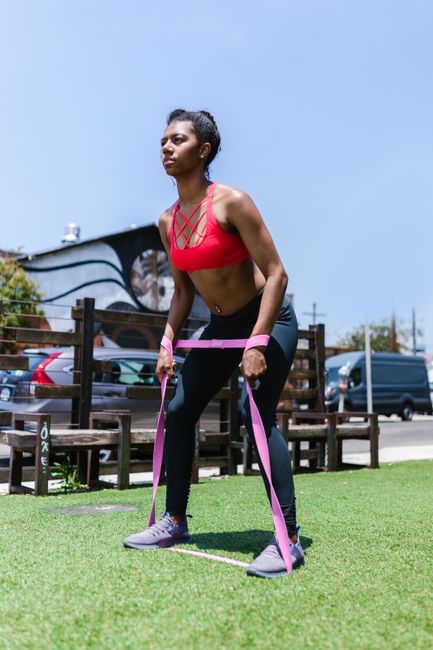
Four movements cover your major muscle groups, and a resistance band handles the only equipment you need:
- Squats to a chair. Stand in front of a sturdy chair, lower yourself until you lightly touch the seat, then stand back up. The chair works as a depth gauge and a safety net.
- Wall push-ups. Hands on the wall at chest height, body straight, lower your chest toward the wall. As it gets easy, step further back.
- Glute bridges. Lie on your back with knees bent and feet flat. Squeeze your glutes and lift your hips until your body forms a straight line from knees to shoulders.
- Standing rows with a band. Anchor the band at chest height — a door hinge, a railing, a solid post. Pull the handles toward your ribs, squeezing your shoulder blades together.
Do 2 to 3 sets of each for 8 to 15 reps. Here’s the part people get wrong: you don’t have to grind to failure. Stop with two or three good reps left in the tank. Most of the strength and metabolic benefit lives there, and it’s far easier to recover from. I’ve watched clients make steady progress for months with a $12 band and the wall at the end of a hallway. Heavy iron is optional.
Why does any of this matter for inflammation? Working muscle releases signaling molecules that help regulate immune activity, and it improves glucose handling — which counts, because blood sugar swings feed inflammatory pathways. Muscle also protects your joints, and aching joints are a major reason people stop moving altogether.
Yoga and tai chi: gentle, but not filler
These practices get filed under “relaxation” and dismissed. That’s a mistake. Research on yoga and tai chi regularly links practice to lower perceived stress and better sleep quality. Neither is a soft outcome. Chronic stress keeps cortisol elevated, and cortisol feeds inflammatory signaling. Short sleep does the same thing. If a 12-minute bedtime routine improves both, it’s doing real physiological work.
The practical version: 10 to 15 minutes of yoga or tai chi on your rest days. Pick a short video or a handful of poses you already know — cat-cow, child’s pose, a seated spinal twist, legs-up-the-wall. Tai chi’s slow weight shifts also train balance, which is worth having as the decades add up.
A short flow before bed beats a 60-minute class you keep postponing. That’s not a motivational slogan; it’s how habit formation works. The session you actually do is the one that changes anything.
One caution: don’t add everything at once. Two strength days and two or three short yoga sessions, alongside your walks, is plenty for the first month. Build the habit first, then layer on more.
How Much Is Too Much? Recovery, Myths, and a Simple Week
Every spring the same cycle plays out in my neighborhood. People who walked comfortably all winter start sprinting hills, spend three days limping, then disappear until the weather changes again. Inflammation doesn’t respond to effort spikes. It responds to repeatable habits, which is a much less dramatic pitch.
Knowing which types of exercise calm inflammation is the easy part. Figuring out how hard and how often is where beginners get stuck. Interest has climbed, too. Google Trends data for the past year shows searches for inflammation running above their 12-month average over the most recent 30 days, which tells me plenty of people are hunting for answers right now.
Soreness measures novelty, not progress
Do 40 bodyweight squats after two months of walking and you’ll be sore tomorrow. That soreness means your muscles met something unfamiliar. Nothing more. It says nothing about whether your inflammation improved, whether your heart got stronger, or whether you built anything worth keeping.
The real problem is what chasing soreness does to your schedule. Soreness-seekers train hard, recover slowly, miss days, then try to make up for lost time with another big session. I’ve done that to myself more times than I want to admit, and the weeks I felt best were never the weeks I destroyed myself.
What a genuinely hard session does to your body
Very intense training temporarily raises inflammatory markers. Hard efforts are typically followed by short-term bumps in things like IL-6 and CRP, and that response is normal. It’s part of how the body adapts. A hard workout followed by rest is a signal to rebuild. A hard workout followed by another hard workout, and another, is a signal that never gets answered.
For someone managing chronic inflammation, the practical version is simple: one or two harder sessions per week is plenty, separated by at least one easy day. For a doctor’s perspective on which exercise types help most, Verywell Health published a Q&A on September 18, 2026, titled We Asked a Doctor the Best Types of Exercise to Reduce Inflammation. It covers aerobic work, strength training, and mind-body movement, the same three categories this article has walked through.
Recovery habits that do the heavy lifting
Sleep first. Seven to nine hours most nights does more for inflammation than any supplement I’ve tried. Protein at meals supports muscle repair so your strength sessions actually pay off. Produce, especially the colorful kind, feeds the gut bacteria tied to lower systemic inflammation. None of it is exotic, and none of it is optional if you want training to help rather than hurt.
If soreness lingers past 48 to 72 hours, you overshot. Cut next week’s volume by about a third and rebuild from there. That single rule has saved me from more setbacks than any training app.
A beginner week you can actually repeat
Treat this as a template, not a prescription. Move the days around to fit your life, but keep the easy-hard rhythm intact.
- Monday: 20-minute brisk walk
- Tuesday: 15-minute strength session (bodyweight or a light resistance band)
- Wednesday: 20-minute walk, plus a 5-minute movement break mid-afternoon
- Thursday: 15-minute strength session
- Friday: 20-minute walk or a short yoga session
- Saturday: yoga or tai chi, 20 to 30 minutes
- Sunday: easy walk or full rest
That’s three to five 20-minute walks, two strength sessions, one or two mind-body sessions, and daily movement breaks. It’s the structure I keep coming back to after trying fancier programs. Once four weeks feel manageable, add five minutes to one walk and one strength session. Don’t add both at the same time, and give each change two weeks before you judge it.
If you remember one thing from this section, make it this: an easy day isn’t a wasted day. It’s the part of the program where the anti-inflammatory benefits actually settle in.
Before you buy anything
You don’t need much gear to start. Supportive walking shoes, a yoga mat, and a light resistance band cover nearly everything above. Prices on those shift constantly, so check current prices on Amazon rather than going off what you paid two years ago. Then come back and tell us in the comments what worked for you. The specifics from real people, including the stuff that flopped, help the next reader more than any generic recommendation.