Why You Feel Nauseous After a Hard Workout (and How to Stop It)
Full disclosure: Some links in this article are affiliate links. We may earn a small commission at no extra cost to you if you make a purchase through them. Our recommendations are based on what real users report, not on commission size.
What’s Actually Going On When Your Stomach Turns Mid-Workout
You’re three rounds into a conditioning circuit, or you just racked a heavy set of squats, and your stomach flips. Your mouth goes watery. Cold sweat across your forehead. For a second you can’t tell if you need to sit down or sprint for the bathroom. If that sounds familiar, you’re not weak and you’re not broken.
The first time it happened to me was a July session in a Houston garage gym with no fan and the door propped open, which did nothing. I figured I was out of shape. It kept happening months later, after I could comfortably finish those same workouts. So I started asking coaches what was going on, and what I got back was boring and reassuring in equal measure: this is a predictable stress response, not a personal failing. Your body is doing what it’s built to do when it decides your legs matter more than your lunch.
A personal trainer walked through the same physiology in a health.com piece from September 18, 2026. Hard training creates a tug-of-war over your blood supply, and your digestive system loses it.
The blood-flow tradeoff
Train hard and your body pulls blood away from your stomach and intestines and sends it to your working muscles, heart, and lungs. That’s not a malfunction. It’s a priority list. Your quads need oxygen right now, and your stomach can wait.
Waiting has consequences. Anything sitting in your gut moves through more slowly than it would if you were on the couch, so a pre-workout snack, a protein shake, or even a large glass of water hangs around longer than usual. That backed-up feeling is a chunk of why nausea shows up during intervals or at the tail end of a brutal session. If you feel fine through the warm-up and green around the gills ten minutes into the hard stuff, this is usually the reason.
Adrenaline and noradrenaline
Intervals, heavy lifts, and max-effort conditioning spike adrenaline and noradrenaline. Those hormones earn their keep: sharper focus, higher heart rate, more push. They also slow gastric emptying, the rate at which your stomach dumps into your small intestine. Your brain is locked in while your gut hits pause.
That surge can turn your stomach before your legs even feel tired. It tends to show up hardest in the first all-out effort of a session, then settle once the hormonal spike fades.
Blood pressure shifts and breath-holding
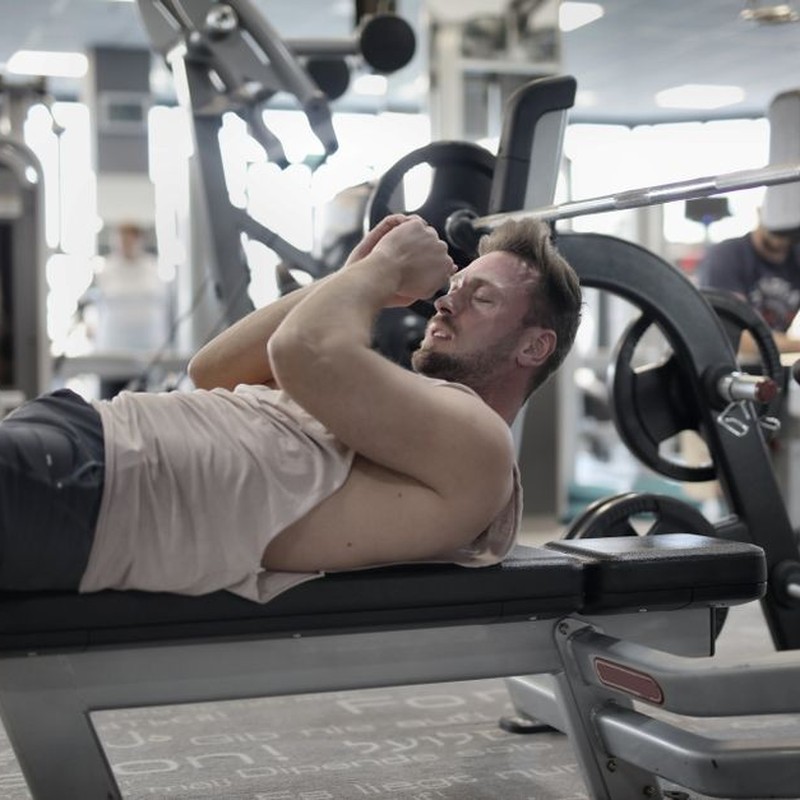
Stand up too fast after a set on the leg press and you get a head rush. Rack a heavy squat, walk three steps, and feel lightheaded and clammy. Hold your breath through a rep, what lifters call the Valsalva maneuver, and your blood pressure spikes and then drops. That swing is enough to leave you dizzy and queasy.
Newer lifters run into this constantly, mostly because nobody taught them to breathe. They hold their breath on every rep, finish the set, and wonder why the room is tilting.
Heat and dehydration turn the dial up
A Houston garage in July and a packed spin studio in January with the heat cranking and thirty bodies in the room produce the same problem. Heat and fluid loss thin out your blood volume, and less volume makes the blood-flow tradeoff more extreme. Your gut gets even less blood, so the nausea and the dizziness both get worse.
I learned this one the hard way. For a couple of summers I trained in a non-air-conditioned garage and drank maybe half a water bottle across a 60-minute session. Nearly every workout ended with me bent over a trash can. Adding electrolytes and drinking steadily through the session didn’t erase the problem, but it cut it down a lot.
Why beginners and returning trainees feel it most
Newer trainees and people back after time off get nauseous more often. Not because they’re permanently unfit. The systems involved simply haven’t adapted yet. Shunting blood efficiently, keeping blood pressure steady under load, and absorbing an adrenaline surge are things your body gets better at over weeks, not days.
So file this away: nausea during hard training is a normal stress response. It doesn’t mean you’re doing anything wrong, and it isn’t a reason to quit. It means your body is still learning how to meet the demand you’re placing on it.
Nausea, Dizziness, or Something Else? Sorting Out the Real Triggers
Two people can finish the same squat session, feel awful in the same way, and have completely different reasons for it. That is the annoying part about post-workout nausea. The symptom looks identical, but the cause might be a burrito eaten 40 minutes before warm-up, a double scoop of pre-workout, or a blood pressure dip when you rack the bar and stand up too fast.
Before you start changing things, sort the symptom. Nearly every case lands in one of four buckets: digestion, blood pressure and blood pooling, hydration and sodium, or the general load you brought into the gym. Where your nausea sits tells you which fix is worth trying first.
Bucket one: digestion, which is usually a timing problem
People obsess over what they eat before training and skip over when. A mixed meal with fat and fiber, which most real dinners are, needs roughly two to three hours to clear the stomach comfortably. Eat that 45 minutes before a heavy set of squats and the food is still sitting there while your legs demand blood flow. Digestion and hard training compete for the same resources, and digestion loses.
A small carb snack 30 to 60 minutes out tends to sit fine for most trainees. A banana, a piece of toast with jam, a small bowl of rice.
If you are a morning lifter who eats dinner at 8 p.m. and trains at 6 a.m., the meal is not your problem and you can stop blaming it.
Bucket two: caffeine and pre-workout blends
If you never train without a pre-workout, you have never actually tested whether it is the culprit. Skip it for a week and keep everything else the same. It is a boring experiment, and it answers the question faster than any article, including this one.
Beyond the caffeine load, many blends stack stimulants with beta-alanine and nitrates, and any one of those can leave a beginner queasy at a dose a regular user handles fine. A personal trainer writing for health.com in September 2026 made a version of this point about hard sessions and nausea. Tolerance is personal, and it shifts with sleep and stress.
Bucket three: dizziness with tunnel vision, ringing ears, or a cold sweat
This is a different animal, and it is not digestion. When your vision narrows, your ears ring, or you break into a sudden cold sweat, you are usually looking at blood pressure and blood pooling. Heavy lifting, a hard finish, or standing up fast after a set can drop pressure enough to make you feel like you are going under. Feeling fine while you are moving and terrible the second you stop is the tell.
Lie down, or sit with your feet higher than your hips, and breathe slowly. Standing back up too soon is what turns a 30-second episode into a fall.
Bucket four: hydration and sodium cut both ways
Too little fluid and you will feel awful. Chugging a liter right before squats produces the same result, because now your stomach is sloshing while you brace. Sip through the session instead of catching up at the last minute.
Long sessions in the heat add a second problem. Sweat carries sodium, and replacing the water without the salt dilutes what is left in your blood. Sodium is the main driver here, and the headache-and-nausea combination people get two hours into a summer workout is a classic sign of it. Potassium matters too, but as one part of a full electrolyte blend rather than a standalone fix.
What is left: the load you brought in with you
Sleep debt and alcohol the night before both raise the odds of feeling sick, and neither is dramatic on its own. Stacked on a hard session, they are usually enough.
So is jumping from a casual pace straight into your hardest set with no ramp-up. Three to five minutes of easy movement and a couple of light warm-up sets cost you almost nothing and give your circulation time to catch up with the demand.
Personally, I have noticed that training on an empty stomach leaves me queasier than a light snack does, but that is my pattern rather than a rule. Plenty of people train fasted with no trouble at all.
When it is not a training problem
Some symptoms deserve a doctor, not a tweak to your routine.
- Chest pain or pressure during or after exercise
- Fainting, or confusion that does not clear in a minute or two
- Vomiting you cannot stop
- Nausea that shows up during easy effort, when nothing about the session was actually hard
That last one matters most for beginners. Feeling sick on a walk or a light set is not a pacing issue.
Sort your symptom into the right bucket first. Every fix in the rest of this guide works better once you know which one you are actually dealing with.
Fixes You Can Use in Your Next Session
Workout nausea is usually a pile of small things rather than one big one — starting too fast, holding your breath, chugging water at the halfway mark, then lying on the floor wondering what happened. Each of those is adjustable. The catch is that if you change all of them at once, you won’t know which one mattered. So pick one fix for your next hard session and leave the rest of your routine alone.
I’ve learned this the slow way, usually on days when I tried to PR a 5K after eight hours at a desk. The sessions that end with me hunched over a trash can are almost never the ones where I went hardest. They’re the ones where I skipped the boring prep.
Warm up in steps, not in one leap
For a run: three minutes of easy jogging, two minutes of dynamic drills like leg swings and high knees, then one to two minutes at your target pace before the workout actually starts. For lifting: five minutes on the bike or rower, one set of the first exercise with an empty bar or light dumbbells, then a set at about half your working weight. Five to eight minutes total covers most sessions. It feels slow. Do it anyway.
Breathe through the hard reps
Holding your breath through a heavy set — the Valsalva maneuver — drives your blood pressure up, and that spike can leave you lightheaded and queasy. So breathe instead: exhale on the effort, inhale on the way back. Push up on a bench press, breathe out. Pull the row handle to your ribs, breathe out. Stand up from a squat, breathe out. On a run, match your breath to your steps — two in, two out when it gets hard. If you can’t say a few words out loud, you’re pushing past the pace your body can handle without getting sick.
Sip, don’t chug
Four to eight ounces every 15 to 20 minutes covers most sessions — a few good gulps, not half a bottle. A stomach full of water sloshing around during burpees is its own recipe for nausea. If you’re going past an hour, or sweating heavily in the heat, add an electrolyte drink; the sodium helps you hold onto the fluid instead of losing it.
One thing I’ve learned the hard way: cold water sits easier on a queasy stomach than room temperature. If you’re already feeling off, sip something cold and plain, skip the sugary sports drink, and give it ten minutes.
Cool down before you sit down
Stop moving suddenly and blood pools in your legs, which is why you feel woozy rather than just tired. Walk for five minutes first. If you’re still floaty, lie down with your legs up a wall or on a bench for another five. That helps blood return to your core and your head instead of hanging out in your calves.
I keep a cheap yoga mat in my trunk for exactly this. Legs up the wall in a parking lot looks weird. Passing out in one looks worse.
Keep post-workout food boring and fast
Your gut stays touchy for a while after a hard session, and fat, fiber, and big portions can restart the nausea twenty minutes after you finish — right when you thought you were clear. Stick to simple carbs with a little protein: a banana, a plain bagel, chocolate milk, or a scoop of whey in water. Eat a small amount, wait ten minutes, then eat more if you feel fine. Chocolate milk works well because it brings carbs, protein, and fluid at once, but if dairy bothers you after hard efforts, whey in water plus a banana does the same job.
Small extras that take the edge off
Ginger chews, peppermint tea, and a cold towel on the back of your neck are cheap and worth keeping in your bag. None of them are magic. They won’t rescue a bad warm-up or a chugged liter of water. But when you’re already green, they make the next twenty minutes easier to sit through.
Ginger chews are the one I actually carry on long trail runs, and peppermint tea is what I reach for after evening sessions when I don’t want anything heavy in my stomach. The cold towel is the strangest-looking one and the one I’d keep if I had to choose.
Pick one thing from this list, run it for your next three hard sessions, and see whether the nausea dial moves. If it does, keep it and stack the next fix on top. Most people I’ve trained end up needing two or three of these habits together, not all six.
Building Tolerance, Knowing When to Get Help, and What to Try Next
Your gut is trainable. That sounds strange, but it’s true. The queasy feeling at the end of a hard set is partly an adaptation problem, not a personal weakness. When your legs and lungs demand everything your heart can deliver, blood gets pulled away from your digestive tract and sent to the working muscles. Your stomach notices. Over time, it gets better at tolerating that shift, the same way your quads get better at tolerating a squat program.
Give it three to four weeks. If you do two or three hard sessions a week and hold the intensity roughly steady, most people notice the nausea easing somewhere around week three. I’ve watched this play out with clients: same Thursday interval session, same effort, four weeks in a row. Around week three or four, the nausea fades. They finish the workout, cool down, and eat dinner an hour later without thinking about it.
What wrecks that adaptation is the jump. Adding volume or intensity too quickly is the most common trigger I see. There’s a general coaching guideline that says keep weekly increases under about ten percent — it’s a convention, not a law, but it’s a useful guardrail. Going from three runs a week to five, or stacking a heavy leg day on top of a hard cycling class, is exactly the kind of spike that sends blood away from your stomach before your gut has adjusted. Expect your stomach to push back. It usually does.
Change one variable at a time
If you change four things at once and you feel better, you have no idea which one helped. Pick one variable, hold everything else steady, and give it two weeks before you touch anything else. Two weeks is enough time for a real pattern to show up and short enough that you don’t waste a month on something that isn’t working. Here is the order that tends to work best:
- Meal timing. Move your pre-workout meal earlier, or go with something smaller and lower in fat and fiber. This fixes more cases than anything else.
- Caffeine. If you slam a strong pre-workout on an empty stomach before intervals, try dropping it or cutting the dose in half. Caffeine can amplify that sour, sloshy feeling.
- Hydration. Both too little and too much fluid can do it. Sip steadily instead of chugging right before you start.
- Pacing. Going out too hot in the first ten minutes is a classic way to end a session bent over with your hands on your knees.
Two weeks per variable. If nothing changes, move to the next one. If something helps, lock it in and keep going.
Write it down, actually
Track four or five sessions in your phone notes. What you ate, how long before you trained, room temperature, hours of sleep, and how you felt at the end on a simple one to five scale. I know this sounds like homework. It takes thirty seconds, and patterns show up fast. You will probably spot that your worst sessions are the ones after five hours of sleep, or the ones in a hot garage in July, and no amount of electrolyte powder was ever going to fix that.
When to talk to a doctor
Most post-workout nausea is annoying, not dangerous. Some of it is not. Get medical attention if you notice any of the following:
- Dark or cola-colored urine after a hard session
- You stop urinating entirely following intense training
- Repeated vomiting that will not stop
- Symptoms that get worse over weeks instead of better, even as your fitness improves
The first two can point toward a serious muscle breakdown condition that needs urgent care. Do not shrug them off because you had a great workout.
Small gear upgrades worth testing
You do not need much. Electrolyte mixes, insulated bottles, handheld flasks, and cooling towels are all cheap enough to experiment with, and they can make a real difference when heat and hydration are part of your problem. A trainer covered some of this ground in a health.com piece last September, and search interest in workout nausea and post-workout recovery has been creeping up over the past year — people are clearly hunting for answers.
Before you commit to anything, check current prices on Amazon so you are not overpaying for a bottle or a tub of powder you might not stick with. And tell me what worked for you. Drop a comment with the one change that finally killed the nausea for you. Chances are someone else reading this is dealing with the exact same thing on their next leg day, and your thirty-second comment might save them a miserable afternoon.