Diet Drinks vs. Water for Weight Loss: What a Two-Year Trial Found
Full disclosure: Some links in this article are affiliate links. We may earn a small commission at no extra cost to you if you make a purchase through them. Our recommendations are based on what real users report, not on commission size.

What the Two-Year Trial Actually Compared
On October 4, 2026, ScienceDaily summarized a major trial under a headline that spread fast: diet drinks worked as well as water for weight loss. If you have been side-eyeing your afternoon Diet Coke and wondering whether it is quietly stalling your progress, that headline was aimed at you.
Here is the setup, minus the spin. Everyone in the study was cutting back on sugar-sweetened drinks — regular soda, sweet tea, sweetened coffee drinks, the usual lineup. Participants then split into groups. Some were assigned zero-calorie sweetened drinks to replace what they gave up. Others were assigned water. Researchers followed both groups for two years and compared how much weight people lost.
The two groups landed in the same neighborhood. Trading soda for diet drinks did not produce worse weight loss than trading soda for water.
Notice how narrow that claim is. It is not a statement that diet drinks do something good for you. It is a statement that in this specific swap, the zero-calorie group did not fall behind the water group on the one outcome being measured.
Why two years carries weight
Plenty of beverage studies run four to twelve weeks. Those are useful for spotting quick shifts in calorie intake, but they barely touch real life. Nobody goes through a full year of holidays, a vacation, a rough stretch at work, and a plateau in a four-week lab protocol.
Two years of follow-up means the trial had to survive all of that. People kept showing up, kept reporting, kept living with whatever drink they were assigned. That is why this finding lands harder than a short-term study — and why news outlets treated it as a big deal instead of a footnote.
A long follow-up does not make a trial bulletproof. It makes it more relevant to how people actually eat and drink over a couple of years instead of a couple of afternoons.
What this trial does not settle
The comparison was diet drinks versus water, inside a group already cutting sugary beverages. Nothing here speaks to how diet drinks stack up against unsweetened iced tea, milk, or black coffee. Water was the benchmark, and that is the whole comparison.
It also does not turn zero-calorie drinks into a health tonic. Not adding calories is not the same as adding benefit. The trial measured weight loss, and weight is one number among many. Questions about long-term sweetener intake and other health markers are separate conversations this study does not close.
Individual differences are untouched too. I have watched someone drink a diet soda and feel done for the afternoon, and I have watched someone drink one and spend the next hour hunting for something sweet in the pantry. Same drink, different response. Appetite, cravings, and how your gut reacts to sweeteners are personal, and a group average will never capture that.
So treat the trial as permission, not a prescription. A few years back I swapped two daily regular sodas for sparkling water with lime and lost roughly the same amount over a season as a friend who went the diet-soda route. Neither of us did anything special. We just stopped drinking sugar.
Putting it to work this week
- Pick the swap you will actually repeat. If diet drinks keep you off regular soda, use them. If they send you hunting for cookies, use water or sparkling water instead. The trial says the weight outcome can be similar either way, so your own pattern is the deciding vote.
- Do not drink them out of obligation. You do not need a daily diet soda to prove you are dieting. Some people keep them around for restaurants and road trips, then drink water at home. That works fine.
- Watch the two-month trend, not the Tuesday. Weight bounces around with sodium, sleep, and hormones. Judge the swap on where you are at eight weeks.
- Keep the rest of your plate boring and consistent. The beverage swap is one lever. Protein at meals, a reasonable calorie target, and a couple of strength sessions a week still do most of the work.
One more thing worth saying plainly: this trial is about weight loss from a beverage swap. It is not a verdict on every health marker someone might care about, and anyone telling you otherwise has gone past what the reporting supports.
If you are restocking your fridge, prices on sparkling water and zero-calorie options swing a lot month to month, so a quick check on Amazon before buying a case is worth the thirty seconds. And if you have made the soda swap yourself, drop a comment with how it went — the individual stories are often more useful than the averages.
Why Swapping Sugary Drinks for Zero-Calorie Ones Can Move the Scale
When the two-year trial made headlines in early October 2026, a lot of coverage framed it as diet soda earning a health halo. That reading misses the point. The finding was narrower: diet drinks performed about as well as water for weight loss over two years. Water is the neutral, universally recommended baseline, so the interesting half of that sentence is the diet drinks matching it.
Nothing in the bubbles does the work. The calorie math does.
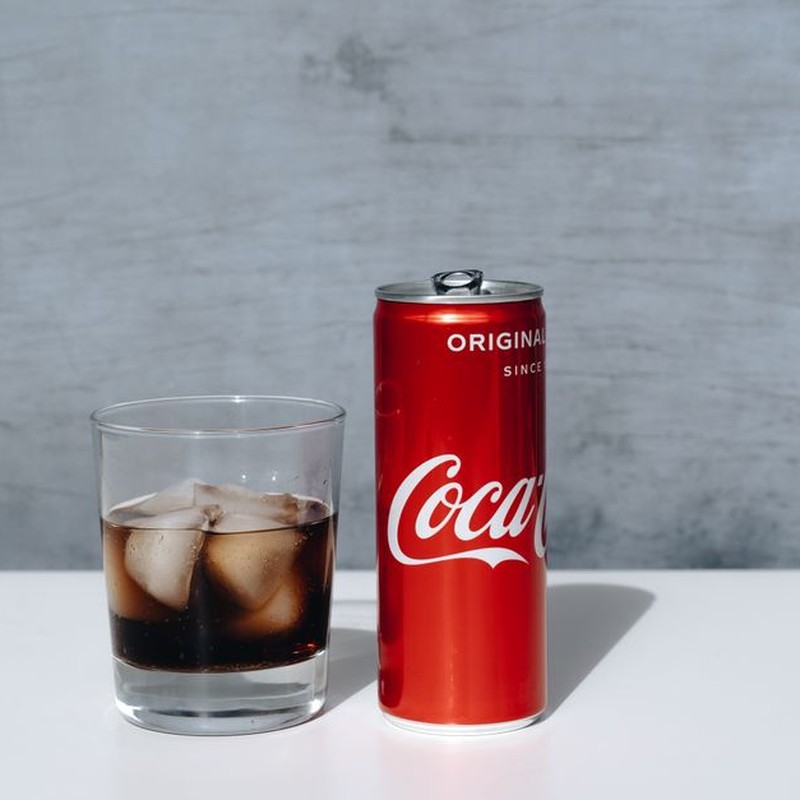
Liquid calories slip past your appetite
Solid food takes up room. It stretches your stomach, takes time to chew, and triggers fullness signals on the way down. A drink skips nearly all of that. You can put away roughly 240 calories in a 20-ounce regular soda in about four minutes and feel exactly as hungry afterward as you did before.
One soda a day adds up to something like 87,000 calories a year. A large sweetened iced tea at lunch often runs 200-plus depending on the pour. A flavored latte with whole milk usually lands somewhere between 250 and 350. None of it touches your plate, and nobody cuts a chicken breast because they had a sweet tea with it.
So when a trial removes a sugar-sweetened drink from someone’s daily routine, it deletes a chunk of calories without asking that person to eat less food. That is a far easier ask than overhauling a diet, and it is the main reason a two-year study can show real weight loss from a change as small as a beverage.
Displacement is the whole mechanism
Water and zero-calorie drinks are not competing with each other. They are both competing with the soda that used to sit in that slot.
Look at it from the routine side rather than the nutrition side. You have a 3 p.m. habit, whether that is a vending machine soda, a drive-thru sweet tea, or a bottled juice. The cue does not disappear because you decided to cut sugar. Something fills the slot. Sparkling water with lime works. Diet cola works. Either way, the 200-plus calories that used to live there are gone, and that is the number the scale responds to.
I tried this a few years back with an afternoon soda. Week one I swapped in a can of diet root beer and changed nothing else. I was down about three pounds in a month, not because of sweeteners but because roughly 140 calories a day stopped showing up.
Hydration quietly props up your training
This part gets undersold in the diet-versus-water debate. If you are a beginner lifting three days a week and adding a couple of cardio sessions, you are asking more of your body than you were six months ago, and hydration supports that work.
- Being mildly underhydrated makes sessions feel harder than they should. The same set of squats just grinds.
- Sessions that feel brutal tend to be followed by grazing. You finish wiped out and eat past your plan that evening.
- Keeping a bottle within arm’s reach all day beats chugging a liter before training. Sip through the afternoon instead.
Water and zero-calorie drinks both help here. Swapping a sugary drink usually raises total fluid intake anyway, since most people drink more of something they actually enjoy.
The trap that makes people think diet drinks failed them
Adding a diet drink on top of a full-sugar day does nothing. Zero. If the regular soda stays and the diet cola is a bonus, you have changed nothing but your grocery bill.
Run a quick test on yourself: name what left the rotation. Not what you added, what left. If you cannot name it, the swap has not happened yet.
Here is how to make that concrete:
- Pick your biggest liquid sugar source. For most people it is one specific drink at one specific time of day, not a vague category.
- Replace that single drink and leave the rest of your diet alone for two weeks. One variable, one measurable result.
- Do not agonize over which replacement. Tap water, sparkling water, unsweetened iced tea, diet soda: all zero-calorie, all count.
- Audit your coffee order while you are at it. A flavored latte can out-calorie a soda and most people never file it under sugary drinks.
- Expect a fast first drop from water weight, then a slower, steadier trend. Both are normal, and neither means anything stopped working.
The trial did not prove diet drinks are healthy. It showed that when you remove a sugar-sweetened drink from someone’s day, the body does not care much what takes its place. If you are comparing brands or pack sizes, prices swing a lot by format, so it pays to check current listings on Amazon before committing to a case. And if you have run this swap yourself, drop a note in the comments about what actually stuck.
Myths That Won’t Die: Sweeteners, Insulin, and Metabolism
Two objections come up every time I talk with someone trying to lose weight who keeps a case of diet soda in the fridge. One is about insulin. The other is about appetite. Both sound intuitive, both get repeated like settled science, and neither held up in the two-year weight-loss trial that made headlines in October 2026.
Claim one: diet drinks spike insulin
Trace it back and you land in a lab. A person takes a sweetener on an empty stomach, nothing else on board, and researchers measure the next hour or two. Some people do show a small insulin rise. Sweet taste alone can trigger a cephalic response, where the body braces for sugar that never arrives.
Fair finding. Also a narrow one.
Nobody drinks a diet soda in a fasting lab chair as their entire meal. It shows up next to a turkey sandwich or a protein shake. The two-year trial was built around that reality: real diets, real food, tracked long enough for the noise to wash out. Diet drinks didn’t underperform water. If sweeteners were reliably wrecking glucose handling, two years of body-weight data should have caught it.
That’s the difference between a four-hour crossover study with two dozen participants and a two-year outcome trial. One measures a moment. The other measures what happens to the number on your scale.
Claim two: zero-calorie sweeteners make you eat more later
This is the compensation argument. Sweet taste without calories leaves you unsatisfied, so you overeat at the next meal and erase whatever you saved. Plausible, and I don’t doubt it happens to some people. Appetite is messy and individual.
The trial handles it anyway. If compensation were large enough to matter, the diet-drink group would have lost less weight than the water group across two years. That’s the entire comparison, and it isn’t what the reporting describes. Whatever compensation is happening is small enough to disappear against 104 weeks of real weight change.
My own pattern agrees. A cold diet cola after lunch does nothing to my dinner appetite. A diet cola plus a sleeve of crackers while I’m distracted at my desk is a different story, and the crackers are the problem in that sentence. If late-afternoon snacking is your weak spot, portion it onto a plate before you sit down and pair it with something that has protein or fiber in it. Blaming the can of soda is misdirected effort.
The guilt framing does more damage than the sweetener
Diet drinks picked up a moral charge somewhere along the way. Ordering one at a restaurant feels like a confession. I’ve watched people apologize for ordering a diet soda, then switch to regular because they’d already blown it in their own head.
That’s backwards. A diet drink is a tool. It moves you from sweet drinks toward fewer sweet drinks, or it keeps you off regular soda for the long haul. Regular soda carries a real calorie load that compounds quietly across a week of lunches. Swapping it for the zero-calorie version is one of the cheapest trades available to someone who genuinely likes fizzy drinks.
A few ways to use them without overthinking:
- Spend them where they replace something. Lunch, drive-thru, movie theater. A diet drink that bumps water out of your hand is less useful than one that bumps regular soda out.
- Don’t chase sweet taste all day. If every drink between 7 a.m. and 9 p.m. is sweetened, you’re not using a tool, you’re just drinking sweet things. Water at meals still does the heavy lifting.
- Judge it by the week, not the sip. One diet soda after a decent day of eating is a non-event. Six of them plus skipped meals is a pattern, and that pattern is about the skipped meals.
- Drop the apology. Guilt is what sends people back to the full-sugar version, which was the original problem.
What’s still open
I won’t pretend the file is closed. Questions about long-term sweetener intake and gut bacteria are still live, and that research hasn’t produced a clean answer. Two years of weight-loss data tells you something about body weight. It says nothing about what thirty years of daily consumption does to a microbiome.
Anyone claiming diet drinks are proven harmless forever is overstating it. Anyone claiming they’re proven harmful is overstating it in the other direction, usually leaning on the same short lab studies. One question is answered reasonably well. The rest stays open until longer work exists.
Practically, that means: use them if they help you cut sugar-sweetened drinks, don’t build your whole hydration strategy around them, and skip the moralizing either way. If you’re restocking, current prices on Amazon are worth a quick check before you commit to a case of something you might not like. And if you’ve already run your own long experiment with diet drinks, tell me how it went in the comments.
How to Use This in Real Life Without Overthinking It
Start with the boring question: what will you actually drink on a Tuesday in February? The two-year trial behind the October 2026 ScienceDaily report found diet drinks did about as well as water for weight loss. That finding mainly removes an excuse. If plain water gets old by midweek and the next stop is a drive-thru sweet tea, the zero-calorie can in your fridge is doing more for you than the water bottle you never finish.
So the decision is not which drink is theoretically cleaner. It is which one keeps the 40-gram sugar bomb out of your hand at 3 p.m.
I have watched clients argue themselves out of progress on this exact point. One guy drank nothing but water for three weeks, hated every second of it, then went back to two sodas a day. Another kept a rotating stock of sparkling water and diet cola and never touched regular soda again. Fourteen months later, guess which one still had the habit.
Make water the default, keep zero-calorie drinks as a replacement tool
Water is what you reach for without thinking. Zero-calorie drinks are what you reach for when water will not cut it. Rotate them so you are not leaning on one thing purely out of habit:
- Sparkling water, flavored or plain, for the fizz and the mouthfeel of a soda
- Unsweetened iced tea or cold brew, which also gets you caffeine if you want it
- Black coffee, hot or iced, which costs almost nothing
- Diet soda, the direct swap for whatever you used to pour over ice
Buying all four at once is overkill. Pick two, keep them cold, and see which one you actually finish.
Cap the upside
Two or three diet drinks a day replacing an old soda habit is fine for most people. Six because they clock in at zero calories is a different story. That is a new habit crowding out water, and often real food too. Being thirsty all day and calling it hydration is not the same thing as drinking.
Simple ceiling: keep the zero-calorie stuff for the moments when you would otherwise have sugar. Meals, the afternoon slump, road trips, movie nights. Water covers the rest.
Track the swap, not the drink
Write down what you replaced, not how many cans you opened. One line a day is enough. Weigh yourself at the same time each morning and read the weekly average, not the daily number. Three to four weeks of that gives you a trend you can trust. Day-to-day scale noise is mostly water, salt, and how late you ate.
What I look for after a month: is the weekly average drifting down, are you hitting protein most days, and did the soda swap stick. If the average is flat but you have not touched regular soda in a month, you fixed the hardest part first. Keep going and tighten the food side before you blame the drinks.
That is the whole routine. Pick a zero-calorie option you will drink daily, let water stay the default, keep the count reasonable, and judge it on a four-week trend. No app, no subscription, no personality change required.
Before you restock, check current prices on Amazon for your go-to multipacks. Pricing swings a lot between US and Canadian retailers, and a case that is a bargain this month can be marked up the next, so a quick look beats a blind reorder.
Then come back and tell me what you swapped. Drop a comment with the drink you replaced, what you switched to, and how the first month went. Specific details from real people beat another round of theory.