How Many Calories Should I Eat?
Most people who start tracking calories pick a random number. 1,200 because someone on Instagram said so. 1,800 because a friend did it. 1,500 because an app suggested it.
None of that means anything without context. The right number depends on your body size, your age, how much you move, and what you are actually trying to do.
That number is your TDEE, short for Total Daily Energy Expenditure. It is what your body burns in a day just by existing, plus everything you do. Eat more than it and you gain. Eat less and you lose. It really is that simple, and that annoying.
If you just want the number without all the background, use our free TDEE calculator. Put in your age, height, weight, and activity level, and it gives you an answer in seconds.
What people usually get wrong about TDEE
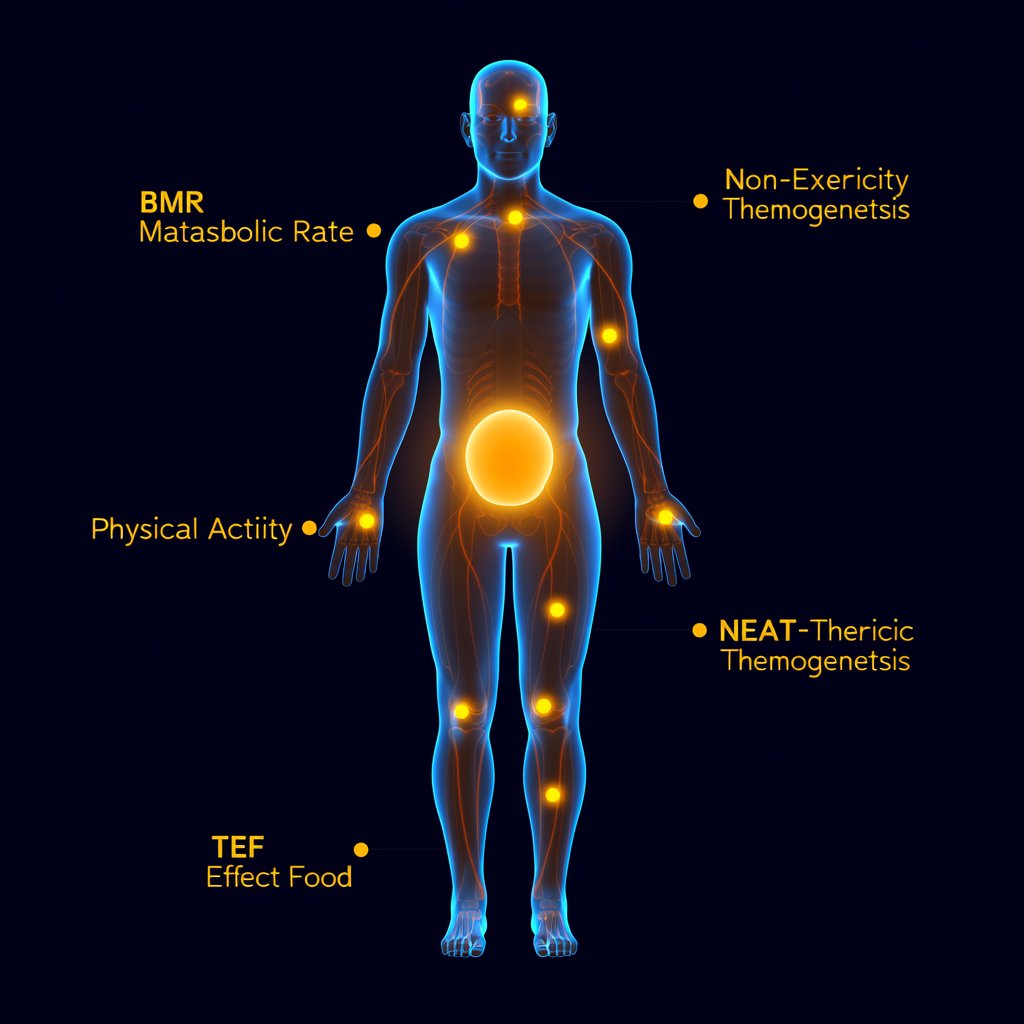
TDEE is made of four parts:
- BMR (Basal Metabolic Rate) — the calories your body burns at complete rest. Your heart, lungs, brain, cell repair. Just keeping you alive. This is about 60 to 75 percent of your total daily burn.
- NEAT (Non-Exercise Activity Thermogenesis) — all the calories from things that are not exercise. Walking to the kitchen, tapping your foot, standing instead of sitting. This one varies a lot between people.
- TEF (Thermic Effect of Food) — the energy used to digest what you eat. Protein costs more energy to process than carbs or fat.
- Exercise — the actual workout calories. For most people this is the smallest piece, unless you train for hours every day.
Most calculators use the Mifflin-St Jeor equation. It is not perfect, but it lands within about 200 calories of your real TDEE for most people.
Men: 10 × weight(kg) + 6.25 × height(cm) − 5 × age(y) + 5
Women: 10 × weight(kg) + 6.25 × height(cm) − 5 × age(y) − 161
Or use the calculator and skip the arithmetic. Same result.
Where people mess this up

The most common mistake I see is picking an activity level that does not match how you actually live.
A grocery store worker who is on their feet all day and a desk worker who trains three times a week are both “moderately active” according to the labels, but they burn different amounts. If you sit at a computer and hit the gym 3 times a week, you are not moderately active. You are lightly active at best. Pick the lower option. You can adjust up later.
The second mistake is treating the number as permanent. Your TDEE shifts. You lose weight and your metabolism slows a little. You start walking more and it goes up. You get sick and it dips. It is not a fixed number tattooed on your wall.
Weigh yourself consistently for a few weeks. If your weight is moving the direction you want, your number is right. If not, shift by 200 or 300 calories and watch again.
What to do with the number

To lose weight
Eat 300 to 500 calories under your TDEE. At that deficit, expect about half a pound to one pound per week. Faster than that and you start losing muscle too. Our calorie deficit guide explains the details.
To build muscle
Eat 200 to 300 calories above your TDEE. Enough surplus to build tissue, not so much that you pack on unnecessary fat. Pair it with a decent program and enough protein.
To maintain
Eat at your TDEE. No deficit, no surplus. Your weight stays roughly the same. This sounds easier than it is, because your daily activity is never the same twice. What you eat around your workouts probably matters more for performance than the daily total anyway.
When the math and the scale disagree
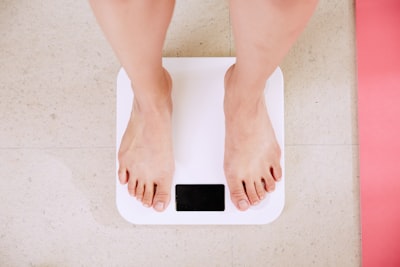
Sometimes the formula is right but your body is not cooperating. Thyroid issues, medication, sleep deprivation, hormone shifts — all of these can push your real calorie needs away from the estimate. If you have been consistent for three weeks and nothing is moving, the problem is probably not your math. Check your sleep first, then review how accurately you are tracking, then consider seeing a doctor.
The calculator puts you in the right ballpark. The rest is paying attention and adjusting as you go.
FAQs
How close are these calculators?
Usually within 200 calories. The Mifflin-St Jeor equation has been tested against lab measurements and is the most accurate formula we have that anyone can actually use.
Should I eat back calories I burn exercising?
Probably not. Most calculators already factor exercise into the activity multiplier, and fitness trackers tend to overstate what you actually burned.
Can I use my TDEE for meal planning?
Yes. Split your target across your meals however works for you. There is no metabolic magic to eating six small meals instead of three bigger ones.
Do I need to recalculate as I lose weight?
Every 10 to 15 pounds, yes. A smaller body needs fewer calories, so your deficit may shrink without you realizing it.
Does everyone my size have the same TDEE?
No. Muscle mass, hormones, and daily movement patterns vary enough that two people of the same height and weight can have noticeably different numbers.
Medical & Editorial Review: This article was reviewed by Liam Smith, founder of Apexfito, for accuracy and safety. Content is for educational purposes and is not a substitute for professional medical advice. Consult your physician before starting any exercise or nutrition program.





2 Comments