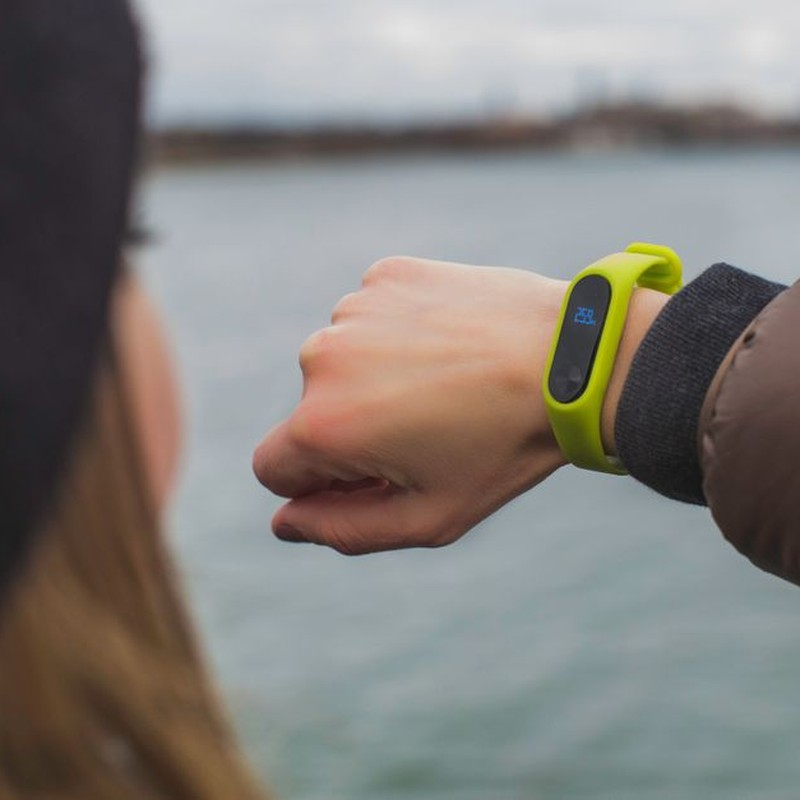
Fitbit vs Garmin vs Apple Watch: Which Fitness Tracker Should Beginners Buy in 2026?
Full disclosure: Some links in this article are affiliate links. We may earn a small commission at no extra cost to you if you make a purchase through them. Our recommendations are based on what real users report, not on commission size.
Start With What Each Brand Is Actually Built to Do
Most beginners open a comparison page, see forty rows of specs, and freeze. Heart-rate sensors, blood oxygen, GPS accuracy, battery life counted in days or hours. That is a lot of noise for someone whose real question is whether they walked enough this week.
Flip the order. Decide what you want the device to be before you decide which device to buy. Fitbit, Garmin, and Apple each grew up around a different idea of what a tracker is for, and that idea shapes everything else: screen, battery, app, price, and whether the thing stays on your wrist past week three.
Google Trends gives you a rough read on where beginners are actually shopping. Over the past year, US searches for the term fitbit climbed, with a recent average of 56.2 against a 12-month average of 43.2. Searches for garmin watch rose too, but barely, at 24.7 versus 23.6. Search traffic doesn’t make a brand better. It does tell you what your neighbors are looking at.
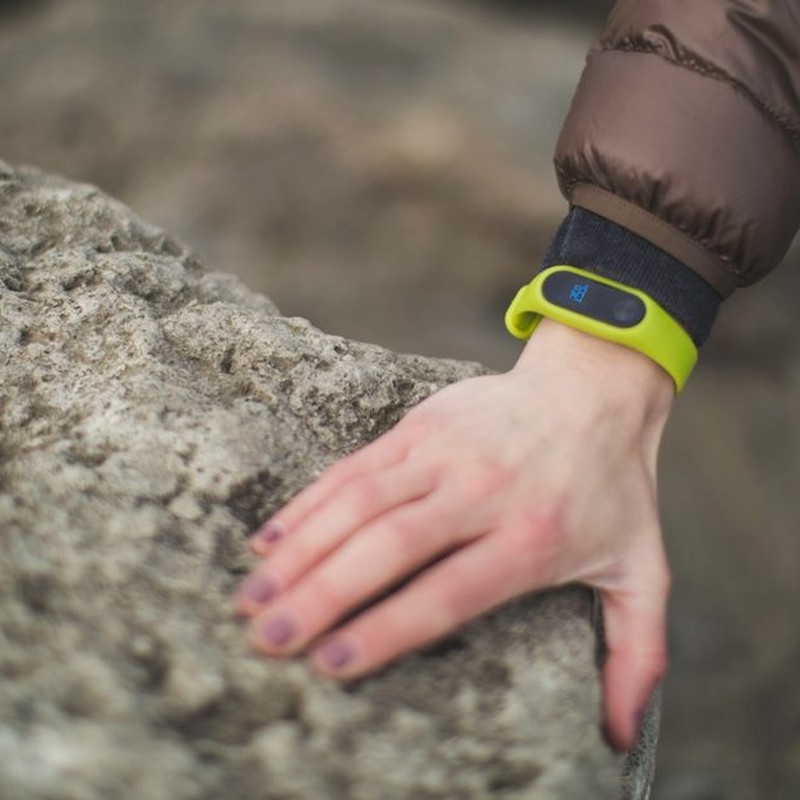
Fitbit: the band you forget you’re wearing
Fitbit’s personality is everyday wellness: steps, sleep stages, a stress score, hourly nudges to move. The bands are light enough to sleep in, which matters more than it sounds, because sleep tracking only works if you actually wear the thing to bed. I have watched plenty of first-time buyers get pulled toward a heavier watch and quietly stop wearing it overnight within two weeks. Fitbit handles the basics, charges on a weekly-ish rhythm instead of every night, and doesn’t ask much of you. If you want to move more, sleep better, and read one number each morning that means something, this is the lane.
Garmin: for people with a route in mind
Garmin came out of the outdoor and endurance world: hiking, cycling, triathlon, trail running. TechRadar’s October 2026 roundup of the best Garmin watches frames the line around runners, athletes, and adventurers, and that is the audience profile in a nutshell. What that background buys you is dependable GPS, battery life measured in days or weeks on some models, and training data that goes past a step count, including pace, elevation, recovery status, and structured workouts you can load and follow. The flip side is complexity. Buy a Garmin for the battery and never open the training screens, and you have paid for software you won’t touch. That is a mismatch, not a flaw, and mismatches are what leave a tracker in a drawer.
Apple Watch: a smartwatch that happens to track workouts
Apple Watch is a smartwatch first: notifications, texts, timers, tap-to-pay. Fitness is one of its jobs, not the whole job. A Shortlist review of the Apple Watch Series 12 published in October 2026 makes that point from the other direction, describing it as a friendly on-ramp for people beginning a fitness routine, largely because the phone, watch, and Health app already work as one system. Carry an iPhone and the setup is nearly frictionless, since your rings sit on the same screen as your messages and the workout app is already there when you start a walk. The tradeoff shows up at night, because most people charge it daily, which turns sleep tracking into a charging habit. If you want one device for messages, calendar, and workouts and you already carry an iPhone, this is the lane.
Sketch your real week before you compare anything
Grab a piece of paper. Write down what an average week actually looks like, not your ideal week. Two gym sessions. A few 20-minute walks after dinner. One weekend hike. Maybe a swim in the summer. Then match that picture to a brand:
- Mostly walking, sleep, and stress you want to see clearly? Fitbit.
- Long runs, rides, hikes, or open-water swims where the route matters? Garmin.
- One device for messages, payments, and workouts, and you already own an iPhone? Apple Watch.
If your week is mostly walks and gym sessions but you are training for something specific, like a first 10K or a century ride, that pulls you toward Garmin even if the spec sheet feels intimidating. The training features get useful the moment you have a goal to point them at.
Roundups help once you have picked a lane. Healthline published a 5 Best Fitness Trackers of 2026 piece in early October 2026, and reading two or three lists from the last few months shows you which models are actually current. Lineups turn over fast, and last year’s list mostly points you at discontinued hardware.
Pick the direction first, then start price-checking. Check current prices on Amazon for two or three models in your lane, and drop a comment with which one you went with and what pushed you there. That is more useful to the next beginner than any spec table.
Battery Life, Phone Pairing, and Subscription Fees
Three details decide whether you’ll still be wearing a tracker a month from now. Not heart-rate accuracy. Not screen brightness. How often you charge it, whether it talks to your phone, and how much of the useful data sits behind a monthly fee.
Charging cadence is the real daily difference
This is where the three brands split hardest, and it’s the part reviewers tend to gloss over.
- Garmin: TechRadar’s October 2026 roundup of the best Garmin watches leans on endurance for runners and adventurers, and that carries down to the beginner models. Garmin’s published battery specs for most of its watches are measured in days, and some models list weeks, depending on which GPS and display settings you use. For a beginner, that often means charging while you shower and forgetting about it.
- Apple Watch: Shortlist’s October 2026 review of the Apple Watch Series 12 calls it a great entry point for starting a fitness journey, and the hardware lives up to that. It’s a full smartwatch with a bright screen and a deep app library. Those things draw power, so most owners settle into a nightly top-up. Plan on a charger by the bed.
- Fitbit: Fitbit’s current lineup generally lands between those two poles. Its published battery estimates for most models run several days, with GPS and always-on display eating into that number. Check the spec page for the exact model you’re considering before you assume.
Here’s a question more useful than any spec sheet: when you get into bed tonight, will you remember to plug the thing in? If you travel a lot, camp, or just hate nightly routines, a device that needs a charge every day turns into a small annoyance that grows into resentment. If you can’t honestly say you’ll do it, give more weight to the multi-day batteries on the Fitbit and Garmin side.
For what it’s worth, I wear a Garmin during the day and a Fitbit overnight, and the Garmin gets one charge a week while the Fitbit gets two or three. That difference shapes how much I actually use each one.
Phone pairing: check your phone before you check the price tag
This is the one that eliminates options outright.
If you carry an iPhone, all three brands pair cleanly. Setup is closer to five minutes than fifty, and you get the full feature set from Fitbit, Garmin, and Apple Watch.
If you’re on Android, Apple Watch is off the table. Full stop. It requires an iPhone, and no workaround changes that. That’s not a knock on the hardware. Plenty of Android users would happily wear one. But it’s a hard wall, and finding out after you’ve opened the box is an expensive lesson.
Android users still get full functionality from Fitbit and Garmin. Notifications, syncing, GPS, sleep tracking, all of it. If you’re weighing those two, the pairing question is already settled. Move on to battery and subscriptions.
What stays free, and what doesn’t
Both Fitbit and Garmin publish free and premium tiers. The split usually falls in the same place: steps, heart rate, workouts, and basic sleep stay visible without paying. The interpretive layer – long-term trend reports, detailed sleep breakdowns, readiness or recovery-style scoring, guided programs – is what the membership typically unlocks.
Garmin’s free tier through the Connect app covers more than most beginners need day to day, and Fitbit’s free app covers the basics too. But don’t take my word for it. Pull up each brand’s current free-versus-paid comparison before you buy, because what’s included changes from year to year. Healthline’s October 2026 roundup of the best fitness trackers is a useful cross-check for which features land on the free side for specific models.
Then ask a blunt question: how many of those premium reports will you open more than twice? If you want steps, workouts, and a decent sleep score, you can go a long time without paying a cent. The memberships start to make sense when you’re chasing a specific goal and want the app to tell you what to do about it.
Band comfort beats screen size, every time
This one sounds soft. It isn’t.
A tracker you take off at night collects zero sleep data, and sleep tracking is one of the main reasons people buy these devices in the first place. A tracker that spends eight hours a day on your nightstand is doing half its job.
Before you buy, try to handle one in a store. Squeeze the band. Check whether the clasp digs in when you bend your wrist. Look at the size on your actual arm, not in a product photo shot on a model with different proportions.
If you can’t get hands-on time, order from a retailer with a straightforward return policy. Wear it for a week. Sleep in it. Work out in it. If it’s bothering you by day three, send it back and try the next one. Return windows exist precisely for this, and using one costs you nothing but a trip to the post office.
Charge frequency, phone compatibility, and paywall depth. Settle those three and you’ve dodged almost every regret story I’ve heard from first-time buyers. If you’ve already made the switch, tell me in the comments which one you landed on and whether the battery claim held up.
What the Numbers Actually Mean, and Where They Fall Short
Your tracker is estimating, not measuring. The optical sensor on the back of the watch fires light into your skin and reads how much comes back; the algorithm turns that signal plus a motion sensor into a number. A chest strap sits much closer to a direct measurement. Everything on your wrist is inference, and how good that inference is depends on what you’re doing at that exact moment.
That distinction matters more for beginners than any spec sheet does, because the failure mode isn’t bad hardware. It’s treating one number as gospel.
Heart rate: solid at rest and steady cardio, messy under load
Wrist-based heart rate is at its best when your body is relatively still and your effort is steady. Walking, easy cycling, sleeping, sitting at a desk. In those conditions the readings land close enough to your true heart rate to build a useful picture of your resting rate and your easy-effort zones. That’s the range most beginners spend most of their time in, which is exactly why the numbers feel trustworthy at first.
Change the conditions and the signal degrades fast:
- Interval sessions, where your heart rate swings hard and the sensor lags behind every change
- Heavy lifting, especially anything with a bent wrist, like kettlebells, dumbbell rows, or a deadlift grip
- Cold-weather outdoor sessions, when blood flow shifts away from your skin and the sensor has less to read
- Loose straps, tattoos over the sensor window, and a band sitting right on the wrist bone
Strap fit is the one variable you actually control, and wearable testers bring it up constantly. Cinch the band so it doesn’t slide, but not so tight it leaves a mark. Position the sensor a finger-width above the wrist bone; on some wrists it reads better an inch up the forearm.
If you care about accurate zone data during intervals or a heavy leg day, a chest strap is the honest upgrade, and Fitbit, Garmin, and Apple all let you pair one. Otherwise, read the shape of the curve instead of the peak number. I’ve done hill repeats with a chest strap and a wrist watch running at the same time. The wrist trace was a smoothed, slightly late version of the real thing. Close on average, behind on every surge.
Steps and calories: trends, not totals
Step counts are useful in one direction. More than usual versus less than usual. Daily totals get treated as precision they don’t have, because the algorithm is estimating stride length and arm motion all day long. Pushing a shopping cart, carrying a toddler, or holding a rail on a treadmill can all suppress the count. So can a long morning at your desk with your wrist parked on a mouse.
The comparison that actually tells you something is your Tuesday this week against your last four or five Tuesdays. Same day, same routine, same commute. That’s a real baseline, and watching it drift up over a month does more for motivation than staring at today’s total at 9 p.m. and deciding whether to walk laps around the block.
Calorie burn is softer still. Trackers estimate it from heart rate, body weight, and motion, and testers who have checked those estimates against lab metabolic testing generally find they skew high, particularly for strength work where your heart rate stays moderate while you are genuinely working. Treat the number as a rough cost of the session, not a receipt. Eat back every calorie your watch claims and you will likely eat noticeably more than you think.
Sleep scores do not travel between brands
Sleep scoring is not standardized across brands. Each company built its own model with its own weightings, stage detection, and thresholds for calling a night good, which is why a Fitbit score and a Garmin score are not the same number wearing different logos. Comparing yours to a friend’s is comparing two different tests that happen to share a name.
Duration is the part devices get reasonably right. The split into deep, REM, and light is fuzzier, so treat stages as approximate and duration as roughly accurate. Keep one device on one wrist and compare this week to last week. If your score dips every time you lift after 8 p.m., that pattern is worth acting on, and it will show up in your own data long before it shows up anywhere else. Switch brands and expect your baseline to reset rather than carry over.
Reviews are a second opinion, not a verdict
Healthline’s October 2026 roundup of the best fitness trackers is a reasonable gut-check on which features reviewers valued across brands. Read it to narrow the field, not to settle the question, since testers weigh features against their own training, their own wrists, and their own idea of what matters.
Readiness scores are prompts, not diagnoses
Body Battery, Training Readiness, Recovery. These scores answer a fair question: should I push today? They draw on heart rate variability, sleep, and recent training load, which are real signals. But the score is a summary of those signals, not a medical opinion, and it does not know you slept badly because the dog was pacing or that your legs feel great anyway. If the number says take it easy and you feel fine, use your judgment and train. If it says take it easy and you feel wrecked, that agreement is useful confirmation. The score earns its keep as a nudge, never as a ruling.
If you want a short list of what to actually trust from your first tracker:
- Resting heart rate trend over several weeks: reliable and genuinely useful
- Step and calorie totals: useful as direction, misleading as precision
- Sleep duration: decent; sleep stages: approximate at best
- Heart rate during intervals and heavy lifting: rough at best
- Readiness and recovery scores: a prompt, not a verdict
None of this makes a tracker less valuable. It makes the purchase more honest. You are buying trend data and gentle nudges, not lab-grade measurement, and knowing which is which keeps you from chasing a number that was never precise to begin with.
A Five-Minute Way to Choose, Plus Day-One Setup
Here is the shortcut. Answer three questions the way you actually live, not the way you’d like to live, and you’ll land on a brand in about the time it takes to brew a pot of coffee.
- Do you carry an iPhone? If you don’t, cross Apple Watch off the list immediately. It only works with an iPhone, and there’s no Android version. If you do carry one, this question stops being a tiebreaker. Fitbit and Garmin both run their apps on iOS without complaint, so all three stay on the table. For most beginners, the real differences between these brands have nothing to do with the phone in your pocket.
- Do you want multi-day battery life? If the thought of another nightly charge exhausts you, look hard at Garmin. TechRadar’s 2026 roundup of the best Garmin watches is aimed at runners, athletes, and adventurers, meaning people who want the watch to outlast the trip rather than just the workout.
- Do you want notifications, contactless payments, and apps on your wrist? A yes pushes you toward the smartwatch end of the aisle. A shrug, where you mostly want steps, sleep, and heart rate, means a simpler tracker will keep you happier and leave more money in your account.
Two clear yes answers usually point to one brand. Three split answers mean buy on price, since you’re not going to use the features that separate them anyway.
Healthline’s October 2026 roundup of the best fitness trackers lands in the same place from a different direction: what matters to a beginner is comfort, battery life, and how readable the app is, not sensor count.
The Two-Minute Recap
- Apple Watch — Battery: roughly a day, so it’s a nightly charge. Phone: iPhone only. Best for: someone who wants the wrist stuff, meaning texts, tap-to-pay, and apps, and treats fitness tracking as part of that package.
- Garmin — Battery: several days to weeks, depending on the model. Phone: either one. Best for: people who run, hike, or train outdoors and don’t want to think about charging.
- Fitbit — Battery: several days. Phone: either one. Best for: straightforward step, sleep, and heart rate tracking at the lowest price of the three.
Day One: Three Things, Then Stop
Most first-week frustration comes from setup decisions, not hardware.
- Wear it snug, just above the wrist bone. Not on the bone, and not loose enough to slide around. I wore my first tracker too loose for two weeks and got heart rate readings that jumped 30 beats in the middle of an easy walk. Snug and slightly high fixed it the same afternoon.
- Set one goal. A single active-minutes target, say 30 minutes a day, beats a screen full of step goals, calorie goals, and stand reminders you’ll be ignoring by Thursday.
- Turn off the notification flood. All those buzzes are the main reason new users start resenting the thing on their wrist by day three. Keep calls and texts if you want them. Kill the rest.
Don’t build a dashboard on day one. You’d just be rearranging furniture in a house you haven’t moved into yet.
Give It Two Weeks Before You Judge the Numbers
Early readings bounce around, and that’s normal. The device is still building a baseline for your resting heart rate and your sleep patterns, which makes the first several nights of sleep scores especially noisy. If your sleep score looks terrible for four days straight, that’s the algorithm calibrating, not a diagnosis.
Two weeks is the honest test. By then, resting heart rate and sleep trends start reflecting you rather than the model’s default assumptions about a person your age.
Before You Hit Buy
Tracker prices swing hard around sales events, so check current Amazon pricing before you commit rather than trusting whatever number you saw last month. The same watch can move by fifty dollars or more depending on the week. Pick the brand that answered your three questions, buy the model that fits your budget, and give it fourteen days before deciding whether it was the right call.
Then come back and tell us in the comments what you picked, and what surprised you in the first month. The boring stuff is what helps the next person: how it felt on day six, whether the sleep score matched how you actually slept, whether you stopped noticing it on your wrist at all.