How Much Should You Deadlift? Honest Standards by Level
How Much Should You Deadlift? Honest Standards by Level
You walk into the gym, chalk your hands, and pull a new personal record. It felt heavy
. You wonder if that is good or if you are still trailing the pack. The internet offers
plenty of opinions—some say two times body weight is the baseline, while others claim
anything under 500 pounds does not count. Neither answer helps a busy adult who trains
three or four days a week between meetings and daycare pickup.
>This guide gives you straight benchmarks grounded in exercise science and real-world
coaching data. No gym-bro hype. Just clear standards you can use to set goals, track
progress, and stay healthy while you build strength.
3>What the Deadlift Actually Measures
The deadlift is a raw test of full-body strength. It demands power from your posterior
chain—glutes, hamstrings, and spinal erectors—while your grip, lats, and core fight
to keep the bar close and your spine neutral. Because it uses so much muscle mass
, the deadlift lets you move more weight than almost any other free-weight exercise
. That is why coaches across the NSCA and ACSM use it as a cornerstone movement in
strength and conditioning programs.
Your deadlift number also reflects training age more than talent. Someone who has
trained consistently for three years will almost always out-pull a beginner with
natural ability but no mileage. Bone structure matters too. A person with long arms
and a short torso has less range of motion, which usually translates to a bigger
pull. That does not make the lift cheating; it just means you should compare yourself
to realistic standards rather than world-record holders.
Honest Deadlift Standards by Body Weight
The cleanest way to grade your deadlift is as a multiple of your body weight. Absolute
numbers favor heavier people, while bodyweight ratios level the playing field. The
numbers below are for a conventional deadlift with a standard Olympic barbell and
full-size plates. If you pull sumo, the standards are roughly the same, though many
lifters find they can handle slightly more once technique is locked in.
Beginner: 0.75–1.0x Body Weight
If you can deadlift your own body weight for one clean rep, you have built a baseline
of strength. Most sedentary adults who start a structured program reach this point
within two to four months. At this stage, your focus should be mastering the hip
hinge, bracing your core, and learning to push the floor away rather than yanking
the bar up with your lower back.
Intermediate: 1.25–1.75x Body Weight
This is where the gym starts to separate casual members from committed trainees. Pull
ing 1.5 times body weight for a single rep means you have built enough posterior chain
strength and grip endurance to handle real load. Many busy adults who train three
days a week hit this range after one to two years of consistent work. If you are
here, you are stronger than most people in any given office.
Advanced: 2.0–2.5x Body Weight
A double-bodyweight deadlift is the classic benchmark for serious recreational lif
ters. It requires not just muscle but refined technique, solid recovery habits, and
enough work capacity to handle heavier training blocks. Busy professionals in their
thirties and forties can reach this level, though it usually takes three to five
years of patient progression. You do not need drugs or a perfect genetic hand to
get here. You need consistency, adequate protein intake, and the discipline to back
off when fatigue builds.
Elite: 2.75x+ Body Weight
Pulling nearly three times your body weight puts you in the top fraction of recreational
trainees. At this level, you are likely competing in local powerlifting meets or
at least training like someone who is. Recovery becomes a part-time job, and small
technical details—breath control, lat engagement, bar path—make the difference between
a successful pull and a failed one. Most adults will never reach this tier, and that
is fine. It is not a requirement for health, athleticism, or looking good in a t
-shirt.
How to Read These Numbers
These standards assume you are a healthy adult training the deadlift directly one
to two times per week. If you only pull occasionally as part of CrossFit-style conditioning
, expect to land a tier lower. If you train specifically for powerlifting with blocks
of volume and peaking, you may land a tier higher.
Women and men can use the same multipliers. While absolute numbers differ on average
because of differences in muscle mass and limb length, the bodyweight ratios hold
up across sexes when you account for individual frames. The ISSN and broader sports
science literature consistently show that relative strength is a fairer comparison
than raw poundage.
Age matters, but less than you think. Strength peaks for many people in their thirt
ies, not their twenties, because neural efficiency and technique keep improving even
as raw testosterone levels shift. If you are 40 and just starting, you can still
reach the intermediate tier within a couple of years and flirt with advanced numbers
if you stay patient.
Common Mistakes That Stall Your Pull
Chasing One-Rep Maxes Too Often
Testing your max is not training. Heavy singles spike your nervous system and require
long recovery periods. Most busy adults make faster progress working in the three
-to-eight rep range and only testing a true max every few months. Save the ego lifts
for competition day.
Rounding Your Back
A flexed spine under load is a recipe for disc issues. You do not need to lift with
an exaggerated arch, but you must keep your lumbar spine neutral from start to finish
. If your back rounds as soon as the bar leaves the floor, the weight is too heavy
or your setup is lazy. Drop the load and rehearse bracing. Take a breath into your
belly, tense your obliques, and imagine someone is about to punch you in the stomach
.
Bouncing the Bar
Touch-and-go reps have their place, but letting the plates slam into the floor and
rebound creates momentum that hides weakness. It also teaches sloppy positioning
. For true strength development, reset every rep. Let the bar settle, breathe, hinge
, and pull from a dead stop. That is why it is called a deadlift.
Ignoring Grip and Assistance Work
If your hands open before your back or legs give out, your grip is the bottleneck
. Mixed grip or hook grip can help, but so can dedicated grip training like farmer
‘s carries and static holds. Also, do not neglect Romanian deadlifts, good mornings
, and back extensions. These build the posterior chain without the same systemic fatigue
as heavy pulling from the floor.
Grip Too Wide or Too Narrow
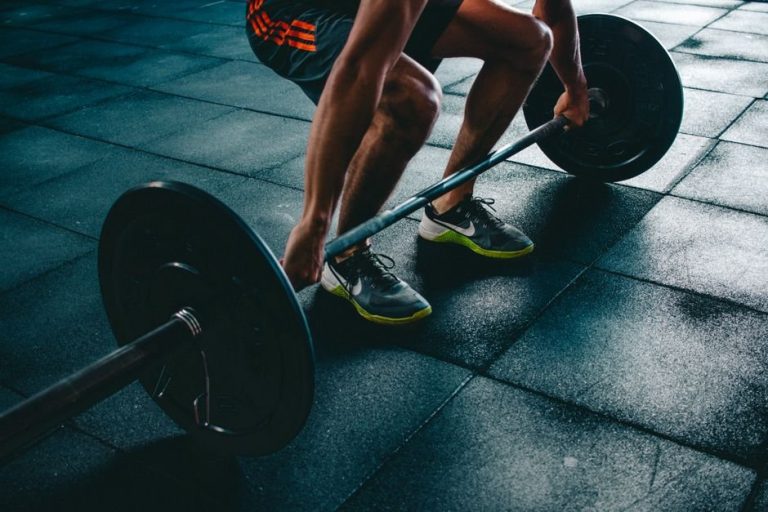
Your arms should hang straight down from your shoulders when you are in the starting
position. If your grip is too wide, you add unnecessary range of motion. Too narrow
, and your knees will knock your elbows on the way up. Film yourself from the front
and adjust until your arms are vertical.
Actionable Summary
Here is what to do with these standards this week:
1. Test or estimate your current one-rep max using a conservative three-rep set and
an online calculator. Do not grind out a true max if you are training alone without
safeties.
2. Identify which tier you fall into based on the bodyweight multipliers above.
3. Set your next target. If you are at 1.2 times body weight, aim for 1.5. If you
are at 1.8, aim for 2.0.
4. Train the deadlift twice a week: one heavy session in the three-to-five rep range
and one moderate session in the five-to-eight rep range with a variation like deficit
deadlifts or Romanian deadlifts.
5. Record your sets. Progress in the gym happens in kilograms and pounds, not vibes
. A simple notebook or app entry tells you when it is time to add weight.
Strength is a long game. The busy adults who build impressive deadlifts are not the
ones with the most time or the best genetics. They are the ones who show up, add
small plates when it is appropriate, and avoid the silly mistakes that send everyone
else to physical therapy. Pull heavy enough to matter, light enough to recover, and
smart enough to last.
About the author: Liam Smith for accuracy and safety. Content is for educational purposes only.
Related reading: