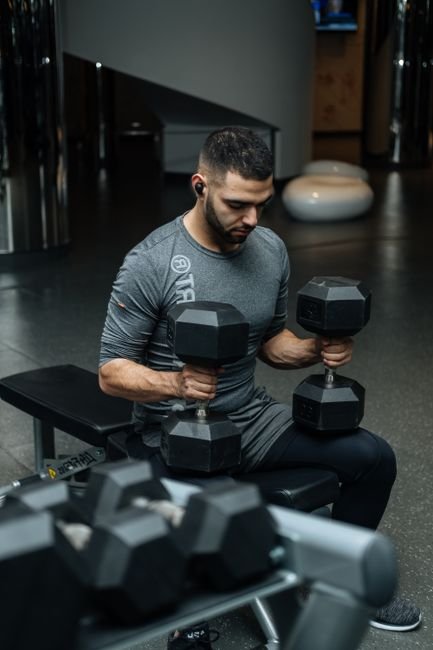
Dumbbell Bench Press Form Guide
Dumbbell Bench Press: Complete Form Guide for Beginners
Walk into any gym and you’ll see someone butchering the dumbbell bench press. Elbows flared like chicken wings, wrists bending backward under the load, feet pedaling mid-air for balance. It’s painful to watch and even worse to copy. The truth is, the dumbbell bench press is one of the best exercises you can do for building chest size and pressing strength, but only if you treat it with the same respect you’d give a barbell squat or deadlift.
Unlike the barbell version, dumbbells force each arm to work independently. That means your stronger side can’t cheat for your weaker one, which builds balanced muscle and healthier shoulders over time. The American College of Sports Medicine (ACSM) emphasizes that unilateral training like this reduces asymmetries and improves neuromuscular control. If you’re a busy adult juggling work, family, and maybe four hours of sleep, you don’t have time to waste on exercises that beat up your joints. This guide will get you pressing safely and making real progress.
Why the Dumbbell Bench Press Deserves Your Attention
>You might wonder why you shouldn’t just stick with the barbell. Both have their place, but dumbbells offer distinct advantages for beginners. The greater range of motion at the bottom stretches the pec fibers more fully, which research in hypertrophy training suggests contributes to muscle growth. The National Strength and Conditioning Association (NSCA) notes that free-weight exercises with a longer range of motion often lead to superior muscle activation compared to fixed-path machines.
Dumbbells also allow your shoulders and wrists to find their natural angles. If you’ve got tight shoulders from hunching over a laptop all day, a barbell can force you into uncomfortable positions. Dumbbells let you rotate your grip and adjust the path so you can train hard without aggravating old injuries. Plus, when you train at home with limited equipment, a pair of adjustable dumbbells and a bench might be all you need.
Equipment and Setup
>Before you touch a weight, lock in your environment. You need a flat bench that doesn’t wobble. If you’re at a commercial gym, check that the bench feet sit flat on the floor. At home, set up on a level surface. An unstable bench under heavy dumbbells is an accident waiting to happen.
Your dumbbells should be ones you can control for at least ten reps with good form. Ego lifting is where beginners get hurt. If you can’t bring the weights to your shoulders and press them into position safely by yourself, they’re too heavy. Most gyms have lighter fixed-weight dumbbells near the cardio area. Use those until the movement feels automatic.
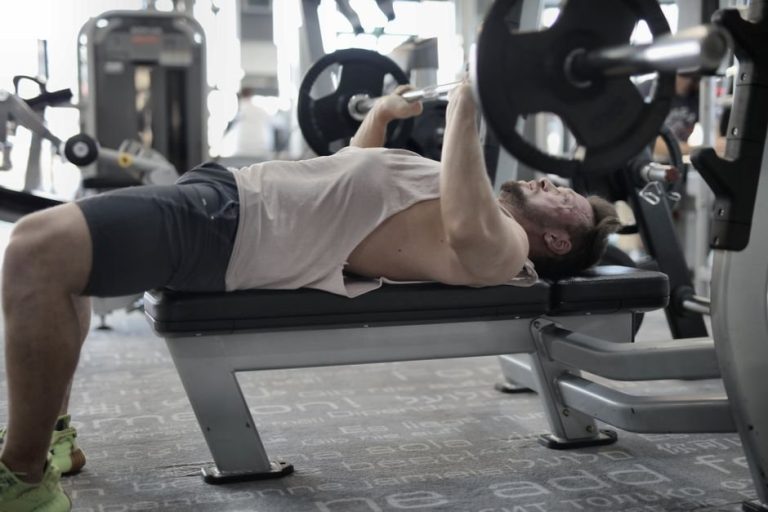
Lie back and set your eyes directly under the dumbbells when they’re at full extension. If your head is too far forward or back on the bench, your press path will be off from the start. Plant your feet flat on the floor, shoulder-width apart or slightly wider. Your knees should bend at roughly ninety degrees. If your legs are too straight, you lose lower-body tension. If they’re too bent, you can’t drive through your feet for stability.
Squeeze your shoulder blades together and press them into the bench. This creates a natural arch in your upper back, not a dramatic powerlifting bridge, but enough to keep your shoulders safe and your chest open. The International Society of Sports Nutrition (ISSN) and resistance training guidelines both highlight that shoulder retraction during pressing reduces anterior deltoid dominance and keeps the focus on the pecs.
Grip and Wrist Position
Once you’re set, grip the dumbbells with your palms facing forward, toward your knees. Your hands should wrap around the handle so that the weight sits stacked over your forearm. The biggest grip mistake beginners make is letting the dumbbell drift backward so it hangs behind the wrist. That strains the joint and bleeds force.
Wrap your thumb around the handle. A thumbless grip might feel natural to some, but if a dumbbell slips, there’s nothing stopping it from crashing down. Your wrist should stay straight, almost neutral, from the first rep to the last. Think about punching the ceiling rather than letting the weight bend your hand backward.
Before you press, rotate the dumbbells slightly so that your palms face each other at the bottom of the movement. This small inward rotation, about forty-five degrees, puts your shoulders in a friendlier position and lets your elbows tuck naturally.
The Lowering Phase
This is where most people go wrong. They treat the lowering phase like a gravity-assisted free fall. Lowering the weight with control is not optional. It’s half the exercise.
Start with the dumbbells pressed directly over your chest, arms extended but elbows not locked out hard. Begin the descent by breaking at the elbows and keeping them at roughly a forty-five-degree angle from your torso. If your elbows flare straight out to the sides, you turn the bench press into a shoulder destroyer. If you tuck them in too tight, the movement becomes a triceps exercise. Forty-five degrees is the sweet spot for most people.
Lower the dumbbells until you feel a comfortable stretch across your chest. For most, this happens when the dumbbells reach chest level or slightly below, depending on shoulder mobility. Your upper arms should roughly parallel the floor at the bottom, but don’t force depth if your shoulders protest. The NSCA recommends working within a pain-free range of motion rather than chasing arbitrary depth standards that don’t fit your anatomy.
Pause for a brief moment at the bottom. Bouncing the dumbbells off your chest might let you lift more weight, but it cheats the muscles and risks injury. A controlled pause kills momentum and forces your pecs to do the work.
The Pressing Phase
From the bottom, drive the dumbbells upward by pressing through your palms and squeezing your chest. Your feet should stay planted, and your glutes should remain on the bench. Some lifters get so focused on their arms that their hips start rising, which turns the bench press into a decline press and stresses the lower back.
Press the dumbbells in a slight arc, not straight up. They should travel inward slightly as they approach the top, finishing with the dumbbells nearly touching above your sternum or upper chest. Your elbows should stay soft at the top. Locking them out completely shifts tension from the muscles to the joints and gives your skeletal system a rest it didn’t earn.
Exhale as you press. Holding your breath through the whole rep might feel stable, but it spikes blood pressure unnecessarily and prevents you from finding a natural rhythm. Brace your core at the start of the rep, then breathe out as you drive the weight up.
Common Mistakes That Waste Your Time
Letting the dumbbells drift toward your face. When the weights travel too high over your shoulders, your front delts take over and your chest checks out. Keep the dumbbells stacked over your mid-chest throughout the movement.
Uneven pressing. Because each arm works alone, it’s easy for one side to press faster or higher than the other. Watch yourself in a mirror or film your sets. If one side consistently lags, drop the weight and work on control until both sides match.
Neglecting the scapular setup. If you don’t pinch your shoulder blades back, your shoulders roll forward under the load. That limits chest activation and irritates the rotator cuff. Spend ten seconds setting your upper back before every set. It’s worth it.
Using too much weight too soon. The dumbbell bench press demands more stabilization than a barbell. If the weights are shaking like you’re mixing a cocktail, you’re not ready for them. The ACSM recommends mastering form with lighter loads before progressing. Your muscles grow from tension, not from the number on the dumbbell.
Incomplete range of motion. Quarter-repping might look impressive on social media, but it shortchanges your results. Lower the dumbbells until you feel a real stretch, then press through a full path. Partial reps have their place in advanced programming, but beginners need full-range work to build strength and mobility together.
Programming and Progression
For a beginner, three sets of eight to twelve reps works well twice per week. That volume sits right in the range the NSCA recommends for muscular hypertrophy and strength development in newer lifters. Rest for about sixty to ninety seconds between sets. If you can hit twelve reps on all three sets with clean form, move up by the smallest dumbbell increment available, usually two and a half or five pounds per side.
Don’t rush to add weight every session. Focus on making each rep look identical. Smooth tempo, controlled lowering, explosive but not sloppy pressing. Once the movement looks the same from set one to set three, you’re ready to load more.
If you train at home and your heaviest dumbbells start feeling light, slow down the tempo. Add a two-second pause at the bottom or take three seconds to lower the weight. Tempo adjustments can make a thirty-pound dumbbell feel like fifty.
Quick Reference: Your Setup Checklist
Before every set, run through this list:
- Bench stable, feet flat, glutes on the pad
- Shoulder blades pinched back and down
- Dumbbells aligned over mid-chest, not face
- Wrists straight, thumbs wrapped
- Elbows at roughly forty-five degrees
- Lower with control, pause, press with intent
- Slight inward arc at the top, soft elbows
It sounds like a lot to remember, but after a few sessions it becomes automatic. Good form is just organized consistency.
Summary
The dumbbell bench press is a cornerstone exercise that belongs in nearly every beginner’s program. It builds chest strength, improves shoulder stability, and corrects the imbalances that barbell work can hide. But it only works if you respect the setup. Pin your shoulders back, keep your elbows smartly tucked, lower with control, and press with intent. Skip the ego lifting, film your form, and progress in small jumps. Your joints will thank you, your chest will grow, and you’ll actually look like you know what you’re doing on the gym floor.
About the author: href=”https://www.apexfito.com/liam-smith-author-founder-of-apexfito/”>Lia m Smith is the founder of Apexfito and writes evidence-based training guides and gear reviews.
Medical & Editorial Review: This article was reviewed by Liam Smith for accuracy and safety. Content is for educational purposes only.
Related reading: