Do You Need a Personal Trainer? What It Really Costs and How to Decide
Full disclosure: Some links in this article are affiliate links. We may earn a small commission at no extra cost to you if you make a purchase through them. Our recommendations are based on what real users report, not on commission size.
What You’re Actually Paying For, and What It Costs in 2025
When you hand over $80 for an hour with a trainer, you are not paying for someone to count your reps. The real product is program design, technique correction, load progression, and progress tracking. If your trainer just stands there with a clipboard and a towel, you are overpaying for a cheerleader.
In most US markets, one-on-one sessions run $40 to $100 an hour. Big-box gyms tend to sit at the low end, since training is an add-on to a membership rather than the main business. Independent trainers and boutique studios land higher. In major metros like New York, San Francisco, or Chicago, I have seen $90 to $150 quoted, though that is anecdotal and usually tied to specialized work like post-rehab or athletes.
In Canada, expect $60 to $120 CAD. Toronto and Vancouver sit at the top, with boutique studios sometimes asking $120 to $140. A gym in Halifax or Winnipeg might charge $60 to $80. Local wages and commercial rent drive those gaps more than anything else.
Package pricing is where budgets get blurry. A 12-session block often advertises a lower per-session rate, say $70 instead of $85. Then come the extras: a sign-up fee of $50 to $150, an annual gym assessment of $30 to $75, and a 24-hour cancellation policy that costs you a session when you get sick. Together, those can add an estimated 15 to 30 percent to the advertised rate. One guy I know bought a 12-pack for $840, paid $99 to join, and $60 for a fitness assessment that amounted to a scale and a handshake. Real cost: $999, or $83 per session. Not terrible, just not the $70 he thought he was paying.
So what should a competent trainer actually deliver? Four things: a program built around your goals and available equipment, real-time form correction, a plan for progressing weight or reps over weeks, and tracking so progress is visible. That last one matters. If nobody is logging your workouts, everyone is guessing.
Credentials are worth checking rather than assuming. In the US, the certifications to recognize are NASM, ACE, ACSM, and NSCA. In Canada, look for CSEP-CPT or a recognized provincial certification such as BCRPA or canfitpro. Current CPR/AED training should be non-negotiable. Ask to see the certificate. If they hesitate, walk away.
Nutrition guidance, app access, and programming between sessions are often sold separately, and some gyms fold them into a premium package that quietly doubles your monthly total. Request an itemized list. If they cannot produce one, that tells you plenty.
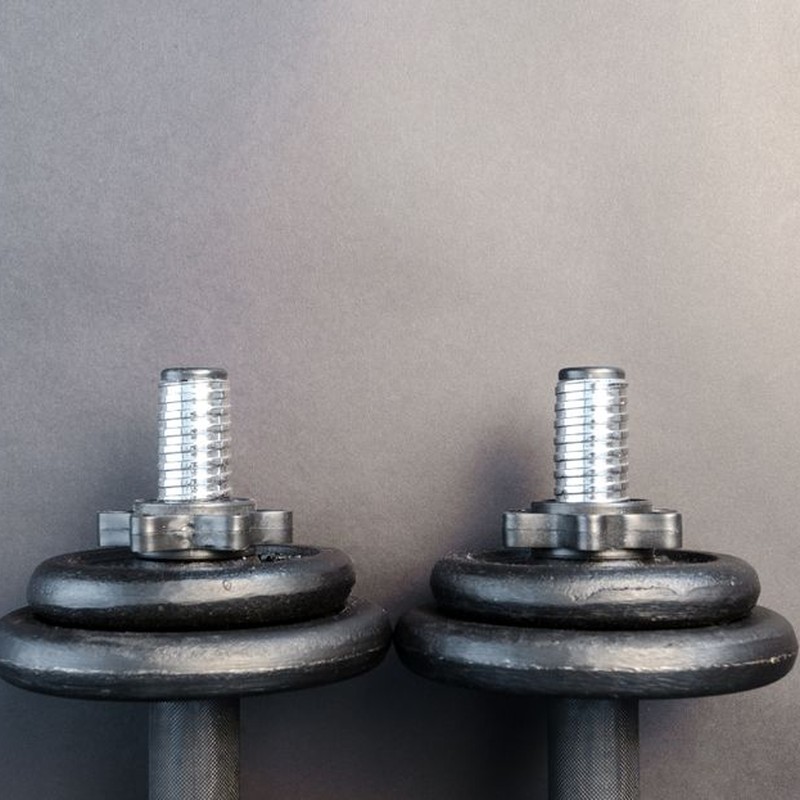
If you are leaning toward going solo, check current prices on Amazon for adjustable dumbbells, resistance bands, or a suspension trainer. A solid home setup can cost about what you would spend on three sessions. And if you have paid for a trainer, share your experience in the comments. What did you actually get for your money?
A Five-Minute Self-Check: Solo Path or Coaching Path?
Most people decide this by feel. A trainer hands them a free session, they feel sore and motivated the next day, and a package lands on a credit card. Or the opposite happens: someone buys a $30 PDF program, runs it twice, and decides every trainer is a scam. Both decisions skip the real question, which is what you specifically are paying for.
Answer these five questions and write the answers down, because memory rounds in your own favor. One caveat applies to the whole section, not just the first question: if you are pregnant or postpartum, rehabbing an injury, or managing something like hypertension or type 2 diabetes, your doctor or a physiotherapist comes first. A certified trainer is a useful second set of eyes on load and breathing, not a replacement for clinical guidance. Ask what experience they have with your situation before you hand over a card.
1. Have you ever loaded a barbell, or are you working around a body that needs supervision?
If you have never done a real set of squats or sat down at a cable machine, you do not yet know what a genuinely hard set feels like. That is the risk window. You cannot tell the difference between a set that is challenging and a back that is about to complain. Learning deadlift setup from a person standing next to you beats learning it from a video you keep pausing between sets.
This is where supervised coaching earns its fee fastest. Four to eight sessions to learn the main lifts properly costs a few hundred dollars and can save you an entire training season spent working around a tweaked back. Same logic applies if you have been cleared to train after an injury and need someone adjusting loads week by week.
2. How long have you been training consistently?
Six months at three sessions a week, more weeks than not, changes what a trainer is selling you. By that point you know the movements, you have a rough sense of where failure sits, and you can read your own log without confusion. You are no longer buying education.
What you would be buying is accountability: a person expecting you at 6 a.m. who notices when you skip. Plenty of people train harder with someone watching, and that is a real benefit. Just name the line item honestly. You are renting a $640-a-month appointment, not a $640-a-month education.
3. What is your completion rate over the last four weeks?
Different question, different answer. Question two is about how long you have been at this. This one is about the last month only: sessions you planned against sessions you actually finished. If you completed fewer than half, the gap is follow-through, not programming. I have watched people buy a new plan when the old plan was working fine. They had a scheduling problem and treated it as a knowledge problem.
A trainer can fix follow-through, because someone is waiting for you. A new spreadsheet cannot. If you are on the fence, run a cheap three-week test: mark an X on a wall calendar for every session you finish, aiming for 8 out of 12. Miss that twice and you have your answer about which problem you are actually solving.
4. Can you explain progressive overload and apply it to your own numbers?
Not the definition, the application. Say you squatted three sets of eight at 95 pounds with two reps left in the tank. Do you know what next week looks like? If you can answer that straight out of your own log without guessing, you are already programming yourself.
At that stage a $25 to $50 written program plus one form-check session a month covers most of what a weekly trainer delivers. You keep a slice of accountability by booking the monthly session and texting a friend your numbers. You also keep the other $500.
5. Say the annual number out loud.
Two sessions a week at $80 an hour is $160 weekly, roughly $640 a month, or about $7,700 a year. At the top of the range, $100 an hour, the same schedule climbs past $10,000. Canadian readers get the same result from $60 to $120 CAD per session.
Now write down three things that money could do instead: a down payment, a real vacation, a home setup with a rack, a decent barbell, and adjustable dumbbells. That does not automatically make the trainer the wrong call. It makes it a trade instead of an impulse buy.
To place yourself: any yes in question 1 points to starting supervised, even if it is only four sessions to learn the lifts. Yes in question 2 means you are buying accountability, which is fine as long as you know that is what you are paying for. Question 3 asks whether the problem is showing up at all, which no program fixes on its own. Questions 4 and 5 lean hybrid or solo.
If you land on the DIY side, price your gear before committing. Adjustable dumbbells, bands, and beginner programming books move around constantly, so check current prices on Amazon rather than trusting what you remember from last year. And if you have run this calculation yourself, drop your numbers in the comments. What did you spend, and did it actually get you training?
Online Coaching, In-Person Training, and Free Plans Compared
Three formats cover nearly every realistic option, and each one solves a different problem. Here is the same breakdown for all three: what it costs, who it fits, and who should walk away.
Online coaching: $50 to $300 a month
Cost: $50 a month typically buys a written program and a monthly check-in by app or email. At $250 to $300 you get weekly calls, video review of your main lifts, and real adjustments when your schedule falls apart.
Who it fits: Lifters who already know how to squat, hinge, press, and row without someone yelling cues, and who want structure plus a person tracking their progress.
Who it does not fit: True beginners who have never seen a hip hinge. Video feedback is slow, and you can spend three weeks grooving a bad pattern before anyone catches it.
Ask one question before you pay: what changes if I stall for three weeks or get sick for ten days? A canned answer about trusting the process is your cue to close the tab.
In-person training: $40 to $120 a session
Cost: $40 to $120 a session depending on your market and the trainer’s experience. Twice a week at $70 is $560 a month, which is a car payment.
Who it fits: Barbell lifts where bar path matters, kettlebell work where a wrist flip can wreck an elbow, and returns to training after a knee, shoulder, or back rehab. Hands on the bar also help if you are the type who skips the gym when nobody is expecting you.
Who it does not fit: Anyone who only needs a squat checked and a program tweaked twice a year. The monthly math does not work for that.
Gym-floor credentials range from a weekend certification to a four-year degree plus a national exam, and you are allowed to ask. Try this one: what would you change if I slept four hours and skipped lunch? Specific answers sound like coaching. Vague ones sound like a sales script.
Free workout plans: $0
The r/fitness wiki, YouTube channels run by working coaches, and university strength and conditioning sites publish beginner programs that are often better designed than what gets handed out on a big-box gym floor. Some of those names carry stronger coaching credentials than whoever you would draw locally, so read the bio and judge for yourself.
What free does not give you is a witness. Nobody notices your knee caving on the last rep of set four, or that your bench stalled because you jumped 10 pounds instead of 2.5. You have to be the one who reads the program notes and follows them.
Be skeptical of any app promising a fixed timeline, like 20 pounds in eight weeks, with no adjustment mechanism for getting sick, traveling, or stalling. That is marketing math. Real coaching adapts week to week. Templates do not adapt at all.
The hybrid setup
One in-person session a month for form checks, plus a low-cost written plan you run the other 29 days. A $70 session and a $30 program costs less than one week of twice-weekly training. I ran this for about eight months while chasing a deadlift PR, and the monthly session caught a hip shift I had been ignoring for weeks. That one fix paid for the year.
Where the money goes instead: an adjustable dumbbell set, a decent kettlebell, or resistance bands so you can train at home on days the gym does not happen. Check current prices on Amazon before you commit to a monthly coaching fee, because a $200 equipment purchase is often the difference between training three days a week and training once.
If you have tried one of these formats, good or bad, drop your experience in the comments. The specifics help other readers far more than any general advice about finding the right coach.
Questions to Ask, Red Flags to Watch, and When to Walk Away
Hiring a trainer is like hiring anyone else for a skilled job. You would not hand a contractor your kitchen without checking credentials and calling a reference. Same logic here, except a bad trainer can cost you money and leave you hurt. So ask the awkward questions before the card comes out.
The hiring script
Run these in your first conversation. A good trainer welcomes them. A bad one gets twitchy.
- What certification do you hold, and are you insured? Recognized ones include NASM, ACE, NSCA, ACSM, and in Canada, CSEP. Ask for the certifying body, not just the word certified. Liability insurance matters too. Dodge either question and you have your answer.
- What happens if I miss a session or get injured? Get it in writing. Do you still pay for a no-show? Can you reschedule? If your back tweaks, do they refer you to a physiotherapist or quietly work around it? Vague answers turn into money fights later.
- How do you track progress, and can I see an example? They should pull up a log, an app, or a spreadsheet with loads, reps, and notes. If they say they just remember, that is not a system. That is a memory test.
- Can I speak to a current client? A confident trainer will connect you with someone a few months in. If they cannot, ask why. Maybe they are new and have no clients yet, which is fine if they say so honestly.
- What does the exit look like? Good trainers work themselves out of a job, so decide your terms before you start. My rule: after eight to twelve weeks I should be able to run my own warm-up, pick my own loads, and adjust a program when I miss a day or feel beat up. If that is not happening, the coaching is not transferring skills. I am just renting motivation.
Red flags that should make you pause
I have watched friends ignore these because they wanted a quick fix. Every one of them regretted it.
- Guaranteed weight-loss numbers. No ethical trainer promises 20 pounds in six weeks. They can promise a process, not a number.
- Programming written before any assessment. If a printed plan appears before they watch you move, ask about injuries, or check your schedule, that plan is cookie-cutter. It might be decent. It is not personal training.
- Supplement sales pressure. A trainer pitching powders and detox teas during your paid session is a salesperson with a whistle.
- Contracts longer than six months with no cancellation clause. People move, get sick, lose jobs. You need an out. Month-to-month or a clear cancellation policy is reasonable. A year with no exit is a trap.
Start with one session, or a three-pack
You learn more about a trainer’s style in three sessions than in three sales conversations. I did a three-pack years ago. By session two I knew his cueing worked for my squat, but he was not going to teach me how to program my own weeks. Cheap information, and it saved me a six-month commitment.
One session tells you if they show up on time, listen, and explain the why behind each exercise. Three tells you whether the coaching sticks. If you leave confused about what you did and why, that is a sign.
What tipped the decision for you?
Tell us in the comments whether you hired a trainer or went it alone, and what was the final straw. A red flag during the sales pitch, a budget crunch, or a friend who handed you a simple program that worked?
One last thing before you sign anything: price the basics first. Adjustable dumbbells, a flat bench, and a set of bands are a one-time cost that outlasts any contract, so check current prices on Amazon and see what fits your budget. Either path can work. Just go in with your eyes open.