Does Strength Training Sharpen Your Brain? What 2026 Research Suggests
Full disclosure: Some links in this article are affiliate links. We may earn a small commission at no extra cost to you if you make a purchase through them. Our recommendations are based on what real users report, not on commission size.
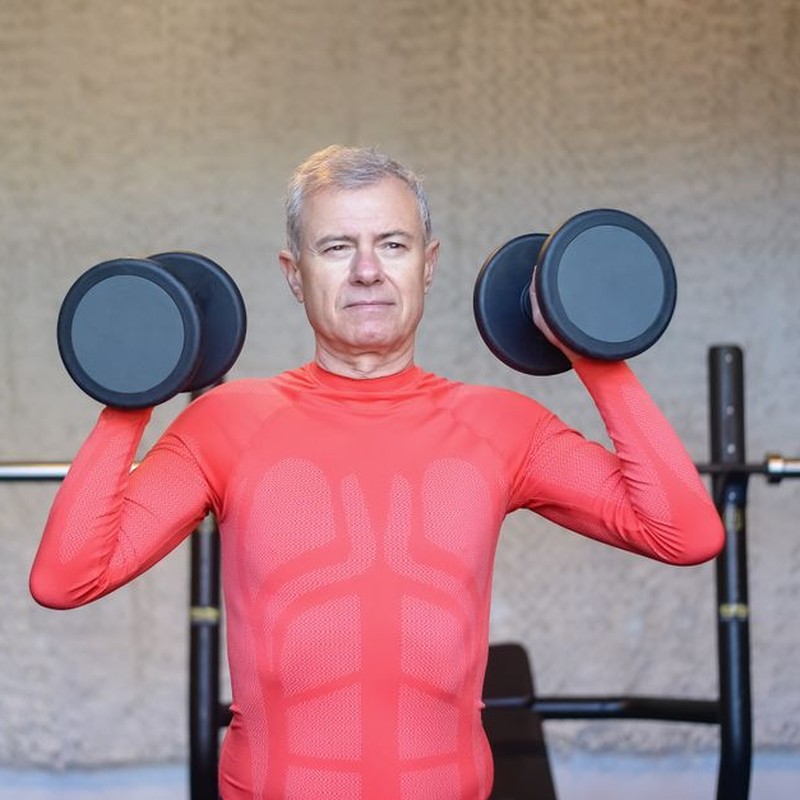
What the 2026 Headlines Actually Claim About Lifting and Brain Age
Two stories in September 2026 put strength training and brain aging in the same sentence, and both got passed around a lot. On September 13, MindBodyGreen ran a piece headlined around a type of workout that could lower the brain’s biological age by roughly two years. Eight days later, health.com published a story framing strength training as the brain boost people have been overlooking. Different outlets, same thread: lifting might do something for an aging brain beyond building muscle.
That thread is worth pulling on. It’s also where a lot of readers stop reading and start repeating the sentence lifting makes your brain two years younger. So before any talk of mechanisms, be precise about what was claimed and what one study can realistically show.
Brain age is a model output, not a repair receipt
Brain age is an estimate. Researchers feed imaging data, sometimes plus cognitive test scores, into a statistical model trained to predict how old someone is from those patterns. Then they compare the prediction to the person’s actual age. Scans that look younger than the calendar earns you a negative brain age gap, which usually gets framed as favorable.
It’s a handy research shorthand. It is not a measurement of how old your neurons literally are. A two-year shift means the model’s estimate moved. It does not mean damaged tissue got repaired or that your hippocampus got a tune-up. I’ve watched people online treat a two-year brain age gap like two years off their cholesterol, which is a big leap.
The caveats that ride along with any study in the news
Sample size, training duration, and what the comparison group actually did. That last one matters more than most readers realize. If the control group sat on the couch while the training group lifted three days a week for several months, part of the measured difference comes from structured activity, from showing up on a schedule, maybe from the social contact. The barbell gets credit for all of it in the headline.
Measurement timing is another wrinkle. Cognitive testing right after a session can pick up short-term arousal and blood flow effects. Testing months later, after training has stopped, answers a very different question. Both are interesting. They are not the same claim.
Where the evidence honestly stands
My read, up front: the direction of the evidence is encouraging, the size of the effect in any single study is modest, and nobody has shown that lifting weights prevents dementia. Not this research, not any research I’ve seen.
What strength training does have is a long list of well-established outcomes. Preserved muscle mass, better bone density, improved blood sugar handling, lower fall risk, easier daily function. Those are the reasons I’d tell a beginner to lift for longevity. Any cognitive bonus rides on top of that foundation. It doesn’t replace it.
A footnote about the timing of all this
Search interest in resistance training and brain health has been roughly flat in the U.S. across the past year. Google Trends puts the twelve-month average for both terms above the most recent thirty-day average, which is a dull way of saying there was no surge. The research isn’t new either. What’s new is that mainstream outlets are connecting the dots for a general audience instead of leaving it in exercise science journals. That’s a media shift more than a scientific breakthrough.
What a beginner should actually do with this
Nothing in these stories changes the fundamentals. Starting from zero, here’s a structure that covers the bases:
- Two full-body sessions per week, 30 to 40 minutes each. That’s the minimum effective dose for most beginners, and it’s enough to see strength gains within a month or two.
- One push, one pull, one squat or hinge, one carry or core movement per session. A dumbbell press, a row, a goblet squat, and a farmer’s carry will do more for you than a complicated program.
- Two to three sets of 8 to 12 reps, stopping with two or three good reps still in the tank. For carries, walk 30 to 40 seconds and repeat.
- Add a little weight or one rep whenever the last set feels easy. That’s your whole progression rule for the first few months.
- Log it. A notebook or phone note with weight and reps takes fifteen seconds and tells you whether you’re actually progressing.
I keep a pair of adjustable dumbbells and a 35-pound kettlebell in my garage, and that setup has covered every exercise above for years. If you want to build something similar, price it out on Amazon before you commit. Adjustable weights swing a lot in price, and the 2026 batch of budget loadable dumbbells is better than what I bought when I started.
One more thing: don’t go hunting for a consumer brain age test to track your progress. Nothing on the market gives you the validated measurement these studies use, and chasing a number that doesn’t reliably exist is a quick route to frustration. Track your lifts instead. That’s a signal you can actually trust.
If you’ve been lifting a while and noticed changes in how sharp you feel, or you started recently and want to compare notes, drop a comment. Reader reports are often more instructive than another press release.
How Working Muscles Could Reach the Brain: The Mechanisms Under Study
In September 2026, MindBodyGreen ran a piece about a certain type of workout lowering your brain’s biological age by two years. Days later, health.com called strength training the brain boost you have been overlooking. Both headlines did what headlines do: they compressed a messy pile of ongoing science into a clean promise.
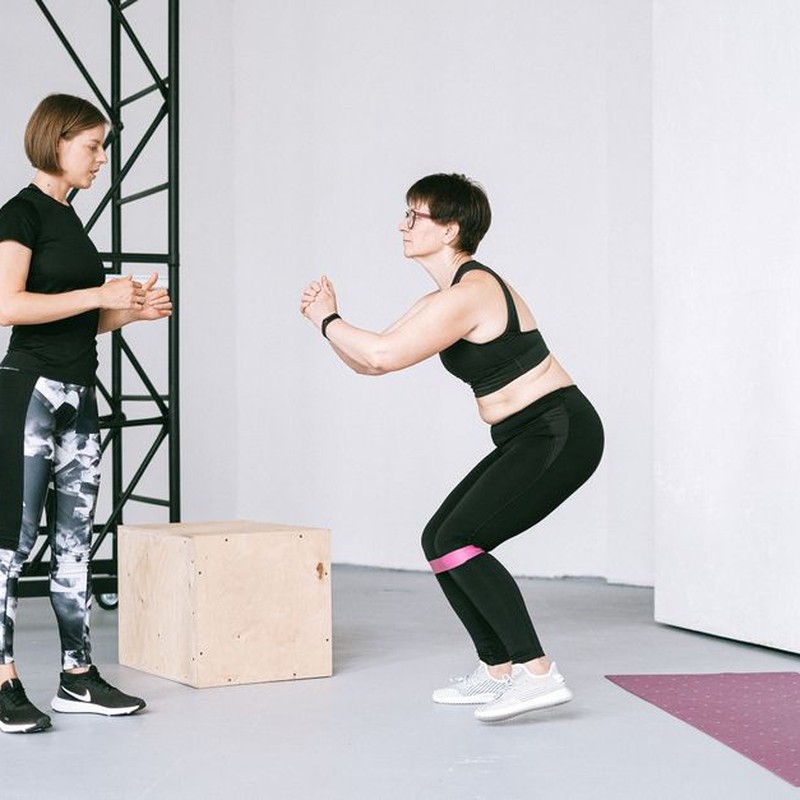
The messier version is more interesting. There are several plausible routes from a hard set of goblet squats to a sharper memory, and not one of them has been confirmed in humans as the reason lifting helps cognition. Here is what researchers are actually chasing.
Blood flow: healthier vessels, better delivery
Mid-set, your blood pressure and cardiac output climb. That spike is normal and short-lived. The durable change shows up over weeks. Repeated resistance sessions improve vascular function, meaning your arteries stiffen less and the endothelium — the inner lining that helps vessels relax and widen — does its job better.
Healthier vessels mean steadier perfusion to the brain regions most vulnerable with age, including the hippocampus and parts of the prefrontal cortex. Those are the same areas that shrink first in many forms of cognitive decline, which is why the blood-flow story keeps getting attention.
One habit deserves priority here: do not hold your breath through a heavy set. A slow exhale as you push keeps the pressure spike from climbing higher than it needs to. If you have hypertension, that single detail matters more than whether you do 8 reps or 12.
Signaling molecules: myokines, BDNF, IGF-1
Contracting muscle releases myokines, small signaling proteins that travel in the blood. Exercise also raises BDNF and IGF-1, two molecules involved in neuron growth, synaptic plasticity, and repair. Acute exercise studies and lab work show these markers climbing after training sessions.
Here is where I slow down. A transient rise in a blood draw on Tuesday is not the same as measuring what a molecule is doing inside a living human brain over twenty years. Researchers can see the signal. They cannot yet trace the line from that signal to a better word-recall score in your sixties.
For this pathway, consistency beats intensity by a wide margin. Three moderate sessions you actually repeat will likely do more than one brutal session you dread and skip.
The metabolic route: muscle as a glucose sink
Muscle is the largest site of glucose disposal in the body. Better insulin sensitivity and steadier blood sugar track with lower dementia risk in large observational cohorts.
Read the word observational carefully. It means association, not cause. People with well-controlled blood sugar differ from people without it in a hundred ways researchers cannot fully untangle. Still, the pattern is consistent enough that many of the brain benefits attributed to lifting may actually be metabolic: muscle that clears glucose efficiently helps protect the vasculature feeding your brain.
A boring pairing shows up in almost every longevity protocol for a reason — two or three lifting sessions a week plus a ten-minute walk after your largest meal.
Sleep and mood: the side doors
Lifting reliably improves sleep quality and depressive symptoms in many adults, and both are tightly linked to cognitive function. Some of any cognitive payoff may walk in through those doors rather than through the muscle itself.
If you train in the evening and struggle to fall asleep, cap sessions at 60 to 75 minutes and push your all-out PR attempts to earlier in the day. I moved my heaviest squats to late morning a couple of years ago and sleep onset got noticeably easier.
What nobody has proven yet
None of these pathways has been isolated in a human trial as the reason strength training helps cognition. To isolate one, you would have to block it — a group that trains while taking something that suppresses myokine release, or a group that trains while sleeping badly, then check whether the cognitive benefit vanishes. Those trials are expensive, hard to run, and mostly not done.
So treat the list above as a set of reasonable explanations rather than a proven chain of cause and effect. The 2026 coverage holds up fine as long as you read may as may.
What to do with this on Monday
For a beginner, the useful takeaway is dull and reliable. Two to three full-body sessions per week. Six to ten hard sets per muscle group weekly. Five to eight reps on big lifts, ten to fifteen on smaller ones. Sixty to ninety seconds of rest. Add weight when you can finish the top of your rep range with roughly two reps still in reserve. Breathe out on the effort.
Run that for twelve weeks and you will have better data on your own sleep, mood, and bloodwork than any headline can hand you.
What the Evidence Supports Today, and Where the Gaps Sit
Read the recent headlines and the case sounds closed. MindBodyGreen ran a September 2026 piece claiming a certain type of workout can lower your brain’s biological age by about two years. Days later, health.com called strength training the brain boost most people overlook. Both are worth reading. Neither is proof.
Here is where the research actually sits, sorted by how much weight each kind of study can carry.
Observational data: consistent, but it cannot tell us why
Across large population studies, adults with more midlife muscle strength, and higher cardiorespiratory fitness, develop dementia less often than weaker, less fit peers. The pattern repeats in study after study, which is why researchers take it seriously.
The catch is what these studies cannot do: they measure people as they already are. Someone strong at 50 may also sleep better, eat better, smoke less, and carry fewer chronic conditions. Early neurodegeneration also saps activity years before a diagnosis, so the arrow may point backward. Less strength does not cause cognitive decline; cognitive decline reduces strength. Researchers adjust for as much of this as they can. Adjustment is not elimination.
Real signal. Weak causal claim.
Randomized trials: positive-leaning, small, and short
Randomized controlled trials fix the direction problem by assigning people to train or not train. In strength training and cognition, most run 8 to 24 weeks and test executive function, processing speed, and working memory.
Results lean positive. They are not consistent. Some trials show clear improvement on one cognitive test and nothing on another. Effect sizes are usually small, the kind of change you would struggle to notice day to day, though a small average can hide bigger gains in certain subgroups.
I have read a lot of these papers, and the details carry more weight than the abstracts suggest: whether participants were supervised, whether the control group did something active, whether the cognitive test was sensitive enough to detect change over three months. A 12-week study with 40 participants is a hint, not proof.
The finding that holds up best
Across trials, the most reproducible result is not about a specific protocol. It is about who responds. People who start out least fit and least active improve the most, on physical measures and often on cognitive ones.
That matters if you are a beginner or coming back after years off. The gains available at the start are the largest you will ever get, and they do not require heavy loads, clever programming, or a gym membership. Two full-body sessions a week with a few sets of squats, rows, presses, and hinges is enough to move you out of that lowest-fitness group. I have watched this with clients who had never touched a barbell: the first eight weeks did more for their energy and focus than the next eight months.
One caveat. The comparison group in some of these studies was fairly sedentary, so beating a control group that changed nothing is a real result, just not the same as beating a group that walked 30 minutes a day.
Why the MCI data is interesting but not solid
Trials in adults with mild cognitive impairment sometimes show larger cognitive gains than trials in healthy older adults. Worth watching. It also rests on small samples and wildly different protocols, machines in one study, bands in another, every rep supervised in a third. Sample sizes are often in the dozens. Treat it as a lead, not a number to build expectations on.
Open questions nobody has answered yet
- Dose: how much strength training is enough, and does more help past a certain point?
- Load: do heavy loads (80 percent of max or more) beat moderate loads for cognition, or is total effort what matters?
- Retention: if you stop training, how fast do any cognitive advantages fade?
Current evidence does not answer any of these cleanly. Anyone who tells you otherwise is filling gaps with confidence instead of data.
How to act on this without waiting for certainty
Practical read: enough evidence to train, not enough to promise yourself a sharper brain. That is still a good trade. Muscle, bone density, balance, blood sugar control, and mood all have decent support behind them. If the cognitive payoff turns out to be modest, you are not lifting for nothing.
A reasonable beginner structure:
- Two sessions a week on non-consecutive days, 30 to 45 minutes each
- One exercise per movement pattern: squat, hinge, push, pull, carry
- 2 to 3 sets of 8 to 12 reps, stopping 2 to 3 reps short of failure
- Add a little weight or one rep each week while your form holds
- Walk or do easy cardio on the other days, since the fitness side of the brain story has its own evidence base
Log your sessions. If you are investing 6 to 12 months, a written record shows whether you are progressing instead of guessing.
If you want to start at home, check current prices on Amazon for adjustable dumbbells or a couple of resistance bands before you buy. The cheap setup that fits your space gets used far more than the expensive one that does not. And if you have been lifting a while, share in the comments what you have noticed in your own focus or memory since you started. Beginner questions are welcome there too.
A Practical Way to Train for Your Brain and Your Body at the Same Time
Strip away the headlines and the intervention in the strength-training research is unglamorous: lift two or three times a week, for months, and let the body respond. The health.com piece from late September 2026 and the MindBodyGreen report on brain biological age both describe ordinary gym work, not a lab protocol. No special sequence. No magic rep range. Starting matters more than optimizing.
Two or three full-body sessions per week, with at least one rest day between them. Monday, Wednesday, Friday, and you’re done. Consistency across months beats the perfect program you agonize over in week one.
Cover these five patterns every session
- Squat or leg press — 2–4 sets of 6–12 reps
- Hip hinge — Romanian deadlift, hip bridge, or a light trap-bar deadlift
- Push — dumbbell bench press, push-up, or overhead press
- Pull — dumbbell row, band pull-apart, or lat pulldown
- Loaded carry — farmer’s walk with dumbbells, or a heavy grocery-bag walk down the driveway
That hits nearly every muscle group that matters for an aging body, and it takes about 40 minutes once you stop resting five minutes between sets. Two to four sets of six to twelve reps per movement is plenty to start. New lifters assume more is better. More usually means soreness that wrecks the next session and a fast exit.
If you’re starting from zero, week one can be one set per pattern at a weight that feels almost too easy. The goal of those first two weeks is learning the movements and proving to yourself you’ll actually show up.
Progress slowly on purpose. Add weight or reps roughly every week or two. When the last rep of the last set starts looking ugly, you’ve found your ceiling for now, and that’s the right place to be working. Stay there until it feels easier, then nudge the load. I’ve had clients stall three weeks on the same dumbbells and then jump ten pounds in a single session. It rarely moves in a straight line.
Don’t gut your cardio to make room for lifting. Brisk walks, a stationary bike, or short intervals on off days cover the vascular side of brain health that resistance training only partly addresses. The two stack rather than compete.
Track two things and ignore the rest: sessions completed per week, and one or two lifts trending up. That’s enough feedback to know it’s working. I’ve watched people turn training into a spreadsheet project and quit by week six because logging started to feel like a second job.
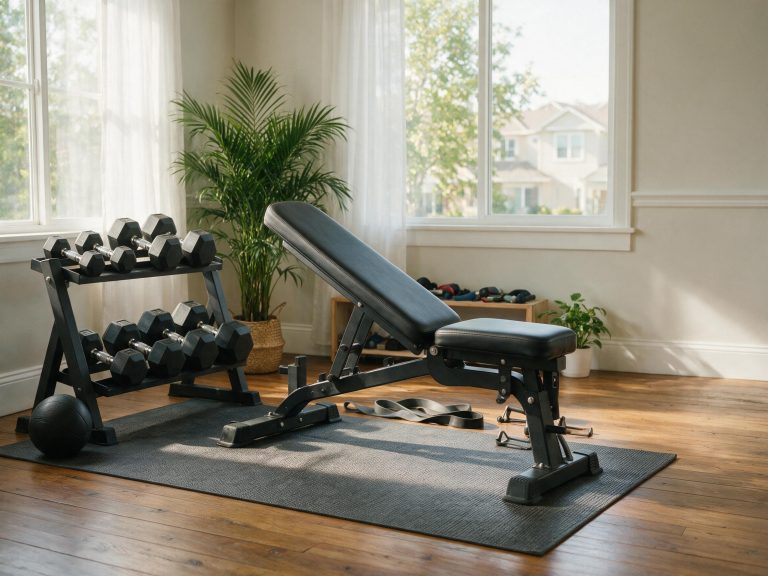
For gear, adjustable dumbbells, a set of resistance bands, and a bench cover most beginner programs. Prices on all three swing a lot with sales, so check current prices on Amazon before buying rather than trusting a number you saw months ago. My own home setup cost less than a year of the gym membership I’d stopped using.
Set expectations honestly. Better sleep, steadier mood, and more daily energy usually show up within a few weeks, and you’ll feel that part. Anything happening upstairs is slower and much harder to notice from the inside. The two-year biological age difference reported in the MindBodyGreen coverage came from months of consistent training, not one block, and it isn’t the kind of change you can verify by how you feel on a Tuesday morning.
Start with two sessions this week. And if you already train, leave a comment about what kept you consistent when motivation dipped — that’s the part beginners actually need to hear.