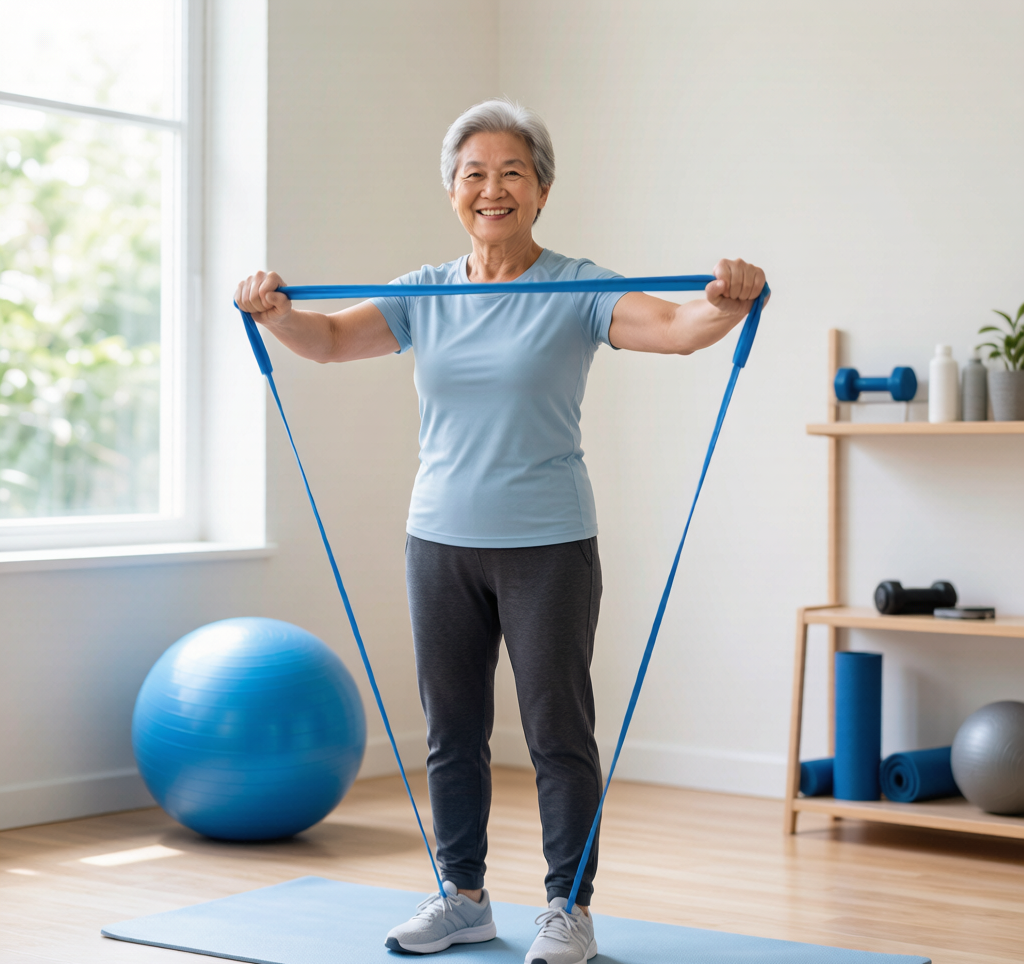
Does Age Affect Muscle Growth? Training After 30, 40, and 50
Full disclosure: Some links in this article are affiliate links. We may earn a small commission at no extra cost to you if you make a purchase through them. Our recommendations are based on what real users report, not on commission size.
The Myth: Muscle Growth Stops After 30
You’ve heard it a hundred times: after 30, your muscles wither and building new tissue is a losing battle. That fear keeps many older adults from ever picking up a weight. I’ve worked with clients in their 50s and 60s who walked into the gym convinced they were too old to make gains. After a few months of consistent training, most were shocked by how much their strength and muscle mass improved.
Let’s separate the fear from the facts.
Natural age-related muscle loss, sarcopenia, is real. From your 30s onward, you can lose 3–8% of muscle mass per decade if you stay sedentary. But losing muscle from inactivity is not the same as being unable to build new muscle. The biological machinery for growth—satellite cells, protein synthesis, neuromuscular adaptation—remains intact throughout life. Resistance training wakes it up, regardless of your birth year.
The science backs this up. A 2015 study in the Journal of Applied Physiology had men and women over 60 follow a 12-week progressive resistance program. On average, they gained 2–3 pounds of lean muscle and increased their strength by 30–50%. That’s the same rate of improvement you’d expect in a 20-year-old beginner. Another study from the University of Alabama in 2009 showed that seniors who lifted weights three times a week for 16 weeks increased muscle fiber size by 25%. The hypertrophic response to strength training remains robust well into your 70s—and beyond.
So the worry is normal, but the evidence is clear: age is not a stop sign. What matters most is that you start, stay consistent, and challenge your muscles with progressive overload.
Ready to begin? You don’t need a gym membership. A set of resistance bands or a pair of light dumbbells (check current prices on Amazon) lets you train at home with minimal fuss. Focus on compound movements: squats, push-ups, rows, overhead presses. Aim for 2–3 sessions per week, and gradually increase weight or reps as you get stronger.
Check current prices on Amazon for resistance bands or light dumbbells, and share your training experience in the comments below. Your journey is just beginning.
What Actually Changes: Hormones, Recovery, and Protein Synthesis
If you’ve heard your hormones plummet after 30, you’re not alone. That’s a common fear. But the decline is gradual—about 1% per year for testosterone and growth hormone after 30. And here’s what matters: your muscles stay highly responsive to training stimulus. Study after study shows that older adults can build muscle at rates close to younger people with the right program. You’re not broken, just a little less efficient.
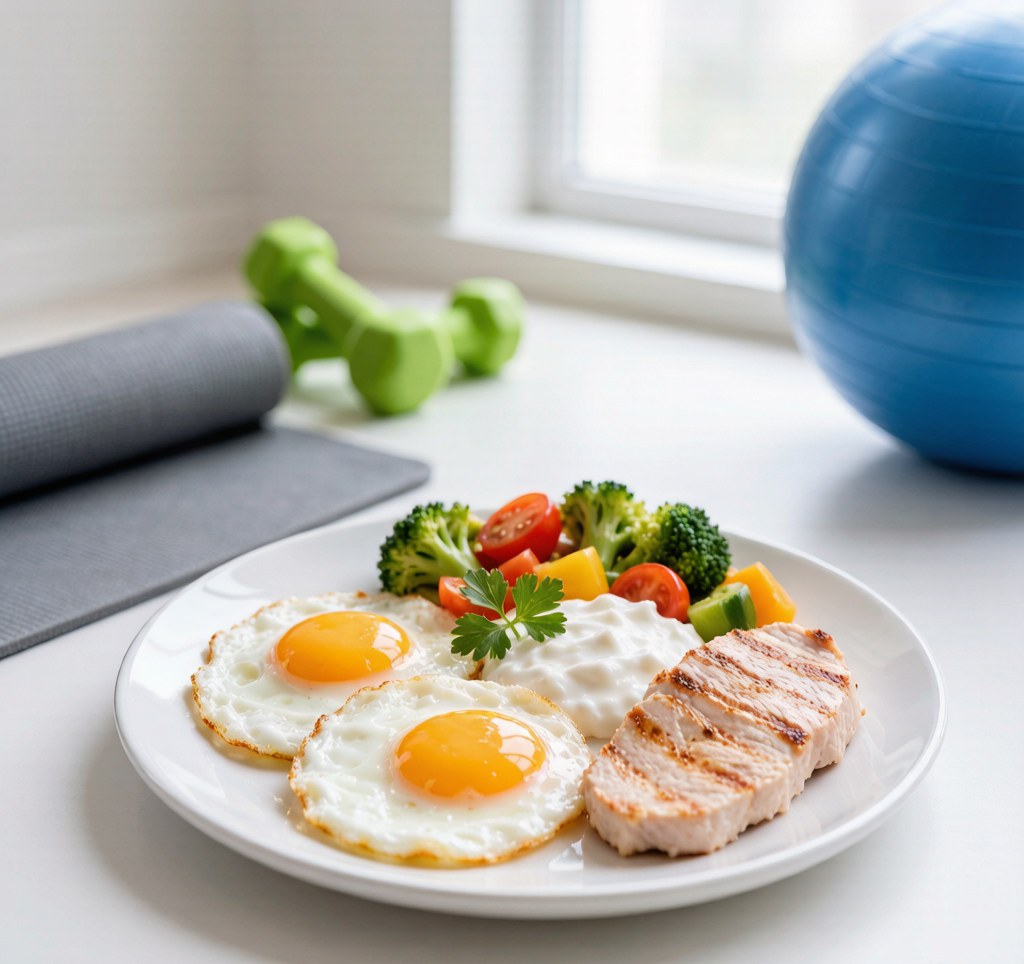
That’s where anabolic resistance comes in. As you age, your muscles need a higher protein dose per meal to kick off the same growth. A 25-year-old might get by on 20 grams of protein. Over 50? That same meal likely falls short. The fix: aim for 30 to 40 grams of protein per meal, spread over three or four meals. Think three eggs plus Greek yogurt at breakfast, a chicken breast at lunch, and salmon at dinner. Simple shift, big impact.
Recovery changes too. Inflammation lingers longer, and your body repairs microtears more slowly. That doesn’t mean skip workouts—it means train smarter. I see clients cut rest between sets too short. Don’t. Take 90 to 120 seconds instead of the 60-second rush from your twenties. Prioritize seven to nine hours of sleep. And add lighter days or active recovery walks—your body will thank you.
For home workouts, a set of adjustable dumbbells or resistance bands goes a long way. I’ve had clients use Fit Simplify resistance bands to add progressive overload without a gym. Another favorite: CAP Barbell coated dumbbells, easy to start light and add weight. Check current prices on Amazon to grab a set that fits your budget.
Your muscles don’t care about your age. They respond to what you feed them, how you challenge them, and how you let them recover. Adjust those three dials, and your gains will follow.
Have you used resistance bands or light dumbbells in your training? Share your experience in the comments below!
Training at 30, 40, and 50: What Changes and What Doesn’t
Your muscles don’t know how old you are. Tissue responds to tension and recovery at 30 or 60. What changes are your joints, your recovery window, and the shape of your day. That means your training should change too—not because you can’t build muscle, but because the smartest path to it looks different each decade.
Your 30s: Build the foundation now. This is the last decade where heavy compound lifts five days a week won’t make your shoulders or knees complain. Recovery is still strong—sleep and nutrition gaps are the main limiters. Focus on progressive overload with barbells and dumbbells. Learn deadlifts, squats, and pull-ups with solid form. Most people in their 30s have a job, maybe kids, but still enough flexibility to train four times a week. Use that window. I’ve seen guys in their 30s add 15 pounds of lean mass in six months just by eating enough protein and running a simple linear progression. Make training a non-negotiable habit now. Once you hit 40, spare time shrinks.
Your 40s: Joints come first. Testosterone declines slowly—about 1% per year after 30—but your ability to apply force and recover holds up well if you manage inflammation. Swap high-impact barbell work for dumbbells and resistance bands on certain days. For example, instead of heavy bench press, try floor presses with dumbbells or banded push-ups. Use full range of motion on everything and focus on controlled negatives (3–4 seconds lowering). I coached a 45-year-old who added 20 pounds to his squat by switching from a barbell to a safety squat bar and adding banded hip thrusts. His knees stopped clicking. Resistance bands like the Fit Simplify set (around $30 on Amazon) let you load joints through the full range without the shock of free weights. Add them to your warm-up and for accessory work.
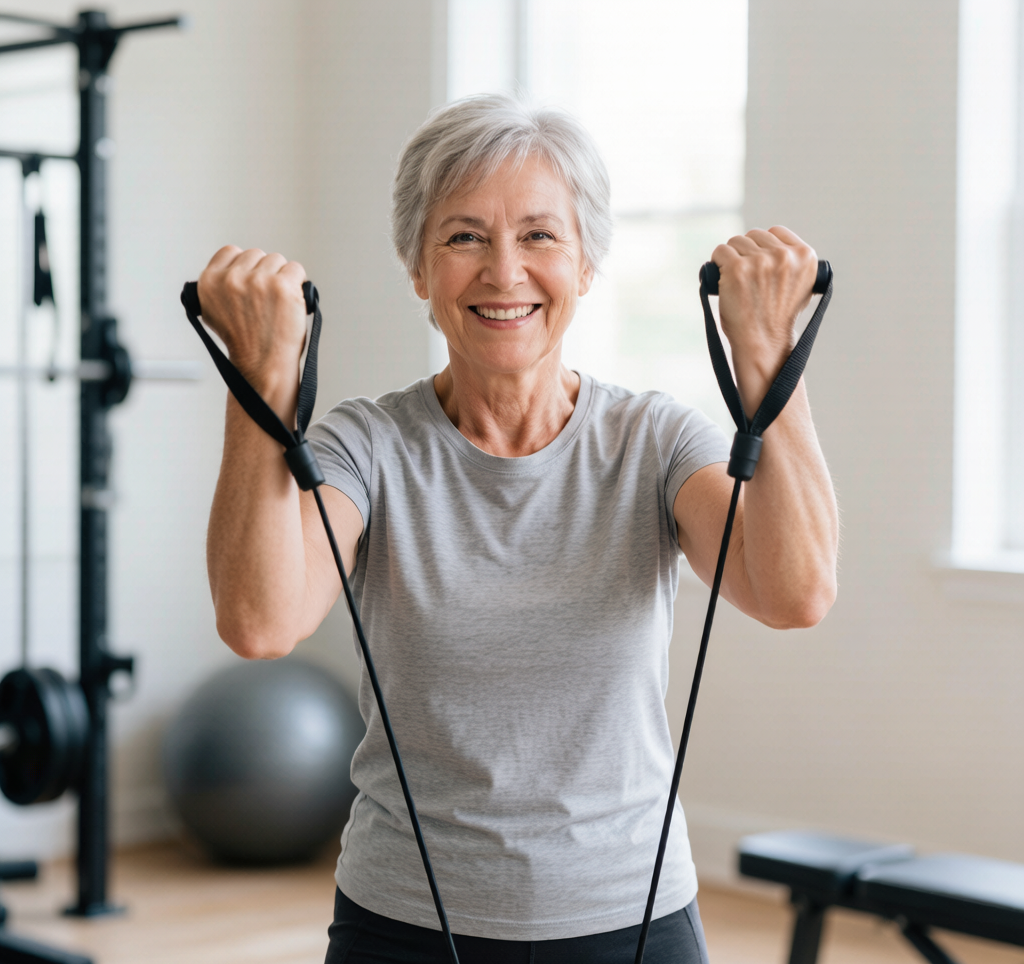
Your 50+: Less intensity, more frequency. Muscle protein synthesis becomes less sensitive to amino acids after 50. That doesn’t mean it stops—it just needs a bigger signal. Shorter, more frequent sessions work better than long, exhausting ones. Three to four 30–40 minute workouts per week, each hitting the whole body, produce better results than trying to kill yourself twice a week. Start every session with a lighter warm-up: 5 minutes of banded glute bridges, leg swings, and cat-cows. Then do your main lifts at a weight you can handle for 8–12 reps with clean form. I have clients in their 60s who maintain lean mass using nothing but resistance bands, a pull-up bar, and a pair of adjustable dumbbells. The WODFitters resistance band set (also on Amazon) is a solid choice because the bands have printed resistance levels and come with a door anchor. After 50, the goal isn’t to set PRs every week. It’s to show up, stimulate the muscle, and protect your joints.
What stays the same: frequency. No matter your decade, training each muscle group twice per week is more effective than once. That’s backed by a meta-analysis in Sports Medicine that found twice-weekly training produced significantly greater hypertrophy than once-weekly, regardless of age. Resistance bands make this easier when you travel or have limited home space. The Fit Simplify bands come with a carry bag, so you can take them on business trips or store them under the couch. No equipment excuses.
Age changes your recovery curve and joint tolerance, but it doesn’t change the fundamental biology of muscle growth. Start where you are. Use the tools that match your stage of life. If you’re looking for affordable resistance bands or light dumbbells, check the current prices on Amazon—they’re usually under $40 and last for years. Try the Fit Simplify or WODFitters sets and see how they feel. And if you’ve adjusted your training after 40 or 50, drop a comment below. What changed for you? What stayed the same?
Putting It Into Practice: A Simple Weekly Blueprint
You’ve absorbed the science. Now it’s time to move. Here’s a 3-day full-body split designed for home, using only bodyweight, resistance bands, and light dumbbells. No gym required.
The Weekly Split
- Monday: Goblet squats (or bodyweight squats), push-ups (knee or full), bent-over rows using bands or dumbbells.
- Wednesday: Reverse lunges, overhead press (dumbbells or bands), band pull-aparts.
- Friday: Glute bridges or hip thrusts (add a dumbbell on your lap for weight), floor press with dumbbells (bench press alternative at home), lat pulldowns using a band hooked over a door.
Workouts take 30–45 minutes. Rest 60–90 seconds between sets. You don’t need to exhaust yourself to stimulate growth — especially after 30, 40, or 50. Consistency beats intensity every time.
Gear That Lasts
I’ve tested plenty of home equipment. These three items cover almost everything you need:
- Fit Simplify Resistance Band Set — five bands with different tensions and a door anchor. I’ve used mine for two years and they still snap back. Great for rows, pulldowns, pull-aparts, and glute work.
- CAP Barbell 10-20 lb Dumbbells — a pair of 15- or 20-pound dumbbells opens up goblet squats, presses, and rows. You don’t need a full rack.
- TheraBand CLX — a portable band system that packs flat. Ideal for travel or storage. It provides progressive resistance through clever design.
These aren’t the cheapest options, but they hold up. I’ve seen cheap bands break in under a month. Spending a little more now saves money later.
Track Your Progress or You’re Guessing
Grab a notebook or open a note on your phone. Write down the exercise, sets, and reps after each set. Every week, aim to add one rep per exercise. When you can comfortably do 15 reps, add 2.5 pounds or move to the next band. This progressive overload principle works at any age — I’ve helped a 58-year-old client add 5 reps to his push-ups in six weeks using this method.
Don’t overcomplicate it. One rep or two pounds every 1–2 weeks is plenty. Slow progress is real progress.
Now it’s your turn. Check current prices on Amazon for the Fit Simplify bands, CAP dumbbells, or TheraBand CLX — prices fluctuate and you might catch a deal. After your first workout, come back and share your experience training past 30 in the comments below. I read every one.
Medical & Editorial Review: This article was reviewed by Liam Smith, founder of Apexfito, for accuracy and safety. Content is for educational purposes and is not a substitute for professional medical advice. Consult your physician before starting any exercise or nutrition program.