Can You Build Muscle With Just One Dumbbell? 8 Exercises That Work
Full disclosure: Some links in this article are affiliate links. We may earn a small commission at no extra cost to you if you make a purchase through them. Our recommendations are based on what real users report, not on commission size.
Why One Dumbbell Is Enough to Build Muscle
When I say “one dumbbell,” I mean one dumbbell at a time from a pair. You don’t need to hunt down a single loose dumbbell. Adjustable sets are sold as pairs, but for every exercise in this article you grab one side and get to work. That’s enough to build muscle, and here’s why.
Muscle growth doesn’t depend on how many dumbbells are lined up in front of you. It depends on mechanical tension — the amount of force your muscle has to produce against a load. Your muscle fibers can’t tell if the load came from a 100-pound barbell or a 30-pound dumbbell held in one hand. They respond to tension, and you can create plenty of tension with a single dumbbell as long as you choose exercises that work one side at a time.
Take a one-arm row. If I hold a 40-pound dumbbell in my right hand and row it toward my hip, that’s the full workload for my lat and biceps on that side. My left arm is just resting on the bench. Then I switch sides and do the same rep count with my left. Each side gets the same stimulus it would get from a barbell row, minus the load-sharing that lets your stronger side take over. The same idea works for split squats, single-arm floor presses, and single-arm curls. I’ve had clients add noticeable size at home using nothing heavier than a 25- or 30-pound dumbbell, simply because they trained one side at a time.
Tempo is the other lever. Lower the weight slowly — four seconds down, a two-second pause at the bottom, then press or curl up. That single rep now lasts twice as long, which means your muscle is under tension for more total time. Time under tension is one of the main drivers of hypertrophy. I use tempo training in my own garage setup whenever I’m working with a lighter dumbbell. It’s a completely legitimate way to make a weight that feels easy turn into something that burns by the tenth rep.
Progressive overload still matters. You can’t do the same three sets of ten forever and expect results. With one dumbbell, you add reps, add sets, slow the lowering phase, or add a pause. All of those increase the difficulty without adding weight. Keep a simple log — write down how many reps you got last week, then try to beat it this week. That’s the same principle powerlifters use, just adapted to a single dumbbell at home.
An adjustable dumbbell makes this setup even easier. The Bowflex SelectTech 552 Adjustable Dumbbells is the one I’ve recommended most to beginners because the dial changes weight in seconds and the whole set sits in a base about the size of a small end table. It’s sold as a pair, but again, you only use one side for the movements in this article. If you want a heavier option, the PowerBlock Elite EXP 5-90 Adjustable Dumbbells goes up to 90 pounds per hand, and it feels solid in a working set. I’ve used both in my own workouts, and either one lets you apply the same training principles without buying a full rack. Check the current price on Amazon before you order — adjustable dumbbells fluctuate a lot. And if you’ve already tried training with just one dumbbell, tell me in the comments which exercise made you feel it the most.
The 8 Exercises That Build Muscle With a Single Dumbbell
Most people assume you need a full rack to build muscle. Then they try to train at home with one dumbbell and give up after two sessions. The problem isn’t the equipment—it’s the exercise selection. I’ve spent weeks with nothing but a single adjustable dumbbell, and these eight moves can hit every major muscle group without a bench.
Before you start, note one thing: with one dumbbell, you can’t load every movement equally. A goblet squat can handle a heavier weight, while a single-arm shoulder press needs much less. If you have an adjustable set, that’s easy. The Bowflex SelectTech 552 Adjustable Dumbbells let me switch from 40 pounds for squats to 20 pounds for presses in a few seconds. If you’re using a fixed dumbbell, pick a middle-ground weight, slow down each rep, and aim for a rep range that keeps the last two or three reps difficult.
Another thing: several of these moves need a stable surface. For the rows and any pressing variation, use a bench, a heavy wooden chair, or a counter that won’t slide or wobble. This isn’t overthinking safety—it’s how you keep your shoulder and lower back happy while training alone.
1. Goblet Squat
Hold the dumbbell vertically against your chest, with both hands cupping the top end. Keep your elbows pointed down, not flaring. Sit your hips back and let your knees track forward until your thighs are at least parallel to the floor. Drive through your heels to stand.
This is the movement where you can use the most weight. With an adjustable set like the PowerBlock Elite EXP 5-90 Adjustable Dumbbells, load it heavy enough that the last two reps are a grind. With a fixed dumbbell, do 10-12 controlled reps and choose a weight where good form breaks down around rep 11 or 12.
2. Single-Arm Dumbbell Row
Place your left hand and left knee on a bench, a sturdy chair, or another stable surface. Keep your back flat and pull the dumbbell toward your hip, not your chest. Squeeze your lat at the top, then lower with control. Perform all reps on one side before switching.
Loading tip: your core has to resist rotation. If your torso twists, the weight is too heavy. Use a lighter option if you have it, or slow the lowering phase to 3 seconds to make the weight feel heavier. A fixed dumbbell works fine here; just keep the reps around 10 per side.
3. Reverse Lunge
Hold the dumbbell at your side with a neutral grip, or clean it up to a rack position at your shoulder. Step backward with one leg and lower until both knees are about 90 degrees. Push through your front foot to return to standing. Alternate legs or do all reps on one side before switching.
Balance is the limiting factor more than raw leg strength. Start light—20 to 30 pounds works for most beginners if you have an adjustable set. With a fixed dumbbell, use the same weight you’d use for rows. Aim for 8-10 reps per leg with a steady, upright torso.
4. Floor Chest Press
Lie on the floor with the dumbbell in one hand at chest level and your elbow on the floor. Place your other hand on your shoulder or out to the side for stability. Press the weight up until your arm is straight, then lower until your tricep touches the floor.
The floor limits your range of motion, but it also protects your shoulders. Keep your ribs down and don’t let your lower back arch. A stable floor is non-negotiable—this exercise shouldn’t be done on a soft mattress or couch. For loading, use a weight you can press for 8-10 clean reps. If you’re using a fixed dumbbell and it feels easy, lower slowly on the way down and pause at the bottom for two seconds.
5. Single-Arm Shoulder Press
Stand with your feet shoulder-width apart. Clean the dumbbell to shoulder level with your palm facing forward. Brace your abs and press the weight overhead until your arm is fully extended. Keep your opposite hand on your hip for balance. Lower slowly to your shoulder.
Your lower back will try to arch once the weight gets heavy. If that happens, drop the load and press with your glutes and abs tight. With an adjustable set, go to a weight that lets you finish 8 reps without losing form. With a fixed dumbbell, do 6-8 slow reps and take a longer break between sets.
6. Romanian Deadlift
Stand with your feet hip-width apart and hold the dumbbell in one hand in front of your thigh. Keep a slight bend in your knees. Push your hips back and lower the weight toward your shin until you feel a stretch in your hamstring. Keep your back flat. Drive your hips forward to stand, squeezing your glutes at the top.
This is a two-leg movement in this routine. The single-leg version is a great progression later, but it demands more balance and coordination. Start with two feet planted so you can focus on the hinge. Loading tip: use a weight that gives a strong stretch without rounding your back. If you have a NUOBELL Max 80 Adjustable Dumbbells, dial in a moderate weight—30 to 40 pounds works well for most beginners. With a fixed dumbbell, go light enough to feel the hamstring stretch, and slow down the lowering phase if it’s not challenging.
7. Suitcase Carry
Hold the dumbbell on one side like a suitcase. Stand tall, pull your shoulder down away from your ear, and brace your core. Walk in a straight line for 30 to 45 seconds, then switch hands. Don’t lean away from the weight.
This movement won’t make your biceps grow, but it’s brutal for your obliques, grip, and shoulders. Use a heavy weight that you can control for a slow, deliberate walk. With a fixed dumbbell, hold it at your side and take short steps, keeping your ribs down.
8. Dumbbell Thruster
Hold the dumbbell at your shoulders with palms facing each other. Squat down until your thighs are about parallel. Drive through your heels and use the momentum from standing to press the dumbbell overhead. Lower it back to your shoulders as you descend into the next rep.
This is a full-body finisher. Pick a weight you can squat with confidence, because the press comes right after. Most beginners should use 10-15 pounds less than their goblet squat. With a fixed dumbbell, keep the reps at 12-15 and focus on a smooth rhythm. If you’re using an adjustable set, don’t be afraid to drop the weight on the last set and speed up the pace.
Run through these eight exercises as a circuit or straight sets 2-3 times per week. If you’re shopping for an adjustable set, check the current prices on Amazon for the Bowflex SelectTech 552 Adjustable Dumbbells or the Yes4All Adjustable Dumbbells 80LB if you want a budget-friendly option. Tried this workout? Tell me in the comments which movement gave you the biggest pump.
How to Structure a Single-Dumbbell Workout and Keep Progressing
One dumbbell can build plenty of muscle if you stop treating it like a temporary fix. After running single-weight sessions in a cramped apartment, I can tell you that the difference between spinning your wheels and actually growing comes down to structure, not luck.
Start with full-body sessions three times per week on non-consecutive days. Monday, Wednesday, and Friday work, or shift those days to match your schedule. That spacing gives every muscle group about 48 hours to recover while still hitting each one often enough to stimulate growth.
For every exercise, do 3 sets of 8-12 reps. Rest 60-90 seconds between sets. Beginners should stay in this range because it keeps the weight honest without turning every set into a battle against fatigue.
Alternate which exercise you start with each workout. If you squat first on Monday, start with a press or a row on Wednesday. This small change stops the same muscles from carrying all the load every session.
A Simple Full-Body Template
Choose one lower-body push, one lower-body pull, one upper-body push, one upper-body pull, and one core movement from the exercise list earlier in this article. Run them as straight sets or a circuit, but keep the same five exercises for at least four weeks so you can measure progression.
- Lower-body push: goblet squat or reverse lunge
- Lower-body pull: single-leg Romanian deadlift (the RDL from Exercise 6) or hip hinge
- Upper-body push: one-arm floor press or standing shoulder press
- Upper-body pull: single-arm dumbbell row or pullover
- Core: suitcase carry or weighted sit-up
On your next workout, swap the order of the first two exercises. If Day 1 begins with the goblet squat, start Day 2 with the one-arm floor press. Your muscles still get the same work, but a different movement gets your freshest effort of the session.
How to Keep Making Progress With the Same Weight
The first progression rule is to add one rep per workout. If you get 8 reps on Monday, aim for 9 on Wednesday. Keep going until you hit 12 with clean form on every set.
The second rule is to slow down the lowering phase. Take 3-4 seconds to lower the dumbbell, pause for a beat, then press or pull back up. This extra time under tension makes a weight that feels too light suddenly feel heavy. I used this approach with a 30-pound dumbbell for weeks, and my chest and back stayed sore in a good way.
When you hit 12 reps with strict form on all sets, your current weight has done its job. That’s the signal to move up to a heavier dumbbell. If you have an adjustable set, make a small jump and repeat the process. If you’re using a fixed dumbbell, you need another one.
Upgrade Options for a Heavier Single Dumbbell
The fastest route is an adjustable dumbbell. The Bowflex SelectTech 552 Adjustable Dumbbells go from 5 to 52.5 pounds, which covers the early years of progression. The PowerBlock Elite EXP 5-90 Adjustable Dumbbells offers a larger range and expands as you get stronger. If you want a quicker switch mechanism without the top-tier price, check the NUOBELL Max 80 Adjustable Dumbbells.
On a tighter budget, the Yes4All Adjustable Dumbbells 80LB gives you a practical weight range without breaking the bank. If you’d rather buy dedicated weights, a fixed set like the CAP Barbell Coated Hex Dumbbell Set works, but you’ll need another set later. The Amazon Basics Neoprene Dumbbell Set is only useful for very light warm-ups, not for progressive overload.
Check current prices for the Bowflex SelectTech 552 on Amazon, then compare the other adjustable sets listed above before you decide. Prices change often, and a few minutes of comparison can save you plenty.
If you’ve already built muscle at home with a single dumbbell, share your experience in the comments. Tell us which exercises moved the needle for you and how long you stayed with one weight before stepping up. The details help other beginners skip the guesswork.
Best Dumbbells for a Single-Dumbbell Home Gym (Buying Guide)
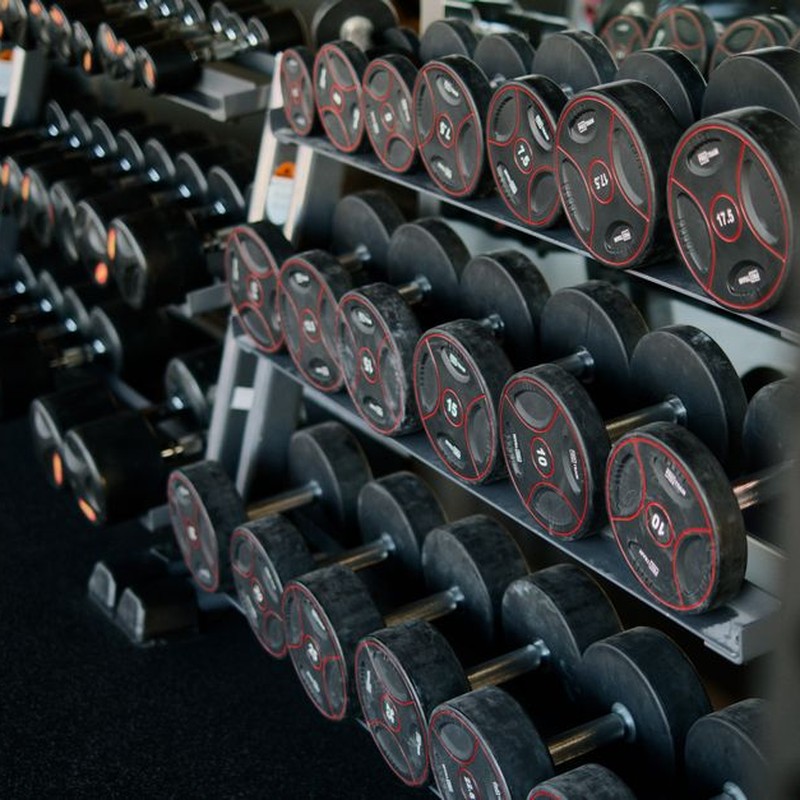
Before you buy, decide how heavy you actually need to go. A single dumbbell that tops out at 20 pounds won’t do much for your legs or back after a few months. For most home gym beginners, a dumbbell that reaches at least 50 pounds gives you room to progress on upper-body moves and lets you load up goblet squats and Romanian deadlifts.
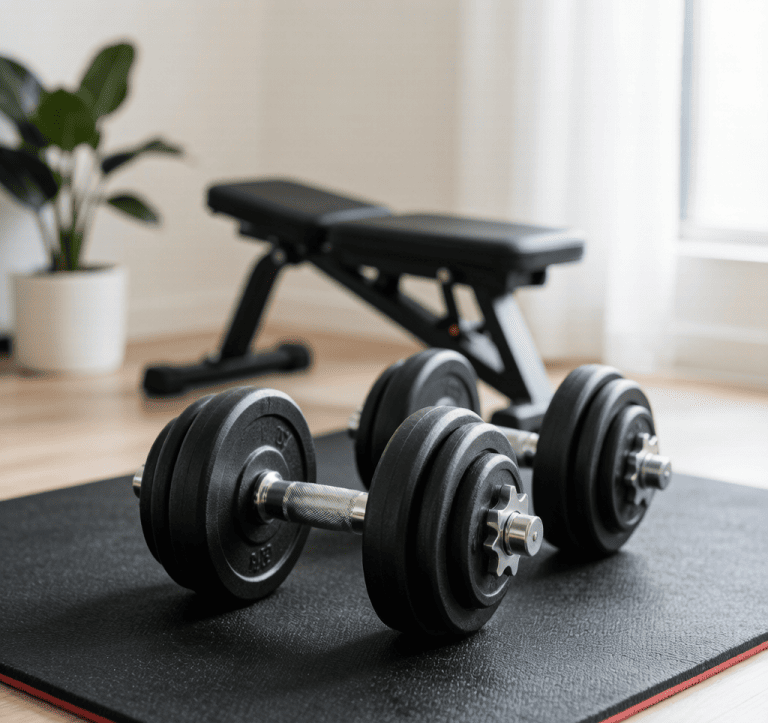
Most adjustable dumbbells are sold as pairs, but you can use just one for the exercises in this article. Store the other one out of the way or leave it in the cradle. You still get the full weight range for each move with a single dumbbell.
Adjustable Dumbbells: The Best Bang for Your Buck
Adjustable dumbbells replace a full rack of weights. You pay more upfront, but you won’t outgrow them in six months.
If quick weight changes are your priority, the Bowflex SelectTech 552 Adjustable Dumbbells are the most popular option. With a 4.6-star rating on Amazon, they have a long track record. They adjust from 5 to 52.5 pounds with a dial, so you can switch between rows and overhead presses in seconds. At around $429, they cost more than a basic set, but they’ve been the standard pick for years. The cradle takes up floor space, and the plastic dials can crack if you drop them on a hard surface. Use a mat under these and they’ll last.
The PowerBlock Elite EXP 5-90 Adjustable Dumbbells are a better fit if you plan to move to heavier weights. They start at 5 pounds and expand to 90 pounds with expansion kits. At about $599 on Amazon, you’re essentially paying for a full dumbbell rack in one compact setup. The trade-off is the blocky feel compared with traditional round dumbbells. It takes a little getting used to on chest presses, but the design stores easily and the weight range is hard to beat.
For a more traditional feel, the NUOBELL Max 80 Adjustable Dumbbells go up to 80 pounds and cost around $649. The curved handle follows your natural grip, and the dial adjustment is fast. User reviews note hinge issues over time, so tighten the screws occasionally and don’t drop them.
If your budget is tighter, the Yes4All Adjustable Dumbbells 80LB is a budget-friendly pick at roughly $280. This listing is for a pair, and the 80LB in the name refers to the total pair weight, not 80 pounds per dumbbell. Each dumbbell maxes out around 40 pounds. That’s enough for many single-dumbbell exercises, but if you planned to load up 80 pounds on one handle, you’d need a different set. The plates slide onto a threaded bar and lock with a nut. Changing weight takes longer than a dial, but the simple design is unlikely to break.
Fixed-Weight Dumbbells: Simple and Dependable
Not everyone needs an adjustable set. If you’re just starting and know you’ll only use light to moderate weight, fixed dumbbells are cheaper and easier to live with.
The Amazon Basics Neoprene Dumbbell Set runs about $60 and comes with a few pairs of light weights, usually from 5 to 20 pounds. The neoprene coat is comfortable to grip and won’t scratch your floors or furniture. These are fine for high-rep workouts at the beginning, but you’ll outgrow them fast if muscle gain is the goal.
The CAP Barbell Coated Hex Dumbbell Set is a different story. At about $200, you get a fixed pair with rubber coating and ergonomic handles. The hex shape means they don’t roll around, which is a small but real benefit when you’re training barefoot at home. Pick the 25–50 pound range if you’re building a single-dumbbell setup for muscle growth.
What I’d Buy Based on Your Situation
- Complete beginner, just want to try it: Amazon Basics Neoprene Dumbbell Set
- Budget-conscious but ready to train seriously: Yes4All Adjustable Dumbbells 80LB
- Want fast changes between exercises: Bowflex SelectTech 552
- Plan to keep progressing for years: PowerBlock Elite EXP 5-90
- Want a traditional dumbbell feel with heavier weight: NUOBELL Max 80
Before you order, measure your training area. Some adjustable dumbbells are wide when loaded, which can get tight on chest presses when you bring the dumbbells down beside your torso. And if you’re working out on a second floor or over hardwood, put down a rubber mat. Heavy plates leave dents.
Check the current prices on Amazon using the links above. And if you have already trained with any of these dumbbells, share your experience in the comments. Your feedback helps other beginners skip the guesswork.
Related Reading
Medical & Editorial Review: This article was reviewed by Liam Smith, founder of Apexfito, for accuracy and safety. Content is for educational purposes and is not a substitute for professional medical advice. Consult your physician before starting any exercise or nutrition program.

One Comment