Silent Walking: Does Walking Without Headphones Lower Stress?
Full disclosure: Some links in this article are affiliate links. We may earn a small commission at no extra cost to you if you make a purchase through them. Our recommendations are based on what real users report, not on commission size.
What Silent Walking Actually Is (and What the Hype Skips Over)
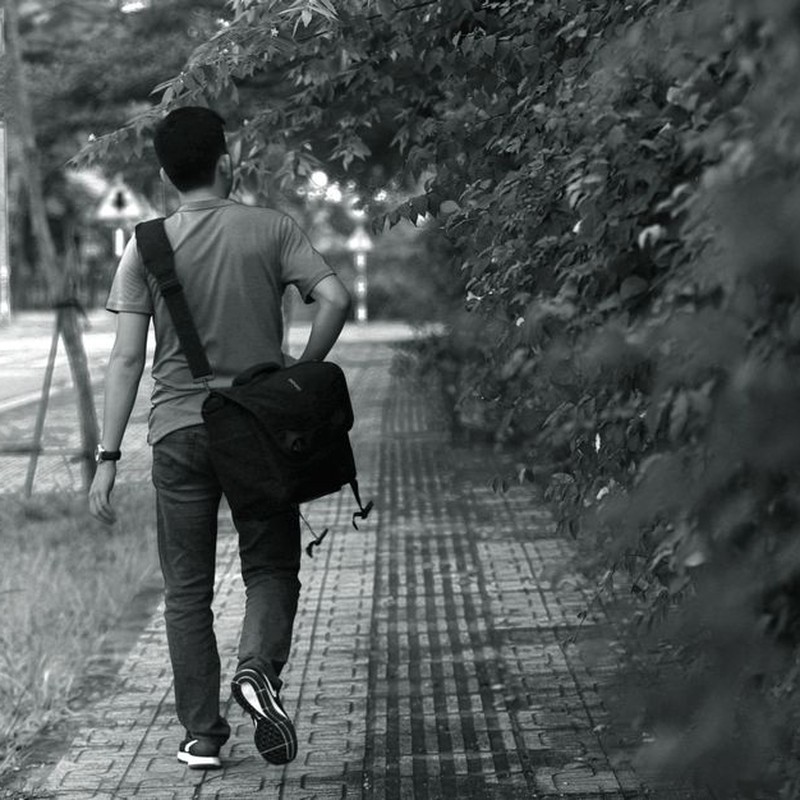
Silent walking is exactly what it sounds like: you go for a walk and you don’t listen to anything. No podcast. No playlist. No phone call. No scrolling while you stroll. Your phone can come along, but it stays in your pocket with the phone on Do Not Disturb and your notifications turned off. That’s the practice. You’re walking with the audio input turned off.
I tried it on my usual neighborhood loop last week. The first ten minutes felt strangely loud — my own footsteps, a dog barking three streets over, a leaf blower somewhere behind me. By minute fifteen, my shoulders had dropped about an inch. Not a scientific measurement, just something I noticed.
The term picked up a fresh wave of coverage in mid-September 2026. On September 17, EatingWell published a piece asking whether silent walking actually helps reduce stress. Around the same time, Google Trends data for ‘mindful walking’ in the US showed a modest uptick over the trailing month. The increase is real, but it starts from a very low base — absolute search volume stays small. So this reads more like a media trend than a mass movement. Plenty of people are curious. Not many are actually searching for it.
The hype skips the boring part: nothing about the mechanics changes. Same gait. Same pace options. Same shoes. Silent walking isn’t a new training method or a secret cardio hack. It’s a walk with the input turned off. You’re not adding a workout. You’re subtracting a distraction.
That subtraction is why the idea travels so fast online. There’s no gear to buy. No app subscription, no special mat, no band, no gadget. You already own everything you need — a pair of shoes and a route. A wellness trend with zero purchases attached spreads quickly, because there’s no barrier between hearing about it and trying it.
One boundary worth setting before you form a strong opinion either way: silent walking is not a treatment for clinical anxiety or depression. It doesn’t replace therapy, medication, or a conversation with your doctor. What it can do is carve out a small window of quiet in a day that’s otherwise loud. For some people, that window makes it easier to notice tension and let it go. For others, the quiet feels boring or even uncomfortable at first, especially if you’re used to filling every minute with audio. Both reactions are normal, and neither one means you’re doing it wrong.
The how-to side — how long to walk, how to build the habit, how to keep your feet and shins happy — is where the practical material lives, and that’s coming up next.
Why Quiet Walks Might Calm You Down — and Where the Evidence Runs Thin
Walking already has a strong reputation as a mood tool. It’s low-impact, it gets blood moving, and most people can do it without a gym, a coach, or a plan. The part that’s genuinely well-documented is walking itself: steady movement tends to take the edge off a bad day, and there’s decent evidence it helps sleep and gives anxious thoughts somewhere to land. That’s the baseline. Silent walking is just one version of it — same walk, audio off.
When EatingWell asked in September 2026 whether silent walking actually reduces stress, the answer wasn’t a clean yes or no. What’s missing is a controlled trial that treats silent walking as a named routine and tests it against a regular walk, a podcast walk, or a music walk. That study doesn’t exist in the current reporting. So the honest position is this: promising habit, plausible mechanism, proof not there yet.
Attention restoration: a break for a tired brain
One explanation holds up well. Focused attention — the kind you burn answering emails, sitting through meetings, and tracking a dozen small tasks — gets depleted. Environments that ask little of that system give it room to recover. A quiet residential street, a park loop, or a canal path isn’t a magic forest, but it asks less of you than a screen does. No notifications, no timeline, nobody waiting on a reply.
Here’s the catch, and I want to be straight about it. Attention restoration has been studied mostly in nature settings, not in silent walking specifically. Applying it to a phone-free walk is a reasonable inference, not a proven result. Still, if you finish a quiet walk feeling less fried than you started, that experience lines up with the theory.
Reduced cognitive load: fewer tabs open in your head
The second explanation is cognitive load. A podcast can be great, but it still asks your brain to follow a story, track voices, and sit through ads. Music with lyrics may compete for the same language-processing machinery. Even a phone call splits your attention three ways — the conversation, traffic, and your feet. Silence removes that competition entirely.
That matters because mental bandwidth is finite. Spend a walk processing headlines, work voice memos, or a true-crime episode, and you may still collect the physical benefits of walking — the cardiovascular and musculoskeletal stuff doesn’t care whether you’re listening to anything. What you may miss is the mental reset. The silent version does a different job. It’s less about motivation and more about handing your head a blank page.
Where the evidence runs thin
If you see a post claiming silent walking drops cortisol by a precise percentage, or cuts anxiety scores by a fixed amount, treat it with suspicion. Those numbers likely trace back to studies on walking, nature exposure, or mindfulness in general — not to controlled trials on silent walking as its own thing. A writer can connect dots. Connecting dots isn’t the same as having the receipt.
Headphones aren’t the villain here. Music and podcasts genuinely help people start walking and keep walking. If a playlist gets you out the door on a day you’d otherwise spend on the couch, that’s a win, and I’m not going to pretend otherwise. Silent walking doesn’t replace that. It adds a different tool for days when you need quiet more than you need distraction.
The expectation that fits the current evidence is modest. After a week of quiet walks, most people notice a drop in mental noise. They don’t usually notice a drop in body weight, a fixed change in resting heart rate, or a sudden transformation in mood. A quieter head is a fair thing to hope for. A complete stress cure isn’t.
If you try it, I’d like to hear what you notice — share your experience in the comments. And if your walking shoes are overdue for replacement, it’s worth checking current prices on Amazon before you log another month in dead foam.
Walk Without Pain: Form, Footwear, and Dosage for Beginners
Every number in this article lives in this section, on purpose. The fastest way to derail a new walking habit is to collect three different starting points from three different places and pick the most ambitious one. So here is the dosage. If a plan you read elsewhere quotes you something bigger, use this instead.
- Start with 10 minutes, three times a week on flat, predictable ground. Sidewalks, a track, a paved park loop. Not 20 minutes, not 45, not a daily streak.
- Add about five minutes to one walk per week — and only after you have repeated the same duration for two or three weeks without anything new aching. If 10 minutes felt fine on Monday, Wednesday gets 10 minutes again, not 20.
- Keep the pace easy. You should be able to hold a conversation and breathe through your nose the whole time. If you are gulping air, slow down before you add a single minute.
Bank the boring weeks. Joints, tendons, and shin tissue adapt slower than your lungs and your motivation do, and that gap is the entire reason beginners overshoot. It feels like nothing is happening. Something is happening.
You will run into plans that go from 10 minutes in week one to a 25-minute walk plus a few short ones by week three. That schedule skipped the part where your connective tissue catches up. I ignored this advice once and spent a month icing my heel for the privilege.
Form cues that actually change something
Stand tall with your ribs stacked over your hips rather than your chest thrust out. Let your eyes rest about 15 to 20 feet ahead — close enough to catch a crack in the pavement, far enough that your neck is not craned down. Shoulders loose, arms swinging naturally. You are not race-walking, so skip the elbow pumping.
The cue that matters most: shorter, quicker steps beat long strides. Overstriding is a common driver of shin and knee irritation in new walkers. When your foot lands way out in front of your body, that leg is working as a brake on every single step. Take smaller steps and you land more underneath your hips, where you can absorb the load instead of fighting it. It feels fussy for about a week and then it disappears into habit.
You don’t need new shoes. You do need dry ones
Wear supportive shoes you already own — a neutral running shoe or a sturdy walking shoe is plenty. If you walk most days, let them dry between sessions instead of leaving them in a cold garage or a damp entryway. I keep a second cheap pair by the door for exactly this reason, and it costs less than one pair of premium shoes per year.
Replace them when the midsole feels compressed and flat, or when new aches show up that were not there a month ago. That is your signal. It is not a mileage number printed on a box.
The safety catch with going silent
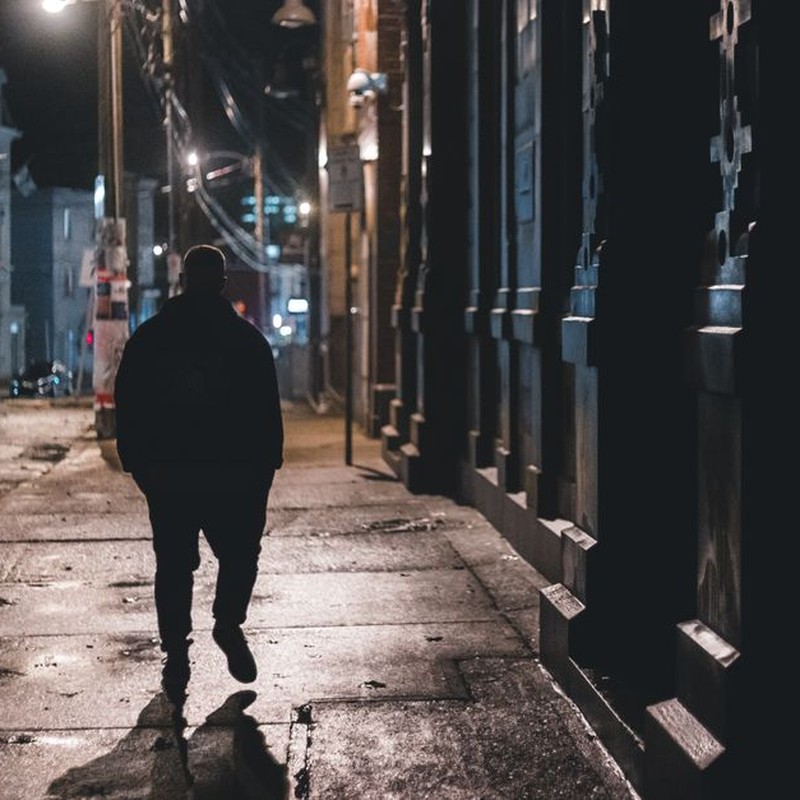
Walking without headphones is the point of the experiment, but it costs you one thing: an early warning cue. You will not hear a cyclist closing from behind, a car backing out of a driveway, or a dog about to bolt. So look both ways twice, cross at lights and marked crossings, and save the headphone-free version for quiet residential blocks and park paths. Busy arterials, dark trails, and icy sidewalks are not where you test it.
From November through March, which covers most of Canada and the northern US, being seen matters more than being heard. A reflective vest or a small clip-on light makes you obvious to drivers at dusk for very little money. If you are buying one, check current prices on Amazon before the dark season arrives rather than paying a premium in December.
Cold muscles are how shin splints start
Spend two or three easy minutes at a shuffle before you settle into your normal pace. Not a formal warm-up — just a slow lap around the block. Then stretch your calves and hamstrings when you get home, holding each for about 30 seconds.
A cold body plus a fast first stretch of sidewalk is the classic recipe for shin splints, and it is worse in the evening after a day of sitting, which is exactly when most people walk.
One stop rule, and please actually use it: if pain is still there after a week of reduced volume, see a clinician. Walking through it rarely ends with you walking more.
Keep your first month unremarkable and you will still be out there in April. That beats a heroic two weeks followed by a month on the couch.
Making It Stick: A Four-Week Silent Walking Start
Walking without headphones is simple. Doing it over and over is the part that trips people up. A habit does not need a trend behind it to survive. It needs a slot in your week you can still hit on a tired Tuesday.
So here is a progression built for someone who has never tried this before. Four weeks, small jumps, no heroics.
- Week 1: Three 10-minute silent walks. Same route, roughly the same time of day. Repetition matters more than duration here.
- Week 2: Four walks, 12 to 15 minutes each. One extra walk plus a few extra minutes is a genuine jump, not a token one.
- Week 3: Keep the weekly walks, then add one longer 25-minute walk on a weekend morning. Slow is fine.
- Week 4: Keep three silent walks and let one be a podcast walk if you want it. By now you will know whether the quiet is doing something for you or just making the walk feel like homework.
Pick an anchor that already exists in your day rather than inventing a new time. After your morning coffee. Before lunch. Right after the last meeting ends. Walks that hang off an existing routine survive. Walks that need a fresh decision every day mostly do not.
Leave the phone in your pocket and flip on Do Not Disturb. If you want a timer, set it before you step out the door and do not touch the screen again until you are back. Checking the clock every two minutes turns a quiet walk into a waiting room.
When your mind will not settle, do not force a blank mind. That is the fastest way to end up annoyed at yourself. Give your brain a small job instead. Count exhales up to ten and start over. Name five things you can see, whether that is a crack in the sidewalk, a red mailbox, or a dog barking behind a fence. Or line your breathing up with your steps: three steps in, three steps out, at a pace that does not feel like work. I tried the step-matching version on my own evening loop and it was the least irritating of the three, mostly because I stopped trying to police my thoughts. Some walks you will spend the whole 12 minutes planning dinner. That is not failure. That is walking.
Track two things. Whether you went, yes or no. And how you felt afterward, on a 1-to-5 scale. Ten seconds in your notes app. A step count tells you almost nothing about whether a walk calmed you down. A number you wrote yourself, two weeks in a row, tells you plenty.
And when the silence is the reason you are not going, drop it. A walk with a playlist beats no walk at all, every time. Keep the movement, lose the rule. The quiet was just one tool you were testing, not the point of the whole thing.
Now the injury part, because beginner walking aches are boring and mostly preventable. Check your volume math before you get ambitious. Week 1 puts you at 30 total minutes. By Week 3 you are at four walks of 12 to 15 minutes plus a 25-minute one, which lands somewhere between 75 and 85 minutes. That is roughly two and a half times your starting load, and it shows up in shins, calves, and the arch of your foot before it shows up anywhere else. If those start grumbling, hold the week where it is instead of pushing through. Soreness that fades by the next morning is normal. Soreness that is sharper on walk two than walk one is your cue to back off.
Two pieces of gear actually matter here. Shoes with a midsole that has not been packed flat for a year, and something visible if you walk after dark, which is most of us from November through February. A reflective vest or a small clip-on light does more for you than any app. Nobody is looking for you out there.
Run this for a couple of weeks, then come back and tell us in the comments what shifted. Mood, sleep, patience with your kids, the volume on your own thoughts. If you need shoes, a reflective vest, or a light for evening routes, you can check current prices on Amazon. As an Amazon Associate, we earn from qualifying purchases.