Foam Roller Buyer’s Guide 2026: Density, Size, and What Actually Helps Sore Muscles
Full disclosure: Some links in this article are affiliate links. We may earn a small commission at no extra cost to you if you make a purchase through them. Our recommendations are based on what real users report, not on commission size.
What Foam Rolling Actually Does for Sore Muscles
I bought my first foam roller because a running buddy swore it would break up the knots in my quads. Six weeks later my quads felt exactly the same, the roller had a permanent dent shaped like my IT band, and I had learned something worth the $40: the roller wasn’t broken. My expectations were.
That’s why this guide starts here instead of with a spec sheet. Know what a roller can realistically do and you buy the right one the first time.
The short version: pressure plus slow movement
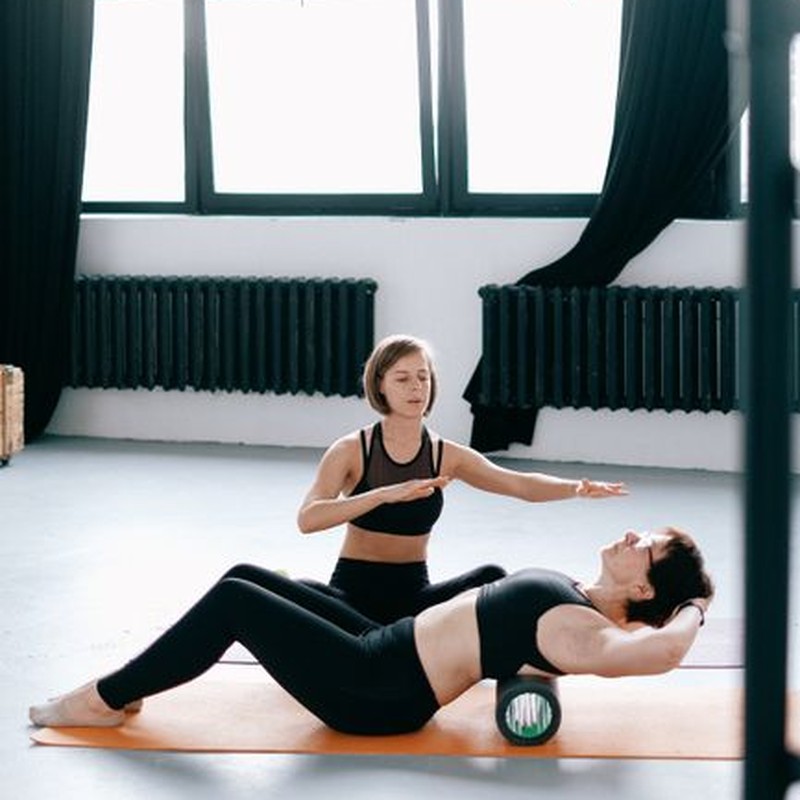
Foam rolling is self-myofascial release, which is a long name for pressing your bodyweight onto a cylinder and sliding slowly along a muscle. That’s the whole technique. No vibration required, and no special beginner protocol beyond going slow enough that you’d rather not be going that slow.
What you feel is a broad, deep massage. Give a tight calf or quad 60 to 90 seconds of steady pressure and it usually feels noticeably looser within a few minutes. I roll my hamstrings before heavy deadlifts when they feel like wet rope, and the first work set stops feeling like a negotiation.
What actually holds up
Two effects survive honest scrutiny, and both are modest.
- Range of motion rises for a short window. After rolling, most people can move a joint a little further for maybe 10 to 30 minutes. It’s a warm-up tool, not a permanent flexibility overhaul. Lasting range of motion comes from loading a muscle through full range over weeks, not from sitting on a tube.
- Next-day soreness gets a little softer. Rolling after training takes the edge off that heavy, bruised feeling in the days following hard or unfamiliar work. Emphasis on a little. It won’t erase a brutal leg day, and it works best the same day rather than waiting until you can barely sit down.
What doesn’t hold up
The claim that a roller breaks up adhesions or flushes toxins out of your muscles doesn’t survive contact with basic anatomy. You are not crushing scar tissue with a foam cylinder, and you are not squeezing metabolic waste out of anything. Your lymphatic system handles that on its own and doesn’t need your help rolling around on the floor. Companies sell rollers by promising mechanical remodeling. What you get is a pleasant, temporary change in how a muscle feels.
So why does it work at all? Your nervous system
This part is more interesting than the marketing. Sustained pressure changes how a muscle senses tension. Hold steady pressure on a spot and the muscle’s stretch sensors seem to quiet down, so the tissue lets go and you can move further before your stretch reflex puts on the brakes. That’s a nervous-system effect, not a mechanical one.
It also explains why a light roller can feel nearly as effective as a hard one for plenty of people, and why the effect fades within the hour. Your body resets. I stopped chasing the hardest roller on the shelf once that clicked. If the benefit runs through sensation, brute force isn’t the variable that matters. Density changes how pressure feels and how easy a roller is to control, which is what the next section digs into.
A roller is a comfort tool, not a cure
Soreness after new training is normal and expected. A roller will not outwork six hours of sleep, protein intake hovering around 60 grams a day, or a training load that jumped 40 percent in one week because you felt good on a Tuesday. I’ve watched people foam roll religiously while ignoring all three, then wonder why their legs never recover. Roll because it feels good and helps you move. Fix the boring stuff because that’s what drives recovery.
Where the 2026 conversation starts
Yahoo Health published a roundup in September 2026 of the best foam rollers for soothing and stretching sore muscles, based on hands-on testing. It’s a useful reality check, because testers keep reaching for the same handful of shapes and firmnesses rather than the exotic stuff. Two rollers that come up over and over in conversations like that one are The Original Foam Roller by TriggerPoint for firm, grippy pressure, and the Amazon Basics High Density Foam Roller for anyone who wants a cheap, dependable starter.
Search interest tells a similar story. Interest in foam roller across the US has stayed low and basically flat for the past year, sitting near 2.0 over the last 30 days against a 12-month average of 3.2. No spike, no collapse. This is a tool people quietly keep buying, not a trend riding a wave, which means prices are stable and you can take your time choosing instead of panic-buying whatever sits at the top of the page.
So take that time, and check current prices on Amazon before you commit, since roller pricing swings more than you’d expect. If you already own one, tell me in the comments what finally made you replace it. A dented roller is usually the moment people start paying attention.
Density, Diameter, and Texture: Matching a Roller to Your Body
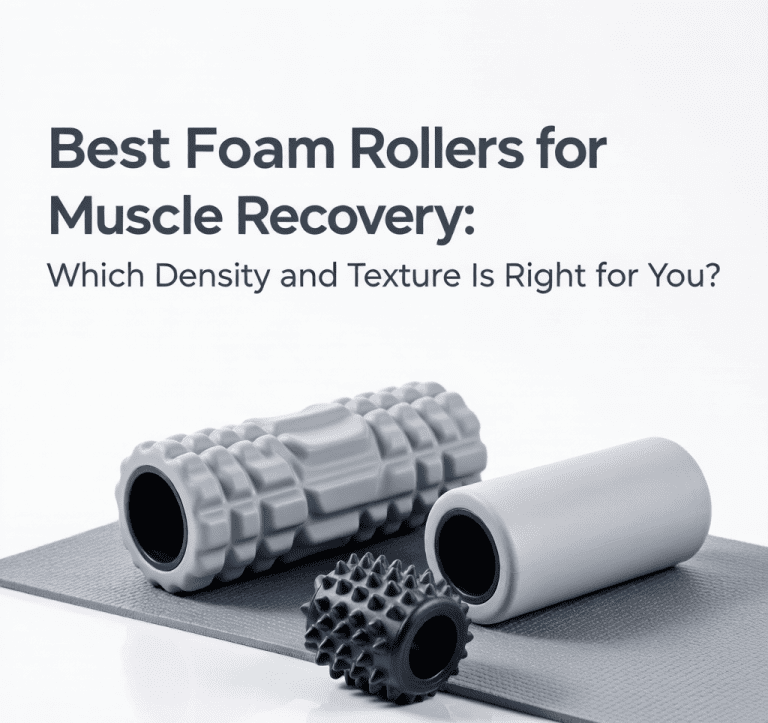
On the shelf, every foam roller looks like the same cylinder. What actually separates them comes down to four things: density, diameter, length, and surface. Get those right and you’ll use the thing every week. Get them wrong and it lives in a closet.
Density is the variable that matters most
A soft or “recovery” roller compresses under your body weight. That’s useful if you’re brand new to rolling, working around a fresh bruise, or rolling over bony hips. You sink in a little, and the pressure spreads out. The trade-off: on big muscle groups like quads and lats, a soft roller barely reaches anything. If you’ve been rolling for months, it feels like you’re lying on a pillow.
Medium-density EVA foam is the do-everything middle ground, and it’s where most people should start. Quads, calves, lats, outer thigh — all manageable without feeling like you’re lying on a curb. It does soften over time, especially if you roll daily or carry more body weight.
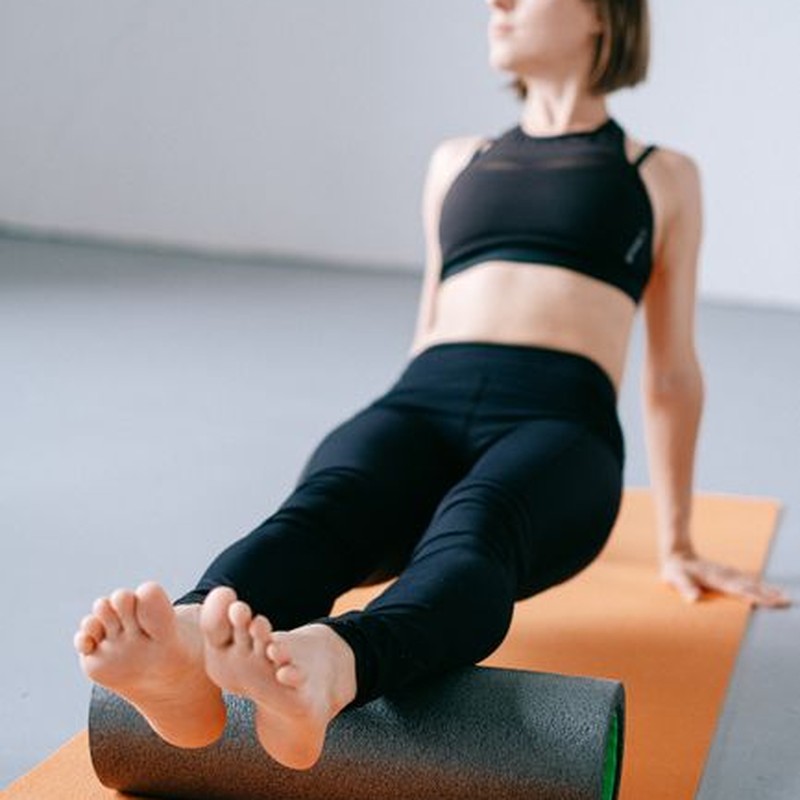
High-density and molded-core rollers feel harder and keep their shape for years. Mine still feels the same after three years of use. They’re better once you’ve built some tolerance, and they’re rough during week one. If you’re brand new and you start with one of these, you’ll flinch off it. Start softer. Graduate later.
Four real rollers worth comparing, from budget to therapist-grade:
- The Amazon Basics High Density Foam Roller (~$16.99) is exactly what the name promises — firm, plain, no extras. A cheap way to find out if you’ll actually stick with rolling.
- The LuxFit High Density Foam Roller (~$19.99) feels similar, runs longer, and goes on sale often.
- The Original Foam Roller by TriggerPoint (~$34.99) has a hollow core and a grid pattern, which gives it more bite than smooth foam.
- The OPTP PRO-Roller (~$44.99) is dense and professional-grade — the kind you see in physical therapy clinics. Not forgiving, but it outlasts everything else on this list.
Diameter changes how a roller behaves
A 6-inch roller is stable. It sits flat, doesn’t wobble, and stays put when you roll your back or glutes — which matters a lot while you’re learning where your body is supposed to be.
A 4-inch or smaller travel roller fits into calves and forearms better because the curve matches those tighter areas. It also rolls faster and feels harsher, since the same body weight presses through a thinner surface. I keep a 4-inch in my gym bag for post-run calves. I wouldn’t want it as my only roller.
Length is about coverage
A 12- to 13-inch roller is enough for most home use. You roll one leg at a time, which is actually better for targeting anyway. An 18- to 36-inch roller gives you a wider surface if you like lying lengthwise along your spine, and it grips carpet better because more of it touches the floor. If you have the space, longer is nicer. If you’re stuffing it in a closet, 13 inches does the job.
Texture is preference, not physiology
Smooth rollers handle general use fine. Grid or textured surfaces give you more bite — some people love the extra feedback, others find it distracting. Hollow-core plastic is lighter for travel; solid foam lasts longer because there’s no hollow tube to crack. I had a hollow-core roller develop a squeak after about a year. My solid foam one is still silent.
Then there are vibrating, heated, and app-connected rollers, which can run $100 or more. Ask yourself one question before buying: will I use this weekly, or will it be in a closet by February? I’ve tried a vibrating roller. The buzz was pleasant, but I didn’t use it any more often than my plain one. If a feature gets you rolling on days you’d otherwise skip, it’s worth the money. If not, skip it.
One more sanity check: Yahoo Health published a hands-on roundup of the best foam rollers of 2026 in September, and their testing lines up with the same variables here — firmness, size, and surface, not marketing copy.
What you should actually spend
In the US and Canada, a decent roller runs roughly $17 to $45. Spending more buys durability, a firmer feel, and a nicer finish — not a different physiological effect. Your muscles don’t know whether you paid $17 or $45. They only know pressure.
So match density to your current tolerance, pick a size that fits your space and your body, and choose a texture you’ll actually roll on. Then check current prices on Amazon and see what’s discounted this week. Already own a roller? Tell us in the comments which density you ended up with — and whether your first pick was too soft, too hard, or just right.
Four Real Rollers Worth Comparing in 2026
I’ve gone through more foam rollers than I’d like to admit. One went soft in the middle after about eight months. Another was so aggressive that I flinched every time it touched my quads. A September 2026 Yahoo Health roundup tested a wide spread of rollers and covered plenty of ground, but the four below are the ones I’ve put real time on. They cover the whole range: cheap starter foam, a mid-priced workhorse, and two firm rollers for people who already know they’ll stick with it.
Here’s how each one feels under a sore muscle, and where each one falls short.
Amazon Basics High Density Foam Roller – the $17 experiment
If you aren’t sure whether you’ll keep rolling past week three, this is the cheapest honest answer. About $17, 4.5 stars, and a review base big enough that you aren’t gambling on an unknown brand. The surface is molded EVA and it’s firm, noticeably firmer than the soft blue cylinders sitting in the corner at most big-box gyms.
Mine showed up with a light plastic smell that faded in about two days. Nothing alarming, but don’t leave it sealed in the box overnight next to your bed. Start with short passes: 30 to 45 seconds per muscle group, not five minutes of grinding. That first pass is a nervous-system check, not a punishment.
Where it loses points: one density, no texture, and the ends slide on hardwood. Roll on carpet or a yoga mat. Mine also started softening at the edges after a few months of near-daily use, which is the trade-off at this price. check current price on Amazon
LuxFit High Density Foam Roller – same firmness, cleaner finish
Around $20, 4.5 stars, a few lengths and colors. Under your leg it feels close to the Amazon Basics roller: same firm EVA, slightly cleaner finish on the ends and surface. The longer versions are the ones I’d pick if you want to lie along the roller for your spine or lats. A 12-inch roller forces you to shift position mid-rep, which gets old fast.
Two things to know. The color options don’t change the density, so a purple 12-inch and a black 36-inch are the same firm foam. Don’t pay extra expecting a softer ride. The hollow-core versions also flex a bit under heavier users. I’m around 190 pounds and could feel a slight give on the longest one. LuxFit High Density Foam Roller
OPTP PRO-Roller – what I’d buy after two cheap rollers died
Roughly $45, 4.7 stars, the highest rated of the four. This is the roller I hand to someone who’s already flattened a $20 foam cylinder. The EVA holds its shape. Six months in, there’s no soft spot where I lean hardest on my right quad. The closed-cell surface wipes clean with a damp cloth, which matters if you sweat on it or roll on a gym floor.
Firmness is a step up from the Basics and LuxFit. If you’ve never rolled, the PRO-Roller across your IT band will feel like a lot. Build up on softer foam first, or keep your early sessions to calves and glutes. Price is the obvious con, and it’s why I don’t recommend this as a first purchase. OPTP PRO-Roller
The Original Foam Roller by TriggerPoint – hollow, dense, aggressive
About $35, 4.5 stars. Hollow-core, hard, and the most intense of the four. On quads and calves, once you’re used to rolling, it gets into tissue in a way softer foam doesn’t. On a first-timer’s outer thigh? Too much. I watched a friend try it for ten seconds and tap out.
The hollow core keeps it rigid under load and makes it light for a gym bag. It’s the one I’d toss in the trunk for travel, since it won’t compress when you stack stuff on top of it. There’s no learning-curve buffer, though. Treat this as a second roller, not a first. The Original Foam Roller by TriggerPoint
How to pick between them
Match the roller to how often you actually roll, not how often you plan to.
- Never rolled before: Amazon Basics or LuxFit, short length. Under $20, and you’ll know within two weeks whether rolling fits your routine.
- Roll a few times a week and want one roller for years: OPTP PRO-Roller. The extra $25 buys shape retention and a surface that wipes clean.
- Comfortable with pressure and want deeper work: TriggerPoint Original. Best on quads, calves, and glutes.
- You travel or train at a gym with no rollers: a short hollow-core model earns its space in a bag.
- Your roller lives beside the couch: buy the longer, denser one.
Prices on Amazon move, and Canadian shoppers often see a different number than US shoppers because of shipping and exchange. Open the links and check the live price before you commit, especially around sale events when the gap between the Basics roller and the OPTP narrows.
Whichever one you pick, keep your first sessions short and boring. Two minutes of rolling beats twenty when you’re starting out. If you already own one of these four, tell me in the comments how it’s held up, especially if it’s gone soft on you.
A 5-Minute Starting Routine and When to Replace Your Roller
You don’t need a 20-minute ritual to get something out of a foam roller. Five focused minutes is plenty to loosen things up before a workout or help you settle down after one. What matters is doing it consistently and knowing when to stop.
Here’s the routine I hand to friends who just unboxed their first roller.
Before a workout: 30-60 seconds per area
Calves, quads, glutes, upper back. Move slowly, about an inch per second, and breathe. If you find a tender spot, park on it for a few breaths instead of grinding back and forth. That steady pressure is what helps the tissue let go. Skip anything that’s acutely injured, bruised, or swollen. Rolling over a fresh injury tends to make it angrier, not better.
After a workout: 60-90 seconds per area
Same four areas, slightly slower, a bit longer each. This is where rolling earns its keep, helping you feel less stiff the next morning.
One exception worth repeating: stay off your lower back. Rolling there pushes your spine into extension, and most people feel worse afterward. If your low back is tight, roll your glutes and hips instead. That’s usually where the tension is coming from anyway.
Technique beats pressure every time. If you’re holding your breath and clenching your jaw, you’re pushing too hard. Back off, switch to a softer roller, or grab a rolled-up towel. A dense roller isn’t a badge of honor. You’re chasing a comfortable stretch, not bruises.
Quick reference:
- Calves: 30-60 sec before, 60-90 sec after
- Quads: same
- Glutes: same
- Upper back: same
- Skip: lower back, joints, fresh injuries, numb or tingling areas
When your roller is done
Foam rollers don’t last forever, and a mushy one does almost nothing. Press your thumb into the surface. If it dents and stays dented, or the roller has flattened into an oval, it’s finished. Cheap foam often quits after 6-12 months of regular use. A molded-core roller, like The Original Foam Roller by TriggerPoint or the OPTP PRO-Roller Foam Roller, holds its shape far longer and can last years.
On a tighter budget? The Amazon Basics High Density Foam Roller and the LuxFit High Density Foam Roller are solid, affordable picks. Just expect to replace them sooner if you roll daily. I’ve watched a $17 roller go from firm to pancake in under a year of daily use, so factor that in.
One more warning that matters more than any spec sheet: sharp pain is a stop sign, not a challenge. Don’t roll directly over a joint, a fresh strain, or an area that feels numb and tingly. If something hurts in a bad way, stop and figure out why before you keep going.
And pair rolling with the basics: sleep, protein, and gradual increases in training volume. Rolling helps you feel better between sessions. It won’t rescue a program that’s outpacing your recovery. I’ve seen plenty of people buy a fancy roller expecting it to fix a training plan that’s too aggressive. It doesn’t work that way.
Ready to grab one? Check current prices on Amazon through the links above before you buy. And if you’ve got a roller you swear by, or one that crumbled after three months, drop it in the comments so other readers can compare notes. Your experience helps everyone else avoid a dud.