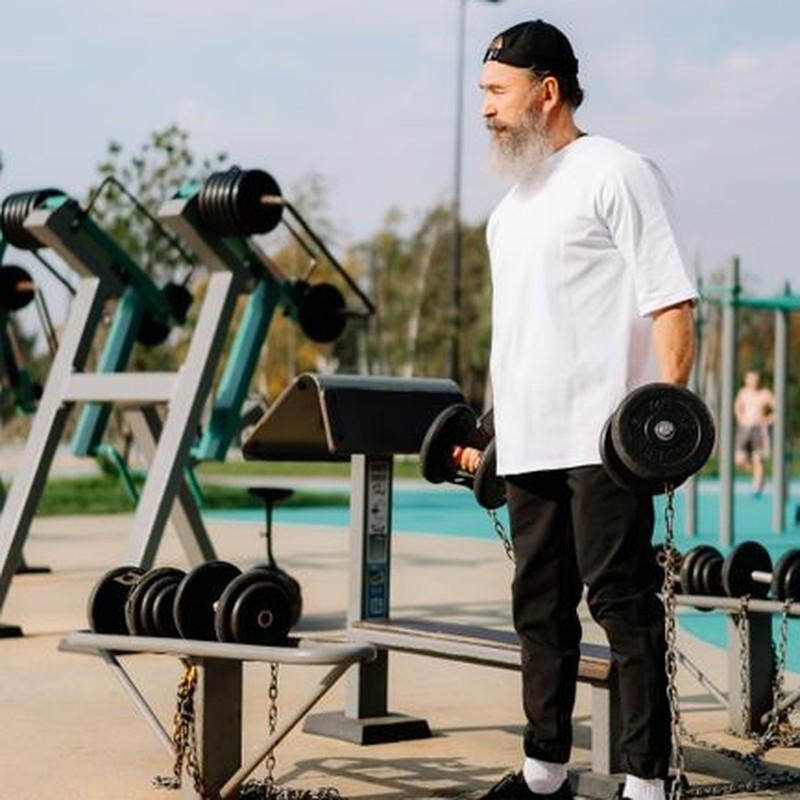
Longevity Training: Is ‘Living Longer’ a Real Training Category?
Full disclosure: Some links in this article are affiliate links. We may earn a small commission at no extra cost to you if you make a purchase through them. Our recommendations are based on what real users report, not on commission size.
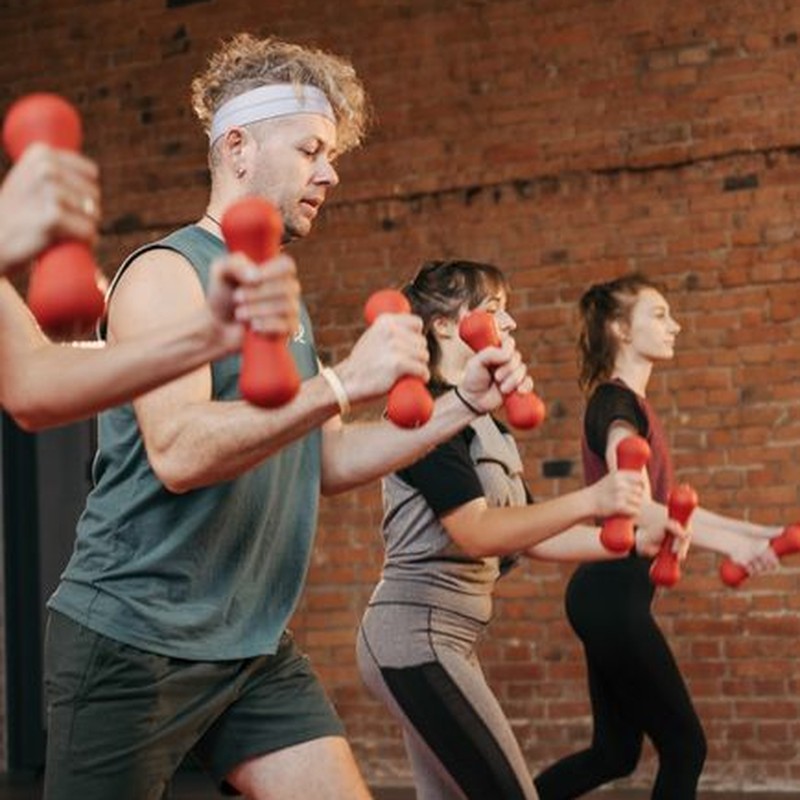
Longevity as a Training Category: What’s Actually New
On October 8, 2026, Athletech News asked a question that says as much about the fitness business as it does about training: beyond strength and cardio, is longevity becoming fitness’s next training category? The framing tells you something. When an industry outlet starts wondering whether a goal deserves its own aisle, gyms, apps, and coaches are usually already selling it as one.
Before you rebuild your week around a new label, look at what the interest data actually shows. Google Trends for the search term “longevity” in the US over the past 12 months shows a recent average of 38.7 versus a 12-month average of 38.4. That is a nudge, not a spike. No hockey stick, no overnight craze. It reads more like slow cultural drift that keeps drifting.
That matches what I see on the ground. My own gym swapped a Tuesday circuit class for a “longevity” block this year with roughly the same exercises, softer lighting, and a longer cooldown. Nothing wrong with that class. It is also not new, and I would not pay a premium for the word on the sign.
Here is the part the label conveniently hides. The variables that actually predict whether you are still hiking, lifting, and getting off the floor unassisted in thirty years are boring and well documented: aerobic capacity, muscle mass and strength, balance, and the ability to stay injury-free long enough to keep training. Exercise science has circled those four for decades. Renaming them does not add a fifth.
What a category name does change is behavior. It changes what people buy, how they schedule their week, and whether they feel like they belong in the weight room at all. That matters, since participation is where results come from in the first place. But the adaptation machinery inside your body does not read the label on the program. It responds to progressive overload, adequate recovery, and repetition over years. Those three do not care what aisle you found them in.
So how do you separate a real longevity program from a rebranded one? I run anything with that label through four filters:
- Progression. Does the load, the reps, or the difficulty go up over weeks? If the dumbbells never change, you are maintaining, not building.
- Hard breathing. Is there a chunk of the session where your heart rate climbs and you would rather stop? Walking on a flat treadmill while scrolling is not aerobic training.
- Balance and single-leg work. Anything that challenges your footing, even for thirty seconds per side. This is the variable people skip because it feels unimpressive.
- Recovery structure. Does the plan include easier weeks or rest days, or is every session a test? Chronic maxing is how you get hurt and quit.
Pass those four and the name on the door barely matters. Fail them and no amount of breathwork, cold plunge, or recovery gadgetry closes the gap.
For a quick gut check, sketch last week on a napkin. Count how many sessions got your breathing hard, how many loaded your muscles against real resistance, how many asked your ankles and hips to stabilize you, and how many were genuinely easy. Most people I talk to land at zero balance work and two hard cardio days, which is a decent start and an easy fix.
The rest of this piece sorts the useful parts from the packaging, then builds a beginner week that hits all four variables with nothing but a floor, a wall, and your own bodyweight.
The Four Things Longevity Training Is Really Asking You to Train
Strip away the branding and “longevity training” is shorthand for four measurable targets. None of them are exotic. They are the same things good coaches have prescribed for decades, just reorganized around a 10-year horizon instead of a 10-week one. Here is what each one asks of you, and how to tell whether you are actually doing it.
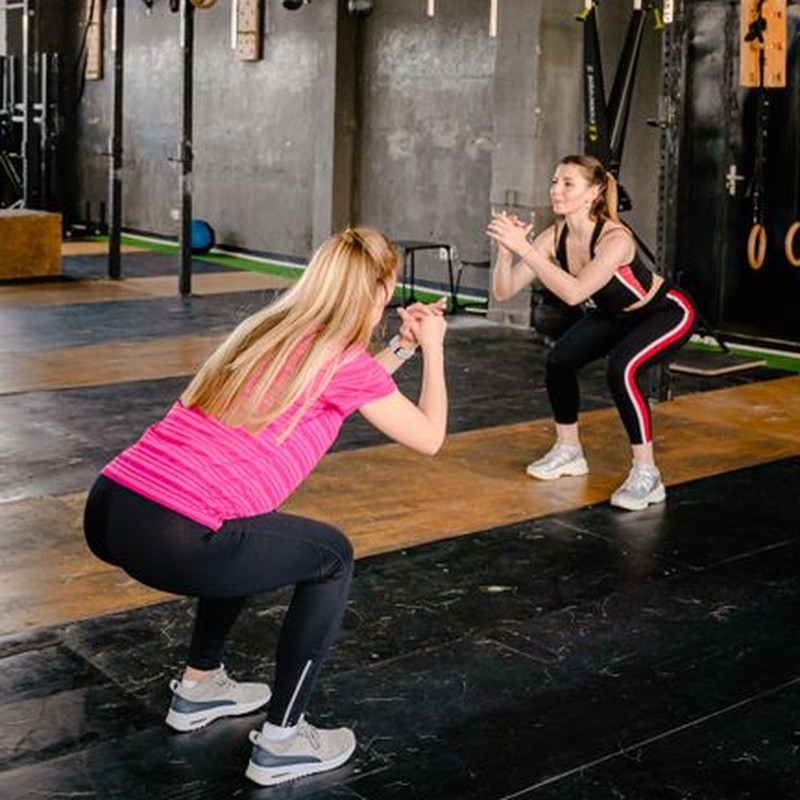
1. Aerobic Capacity: The Piece With the Deepest Paper Trail
Aerobic fitness has the strongest link to long-term health outcomes of the four. Follow large groups of people for years and the ones with better cardiorespiratory fitness tend to have fewer heart problems, better cognitive scores, and lower all-cause mortality. The relationship is consistent and well documented. It does not prove cause and effect on its own, but it is the best-supported target on this list.
Start with 150 minutes of moderate activity per week. That number comes from public health physical activity guidelines in the US, Canada, and internationally, and it has held up for years. My beginner split: two easy sessions of about 50 minutes, one 30-minute session with hard efforts mixed in, and a couple of 10-minute walks on the other days. That lands you right around 150. Easy means brisk walking, easy cycling, a rowing machine at conversational pace, or a steady hill walk. No gear required.
Intensity is where people cheat without realizing it. Use the talk test. On easy days you should be able to speak in full sentences without gasping. On the hard day — say four rounds of 3 minutes hard, 3 minutes easy — you should manage a word or two and nothing more. I have used this for years, and it lines up with heart rate zones closely enough without a watch.
Measure it two ways: total minutes per week, and the number of hard efforts you complete. That is the whole scoreboard.
2. Strength: Protecting What You Lose With Age
Muscle mass and bone density both decline with age, and faster if you do nothing about it. Strength training is the countermeasure. The prescription: two or three full-body sessions per week, six to eight movements per session, two to three sets of 6 to 12 reps per movement. That range is wide on purpose. Six reps with a heavier load builds strength, 12 reps with a lighter one builds muscle, and you can rotate as your equipment allows.
Prioritize legs, hips, and back. Those carry the most day-to-day function: getting out of a chair, carrying groceries, picking something up off the floor. Bodyweight covers a lot of ground — squats, split squats, hip bridges, bird dogs, and chair-supported push-ups with your hands on the seat if floor push-ups are too much yet. For back, a backpack row works well. Load a backpack with books, hinge over, and row. I have used a stuffed backpack for rows and carries for years, and it holds up fine.
One progression rule, applied every time: when you can hit 12 reps on every set with about two reps left in the tank, make it harder. Add books to the backpack, slow the lowering phase to three seconds, or add a pause at the bottom. Write your reps down. If you are not tracking, you are guessing.
3. Balance and Stability: The Category You Ignore Until Something Breaks
Balance work rarely gets scheduled until a fall or an injury forces the issue. For many older adults, that is the moment independence starts to shrink, and it tends to arrive without warning. You do not need a Bosu ball or a balance pad to lower the risk. Two or three short sessions a week covers most of it.
My circuit takes eight minutes. Stand on one leg for 30 seconds per side, fingertips on a wall if you need them. Walk heel-to-toe in a straight line for 20 steps. Carry a loaded backpack for 40 steps. Then practice standing up from the floor without using your hands, five times. I do this on Tuesdays and Saturdays. It is boring. It also works.
Measure seconds on one leg and the number of unassisted floor stands. When 30 seconds gets easy, close your eyes or stand on a folded towel. When five floor stands get easy, slow the descent down.
4. Recovery: A Training Input, Not a Bonus
You do not get stronger during the workout. You get stronger between workouts, which makes sleep, protein, and lighter weeks part of the plan rather than an afterthought. The framing matters here: you adapt between sessions, not during them. Grinding through extra sets mid-session when you feel flat is usually the wrong call.
Sleep first. Public health guidance lands on seven to nine hours for most adults, and if your training volume is on the higher side, aim for the upper half of that range. Protein next. Sports nutrition position stands put muscle-building intake around 1.6 grams per kilogram of body weight per day, which is roughly 0.7 grams per pound — about 105 grams a day for a 150-pound person. Worth saying plainly: that figure is a muscle-building target from sports nutrition research, not a longevity requirement, and general public health protein guidance sits lower. A palm-sized portion at each meal gets most beginners close enough.
Then the piece people skip. Every six to eight weeks, take a lighter week. Cut volume by roughly half: two easy aerobic sessions, one strength session with fewer sets, no hard intervals. I schedule mine around a busy work week so it does not feel like losing ground. You come back fresher and less likely to get hurt.
Four targets, four ways to measure them. The “longevity” label does not change the physiology underneath. It just puts a name on the things that move the needle over a decade.
Where the Longevity Label Oversells
Every few years the fitness industry finds a new word for the same three things: move often, lift something, keep doing it. The word changes. The price tag changes faster. This round the word is longevity, and it’s now printed on supplement tubs, recovery chairs, and apps that grade your sleep like a report card.
Search interest in the term has been ticking up over the past year, and the products have multiplied faster than the evidence behind them. I’ve watched this cycle with kettlebells, with functional training, with recovery scores. The training underneath is usually fine. The markup on top is where things drift. So here’s a filter for everything sold under the longevity banner.
No single number decides how long you live
VO2 max, grip strength, and heart rate variability all show up in research as associations measured across groups of people. Read that slowly. Groups. Not you, not this month, not this Tuesday.
The pattern is real and consistent: on average, people with higher aerobic fitness and stronger grips die at lower rates than people with less of both. But an average describes a crowd, not a person. It can tell you which way the odds lean across a thousand people. It can’t tell you what happens to you, and it can’t be reverse-engineered into a personal countdown clock.
Which brings up wearables. One morning’s HRV reading is mostly noise from sleep, alcohol, stress, or a late meal. Your score is a trend line, not a diagnosis. Watch the 30-day direction and shrug off the daily spikes. One more detail that trips people up: different apps calculate HRV differently, so a 45 on one platform isn’t a 45 on another. Comparing across apps is comparing two different measurements that happen to share a name.
A practical alternative costs nothing. Log two or three markers once a month: resting heart rate on waking, a timed one-mile walk, and max push-ups in two minutes. Three months of that tells you more about your trajectory than a daily readiness score ever will.
The absolutes fall apart fast
“Zone 2 only.” Zone 2 work is genuinely useful and easy to repeat, especially for beginners building an aerobic base. The case for skipping harder efforts doesn’t hold. Intervals are what move VO2 max, and aerobic capacity is the marker that shows up most consistently in the cohort data.
“Lift heavy, skip cardio.” Aerobic fitness tracks with health outcomes about as strongly as anything in this field. Someone who deadlifts 400 pounds but can’t walk a mile without stopping has built one thing and skipped the other.
Beginners don’t have to pick a side. Two full-body strength sessions, a few 20-to-40-minute walks, and one short interval session per week covers the bases. That isn’t a compromise between two camps. That’s the whole trick, and it’s been the whole trick for decades.
Take the product out and see if the program still works
Supplement stacks, biological age tests, subscription recovery gadgets. Pull all of it out of the plan and ask whether the plan still works.
If yes, the product was optional. If it was the centerpiece, that says more about the marketing than the training. None of it is required for the adaptations that matter: better glucose handling, more mitochondria, a stronger heart, more muscle.
I’ll be fair to the category. Some tools earn their place. A cheap heart rate strap that gets you actually doing intervals instead of guessing is money well spent, and a basic step counter that pushes you out the door after dinner does real work. The dividing line is whether the gadget changes your behavior or just your dashboard.
Biological age tests belong in the same conversation, and they aren’t nonsense. They measure something real, and for some people a lab report is the nudge that finally gets them moving. But the result rarely changes the plan. I’ve yet to see a training decision flip because a test came back a few years older than the calendar, and the number doesn’t do a single rep for you.
Squats. Rows. Pushes. Walks. Intervals. That’s what remains when the packaging comes off. It’s a beginner program from 1995 with new names, a certification course, and a higher price tag.
The stripped-down version: sit down onto a chair and stand back up for squats, row a band or a backpack strap toward your ribs, push against a kitchen counter, walk 20 to 40 minutes, and finish the week with six rounds of 30 seconds brisk and 90 seconds easy. No equipment required. No subscription required.
If a longevity program can’t survive that translation, the label was doing the work. Your wallet can keep the difference, and your body won’t know the brand name either way.
A Beginner Week You Can Start Monday
Longevity may be getting its own aisle in the gym, as Athletech News framed it in an October piece on the trend, but a category label doesn’t get you off the couch on a Monday. A week does. This is the template I hand to beginners who want the health side of training without buying a membership they’ll feel guilty about by February.
- Monday: Full-body strength, 30 to 40 minutes, plus 5 minutes of balance and floor-to-stand work.
- Tuesday: Easy walk or bike ride, 40 to 45 minutes at a pace where you can hold a conversation.
- Wednesday: Off, or 20 to 30 minutes of easy walking or biking plus 10 minutes of mobility. That optional session is your fourth aerobic block.
- Thursday: Full-body strength again, 30 to 40 minutes, plus 5 minutes of balance and floor-to-stand work.
- Friday: Intervals, 25 to 30 minutes total, including easy warm-up and cool-down.
- Saturday: Longer easy walk, 60 to 75 minutes.
- Sunday: Off.
That list is built to hit all four pillars: strength, aerobic work, balance, and mobility. Move the days wherever they fit. Wednesday and Saturday are the easiest to shift. The one rule worth respecting is keeping the two strength sessions roughly 48 hours apart, so your muscles have time to recover before you ask them for the same work again.
Aim for at least 150 minutes of easy aerobic work across the week. Tuesday, Friday, and Saturday get you most of the way there, and Wednesday’s easy session closes the gap. If you take Wednesday completely off, stretch Tuesday to 45 minutes, Friday to 30, and Saturday to 75. The weekly floor matters more than hitting exact numbers.
You don’t need a gym for the first month or two. Not even close. Push-ups or incline push-ups with your hands on a counter, split squats, hip hinges with a backpack loaded with books, rows using the edge of a sturdy table, planks, and carries around the block with grocery bags cover the whole body. I ran almost exactly this setup in my living room for six weeks after a shoulder tweak kept me out of my usual gym, and the only thing I missed was the atmosphere.
Build each strength session around six movements: one push, one single-leg, one hinge, one pull, one core, one carry. Use the same prescription from earlier: two to three sets of 8 to 12 reps, stopping two reps short of failure, with 60 to 90 seconds of rest between sets. If you finish Monday and feel like you could have done more, add a rep per set next week. Once you hit 12 reps on every set, add a set or a little load. That’s the progression. Don’t pile on new exercises just because the first week felt easy.
Don’t skip the balance and floor-to-stand work. It takes five minutes and it’s the part most beginners ignore until they trip on a curb. Single-leg stands, heel-to-toe walks, and sit-to-stands from a chair are enough. If you can get down to the floor and back up without using your hands, practice that a few times a week. If you can’t yet, use a chair and work toward it.
For Friday’s intervals, keep it simple. Walk briskly for a minute, back off for a minute or two, and repeat until 25 minutes are gone. Use the talk test as your gauge: during the hard stretches you should be too breathless for a full sentence, and during the easy ones you should be able to chat. Riding a bike works the same way.
Track two things only. First, whether you completed the sessions, a simple checkmark on your phone. Second, one performance marker you actually care about: push-up reps in a single set, how fast your usual walk feels, or how the stairs feel at the end of the workday. Retest that marker every six weeks. If it moved, add a little volume, maybe one extra set on the strength days or five more minutes on Saturday’s walk. If it didn’t move, look at sleep and how many sessions you actually finished before you change the program.
If you’re coming back after a long layoff, or you’re managing a heart condition, diabetes, or joint issues, get a quick green light from your doctor before you start. That’s not a hedge. It’s just cheaper than finding out the hard way.
If you’d rather train at home than keep improvising with furniture, three inexpensive upgrades unlock the most programming: a resistance band set, a pair of adjustable dumbbells, and a chest strap heart rate monitor. Bands cover pulling and mobility, the dumbbells let you load hinges and presses properly, and the strap makes Friday’s intervals honest instead of guesswork. Prices on all three swing a lot by brand and season, so compare a few listings before you commit rather than assuming the first one you see is the going rate.
Run the template for four weeks before you judge it. Four weeks is long enough to know whether the schedule fits your life and short enough that a bad fit doesn’t waste a season. If you want the home setup, check current prices on Amazon first. Then leave a comment with what changed, whether that’s rep counts, energy on the walk, or simply finishing a full week for the first time. Those first full weeks are the ones that matter most.