Starting Strength in 2026: Is It Still the Best Beginner Strength Program?
Full disclosure: Some links in this article are affiliate links. We may earn a small commission at no extra cost to you if you make a purchase through them. Our recommendations are based on what real users report, not on commission size.
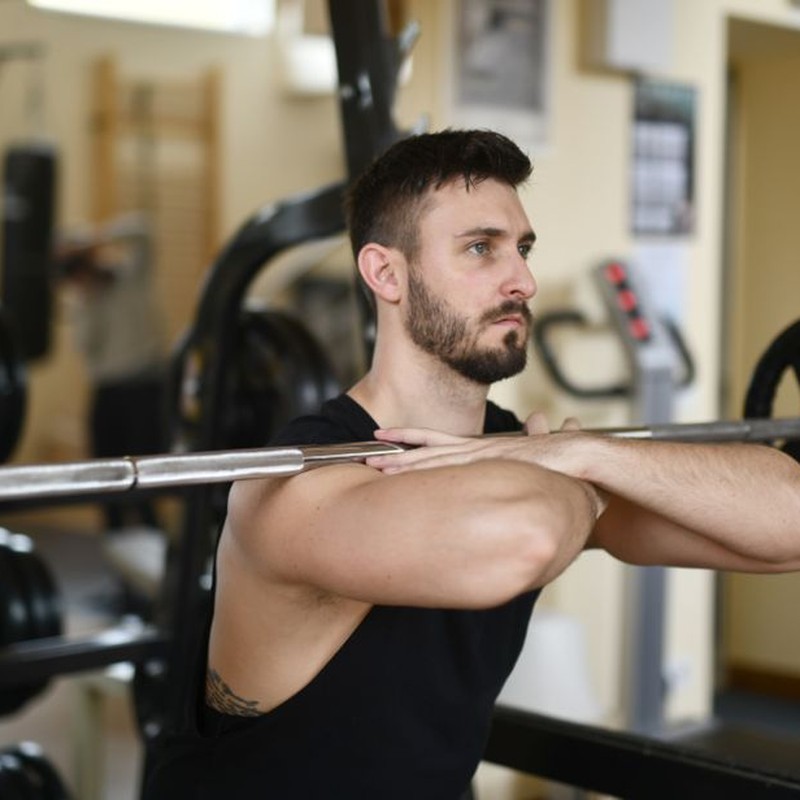
What Starting Strength Actually Asks of You
Starting Strength has a reputation problem in some corners of the internet. People hear novice linear progression and picture a nineteen-year-old in a chalk cloud grinding a failed rep while someone yells at him. The actual program is far less dramatic. Three days a week, three exercises per session, five reps per set, add a little weight the next time you show up. That is the whole engine.
You are signing up for a two-workout rotation. Alternate them, so one week runs A/B/A and the next runs B/A/B. You squat in every single session, which surprises anyone coming from a bodybuilding split where legs get one dedicated day.
- Workout A: back squat, bench press, deadlift.
- Workout B: back squat, overhead press, power clean.
No cable flyes, no leg extensions, no carefully sequenced accessory circuit. Monday, Wednesday, Friday works well for most people; Tuesday/Thursday/Saturday is just as good if your week is odd. Budget 60 to 75 minutes per session including warm-ups once the weights get heavy.
Two honest caveats about that B day. The power clean is technical, and teaching it to yourself from video is a genuinely bad idea. I tried it in my garage gym years ago and ended up with bruised collarbones and a pull that looked more like a reverse curl. If nobody can coach the movement, swap in barbell rows or chin-ups. Plenty of people run it that way and still get strong. Second, the deadlift on day A is one set of five, not three. Miss that detail and you will wonder why your lower back feels wrecked by week three.
Here is where new lifters get confused: this is 3 sets of 5, not 5×5. The 5×5 label usually points to StrongLifts or older Bill Starr-style templates, which use a different set count and different volume. Mixing the two is the most common beginner mistake, and it matters, because five heavy sets of squats three times a week will bury a novice in about a month. Three sets of five, done properly, is plenty of stimulus when you are new.
Progression is simple and slightly aggressive. Complete all your reps, and the next session gets more weight: roughly 5 pounds on the press and bench, about 10 pounds on squats and deadlifts for the first few weeks. When those jumps start feeling like a wall, cut them in half, then in half again. No percentage math, no RPE chart, no autoregulation. You either made the reps or you did not.
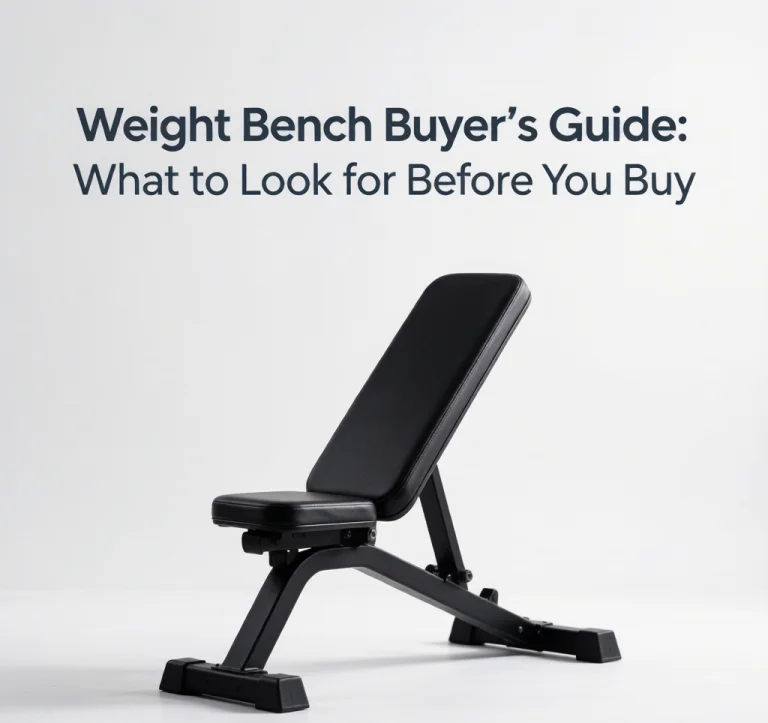
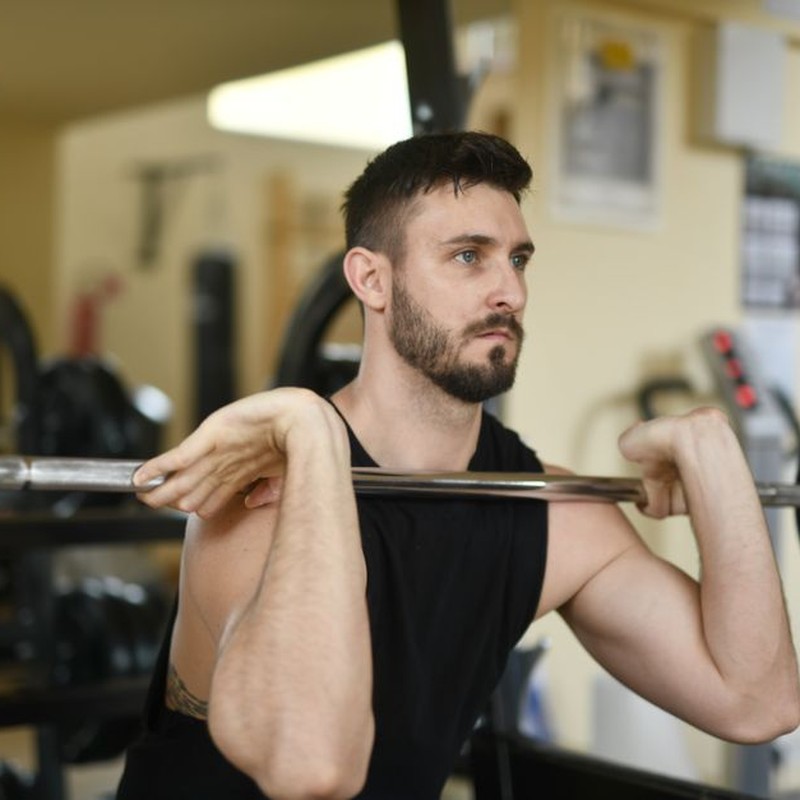
The shopping list is short: a barbell, plates, a squat rack with safeties, and a bench. That minimal footprint is much of why the program keeps circulating in home gym circles.
It is also getting fresh attention. Muscle & Fitness ran a piece on October 16, 2026 calling Starting Strength a time-tested program for lifters chasing size and strength, and US search interest in the term has ticked upward over the past year according to Google Trends, with a recent average of 71.2 against a twelve-month average of 67.0. Modest growth, not a boom, but enough that beginners keep asking.
My skepticism is not about the structure. Three full-body sessions built on squats is a sound way to spend your first six months under a bar. The skepticism is about the assumptions baked in: that you will sleep enough, eat enough, and never miss a session for three months straight. Miss two weeks and the math starts working against you. The program does not adapt to you; you adapt to it. That is a real limitation for anyone with a chaotic schedule or a physically demanding job.
Give it eight to twelve weeks and you will know whether linear progression suits you.
The Weekly Schedule and Exact Workout Template
Starting Strength is not a bodybuilding split. It is two workouts, A and B, alternated on nonconsecutive days. The schedule is boring on purpose, and boring is what lets you add weight every session without standing in the middle of the gym deciding what to do next.

The two-week rotation
Week 1 runs A-B-A. Week 2 flips to B-A-B. If you train Monday, Wednesday, Friday, Week 1 is A on Monday, B on Wednesday, A on Friday. Week 2 is B on Monday, A on Wednesday, B on Friday.
The flip exists for one reason: equal frequency. Over two weeks each workout gets three sessions, so the squat stays at three times a week and neither workout gets starved. Run straight A-B-A-B-A-B for a month instead and workout B keeps losing the argument against whatever else is on your calendar. The rotation is the guardrail.
| Day | Week 1 | Week 2 |
|---|---|---|
| Monday | Workout A | Workout B |
| Wednesday | Workout B | Workout A |
| Friday | Workout A | Workout B |
The exact workout template
Print this. It is the whole program.
- Workout A: Back squat 3×5, bench press 3×5, deadlift 1×5.
- Workout B: Back squat 3×5, standing overhead press 3×5, power clean 5×3.
Every set above is a work set. Warm-up sets come before them and do not count toward the total. On the clean, 5×3 means five sets of three reps rather than three sets of five, because five sloppy cleans teach you nothing except how to catch a bar with your elbows down.
The power clean is the piece that gives new lifters the most trouble. Without a coach or bumper plates, barbell rows at 3×5 are the common substitution, and that is the version I would hand a total beginner training alone in a commercial gym. Call it what it is, though: a modification, not the original program. The squat, bench, press, and deadlift are the engine. The clean is the optional turbo.
Warm-up sets that actually prepare you
Start each lift with the empty bar for a set of 5 to 10 reps. Then take two or three ramping sets at roughly 50, 70, and 85 percent of your working weight. If your work sets are 135 pounds, that reads as the empty bar at 45, then 95, then 115 before your first work set. Plenty of lifters fold the 50 percent jump into the empty-bar set and go straight to the heavier ramps, which is fine as long as you are not jumping from 45 to 135 and calling it warmed up.
Do not turn warm-ups into a workout. I have watched new lifters grind through six warm-up sets, chat for ten minutes, then miss their second work set and blame the program. Two or three ramps are enough. On deadlift you can usually take fewer jumps because the lift itself is one heavy set of five.
Rest periods are part of the program
Rest 3 to 5 minutes between working sets on squats. Rest 2 to 3 minutes on the bench and the overhead press. Deadlift is a single set of five, so there is no between-set rest to manage there at all. You warm up, you pull one hard set, you strip the bar and move on.
Those gaps feel excessive if you came from a gym class or a circuit-training app. They are not laziness. Cutting rest short is the fastest way to miss reps you are actually strong enough to make, and a missed rep at 3×5 looks identical in your logbook to a genuine stall. Bring a timer or use your phone. If you finish a set of squats and immediately reload the bar for the next one, you are not doing this program. You are doing cardio with a barbell.
How long a session actually takes
Budget 60 to 75 minutes per session, warm-ups included. That estimate is not padding. Three lifts means three separate warm-up ramps, and three sets of squats with honest 3-to-5-minute gaps eats 15 minutes on its own before you touch the bench.
If you are consistently in and out in 35 minutes, you are either rushing the rest or skipping warm-up sets. Both habits work right up until they do not, and then the program takes the blame instead of the execution. A Muscle and Fitness piece from October 2026 made the case that Starting Strength remains a time-tested program for lifters chasing size and strength, and it is right about the structure. The structure only pays off when you respect the boring parts: the ramps, the long rests, and the single deadlift set.
Log every set
Write down every set and every weight in a notebook or app. Date, lift, weight, and whether you hit all five reps. The program only works if you know exactly what you lifted last time. Guessing is how people repeat the same weight for three weeks and then wonder why nothing is moving.
Print the A and B sheets, tape them inside a notebook, and fill in the numbers as you go. The default progression is 5 pounds added to the bar for the next session on squat, bench, press, and deadlift. When you miss reps, do not redesign the schedule on day three. The reset rules in the next section cover exactly when to drop weight and how far back to go.
Progression Rules, Stalls, and When to Move On
This is the part of Starting Strength people either love or quit over. The program asks you to add weight to the bar almost every session, and for a while that works. Then it stops working, and you need rules for what happens next.
Without rules, beginners do one of two things: they panic and program-hop, or they grind the same weight for six weeks and call it a plateau. I have watched both happen to people I was coaching in person, and neither is necessary.
When you have earned the next jump
Add weight after you complete every prescribed rep with acceptable form. For squat, bench, and press that means all 15 reps across three sets of five. For the deadlift, it means all five reps of the one working set.
Acceptable form is where people fudge. My working definition: full range of motion, no rounded lower back on the pull, no squat that turns into a good-morning, and no rep where you stand there for eight seconds talking yourself into it. Grinding the last rep of the last set is normal. Losing position to get it is not.
How much to add depends on the lift and the lifter. The usual jumps are 5 pounds on the press and bench, 5 to 10 on the squat, and 10 on the deadlift for the first few weeks. Smaller lifters often get more mileage out of smaller jumps early on. Nothing bad happens if you take 5 pounds on the deadlift instead of 10.
Two misses at the same weight is a stall, not a verdict
Here is the sequence I hand to anyone running their first novice block:
- First miss: repeat the weight next session. Sometimes it was sleep, sometimes a rushed warm-up, sometimes you just had a bad day.
- Second miss at the same weight: that is the stall. Take roughly 10 percent off the bar and build back up. Squatting 185 becomes about 165.
- Rebuild: work back up in normal jumps. You will usually pass the old number by 10 or 15 pounds, because the reset bought you a few weeks of clean volume instead of a grind.
Most lifters get one or two honest resets per lift before things turn sour. If you have reset the squat three times and hit the same wall in the same place each time, you have taken what the novice phase had to give on that lift.
The cheapest fix in the gym costs about twelve dollars
Press and bench stall first, usually because a 5-pound jump is a big percentage of the bar. At a 95-pound press, 5 pounds is more than 5 percent. That is a lot to ask every session for weeks on end.
A pair of 1.25-pound plates buys you time. I have watched people add 2.5 pounds to a press for six straight weeks after being stuck for a month on 5-pound jumps. It is the least glamorous piece of equipment in strength training and one of the most effective.
It does not rescue a squat stalling at 225. Treat micro-loading as an upper-body tool, plus a late-stage option on the other lifts once 5 pounds has become too much.
How long linear gains actually last
Three to nine months is the realistic range for most new lifters. Teenagers and twenty-somethings eating in a surplus and sleeping eight hours sit at the top of that range. Anyone starting at a low body weight, training on five hours of sleep, or trying to lose fat at the same time should plan for the shorter end.
What that range buys you is impressive. I have seen a lean 20-year-old add well over 100 pounds to his squat in a single novice run. I have also seen a 45-year-old who works nights add 40 pounds and be rightly pleased about it. Both are the program working as intended.
Muscle & Fitness made the case in October 2026 that Starting Strength remains a time-tested option for lifters at every level. The part that piece and most program reviews gloss over is what the word novice implies: this is a phase, not an identity.
Markers that your phase is running out:
- Three resets on the same lift, with the wall landing in the same place each time.
- Squats stalling while bodyweight climbs. That is a programming problem, not a recovery problem.
- Sessions that leave you wrecked for two days. Three sets of five near your limit, three times a week, accumulates fast.
- You are adding 10 pounds a month instead of 10 pounds a week, and every session feels heavier than the last.
One of those alone is not a reason to leave. Two or three together usually is.
Pick something that loads by the week, not the session
The sensible next step is a template where weight moves weekly instead of every workout. Texas Method, HLM, 5/3/1, or a plain upper/lower split with slower progression all qualify. A four-day upper/lower with one heavy and one moderate day per lift suits people who liked the simplicity of Starting Strength but do not want to live under a barbell for 75 minutes three times a week.
Which template you choose matters far less than the fact that you keep adding weight over months rather than sessions. Beginners graduate from linear progression and then spend a year wandering between programs, never running one long enough to see it work. Pick something, run it for 12 weeks, and grade it on one question: did the bar get heavier.
If you have already run a novice phase, I want to hear what your reset numbers looked like and where you went afterward. That is the part new lifters never get to see in advance, and it belongs in the comments.
Recovery, Cardio, and Fitting It Into a Real Week
The thing that stops most beginners on Starting Strength isn’t a flaw in the template. It’s the third squat session of the week — the one where your last warm-up set already feels heavier than your top set did on Monday. Squatting heavy three times a week is the single biggest recovery cost in the program, and it’s usually the reason people stall at 185 pounds instead of 285. You’re adding weight to the bar every session, so the demand climbs faster than on almost any other beginner plan. If sleep, food, and stress aren’t at least roughly in order, the linear progression quietly stops being linear.
So treat recovery as part of the program, not an afterthought to it.
Sleep and food do more than any supplement
Seven to nine hours of sleep is the working target. Not because a study told me to type that, but because the lifters I’ve watched grind to a halt on this program were almost always sleeping six hours and wondering why 225 felt like a house.
Eating matters just as much. If strength is the goal, you want bodyweight trending up slowly — a pound or two a month for a lot of beginners, more for skinny teenagers. A slow climb gives the bar something to build on. Trying to run a caloric deficit and a linear progression at the same time is how people spend four months going nowhere on both fronts.
Protein: roughly 0.7 to 1 gram per pound of bodyweight per day is a reasonable working range in a small surplus. For a 180-pound lifter that’s 125 to 180 grams. Hit that, eat enough to gain a little, and you’ve covered the basics. Whey is convenient, not magic — I bought the cheapest tub on the shelf for years and my results tracked with total daily intake, never the label.
Cardio without wrecking your squats
You can keep conditioning on this program. Plenty of people run themselves into the ground trying to be a lifter and a marathoner in the same eight weeks, but that’s a volume problem, not a cardio problem.
Two ground rules:
- Put cardio on non-lifting days, or after the barbell work. Thirty minutes on the rower before squats is a good way to miss reps you should have made.
- Keep it easy to moderate. Two or three sessions of 20 to 30 minutes — incline walking, a stationary bike, an easy jog — won’t blunt strength gains for most beginners. Conversational pace, more or less.
The one thing I’d genuinely avoid is hard intervals or a long run in the 24 hours before a squat session. Sore legs and a heavy bar don’t mix. A missed set of five at 205 because your quads were fried from yesterday’s hill repeats costs you a full week of progression, and that trade never works out in your favor.
A realistic three-day week
Each barbell session runs 60 to 75 minutes once you count warm-up sets and rest between work sets. That’s already a real time commitment, which is why the cardio lands on separate days or gets tacked on afterward instead of eating into your squat recovery. Weeks alternate A/B/A and B/A/B.
- Monday: Workout A — squat 3×5, bench 3×5, deadlift 1×5 (60-75 min)
- Tuesday: 25 minutes easy bike or incline walk
- Wednesday: Workout B — squat 3×5, overhead press 3×5, power clean 5×3 (or barbell row 3×5 if nobody’s taught you the clean)
- Thursday: Rest or a short walk
- Friday: Workout A — same prescription, heavier bar
- Saturday: Optional 20 to 30 minutes of easy conditioning
- Sunday: Rest
Next week flips to B/A/B. Same structure, same session length, just a different order.
When to take a deload
Deload weeks aren’t built into the template, which trips up beginners who assume the program self-regulates. It doesn’t. You make that call yourself.
Take one when life stress spikes, when sleep craters for a week or more, or when you’ve failed the same weight three sessions running. It doesn’t have to be fancy: drop the working weight 10 to 15 percent for a week, or cut a set from each lift, then resume where you left off. I’ve watched lifters take a light week and come back hitting PRs two sessions later. I’ve also watched lifters grind against the same failed squat for a month because they treated a deload like a moral failure.
If you only have two days
Run A and B on nonconsecutive days — Monday and Thursday, or Tuesday and Friday — and flip the order the following week so both workouts get equal exposure. Progress will be slower. That’s the honest trade, and it beats the alternative of skipping sessions entirely. Three days is the design, not a requirement for entry into the club. Two focused sessions beat three where one is a zombie walk through the warm-up.
If your week genuinely won’t hold three barbell days plus a couple of easy cardio sessions, that’s worth paying attention to rather than forcing. The next section covers the modifications that make more sense than white-knuckling the template exactly as written — including when a different beginner program is the smarter pick.
Who Should Skip It, and How to Modify It for 2026
Starting Strength is still a good beginner program. It is not a good program for every beginner, and in 2026 a fair number of readers should pick something else and stop feeling guilty about it.
Skip it if any of these describe you
- You do not have a rack with safeties, and you do not have a spotter you actually trust every single session. A failed squat with no pins is not a character-building moment.
- Your only training window is 6 p.m. at a commercial gym where three racks serve forty people. You cannot run a linear progression on a lift you get to attempt once every eleven minutes.
- You have a history of low back trouble, uncontrolled blood pressure, or an injury nobody qualified has cleared. Handle that first. Adding ten pounds a week to a back squat is a terrible way to rehab anything.
- Getting under the bar hurts. Burning effort is fine. Sharp pain in a shoulder or hip is a stop sign.
None of that rules out barbell training forever. It means this template, run exactly as written, is not your starting point.
Swaps that keep the structure
The A/B rotation is the part worth keeping: three sessions a week, alternating, with the same rule every time. Finish all your sets and reps, add weight next session. Change the tool, keep the rhythm.
- Goblet squats or leg press in place of back squats, especially while you are still learning the pattern or training at home with a thin plate collection.
- Dumbbell bench press in place of barbell bench. Easier to bail out of alone, and it tells you honestly which side is weaker.
- Trap-bar deadlifts in place of straight-bar pulls. The neutral grip is kinder to shoulders and simpler to groove in your first month.
- Chest-supported rows in place of power cleans. Most new lifters get more from rows early on. The clean is a technical lift that deserves its own coaching, not a footnote tacked onto a Tuesday session.
Over 40, or back after a long layoff
Run two work sets of five instead of three, take five-pound jumps instead of ten, and open lighter than the template suggests. Same progression rule, roughly two-thirds of the weekly stress. You will still add weight for months, just with fewer weeks lost to a cranky hip.
Two other tweaks I use: tack chin-ups or rows onto the end of a session if your upper back lags behind your pressing, and press twice a week if overhead strength is the goal you actually care about. The program is a skeleton, not scripture.
Start lighter than your ego wants
Of every modification on this page, this one matters most and costs nothing. If you figure your five-rep squat max is somewhere near 185, open at 95 to 115. A first session with a manageable squat leaves room for twenty-plus productive weeks. Opening near a real max ends the run in about a month, usually with a tweaked back as the parting gift.
If you are buying gear
Before you commit a dollar, check current prices on Amazon for a barbell, a set of plates, and a rack with safeties. Spend on the rack first. A cheap bar inside a good power rack is a workable setup; a nice bar with nothing to catch you is a liability. Log three weeks with a conservative start before you judge any of it, and once that month is behind you, leave a comment with what you ran and what broke first. I read them, and the specifics help the next person decide.
The verdict
Run it if you have a rack with safeties, a cleared bill of health, and the patience to start embarrassingly light. Skip it if any of the four bullets up top landed on you, spend a few months on goblet squats, leg press, dumbbell pressing, and trap-bar pulls, and come back to the straight bar when the equipment and the body both cooperate. Getting stronger without getting hurt is the whole point. The program was only ever the vehicle.