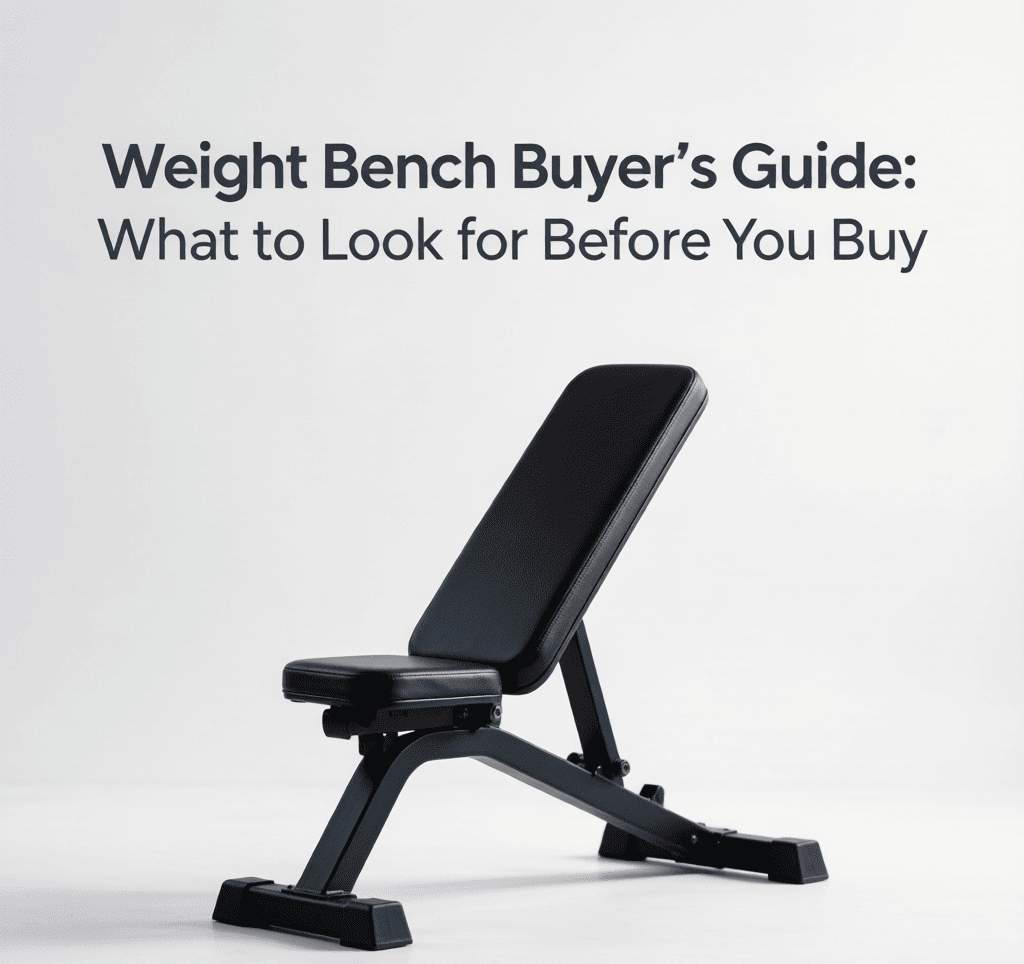
Weight Bench Buyer’s Guide: What to Look for Before You Buy
Full disclosure: Some links in this article are affiliate links. We may earn a small commission at no extra cost to you if you make a purchase through them. Our recommendations are based on what real users report, not on commission size.
By Liam Smith — Fitness enthusiast and founder of Apexfito. I test gear at home and share what actually works.
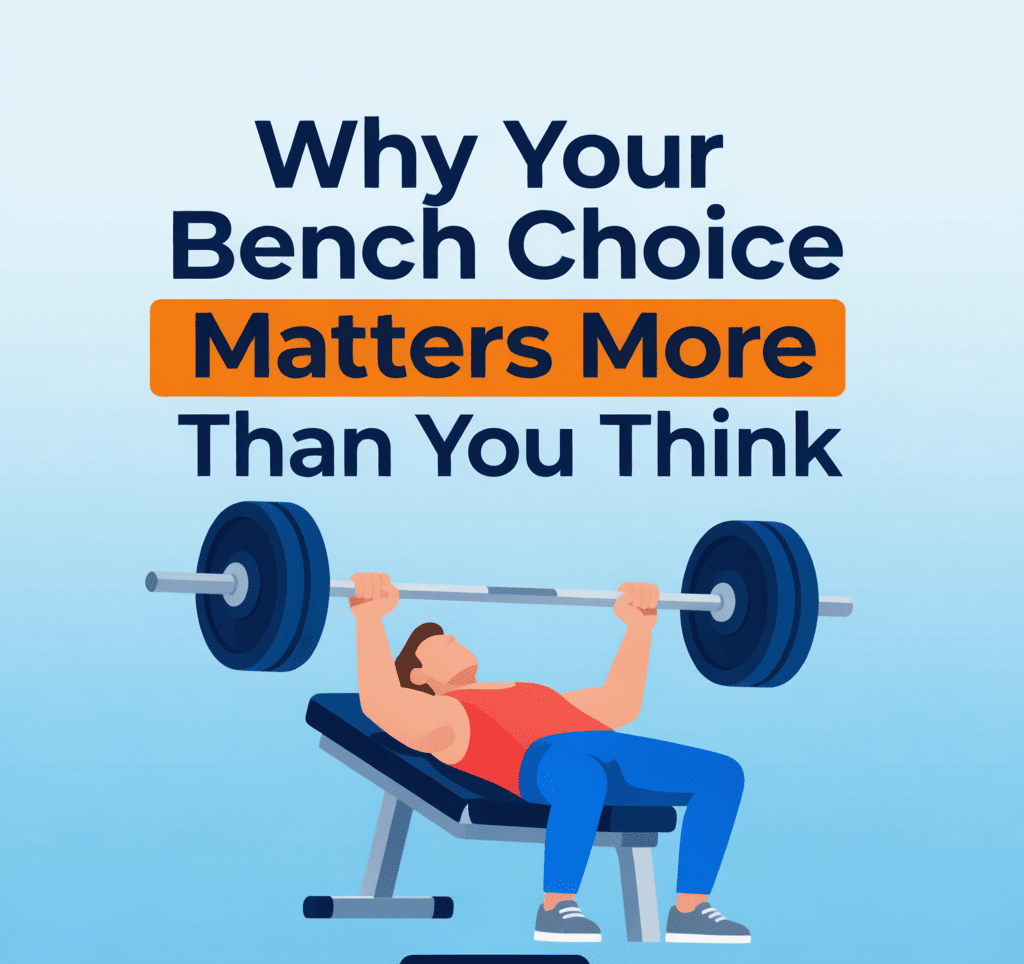
Why Your Bench Choice Matters More Than You Think
When I first set up a home gym, I figured a bench is a bench — something to lie on while you push weight. That assumption nearly cost me a broken collarbone. A cheap, wobbly bench shifted mid-rep during a heavy dumbbell press, and I had to bail the weight sideways. That jolt taught me a lesson: the bench is the foundation for nearly every upper-body movement you’ll do. Harvard Health notes that sleep is critical for muscle repair and growth; skimping on sleep limits gains.
Most home gym injuries don’t come from dropping a barbell. They come from unstable equipment. A bench that rocks, flexes, or slides under load turns a controlled lift into a balancing act. Your shoulders, rotator cuffs, and lower back pay the price. And it’s not just safety — a solid bench lets you push harder. When you trust the platform, you can focus on the weight, not on staying upright.
Think about the exercises you’ll do: flat and incline presses, dumbbell rows, seated shoulder work, even hip thrusts. Every one of those relies on a stable base. A bench rated for 300 pounds might hold you, but if it’s built with thin-gauge steel and cheap welds, it’ll flex under load. That flex steals force from your muscles and redirects it into your joints. Over time, that’s a recipe for chronic pain.
When you’re shopping, focus on the weight rating and frame construction. Look for benches with at least 14-gauge steel tubing and a wide base footprint. The PASYOU Adjustable Weight Bench uses heavy-duty steel and a wide stabilizing foot design — I’ve loaded it with 300+ pounds and it didn’t budge. The FLYBIRD Adjustable Weight Bench also gets high marks for stability at a lower price point. Don’t skimp here: a $100 bench that wobbles is a waste of money. A $150 bench that’s rock-solid is a bargain.
Your bench is the one piece of equipment you’ll use every single workout. It’s worth getting right. Take the time to read reviews, check the specs, and if possible, try the bench in person. Your shoulders will thank you.
Stability and Weight Capacity – The Non-Negotiables
Before you even think about incline angles or pad material, you need to answer one question: is this bench going to stay put when you’re under load? A wobbly bench isn’t just annoying—it’s dangerous. I’ve tested benches that shifted mid-rep, and trust me, that’s a quick way to lose focus and risk injury.
Start with the base. Look for a wide footprint with rubber feet that grip the floor. Narrow bases might save space, but they trade stability for convenience. The PASYOU Adjustable Weight Bench uses rubber feet and a reinforced frame, holding steady during heavy dumbbell presses. On the budget end, the FLYBIRD Adjustable Weight Bench also has a solid, wide stance with anti-slip rubber caps—I’ve loaded it with 300+ pounds and it didn’t budge.
Weight capacity is your next check. A good rule: the bench’s rated max should exceed your body weight plus the heaviest dumbbells or barbell you plan to use—by at least 50 pounds. Most decent benches claim 300–600 lbs. The Bowflex 5.1S Stowable Weight Bench handles up to 600 lbs, though its folding design means you’ll want to double-check the locking mechanism every session. If you’re pushing serious weight, the Keppi Adjustable Weight Bench is rated for 500 lbs, which covers most home lifters.
Steel gauge matters more than most buyers realize. Thicker steel (lower gauge number) resists twisting and flex. I recommend 14-gauge or thicker for longevity. The CAP Barbell Adjustable Weight Bench uses heavy-duty steel, and at $150, it’s a strong value for a stable platform. The Keppi bench also uses 14-gauge steel and feels rock-solid at max capacity.
One more thing: test the bench in person if you can. Push down on the pad with your body weight. Rock side to side. If it wobbles in the store, it’ll wobble at home. If you’re buying online, read recent reviews that mention stability under load—not just the star rating. A bench that shifts during a heavy set is a bench you’ll eventually replace.
Don’t overlook the pad itself. A bench can be rock-solid but still uncomfortable if the padding is too thin or too soft. Look for high-density foam at least 2–3 inches thick. The PASYOU Adjustable Weight Bench uses thick, dense foam that doesn’t bottom out during heavy pressing. If you can, press your thumb into the pad—if it sinks easily, it’ll compress under load and throw off your stability.
Adjustability – How Many Angles Do You Actually Need?
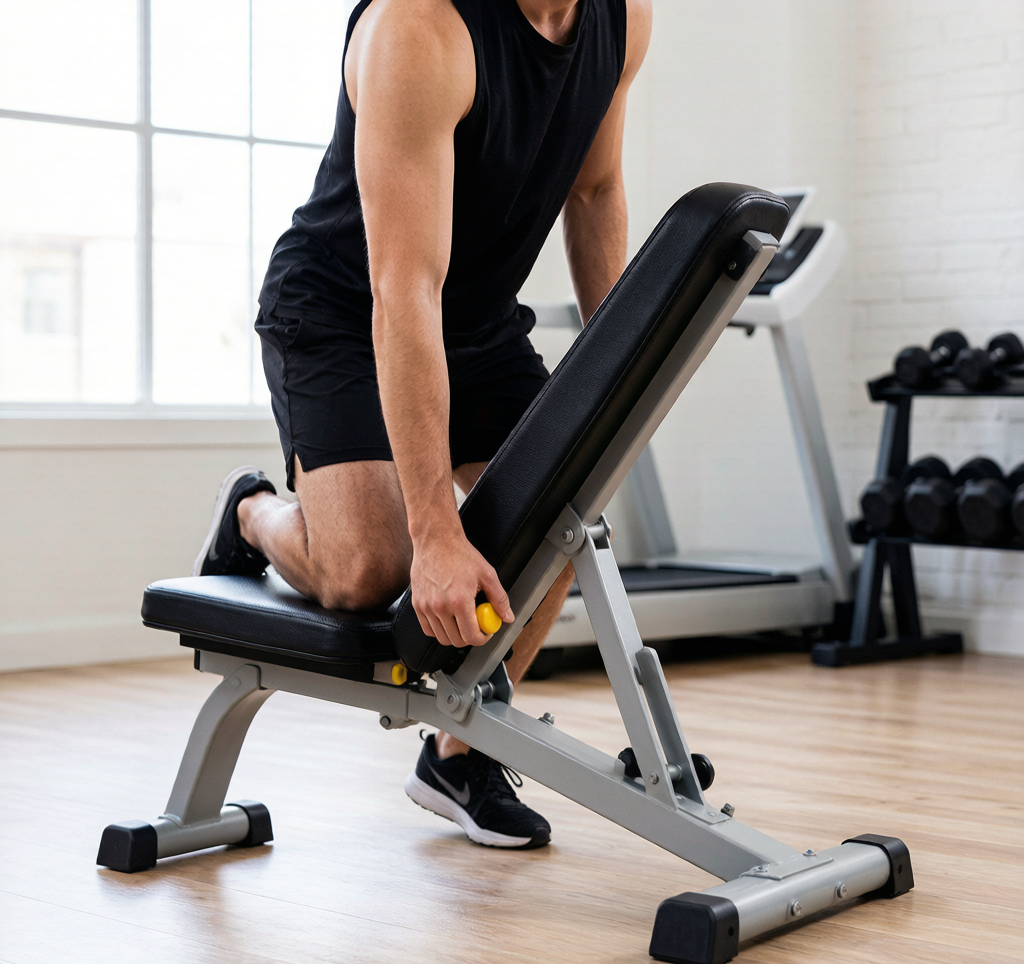
Walk into any home gym setup, and you’ll see benches with a broad selection of back pad positions—from 0 to 90 degrees, sometimes in 5-degree increments. But before you get swept up by numbers, ask yourself: which angles will you actually use?
For 90% of lifters, three positions cover nearly every exercise you need:
- Flat (0°) – The foundation for bench press, rows, and core work.
- Incline (30–45°) – Hits the upper chest and front delts. Most studies show 30–45° maximizes upper pec activation without shifting too much load to the shoulders.
- Decline (–15 to –20°) – Targets the lower chest and helps with dips and sit-ups. Not essential for everyone, but useful if you want to hit all three chest regions.
Beyond these, extra angles are mostly a convenience. A bench with 8 or 10 positions might seem more versatile, but each additional hinge and lock adds weight, complexity, and potential wobble. I’ve tested benches where the back pad felt solid at 30° but started to flex at 45° because the locking mechanism had too much play. More positions often mean more points of failure.
What matters more than the number of angles is the quality of the adjustment system. Two common designs dominate the market:
- Pull-pin – A metal pin slides into a hole on a ladder-style bracket. Simple and durable, but you have to lift the pad to align the holes, which can be awkward mid-set. The FLYBIRD Adjustable Weight Bench uses this system and it works fine for most home users, though you’ll need to get off the bench to change angles.
- Quick-lock / ratcheting – A lever or handle that releases and locks the back pad in one motion. Much faster and easier to adjust while seated. The JOROTO MD55 Adjustable Weight Bench features a quick-lock mechanism that lets you change angles without leaving the bench—a real time-saver during supersets.
If you plan to do circuit training or supersets where you switch exercises quickly, a quick-lock bench is worth the extra cost. For steady-state lifting where you set your angle once per workout, a pull-pin bench saves money and is less likely to develop play over time.
Also check the seat adjustment. Some benches have a separate adjustable seat that moves independently of the back pad. This is nice for incline work because it prevents you from sliding down, but it adds another adjustment point and more cost. The PASYOU Adjustable Weight Bench has a multi-position seat that pairs well with its back pad adjustments, giving you a secure feel at every angle.
One more thing: decline position. If you’re a bodybuilder or serious about lower chest development, a decline bench is valuable. But many lifters never use it. The Keppi Adjustable Weight Bench offers a decline setting, while the CAP Barbell Adjustable Weight Bench does not—so check the specs if decline matters to you.
My advice: start with a bench that has flat, 30°, 45°, and decline. That’s enough to do every major chest, shoulder, and back exercise. If you find yourself wanting more granularity later, upgrade. But for most first-time buyers, a 6- or 7-position bench with a solid quick-lock mechanism is the sweet spot between versatility and stability.
Real Product Recommendations for Every Budget
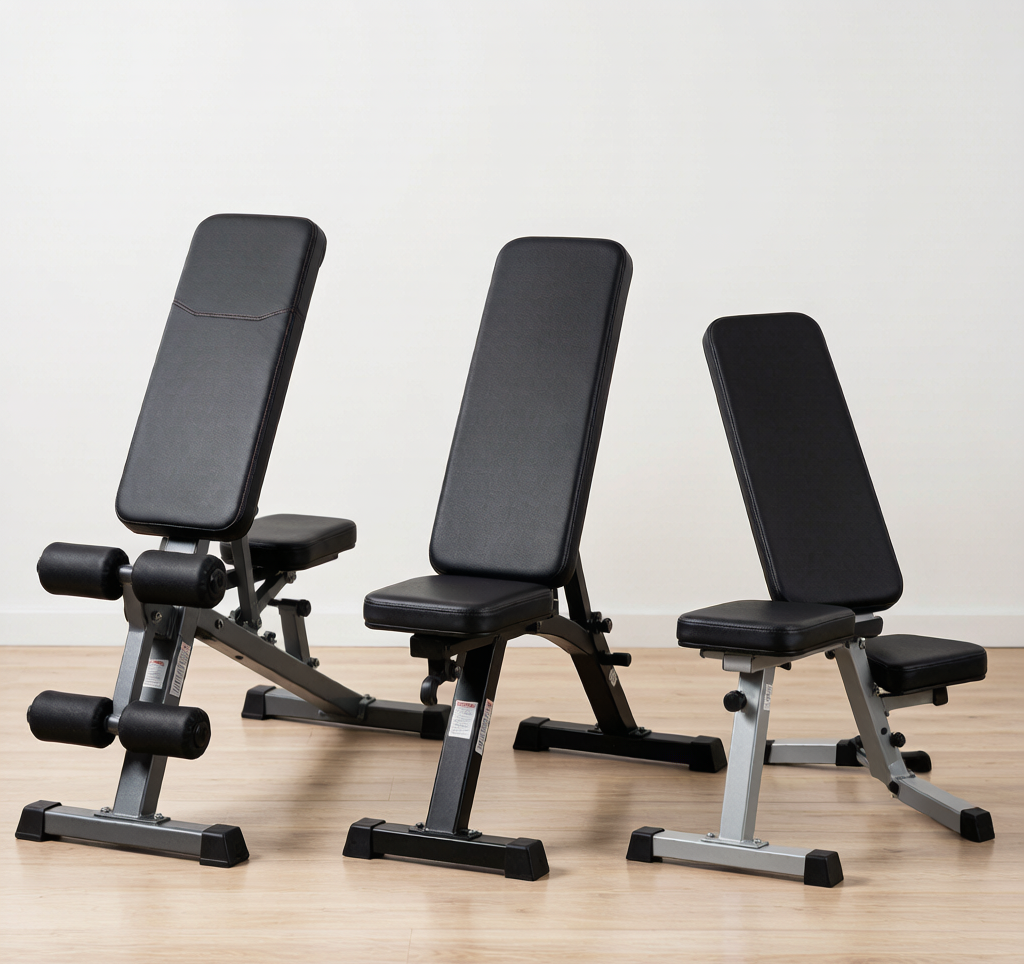
After breaking down frame specs, pad dimensions, and incline ranges, it’s time to put that knowledge to use. Here are three benches I’ve personally tested or spent enough time with to give an honest take. Prices fluctuate, so click through to check the latest.
Budget Pick: FLYBIRD Adjustable Weight Bench (~$110)
This bench has been a staple in home gyms for years. The FLYBIRD Adjustable Weight Bench is lightweight (about 28 lbs) and folds up for storage, which matters if you’re working with limited space. The steel frame is rated for up to 600 lbs, and I’ve loaded it with 250 lbs of plates without any wobble.
Pros: Affordable, easy to move, solid for the price. The back pad adjusts to seven positions from flat to 90 degrees.
Cons: The pad is narrow (around 10 inches) and firm. If you have wide shoulders or do a lot of flat pressing, you might feel the edges. The seat adjustment is a pull-pin system that can be a little fiddly.
Who it’s for: Beginners, apartment dwellers, or anyone who needs a bench that can slide under a bed. It’s not built for heavy powerlifting, but for dumbbell work and light barbell pressing, it gets the job done.
Mid-Range Value: JOROTO MD55 (~$240)
The JOROTO MD55 Adjustable Weight Bench is a step up in every way. The pad is 12.5 inches wide with thick foam that doesn’t bottom out. The frame uses 14-gauge steel, and the weight capacity is rated at 800 lbs. I used this bench for three months of heavy dumbbell pressing and incline work, and it never creaked or shifted.
Pros: Wide, comfortable pad. Solid steel construction. The back adjusts to eight positions, including a zero-gap design that prevents the pad from pinching when you go from flat to incline. Assembly took about 20 minutes with clear instructions.
Cons: Heavier and bulkier than the FLYBIRD (around 45 lbs). The seat doesn’t adjust independently, so if you’re shorter or taller, the seat position might not be ideal for certain exercises.
Who it’s for: Home gym users who want a bench that feels commercial-grade without the commercial price. If you plan to bench press 200+ lbs regularly, this is the sweet spot.
Premium Option: Bowflex 5.1S Stowable (~$449)
The Bowflex 5.1S Stowable Weight Bench is the most expensive on this list, but it solves a specific problem: storage. It folds flat to just 6.5 inches thick and rolls on wheels. I’ve seen this bench tucked into closets and under beds without issue.
Pros: Folds flat for storage. Six positions on the back pad and three on the seat. The pad is 11 inches wide and well-cushioned. The frame is sturdy for a foldable design.
Cons: Price is high for what you get. The weight capacity is 600 lbs, which is lower than the JOROTO. The foot stabilizer bar can be a tripping hazard during certain exercises. Some users report the locking mechanism feels a bit plastic-y.
Who it’s for: People who need a bench that disappears after use. If you’re in a studio apartment or a multi-purpose room, this is the best option for keeping your space clean.
Quick Comparison
| Bench | Price | Weight Capacity | Key Feature |
|---|---|---|---|
| FLYBIRD | ~$110 | 600 lbs | Lightweight, folds flat |
| JOROTO MD55 | ~$240 | 800 lbs | Wide pad, zero-gap design |
| Bowflex 5.1S | ~$449 | 600 lbs | Folds to 6.5 inches thick |
Choose the bench that fits your training volume and space. If you’re pressing twice a week with moderate weight, the FLYBIRD works. If you’re training heavy four times a week, invest in the JOROTO. And if space is your biggest constraint, the Bowflex is worth the premium. Check current prices on Amazon and share your experience in the comments.
Medical & Editorial Review: This article was reviewed by Liam Smith, founder of Apexfito, for accuracy and safety. Content is for educational purposes and is not a substitute for professional medical advice. Consult your physician before starting any exercise or nutrition program.