Creatine for Women: Benefits, Dosage, and What the Research Says
Full disclosure: Some links in this article are affiliate links. We may earn a small commission at no extra cost to you if you make a purchase through them. Our recommendations are based on what real users report, not on commission size.
What Creatine Does in Your Body (and Why It Won’t Make You Bulky)
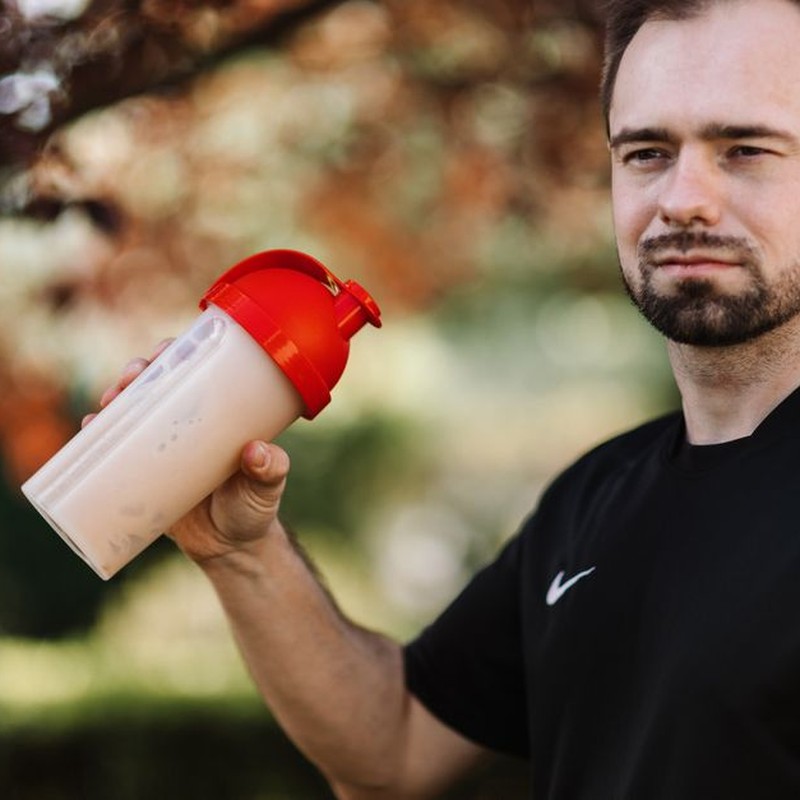
My first tub of creatine monohydrate sat in my pantry for a month. Every time I opened that cabinet I heard the same worry on repeat: what if I get puffy? What if my jeans stop fitting? What if I end up looking like a bodybuilder? A friend eventually dumped a scoop into my shaker and handed it to me. Two weeks later my squat felt stronger, my legs looked a little fuller in a good way, and my jeans fit exactly the same.
Here’s what’s actually happening inside your muscles when you take it.
When you lift something heavy, your muscles run on ATP. That’s cellular fuel, and it burns out fast, usually within the first 10 to 15 seconds of hard effort. Creatine converts into a molecule called phosphocreatine inside your muscle cells, and phosphocreatine regenerates ATP on the fly. More phosphocreatine means a little more runway before your muscles tap out. That’s the window that decides whether you grind out a sixth rep on a heavy squat or stall at three. It’s not magic. It’s just faster refueling during the shortest, hardest part of a set.
This is where most women get the story wrong. Creatine doesn’t build muscle by itself. It isn’t a hormone and it doesn’t add tissue on its own. What it does is let you handle more total reps at a given weight, and that extra weekly volume is what signals your body to grow over months. The powder is the enabler. Your training, your protein intake, and your consistency do the actual shaping. Lift two to four times a week and eat enough protein, and creatine helps you get more out of every session. Train and eat like a bodybuilder for years and you’ll get that result too, but that’s the training and the years talking, not the scoop.
About the 2 to 4 pounds some women gain in the first couple of weeks: that’s water, but not the kind that puffs you up. Creatine pulls water into the muscle cell rather than under your skin. It sits inside the tissue, so a leg or arm can look slightly fuller and firmer. It doesn’t widen your waist or swell your face. The number on the scale might tick up while your measurements and how your clothes fit stay the same. That extra intracellular water can even help you perform better, since hydrated muscle cells contract more efficiently.
Timelines are pretty predictable. If you load, meaning roughly 20 grams per day split into four doses for 5 to 7 days, you might notice strength changes in 1 to 3 weeks. If you skip loading and take a steady 5 grams daily, expect closer to 3 to 4 weeks. Both roads lead to the same place. Loading saturates your muscles faster, but taking 20 grams at once can leave you camped out in the bathroom. I suggest the simple route: 5 grams a day and some patience. It’s cheaper, easier on your stomach, and you end up in the same spot.
So what does this look like in real life? For a woman lifting two to four times a week, the realistic result is a heavier top set and better last-rep quality. Maybe you go from squatting 95 pounds for 5 reps to 105 for 5. Maybe the tenth rep of a set feels as clean as the first. That’s the whole payoff. No sudden broad shoulders, no bulging biceps. Muscle size follows training volume, protein intake, and years of consistent work. I’ve been taking creatine for a while now and I still wear the same size jeans I wore before I started. My arms are a bit more defined, but that came from the barbell.
If you’re ready to try it, here’s the practical version:
- Pick creatine monohydrate. It’s the most researched form and the cheapest, and the fancy versions haven’t shown better results.
- Take 5 grams daily. Every day, including rest days. Saturation is the goal, not a pre-workout spike.
- Ignore the timing debates. Morning, post-workout, with coffee, before bed. Your muscles don’t care much.
- Mix it however you’ll actually drink it. Water, a protein shake, or stirred into your morning oatmeal all work.
- Buy from a brand that lists third-party testing on the label. You want creatine and little else in the tub.
If you want to compare brands, you can check current prices on Amazon and read through the reviews before committing to a tub.
And if you’ve already been taking it, tell me how it went. Did the scale move? Did your lifts? Drop a comment below, because your experience might be the nudge another woman needs to finally open her own pantry door.
What the Research Says About Creatine in Women
Here’s the awkward part of the creatine literature: for about two decades, women were barely in it. Most trials from the 1990s and early 2000s recruited men almost exclusively, and those are the studies that gave us the familiar 3 to 5 grams a day and the standard loading protocol. Female-specific research is newer, and the individual trials are small, often 20 to 40 participants instead of hundreds.
What matters is that when women are included, the result points the same way. Strength goes up. Lean mass goes up. Gains get bigger when creatine is paired with resistance training rather than taken on its own. The evidence is thinner, not contradictory.

Postmenopausal women have the deepest evidence base
The most solid female-specific data belongs to postmenopausal women, mostly from work by Darren Candow, Philip Chilibeck, and their colleagues. Their trials pair creatine with a structured resistance training program and consistently show gains in leg press strength and lean tissue, plus shifts in markers tied to bone turnover and bone mineral density.
One caveat I’d want a friend to hear: those bone findings come from DXA scans and blood markers measured over fairly short trials, not from fracture outcomes tracked over years. Promising, especially for women past menopause who are losing bone, but not a substitute for the training that drives the adaptation in the first place.
If you eat little or no meat, you’ll likely respond more
Red meat and fish are the main dietary sources of creatine, and omnivores walk around with muscle stores that are already close to full. Vegetarian and vegan women start lower. That leaves more headroom to saturate, and in trials comparing the two groups directly, vegetarians show larger jumps in muscle creatine content and often bigger performance gains.
I watched this play out with a training partner who’s been vegan for six years. She noticed a difference in her top-end squats within about three weeks, faster than I did when I first started. Anecdote, not proof, but it lines up with what the labs report.
The fear of getting bulky is doing more damage than the supplement
A 2021 survey of female athletes led by Abbie Smith-Ryan found that fewer than a third used creatine. The top reasons given for avoiding it were fear of weight gain and bloating, not any harm anyone had actually experienced.
Creatine pulls water into muscle cells, not under the skin. Most women see a pound or two of scale movement in the first week or two, and that water sits inside the muscle, where it helps you lift. It doesn’t add fat, and it won’t puff up your face or midsection. If your stomach feels off, that’s usually a 20-gram loading dose, a poorly manufactured powder, or not enough fluids, not the 3 to 5 g maintenance dose.
Where the data gets thin
Several newer lines of research look at creatine across the menstrual cycle, during pregnancy, and for cognition under sleep deprivation in women. Those findings are early and inconsistent. Some studies see a phase-dependent effect, others don’t. Treat them as interesting leads rather than guidance you’d build a plan around. If you’re pregnant or breastfeeding, run it past your OB instead of a forum thread.
Dosing: what the numbers actually say for women
The best estimate for maintaining saturated muscle stores in women is about 0.03 grams per kilogram of body weight per day. For a 70 kg (154 lb) woman, that’s roughly 2 grams. A flat 3 to 5 g daily sits comfortably above that threshold, which is why it’s the practical default. No math, no scale, no guessing at your lean mass.
- Skip the loading phase unless you need saturation within a week. Loading means 20 g a day split into four doses for 5 to 7 days. It works, but it’s where most stomach complaints come from.
- Timing is flexible. Post-workout is fine. So is your morning coffee. Consistency across weeks matters far more than the clock.
- Take it with food if it bothers your stomach. A scoop stirred into oatmeal or a smoothie goes down easier than dry powder in water.
- Buy monohydrate and look for a third-party seal like NSF Certified for Sport or Informed Sport. Fancier forms cost more and don’t outperform it.
- Give it 4 to 6 weeks alongside real resistance training before you judge it. Creatine amplifies the work you put in; it doesn’t replace it.
Track your lifts rather than the scale. That’s the number that tells you whether it’s actually doing anything for you.
If you’re ready to buy, check current prices on Amazon first. Prices swing a lot between brands, and a sealed, third-party-tested tub of monohydrate is usually the cheapest thing in your supplement cabinet. And if you’ve been taking it for a few months, leave a comment about what changed for you. Real reports from women who lift are still the scarcest data in this whole field.
Dosage, Timing, and Which Type to Buy
Walk down the supplement aisle or scroll Amazon and you’ll find creatine in at least six forms, each promising to beat the last. I’ve tried a few. I keep coming back to plain monohydrate powder — the only form with decades of human data behind it, and the cheapest one on the shelf.
Buy monohydrate and stop second-guessing
Creatine HCL, creatine nitrate, creatine ethyl ester, liquid creatine, gummies. They all sound more advanced than a scoop of white powder. Most of them aren’t.
The research on the alternatives is thin, and several of them are dose games. A single gummy might carry 1 gram of creatine, which means you need five of them to hit a standard daily dose — plus the sugar and gelatin that come along for the ride. Ethyl ester actually performed worse than monohydrate in the human trials that exist. Nitrate has a few small blood-flow studies, nothing close to the body of evidence monohydrate has built since the early 1990s.
So: buy monohydrate. Spend the savings on protein powder or a decent pair of lifting shoes.
Five grams, every day, rest days included
Take 5 grams daily. Training days, rest days, leg day, couch day. All of them.
Creatine works by saturating the creatine stores in your muscles, and saturation is slow and steady. It doesn’t know or care whether you lifted today. Skipping days just stretches out how long it takes to get fully loaded and gives you less return on the tub you paid for.
You’ll see loading protocols everywhere — 20 grams a day split into four doses for about a week. They work, but the only real advantage is reaching saturation roughly two weeks sooner. The cost is that a good chunk of people end up with loose stools, cramping, or a sour stomach during that week. If you’re new to this, skip loading entirely. Five grams a day gets you there in three to four weeks with no drama.
On body size: some research doses at 0.03 grams per kilogram of body weight per day. For most women that lands between 3 and 6 grams. Five covers nearly everyone.
Timing matters much less than you’ve been told
If you’ve read that creatine has to go in right after training or it’s wasted, relax. The timing studies are genuinely mixed, and once you’re saturated, the gap between pre- and post-workout dosing is small enough to disappear.
What may help a little is taking it with food, ideally carbs plus protein. Insulin seems to nudge creatine into muscle, so pairing your scoop with breakfast or a post-training shake is a reasonable move.
The habit is what does the work. Pick a time you’ll actually remember — morning coffee, dinner, whenever — and take it there every single day. Consistency beats clock-watching.
How to read the label in 30 seconds
- Micronized powder. Micronized creatine is milled into finer particles that mix more easily. If plain creatine ever left you bloated or crampy, this is usually the fix.
- A third-party testing seal. NSF Certified for Sport, Informed Sport, and the Creapure logo are the three worth knowing. Supplements aren’t pre-approved by the FDA before they hit shelves, so those independent seals carry real weight — they verify that what’s on the label is in the tub and that banned substances aren’t.
Skip the flavored, pre-workout-blended, and \”women’s formula\” tubs. They often cost twice as much and tuck 2 grams of creatine into a 20-gram scoop padded with fillers.
Getting it down without gagging
Plain creatine is gritty and nearly tasteless. That’s a blessing and a curse: it ruins nothing, but it won’t dissolve into a clean glass of water either.
It mixes better in warm liquid, and heat doesn’t degrade it. I stir mine into coffee most mornings and it vanishes. Oatmeal, yogurt, soup, smoothies — all fine. The one thing I’d avoid is leaving it sitting in liquid for hours, because it settles into sludge at the bottom of the cup.
Hot tea works as well as coffee. Caffeine doesn’t cancel creatine out, despite the headlines you may have seen.
No cycling, no washout
Creatine isn’t a stimulant. There’s no receptor to downregulate and no tolerance to build, so there’s nothing to cycle off. Years of continuous use sit comfortably inside what the long-term safety data supports.
If you do stop, muscle stores drift back toward baseline over about four to six weeks, and the strength and power edge fades with them. That’s the only real cost of quitting.
Ready to start? Check current prices on Amazon for a micronized monohydrate with a third-party seal, then tell me in the comments how your first month goes. I read every one.
Side Effects, Safety, and How to Tell It’s Working
Two stories follow creatine around more than any other: it wrecks your kidneys, and it makes your hair fall out. Both trace back to small findings that got repeated until they sounded settled. Neither holds up when you look at what was actually measured.
The kidney scare starts with a blood test
Creatine breaks down into creatinine, and your kidneys filter creatinine out. That is the entire chain of events. Standard bloodwork measures serum creatinine and plugs that number into an equation that estimates kidney function, which is why the result can look rough on paper once you start supplementing.
Your kidneys are fine. They are clearing more of a normal waste product than they were before. The International Society of Sports Nutrition position stand reviewed the research and found no evidence of kidney damage in healthy people taking up to 30 g per day for as long as five years.
Practical version: tell the person drawing your blood that you take creatine, and mention it to whichever doctor reads the results. If there is a real concern, they can run cystatin C instead, a marker that creatine intake does not touch. I watched a friend panic over a slightly elevated creatinine number and get sent for a repeat panel that came back perfect two weeks later. One sentence at check-in prevents that whole loop.
Where the hair-loss claim actually comes from
One study. From 2009. Twenty rugby players, all men, following a creatine loading protocol while researchers measured dihydrotestosterone, or DHT, before and after. DHT went up. That is the entire foundation.
The study never measured hair loss. It measured a hormone loosely linked to it, in a sample far too small to draw conclusions from, in a group that was not women. Nobody has replicated the finding since, and no study has tied creatine to hair shedding in women. If you are noticing thinning, the usual suspects are genetics, thyroid function, low iron or ferritin, PCOS, and perimenopause. Those are worth checking with a doctor instead of blaming your scoop.
Stomach cramping is the one real complaint
GI discomfort is the side effect that actually shows up, and it is almost always a dosing problem rather than a creatine problem.
- Skip the 20 g loading phase. It is optional, and it is where most stomach issues start.
- Split your daily 5 g into two 2.5 g servings.
- Take each one with food, not on an empty stomach.
- Mix it into a full glass of water, coffee, or a smoothie. Dry scooping is a bad idea for reasons beyond the taste.
Most people who make those four changes feel normal again within a few days. Micronized powder dissolves more easily and tends to sit a little gentler if you are sensitive, though the difference is smaller than the supplement aisle wants you to believe.
One thing that is not a side effect: the puffiness. Creatine pulls water into muscle tissue, not under your skin. If the scale climbs a pound or two in the first week, that is water sitting inside your muscles where it can help you lift. Your jeans fit the same.
Water, headaches, and the boring stuff
Drink to thirst like you normally would. You do not need to carry a gallon jug around all day. But adding creatine to a day where you have had two coffees and half a bottle of water is a reliable way to end up with a headache by mid-afternoon. I have done exactly that, and it took me a while to connect the dots.
Who should talk to a doctor first
Anyone with existing kidney or liver disease, and anyone who is pregnant or breastfeeding. Not because creatine is known to be harmful in those groups, but because the research has not been done. That distinction matters, which is why the honest answer here is to ask your physician rather than hand out a blanket yes or no.
Same conversation if you take prescription medication that affects your kidneys, or if you are on lithium or a diuretic. Bring the bottle to your appointment and ask. Two minutes now saves hours of second-guessing later.
Three numbers, six weeks
Creatine does not feel like anything. No buzz, no surge on the drive to the gym. That is why you track instead of guessing.
- Top set weight on two or three main lifts. Squat, hip thrust, row, whatever you actually train.
- Reps at a fixed load. Same weight, more reps over time.
- How the last set feels. Four reps left in the tank versus one is real progress, even when the numbers on the bar do not move.
Improvement on two of those three across six weeks means it is working. Anything under four weeks is too early to judge. Protocols in the research typically run four to twelve weeks, and muscle creatine levels take a few weeks to fully saturate, so the early stretch is mostly setup.
If you also track body weight, expect it to drift up a pound or two. That is intracellular water, not fat, and it levels off fast. Waist measurements and how your clothes fit tell a truer story than the scale during the first month.
Picking a tub and checking the price
Plain creatine monohydrate, third-party tested, unflavored. Look for NSF Certified for Sport or Informed Sport on the label if you compete, or if you just want the extra layer of verification. Everything else, including HCl, blends, and gummies, costs more without a strength advantage in the research.
Prices swing widely between brands and tub sizes, and per-gram cost is the number that matters, not the sticker price. A 300 g tub and a 1,000 g tub are not comparable until you do the division. Compare current prices on Amazon before you commit, since sales and subscribe-and-save discounts change what the same product costs from one week to the next. Checking today rather than three months from now is an easy way to save real money on a supplement you will buy again.
Then come back and tell us how it went. The first-month details are the ones other beginners actually want: whether your stomach settled and how long it took, when the bar first moved easier, and whether the water weight caught you off guard. Your comment is worth more to the next woman reading this than another study abstract.