Can You Build a Big Chest With Just a Weight Bench and…
By Liam Smith — Fitness enthusiast and founder of Apexfito. I test gear at home and share what actually works.
The Science of Chest Development With Limited Equipment
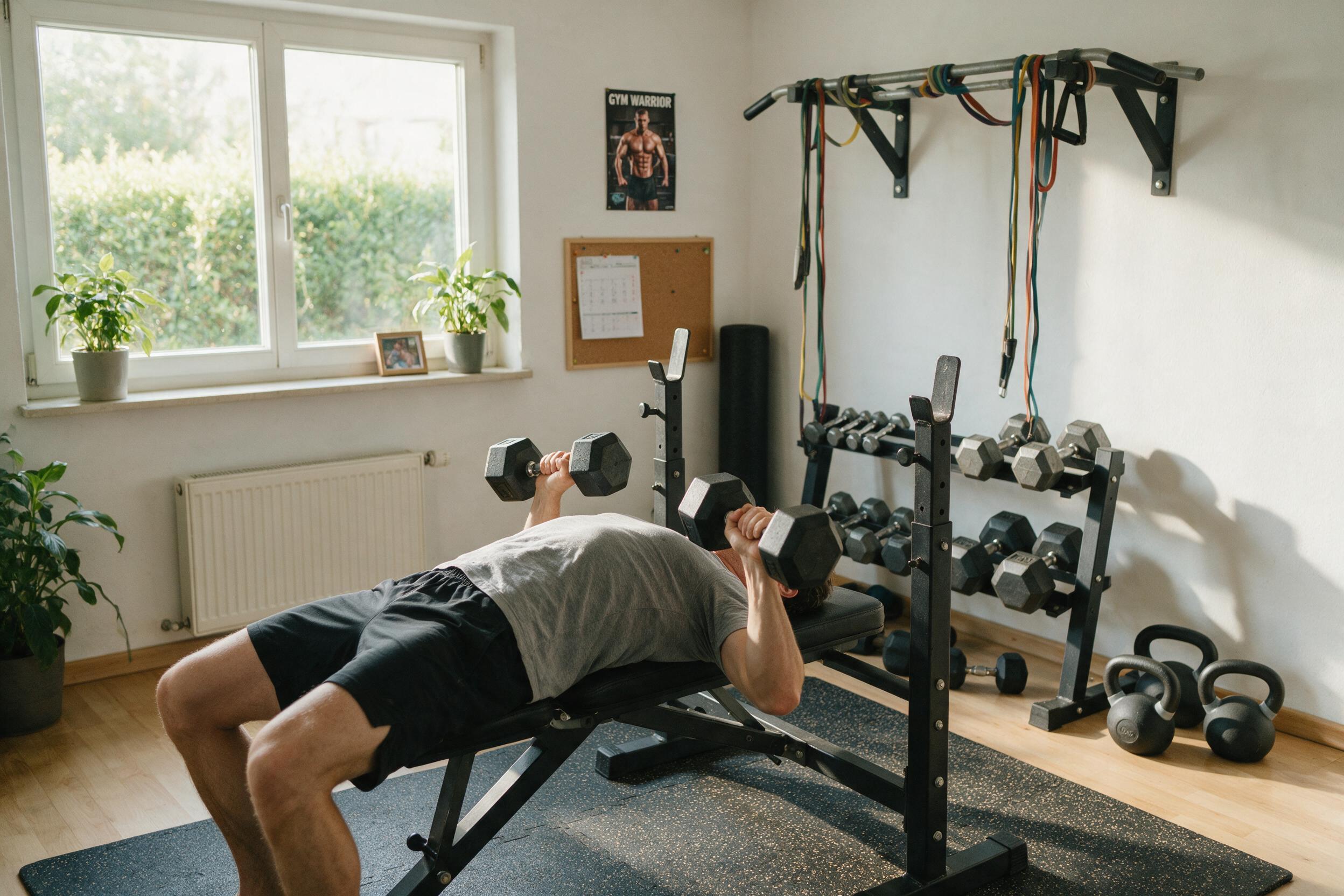
When I first set up my home gym with just a weight bench and a set of dumbbells, I wondered if I’d ever build a chest that turned heads. After months of consistent training, I can tell you the answer is a resounding yes. The science backs it up: your pectorals don’t care whether you’re in a commercial gym or your garage—they respond to tension, stretch, and progressive overload. Harvard Health notes that sleep is critical for muscle repair and growth; skimping on sleep limits gains.
Progressive overload is the non-negotiable driver of muscle growth. With dumbbells, you can increase weight in small increments—often as little as 2.5 pounds per dumbbell. That’s a huge advantage over barbells, where jumps are typically 5 or 10 pounds. I’ve found that adding just 2.5 pounds per side on my dumbbell bench press each week keeps my chest guessing and growing.
Dumbbells also let you take each rep through a fuller range of motion. At the bottom of a dumbbell press, you can lower the weights past your chest, stretching the pectorals under load. This stretch-mediated hypertrophy is a powerful stimulus. A barbell stops at your sternum, but dumbbells can go deeper. I’ve noticed significantly less shoulder discomfort and more chest activation since switching to dumbbells.
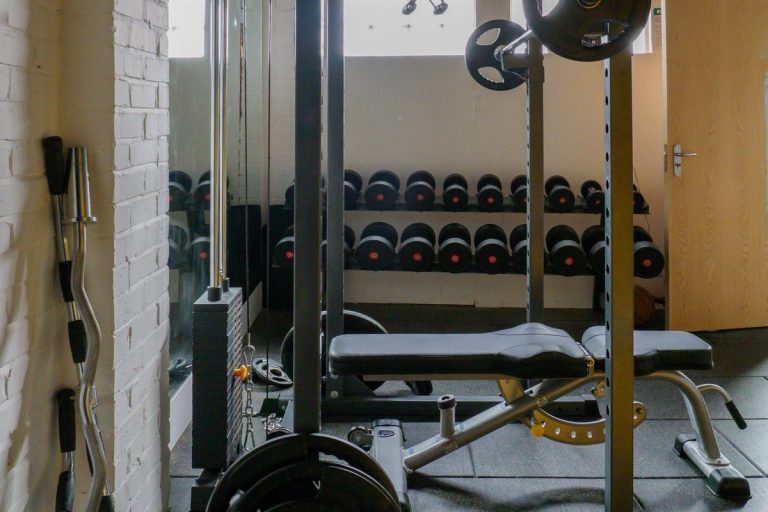
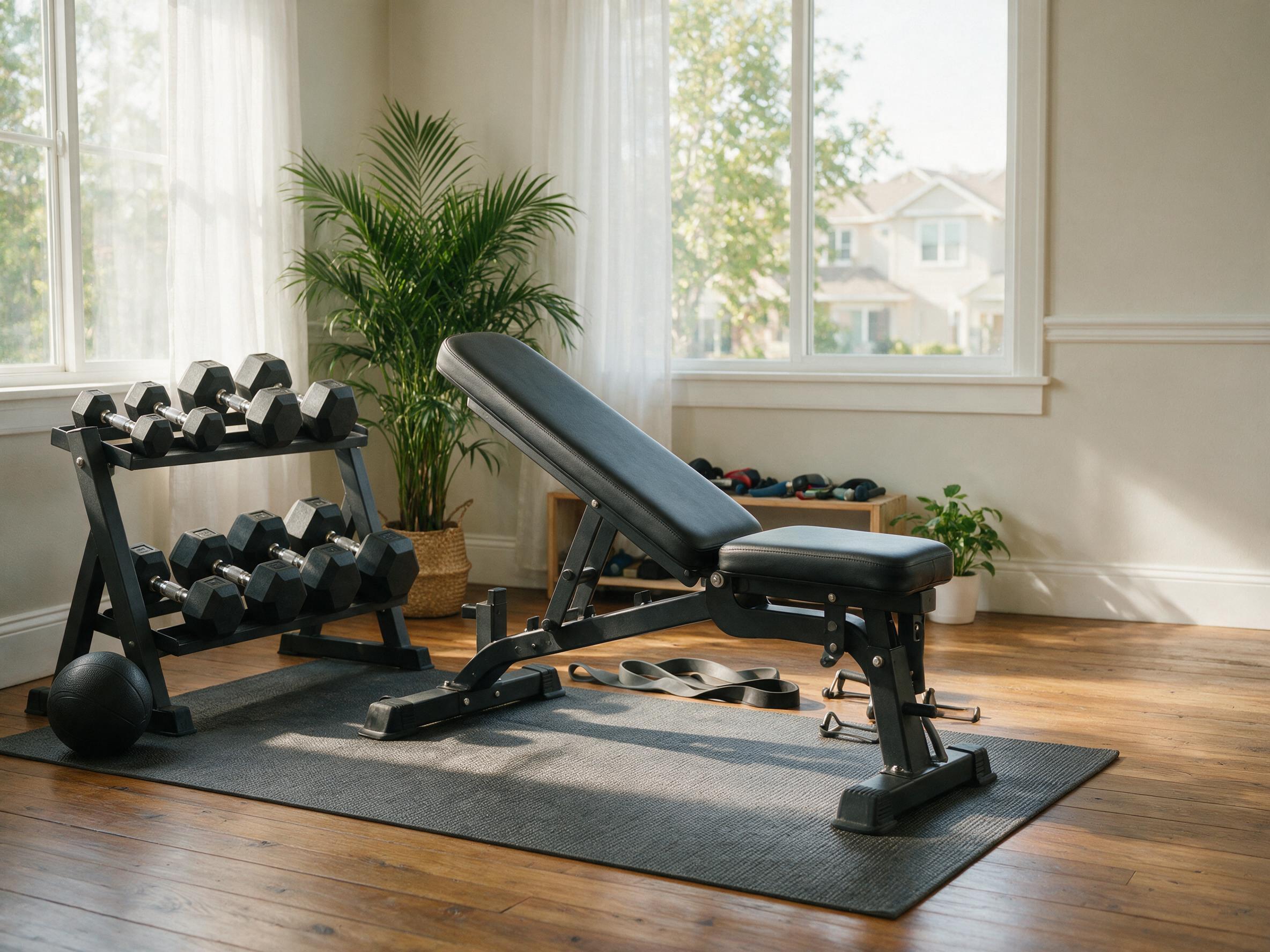
An adjustable bench is your best friend for targeting all three regions of the chest. Set it to 30–45 degrees for the upper chest, flat for the middle chest, and a slight decline (or flat with elbows flared) for the lower chest. The JOROTO MD55 Adjustable Weight Bench offers a wide range of angles and a sturdy frame that doesn’t wobble under heavy loads—I’ve pressed 80-pound dumbbells on it without any stability issues. If you’re on a tighter budget, the FLYBIRD Adjustable Weight Bench is a proven workhorse that thousands of home gym owners trust for incline and flat pressing.
Another overlooked benefit of dumbbells: they correct strength imbalances. If your left side is weaker than your right (and it probably is), dumbbells force each side to work independently. Over time, this leads to more balanced chest development and reduces the risk of injury. I’ve seen guys in the gym with one pec noticeably larger than the other—that’s almost always from barbell-only training.
So yes, a weight bench and dumbbells are highly effective for chest growth. Your main focus should be training with intention: progressive overload, full range of motion, and angle variation. Pick a bench that feels solid and adjusts easily, like the PASYOU Adjustable Weight Bench with its 4.5-star rating and affordable price, and you’re set for serious gains.
One question I get a lot: what happens when you can’t buy heavier dumbbells? It’s a real limitation in a home gym. When you max out your dumbbell set, you can still drive growth by manipulating other variables. Slow down the eccentric—take three to four seconds to lower the weight. Add an extra set or two. Decrease rest times between sets. Or incorporate pause reps at the bottom of the press. These strategies keep tension on the muscle and stimulate new growth without adding a single pound.
Essential Dumbbell Chest Exercises You Need in Your Routine
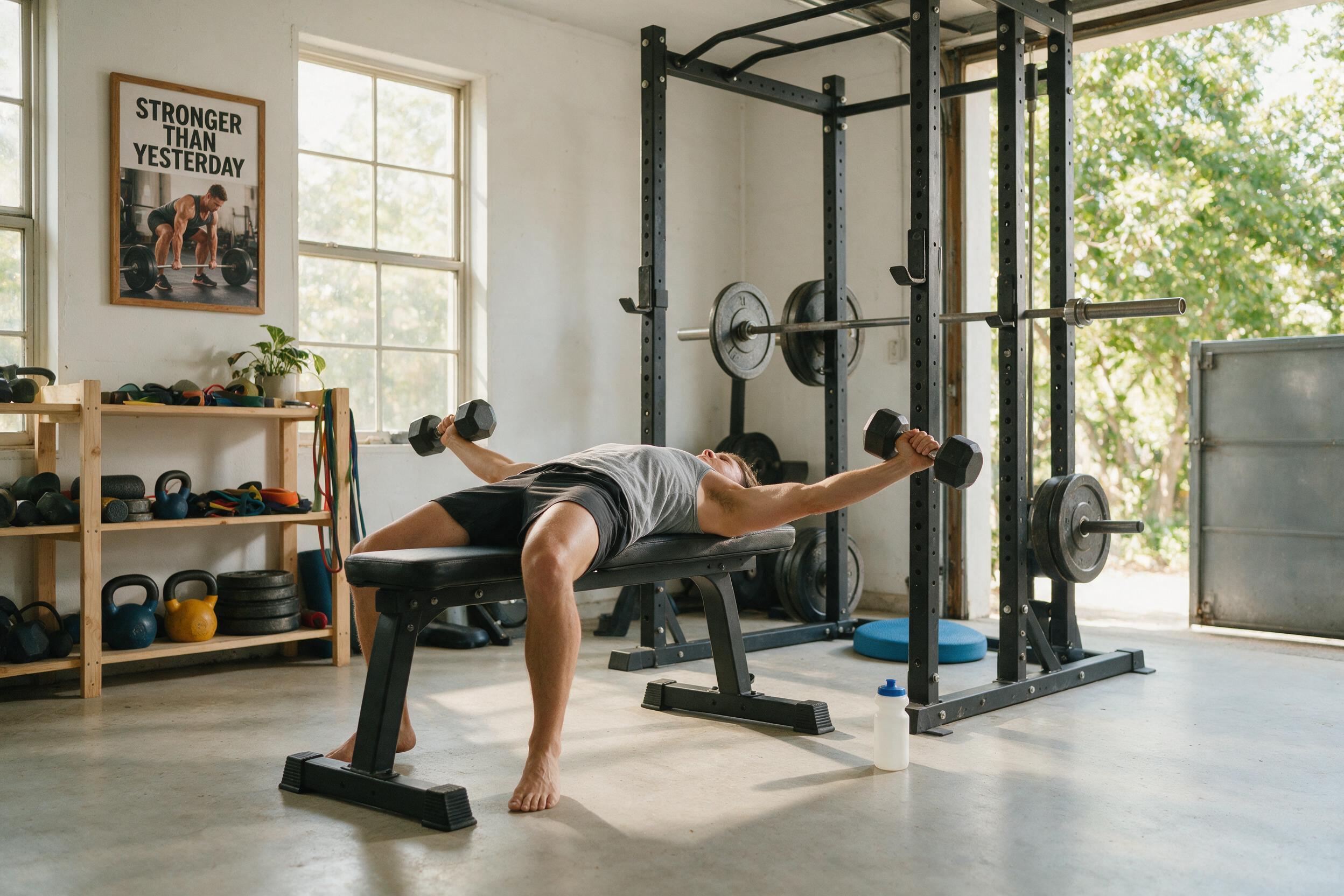
Building a big chest at home comes down to picking the right moves and executing them with intent. With just a weight bench and a set of dumbbells, you can hit every part of the pectorals—upper, middle, and lower—plus the adduction and stretch that drive growth. Here are the exercises I’ve found most effective, along with technique cues that make the difference between just moving weight and actually building muscle.
Before we dive into the moves, a quick word on order. I always start with compound lifts—the presses—when my energy and neural drive are highest. That means flat or incline dumbbell press first, then flyes and pullovers later for isolation and stretch. This sequence maximizes force production on the heavy lifts and lets you accumulate volume without pre-fatiguing the pecs. Try it: lead with a press variation, then follow with flyes or pullovers for 2-3 sets each.
Flat Dumbbell Press: The Foundation for Mass
The flat dumbbell press is your bread-and-butter chest builder. Unlike a barbell, dumbbells let each arm work independently, forcing your stabilizers to fire and correcting strength imbalances. I’ve seen lifters add serious size by focusing on a controlled eccentric—lowering the dumbbells for a full 3-4 seconds—and getting a deep stretch at the bottom. Your elbows should sit just below the bench at the lowest point, with the dumbbells brushing your chest. Drive the weights back up in a slight arc, squeezing your pecs at the top. For a reliable bench that stays solid during heavy pressing, the JOROTO MD55 Adjustable Weight Bench offers a wide, stable base and non-slip foam grips that keep you planted.
Incline Dumbbell Press: Build That Upper Chest
If your chest looks flat from the top, you’re likely neglecting the upper pec. Set your bench to a 30-45 degree angle—anything steeper shifts work to your front delts. I keep the incline around 30 degrees for the best upper chest activation. Lower the dumbbells to your upper chest, letting your elbows flare slightly, then press up and slightly inward. Many home gym guys skip this because it feels harder than flat pressing, but that’s exactly why you need it. A budget-friendly option like the PASYOU Adjustable Weight Bench adjusts easily to multiple incline angles, making it simple to dial in your setup.
Dumbbell Flyes: Stretch and Adduction
Flyes add a stretch and adduction component that presses don’t fully cover. Use a lighter weight than your press—I drop to about 60% of my press weight. Keep a slight bend in your elbows (think hugging a barrel) and lower the dumbbells out to your sides until you feel a stretch across your chest. Don’t go deeper than shoulder height to protect your rotator cuffs. Squeeze your pecs together at the top. I like doing these on both flat and incline benches to hit different fibers. The FLYBIRD Adjustable Weight Bench is a popular choice here—its compact frame and multiple back positions make it easy to switch between flat and incline flyes without a lot of fuss.
Pullovers: The Finisher for Rib Cage Expansion
Pullovers are an underrated chest builder that also hit your lats and serratus. Lie perpendicular across the bench with only your upper back supported, hips dropped toward the floor. Hold one dumbbell with both hands over your chest, then lower it back behind your head until you feel a deep stretch in your chest and rib cage. Pull it back to start using your pecs and lats. I use these as a finisher for 2-3 sets of 10-12 reps with a moderate weight. The stretch feels incredible and helps open up your chest. For this move, a sturdy bench like the Keppi Adjustable Weight Bench provides the stability you need when you’re lying across it—its wide back pad and rubber feet keep it from sliding.
Rotate these exercises across your weekly sessions. For example, start with flat presses on your heavy day, lead with inclines on your second chest day, and finish with flyes and pullovers for volume. Track your weights and reps—progressive overload is still the law, even at home. And if you’re shopping for a bench that can handle all these angles, check the latest prices on Amazon for options like the CAP Barbell Adjustable Weight Bench or the Bowflex 5.1S Stowable Weight Bench if you need something that folds away. Drop a comment below with your go-to dumbbell chest move—I’m curious what’s working for you.
How to Structure Your Home Chest Workout for Maximum Growth
Building a big chest at home isn’t about having a gym full of machines. It’s about how you organize your training. With just a weight bench and dumbbells, you can trigger serious muscle growth—if you follow the right structure. Here’s the blueprint I’ve used myself and with clients.
Train chest twice per week. That’s the sweet spot for most lifters. You need at least 48 hours between sessions for recovery and protein synthesis to do its thing. For example, hit chest on Monday and Thursday, or Tuesday and Friday. Don’t cram it all into one day—more frequency beats more volume when you’re after size.
Each session should include 3–4 exercises, 3–4 sets of 8–12 reps. That rep range is proven for hypertrophy. Take your last set to or near failure—that’s where the real growth happens. Track your weights and reps in a notebook or app. Aim to add 2.5–5 lbs or one extra rep per exercise each week. This is called double progression, and it’s how you keep making gains without a spotter.
Here’s a sample weekly plan that works great with a JOROTO MD55 Adjustable Weight Bench or any sturdy adjustable bench. Make sure the bench can handle incline and decline positions without wobbling.
Workout A (Monday):
- Flat dumbbell press: 4 sets of 8–10 reps
- Incline dumbbell flyes: 3 sets of 10–12 reps
- Push-ups (as a burnout): 2 sets to failure
Workout B (Thursday):
- Incline dumbbell press: 4 sets of 8–10 reps
- Flat dumbbell flyes: 3 sets of 10–12 reps
- Dumbbell pullovers: 3 sets of 10–12 reps
Notice how I alternate between presses and flyes. Presses build overall mass; flyes target the outer chest and stretch the muscle fibers. Pullovers are an underrated move that hits the upper chest and lats. If you’re using a budget-friendly bench like the PASYOU Adjustable Weight Bench or the FLYBIRD Adjustable Weight Bench, just make sure the back pad is long enough to support your head during flyes.
Progression tip: If you can’t add weight (because your dumbbells max out), add reps. Once you hit 12 clean reps on your last set, increase the weight next session. This keeps the tension high. I’ve seen guys add an inch to their chest in 12 weeks just by sticking to this system.
One more thing: don’t skip the warm-up. Do 2–3 light sets of 15 reps with lighter dumbbells—maybe 40–50% of your working weight. This preps the joints and primes the nervous system. Your bench—whether it’s the Bowflex 5.1S Stowable Weight Bench or the Keppi Adjustable Weight Bench—should feel solid under you. If it wobbles, you’re losing tension and risking injury.
Stick with this plan for 8–12 weeks. Track everything. And if you’re using a bench like the CAP Barbell Adjustable Weight Bench, you’ve got a solid foundation. Check current prices on Amazon and share your experience in the comments—I’d love to hear what’s working for you.
Choosing the Right Weight Bench for Your Home Gym
Your bench is the foundation of your home chest workouts. A wobbly bench is a safety hazard and will kill your gains. I’ve had to bail on a heavy press set because a cheap bench started tipping—not an experience I recommend. Here’s what to look for and how the top options stack up.
Stability and weight capacity come first. The JOROTO MD55 Adjustable Weight Bench handles up to 300 lb, enough for most intermediate lifters. If you’re pushing heavier, the Bowflex 5.1S Stowable Weight Bench supports 600 lb and folds away when not in use. For taller athletes, based on user reviews and specs, the PASYOU Adjustable Weight Bench and CAP Barbell Adjustable Weight Bench offer wider pads and higher weight limits—both rated at 600 lb.
Adjustability is non-negotiable for chest development. You need at least three back positions: flat (0°), incline (30–45°), and decline (negative angle). This lets you target the upper, middle, and lower pectorals. The FLYBIRD Adjustable Weight Bench ($109.99) and Keppi Adjustable Weight Bench ($119.99) both offer six positions, including decline, without breaking the bank.
Budget picks that don’t skimp on quality. The FLYBIRD and Keppi benches are surprisingly sturdy for the price. I’ve used the FLYBIRD in a garage gym for two years—no wobble, no rust. The Keppi has a slightly wider pad (30 inches) and a removable leg hold-down for decline presses. Both are excellent entry points.
For serious lifters, invest in the Bowflex 5.1S. It’s the priciest at $449, but the 600 lb capacity, stowable design, and smooth ladder adjustment make it a long-term buy. If you’re over 6 feet tall or plan to press heavy dumbbells, the PASYOU and CAP Barbell benches give you a wider, longer platform for better stability. Pad width matters for comfort—especially if you have broad shoulders. A narrow pad can dig into your shoulder blades during pressing. The PASYOU and CAP Barbell benches have wider pads (around 12–13 inches) that provide better support for larger lifters.
Check current prices on Amazon for these benches—they fluctuate often. Share your experience in the comments: which bench did you choose and how has it held up?
Medical & Editorial Review: This article was reviewed by Liam Smith, founder of Apexfito, for accuracy and safety. Content is for educational purposes and is not a substitute for professional medical advice. Consult your physician before starting any exercise or nutrition program.