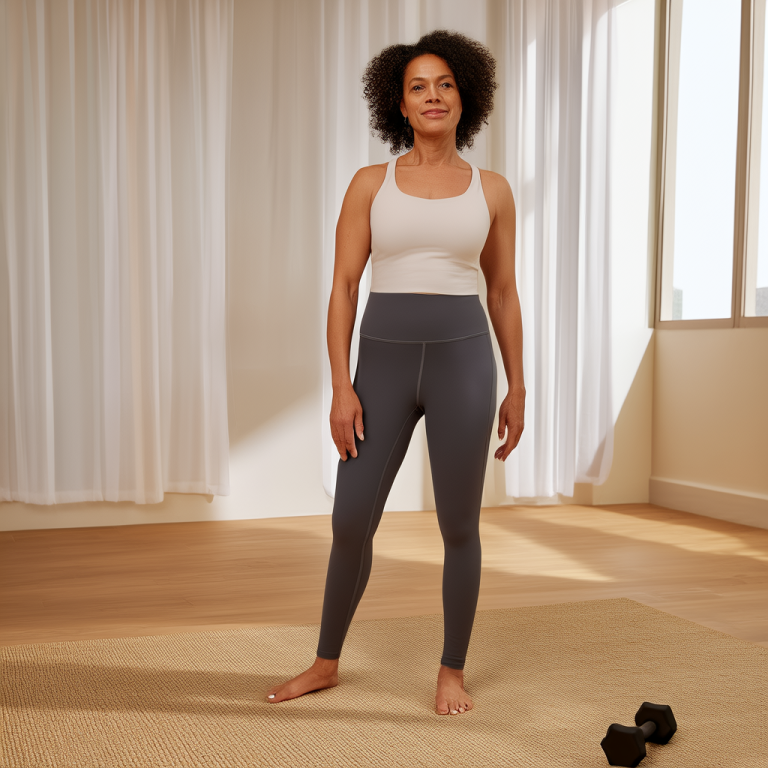
Home Workout Routine for Busy Dads: 15 Minutes, No Equipment, No Excuses
Full disclosure: Some links in this article are affiliate links. We may earn a small commission at no extra cost to you if you make a purchase through them. Our recommendations are based on what real users report, not on commission size.

Why 15 Minutes Works for Busy Dads
Most dads I know don’t struggle with motivation. They struggle with the clock. You wake up early, get the kids fed, go to work, come home, help with homework, do bath time, and next thing you know it’s 10 p.m. and the day is gone. Driving to a gym, changing, working out for an hour, showering, and driving back—that doesn’t fit most days. That’s not a lack of discipline. That’s a scheduling problem.
Fifteen focused minutes beat sixty distracted minutes almost every time. When you know you only have a quarter of an hour, you don’t check your phone between sets. You don’t wander around looking for equipment. You don’t spend ten minutes chatting by the water fountain. You get to work. That kind of intensity is what actually builds strength and improves conditioning.
I ran this experiment myself when my second kid was born. I had no time, no energy, and no desire to pack a gym bag. So I set a timer for 15 minutes each morning and did a simple circuit in my living room: bodyweight squats, push-ups, lunges, and a plank. Nothing fancy. After two weeks, I had more energy, my posture felt better, and I stopped feeling guilty about skipping the gym. That was my experience—not a promise that everyone will see the same results in two weeks—but it showed me the daily 15-minute approach is worth sticking with.
You can slot this in before the kids wake up. You can do it during nap time. Or you can do it right after you get home from work, while the kids are having a snack. It doesn’t have to be the same time every day. It just has to happen.
Consistency drives progress. A daily 15-minute routine builds the habit and your base fitness level faster than an occasional 90-minute session. The point is to make exercise feel normal, not like a major event you have to gear up for.
Here’s the weekly structure for this plan:
- Monday: Full-body strength circuit
- Tuesday: Active recovery (mobility flow or a walk)
- Wednesday: Full-body strength circuit
- Thursday: Active recovery (mobility flow or a walk)
- Friday: Full-body strength circuit
- Saturday: Family activity or outdoor play
- Sunday: Rest or light stretching
No fancy equipment needed. Start with exercises you know, keep rest short, and add a rep or shorten your breaks as it starts to feel easy. That’s the whole progression for the first few months. No apps, no gym membership, no complicated tracking. Just a timer and a little bit of space.

The 15-Minute Home Workout Split: How to Set Up Your Week
Getting consistent is a lot easier when you know exactly what Monday is going to look like. That’s why I set up a split before I started training at home. After my second kid, I planned workouts the same way I planned meals: if I didn’t have a simple rotation, I’d end up staring at a mat and hoping motivation would show up. Motivation rarely does.
Here’s the weekly rotation I use with my own calendar. It’s built so you never string together more than two hard days in a row.
- Monday: Strength work
- Tuesday: Cardio and core
- Wednesday: Active recovery
- Thursday: Strength work
- Friday: Cardio and core
- Saturday: Full-body finisher
- Sunday: Off or a family walk
Notice what happens around the two recovery anchors. Monday and Tuesday are your harder days. Wednesday is active recovery—a brisk walk, light stretching, or an easy yoga flow. Thursday and Friday you push again. Saturday is a short full-body finisher, and Sunday you rest or walk. That means you never ask your body for max effort three days in a row. You also have built-in breaks when your sleep gets wrecked and your energy dips.
Each strength day uses the same four movement patterns: push, squat, hinge, and carry. I also add a row when I can, usually a bodyweight row under a sturdy kitchen table, because dads need pulling strength for carrying kids and hauling groceries. Lie underneath, grab the edge, keep your body straight, and pull your chest to the table. If the table wobbles or you don’t trust it, skip the row and stick with the four main patterns.
Here’s the 15-minute strength template. Pick one exercise from each pattern. Do 40 seconds of work, then take 20 to 30 seconds to get into position for the next move. After you finish all four, rest 30 to 45 seconds. Repeat until the timer stops. Most days that means three full circuits; if you’re just getting back into it, two clean circuits are still a win. On Thursday, swap regular push-ups for incline push-ups on the counter, bodyweight squats for split squats, glute bridges for a deadlift with a loaded duffel bag, and farmer carries for a suitcase carry on one side. Small changes keep your joints happy and your brain interested.
Cardio and core days fly by. Pick anything that makes you breathe hard: jumping jacks, high knees, or a fast dance party with the kids. Do 30 seconds hard, then 30 seconds easy for 12 minutes. Finish with three rounds of 30 seconds of a plank or bird dog, with 15 seconds off between rounds.
Saturday is a full-body finisher, but treat it as a reward, not a punishment. Pick three moves like bodyweight squats, push-ups, and a plank. Do each for 20 seconds, rest 20 seconds, and repeat for three rounds. Keep it light enough that Sunday actually feels like a rest day.
If you miss a day, don’t double up. I’ve tried that too many times, and it just turns one missed workout into two sloppy ones. Pick up where you left off. Missing one session won’t ruin your progress. Quitting because you feel behind will.
Try this split for one week and pay attention to how the rhythm feels. If you know Monday morning exactly what the week looks like, you don’t have to negotiate with yourself. And when you’ve done it, drop a comment below and tell me how it went.
The Workout: 15 Minutes of Bodyweight Strength
You don’t need a garage gym or an hour of quiet time. I’ve run this exact circuit in a living room with a toddler climbing on me, and it still got the job done. The full session runs 15 minutes: 3 to warm up, 12 to work.
Warm-Up (3 Minutes)
Move through these four exercises back-to-back for 45 seconds each. No rest in between. Keep the pace easy — you want blood moving, not a full sweat yet.
- Jumping jacks — 45 seconds
- Arm circles — 45 seconds (forward for the first half, reverse for the second)
- Bodyweight squats — 45 seconds
- High-knee march — 45 seconds
The 12-Minute Circuit
Reset your timer for 12 minutes. Complete the six moves below in order, then start back at the top. Same reps every round. Rest 15 seconds between moves and 60 seconds after a full round. The timer never pauses — that’s what makes this 12 minutes honest.
- Push-ups — 10 reps
- Bodyweight squats — 12 reps
- Reverse lunges — 8 reps per leg
- Plank hold — 15 seconds
- Glute bridges — 10 reps
- Mountain climbers — 10 reps per leg
Most beginners land at 2 to 3 full rounds in 12 minutes. Two rounds might not sound impressive, but it’s a real session. Write down how many rounds you hit and how each movement felt. That number is your baseline.
Scale It to Your Level
Form beats speed every single time. Push-ups too hard? Put your hands on a sturdy counter or table. Squats feel awkward? Slide a chair behind you and sit back into it. Plank gets shaky? Drop to your knees. For reverse lunges, hold the back of a chair if you need help balancing. These changes aren’t cheat codes — they’re how you build up without wrecking your joints.
The Progression Rule
Stick with this same circuit for four weeks, training three days a week with at least one rest day between sessions. Start with 2 full rounds. Add 1 round each week until you’re hitting 4. Only then start adding reps — bump push-ups to 12, squats to 15, lunges to 10 per side, and stretch the plank to 20 seconds.
How to Balance Strength With Cardio in 15 Minutes
You don’t need a separate cardio block. You just need to make the minutes you already have work twice as hard.
When I started training at home, I treated strength and cardio like two different errands. Lift on Monday. Run on Tuesday. But with a toddler demanding breakfast and a deadline at work, I didn’t have time for two errands. So I stopped separating them. I folded cardio into my strength days and added two short cardio-only sessions that never touched family time. Here’s how to make it work for you.
The three rules that keep it simple:
- Turn rest periods into movement. Instead of standing still between push-ups and squats, march in place, do fast feet, or take quick side steps. You don’t need to go crazy. Keep your legs moving. Your arms get a break, but your heart keeps working. By the end of the 15-minute circuit, your breathing will be up and you’ll be ready for the next set.
- Add two cardio-only days per week. Keep it simple: 12 rounds of 30 seconds on, 30 seconds off. Rotate through jumping jacks, mountain climbers, and bodyweight squats. That’s six minutes of work total. It sounds short, and it’s supposed to be. You’re not training for a marathon. You’re giving your heart a reason to work a little harder, then getting on with whatever the day throws at you.
- Keep the intensity conversational. This is the dial most beginners get wrong. You want to be breathing hard enough that you wouldn’t try to recite a poem, but not so out of breath that you can’t say ”I’m fine” to a kid who walks in. If you can sing a full chorus, speed up. If you’re seeing spots, slow down.
On your strength days, the rest-period bursts are your cardio. Use the push, squat, carry pattern from the strength circuit in the earlier section. Between rounds, do 20 seconds of fast feet or side steps. That way you’re working your heart, legs, and arms in the same 15-minute block. No extra time needed.
Recovery isn’t a problem if you keep the intensity conversational. The weekly schedule in the earlier section already alternates strength days and cardio-only days, so you’re never hammering the same muscles two days in a row. If a strength day feels heavy, swap the fast feet for a slow march. If a cardio-only day feels too easy, pick up the pace for the last few rounds. You’re in control.
One thing I learned the hard way: don’t do these intervals right after a big meal. Give yourself at least an hour, or keep the pace conversational and you’ll be fine. The goal is consistency, not punishment.
Try this for a week and come back to tell us how it felt. Did the fast feet during rest periods keep you honest? Did the two cardio-only days fit into your schedule? Let us know in the comments.
Recovery, Nutrition, and Staying Consistent for the Long Haul
You can do every rep perfectly and still feel stuck if you ignore recovery. I found this out after my youngest started sleeping through the night. I was gung-ho for a few weeks, then my body felt flat and I wanted to quit. The fix wasn’t more discipline. It was three small habits that made recovery automatic.
Recovery in Three Steps
- Water before your workout. Drink a glass about 15 minutes before you start. Your muscles work better when you begin hydrated, and a 15-minute session goes by fast enough that you won’t need to stop for a sip. If you’re used to coffee first, finish your coffee, then have a glass of water.
- Protein after your workout. Aim for 20 to 30 grams. That could be three eggs and a cup of Greek yogurt, or a protein shake. You don’t need to hit an exact number; just land in that range and you’re giving your body the material to repair muscle.
- Get to bed at a reasonable hour. You may not control when your kids wake up, but you control when you close the phone and turn out the light. Recovery is where the strength actually builds. If you cut sleep, you cut results.
When three sessions in a week feel almost easy, add two reps to the last set of every move. That gradual load keeps your body adapting without turning your schedule into a second job.
Use a Habit Anchor
Motivation fades around day four. That’s normal. Instead of relying on it, pair your workout with something you already do every day. Coffee brewing, your kid’s bath time, or the start of the nightly news all work. I tied my session to the coffee maker, and I stopped needing to remind myself. The coffee pot became my coach.
Track With Paper or Your Phone
Put a paper calendar on the fridge or open a note app. Every time you finish a 15-minute workout, mark it. That’s it. The dots or checks compound. On days you don’t feel like moving, your own history is the strongest push you’ve got.
The Long Haul
Consistency isn’t about being perfect. Some weeks you’ll hit three sessions. Some weeks you’ll only get two. That’s still a win. What matters is that you don’t have two zero weeks in a row. If you miss Monday, work out Tuesday. If you miss the whole week, start again on Sunday night with the easiest session in this plan.
A realistic week looks like three sessions: Monday, Wednesday, and Friday. If that doesn’t fit, do Sunday, Tuesday, and Thursday. The only schedule that fails is the one you don’t write down.
You don’t need extra gear for any of this. If you decide later that you want a little more resistance than bodyweight, a pair of dumbbells or a resistance band is enough. Check current prices on Amazon if you’re curious, but don’t buy anything until you’ve built the habit for two weeks. Then come back and share your experience in the comments. I want to hear which workout you started with and how your first week went.
Medical & Editorial Review: This article was reviewed by Liam Smith, founder of Apexfito, for accuracy and safety. Content is for educational purposes and is not a substitute for professional medical advice. Consult your physician before starting any exercise or nutrition program.