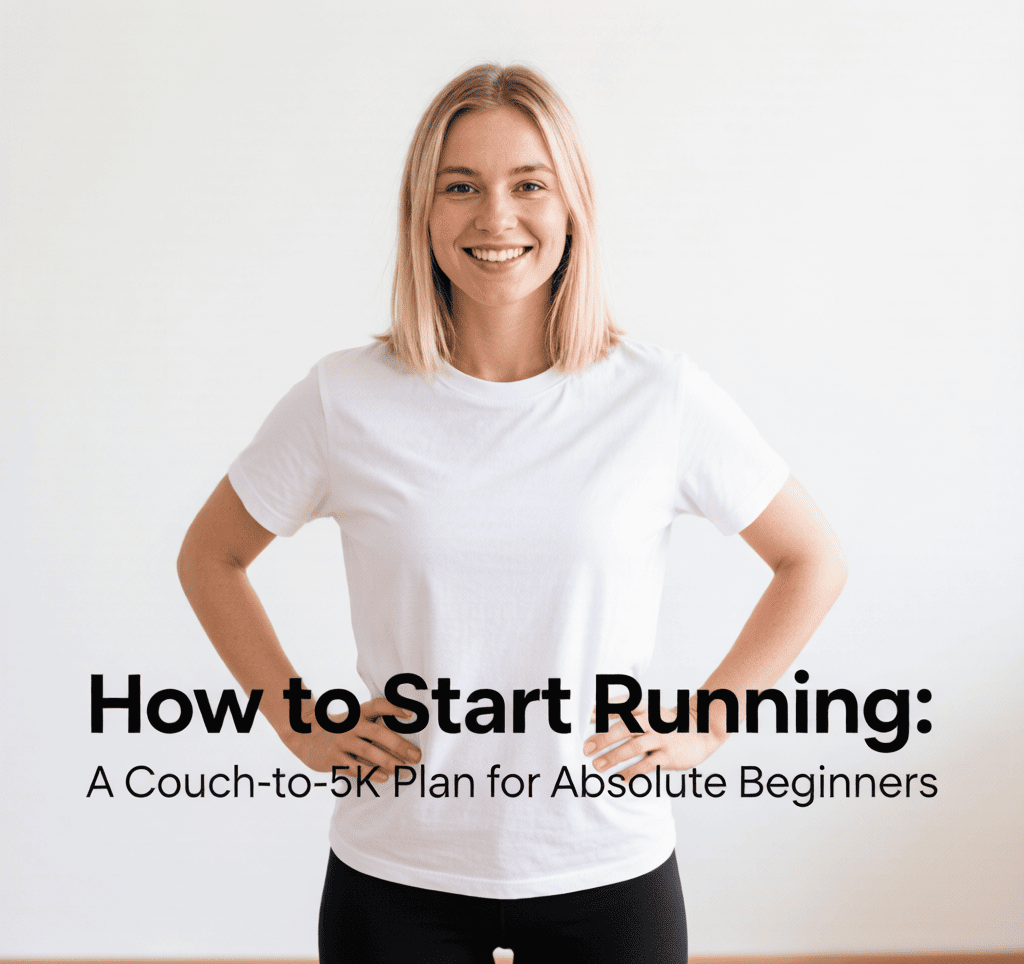
How to Start Running: A Couch-to-5K Plan for Absolute…
By Liam Smith — Fitness enthusiast and founder of Apexfito. I test gear at home and share what actually works.
Why This Couch-to-5K Plan Works for Non-Runners
I remember the first time I tried to run a full mile without stopping. I made it about 400 meters before my lungs were on fire and my shins ached. That’s exactly why the Couch-to-5K plan exists — it’s built for people like you and me who can’t just go out and run three miles on day one.
The secret is timed intervals. In week one, you run for 60 seconds, then walk for 90 seconds, and repeat that cycle eight times. Total running time: just 8 minutes. Total session time: about 20 minutes. Anyone can handle that.
This approach does two critical things. First, it protects your body. Your muscles get stronger quickly, but your bones, joints, and connective tissues need more time to adapt. The walk breaks give those slower parts a chance to catch up. I’ve seen beginners skip this and end up with shin splints or knee pain within two weeks. The interval method sidesteps that almost entirely.
Second, it builds real confidence. Every time you finish a run interval, you prove to yourself that you can do it. That feeling compounds. By week four, you’ll be running for three minutes straight and thinking, “I actually did that.”
Most beginners finish a 5K in about 30 to 40 minutes after 8 or 9 weeks of consistent training. You don’t need speed. The only goal is to keep moving for the full interval period — not to set a personal record. If you can walk briskly, you already have the baseline fitness to start this plan.
So what does a typical week actually look like? Three sessions per week, with rest days in between — those rest days are non-negotiable. Each session starts with a 5-minute brisk walk to warm up, then the run/walk intervals, then a 5-minute cool-down walk. Progression happens gradually. You might add 30 seconds to the run interval each week, or reduce the walk break by 15 seconds.
You don’t need a treadmill or a track. Any flat, safe surface works — a sidewalk, a park path, even a quiet street. The only gear required is a pair of comfortable running shoes. (If you need a new pair, check current prices on Amazon — it’s worth investing in something that fits well.)
If you’re reading this and thinking, “I’m not a runner,” you’re exactly the person this plan is for. You don’t have to be fast. You don’t have to be fit. You just have to show up three times a week and follow the intervals. Share your experience in the comments — I’d love to hear how week one goes for you.

What You Need Before You Start
You don’t need much to start running. But a few smart choices up front can save you from blisters, sore joints, and quitting early. Here’s what you need.
Running Shoes
Your most important piece of gear. Skip the fashion sneakers and go to a dedicated running store. Ask the staff to watch you walk or jog — they’ll check your gait and recommend a shoe that matches your foot shape and stride. I’ve done this at both small local shops and big stores like Fleet Feet, and the difference is real. Expect to spend $100–$150, but those shoes will last 300–500 miles.
Clothing That Works
Cotton holds sweat and turns into a wet rag against your skin. On longer runs, that leads to chafing in places you don’t want to think about. Wear moisture-wicking socks and clothes — polyester or nylon blends. A cheap technical tee from Target or a pair of running shorts with a built-in liner will do just fine.
An Interval Timer App
You’ll be doing walk-run intervals, so you need something to tell you when to switch. Download a free interval timer app like Seconds or Interval Timer. Set it for your run and walk segments, and you’re good. No staring at your watch, no guessing. I use Seconds because it lets me customize the intervals and even add a voice cue.
Hydration Before You Go
Drink a glass of water 20–30 minutes before you head out. That’s enough to keep you hydrated without sloshing. Don’t carry a water bottle unless it’s very hot or you’re going over 30 minutes. For a 20-minute run, pre-hydration is plenty.
That’s it. No special gear, no gym membership, no expensive gadgets. Lace up, download the app, and you’re ready for Week 1.

The 9-Week Couch-to-5K Schedule: Walk-Run Intervals

This plan builds you up slowly. You won’t run until you’re exhausted. Instead, you’ll follow walk-run intervals that increase running time gradually. Each week adds a little more running and a little less walking. By week 9, you’ll be running 30 minutes non-stop.
Here’s the full breakdown. Stick with it, and don’t skip ahead.
Week 1: Getting Started
Frequency: 3 sessions (e.g., Monday, Wednesday, Friday)
Intervals: Run 60 seconds, walk 90 seconds. Harvard Health notes that keep your back straight and lower your hips until your thighs are parallel to the floor. AAOS OrthoInfo notes that proper lifting technique is essential to prevent injury and maximize strength gains. Repeat 8 times.
Total time: 20 minutes
Your first week is about building the habit. Don’t worry about pace. Run at a conversational effort—if you can’t speak in short sentences, slow down. I remember my first day: I was winded after 30 seconds. That’s normal. Just keep moving.
Week 2: Slight Increase
Frequency: 3 sessions
Intervals: Run 90 seconds, walk 2 minutes. Repeat 7 times.
Total time: 24 minutes
You’ll notice the running intervals are longer, but the walk breaks are still generous. Focus on your breathing. Inhale for two steps, exhale for two steps. It helps.
Week 3: Building Endurance
Frequency: 3 sessions
Intervals: Run 90 seconds, walk 2 minutes. Repeat 7 times.
Total time: 24 minutes
Same as week 2? Yes. This week is a consolidation week. Your body adapts to the stress. Don’t be tempted to run faster or longer. Trust the process.
Week 4: Stepping Up
Frequency: 3 sessions
Intervals: Run 3 minutes, walk 2 minutes. Repeat 5 times.
Total time: 25 minutes
Three minutes of running feels like a milestone. You’ll feel your heart rate climb. That’s okay. Keep your arms relaxed and your shoulders down. I used to clench my fists—don’t do that. Shake them out during walk breaks.
Week 5: The Jump
Frequency: 3 sessions
Intervals: Run 4 minutes, walk 3 minutes. Repeat 4 times.
Total time: 28 minutes
This is where many people feel doubt. Four minutes is a long time when you’re new. But you’ve been building for a month. You’re ready. If you need to slow down to a shuffle, that’s fine. Forward is forward.
Week 6: Pushing Further
Frequency: 3 sessions
Intervals: Run 6 minutes, walk 2 minutes. Repeat 4 times.
Total time: 32 minutes
The running blocks are getting longer. Your walk breaks are shorter. You might feel your calves or shins. That’s common. Stretch your calves after each session. If you feel sharp pain, take an extra rest day.
Week 7: Almost There
Frequency: 3 sessions
Intervals: Run 10 minutes, walk 3 minutes. Repeat 2 times.
Total time: 26 minutes
Double-digit running minutes. You’re covering real distance now. On your walk breaks, don’t stop completely—keep walking at a brisk pace. It keeps your heart rate up and makes the transition back to running easier.
Week 8: Consolidation
Frequency: 3 sessions
Intervals: Run 12 minutes, walk 2 minutes. Repeat 2 times.
Total time: 28 minutes
This week is a bridge to the final goal. You’re running 24 minutes total with just one short walk break. You’re strong enough. Trust the work you’ve put in.
Week 9: The Big One
Frequency: 3 sessions
Intervals: Run 30 minutes straight (or 3.1 miles).
Total time: 30 minutes
You did it. Run 30 minutes without stopping. Don’t worry about speed—just cover the time. If you need to slow to a jog, that’s fine. The distance will come later. Celebrate this win.
Tips for Success
- Warm up: Walk briskly for 5 minutes before each session. Do dynamic stretches like leg swings and butt kicks.
- Cool down: Walk for 5 minutes after. Stretch your quads, hamstrings, and calves.
- Listen to your body: If you feel pain (not just soreness), take an extra rest day. It’s better to skip one session than to be sidelined for a week.
- Stay hydrated: Drink water throughout the day, not just during your run.
- Track your progress: Use a free app like Couch to 5K or just a stopwatch. Seeing your improvement is motivating.
This plan works if you work it. I’ve seen friends go from hating running to signing up for 5K races. You can too. Check current prices on Amazon for running shoes and gear, and share your experience in the comments below. Let us know which week felt hardest and how you pushed through.
How to Balance Strength and Cross-Training

Running is a repetitive, high-impact activity. Without some support work, your body will eventually push back. That’s where strength training and cross-training come in. They don’t just make you a better runner — they keep you running.
On your two non-running days each week, do a 20-minute bodyweight circuit. No gym, no fancy equipment. Just you, a mat, and these five moves: squats, lunges, push-ups, planks, and glute bridges. Do each exercise for 40 seconds, rest 20 seconds, repeat the circuit twice. That’s it. You don’t have to do these on the same two days every week — just make sure they fall on days you’re not running. For example, if you run Monday, Wednesday, and Friday, you could do the circuit Tuesday and Saturday, or Thursday and Sunday. Whatever fits your schedule.
Strength work reduces injury risk by strengthening the muscles and tendons that support your running stride. Strong glutes and core keep your pelvis level when you fatigue. Strong quads and calves absorb shock better. Weakness in any of those areas forces your joints to take the load instead. I noticed this firsthand: after adding these circuits, my knees felt more stable and my hips didn’t ache after longer runs.
Cross-training is your other recovery tool. If you feel extra fatigued — maybe you had a rough week or your runs feel harder than usual — swap one run per week for a 30-minute walk, bike ride, or swim. Active recovery counts. It keeps blood flowing to sore muscles without pounding the pavement. I’ve swapped a run for a leisurely bike ride on many Saturday mornings and felt fresher for Sunday’s long run.
One hard rule for the first six weeks: never run two days in a row. Your body needs 48 hours to repair the micro-tears in muscle tissue that happen every time you run. Running back-to-back days before you’ve built that base is the fastest way to shin splints, runner’s knee, or burnout. Run, rest or cross-train, run. That rhythm is your foundation.
Here’s a sample week to make it concrete:
- Monday: Run (walk-run intervals)
- Tuesday: Bodyweight circuit + 10-minute walk
- Wednesday: Run (walk-run intervals)
- Thursday: 30-minute bike ride or swim
- Friday: Run (walk-run intervals)
- Saturday: Bodyweight circuit + 10-minute walk
- Sunday: Rest or gentle stretching
That schedule gives you three runs, two strength sessions, one cross-training day, and one full rest day. It’s sustainable. It’s smart. And it will get you to that 5K finish line without sidelining you with an injury.
Staying Motivated and Tracking Progress

Starting a running plan is exciting. The first week feels fresh, the intervals are short, and you’re riding that new-goal energy. But around Week 3 or 4, the novelty wears off. Your legs might feel heavy. The weather turns. Life gets busy. That’s when motivation falters — and why having a system for tracking and accountability matters more than willpower.
Log Every Session — Even the Rough Ones
Grab a simple notebook or use a free app like Strava or Nike Run Club. After each run, jot down the date, the intervals you completed, and — this matters — how you felt. Did your shins ache? Were you winded on the first interval? Did the last 30 seconds feel impossible? Write that down.
Over two or three weeks, patterns emerge. You might notice that Tuesday runs always feel harder because you had a late Monday night. Or that you run better after a light breakfast. That data helps you adjust your schedule and expectations. It also proves progress: when you look back at Week 1 and see that you struggled with 60-second runs, and now you’re doing 5-minute intervals, that’s concrete evidence you’re getting stronger.
Don’t just log numbers. Log context. It turns a simple record into a coaching tool.
Missed a Week? Don’t Panic — Drop Back
Life happens. You get sick, travel for work, or just lose momentum. The worst thing you can do is skip two weeks and then try to jump back in where you left off. That’s how you get injured or feel so discouraged you quit.
Here’s the rule: if you miss more than three days, drop back one week in the plan. If you missed a full week, drop back two weeks. Repeat that week until it feels comfortable again, then move forward. Consistency matters more than speed. A slow, steady return beats a forced comeback that ends in shin splints or burnout.
I’ve done this myself. I missed Week 5 of my first Couch-to-5K because of a bad cold. I repeated Week 4, and it felt hard but doable. That extra week didn’t delay my finish — it saved it.
Find a Running Buddy or Join a Group
Accountability is a powerful force. When you know someone is waiting for you at the park at 6:30 AM, you’re far less likely to hit snooze. Ask a friend, coworker, or neighbor to join you. Even if they’re faster or slower, you can adapt the intervals to each person’s level — just meet up for the warm-up and cool-down, or run together during the rest periods.
If you don’t have a friend interested, look for a local beginners’ running group. Many running stores like Fleet Feet or Road Runner Sports host free weekly group runs for all levels. On Meetup, search for ”Couch to 5K” or ”beginner running” — in my city, there’s a group called ”St. Louis Beginners Run Club” that meets Saturday mornings at a local park. Facebook groups also have local Couch-to-5K clubs. The social pressure is real — and it works. You’ll also pick up tips from others who’ve been where you are.
Celebrate Every Small Win
This plan is built on tiny victories. Don’t wait until you cross the finish line of a 5K to feel proud. Celebrate finishing Week 4. Celebrate the first time you run for 5 minutes straight. Celebrate completing a 20-minute run — that’s a huge milestone.
How to celebrate? Tell someone. Post it on social media. Give yourself a non-food reward: a new running top, a massage, or a guilt-free rest day. I keep a small jar on my desk and drop a marble in after every completed session. When the jar is full, I treat myself to something I’ve wanted. It sounds silly, but it works.
Progress isn’t linear. Some weeks will feel easy, others will feel like a slog. That’s normal. What matters most is showing up, logging your experience, leaning on your people, and giving yourself credit for every step forward.
Check current prices on Amazon for running shoes, hydration belts, or a simple stopwatch to help you track intervals. And share your experience in the comments — what’s your biggest win so far?
Medical & Editorial Review: This article was reviewed by Liam Smith, founder of Apexfito, for accuracy and safety. Content is for educational purposes and is not a substitute for professional medical advice. Consult your physician before starting any exercise or nutrition program.