Rubber vs Urethane vs Cast Iron Dumbbells: Which Material Should You Buy for Home Use?
Full disclosure: Some links in this article are affiliate links. We may earn a small commission at no extra cost to you if you make a purchase through them. Our recommendations are based on what real users report, not on commission size.
Material Basics: Rubber, Urethane, and Cast Iron Compared
Before you compare weight ranges and handle knurling, look at what the heads are made of. The material decides how your floor holds up, whether your garage smells like a tire warehouse for two weeks, and how the dumbbells feel by the 15th rep of a set.
Cast Iron: Cheap, Dense, and Unforgiving
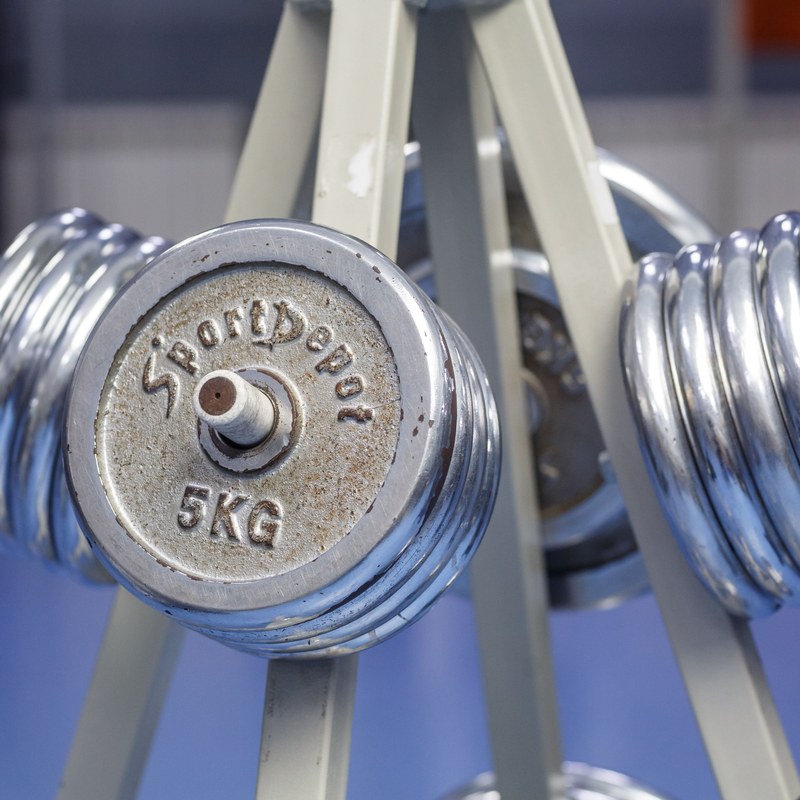
Cast iron is the baseline. It’s dense, cheap, and has been in gyms for decades because nothing else packs this much weight into such a compact package. Bare iron sets cost less than coated alternatives, and used pairs show up on marketplace apps constantly.
But bare iron rusts. If you train in a garage or basement with humidity, red flakes appear within months. I watched it happen to my own set after one humid summer. The dumbbells still worked, but my hands picked up orange streaks and the finish never recovered.
Iron is also hard on floors. Set a 50-pounder down hard on wood or tile and you’ll chip both. Rubber and urethane absorb some of that impact; cast iron just passes it through.
If you buy cast iron anyway, look for a coated version rather than bare. The CAP Barbell Coated Hex Dumbbell Set adds a rubberized coating around the iron core for about the same price as bare iron. The Yes4All Adjustable Dumbbells 80LB do the same thing in an adjustable format: cast iron plates wrapped in a protective rubber coating.
Rubber Coating: Impact Protection With Trade-Offs
Rubber solves the two biggest annoyances of bare iron. Drop a rubber-coated dumbbell and it thuds instead of clangs. Set it down on concrete and it doesn’t scrape or bounce the way bare iron does. If your gym is above a living room or next to a shared wall, that alone is worth the upgrade.
The catch is quality. Cheap rubber off-gasses, and that strong tire smell sticks around for two to three weeks in a closed garage. Low-grade coatings also chip when you drop weights repeatedly on rough concrete. I’ve owned a bargain set and a mid-range set, and the difference showed up fast in the first few weeks.
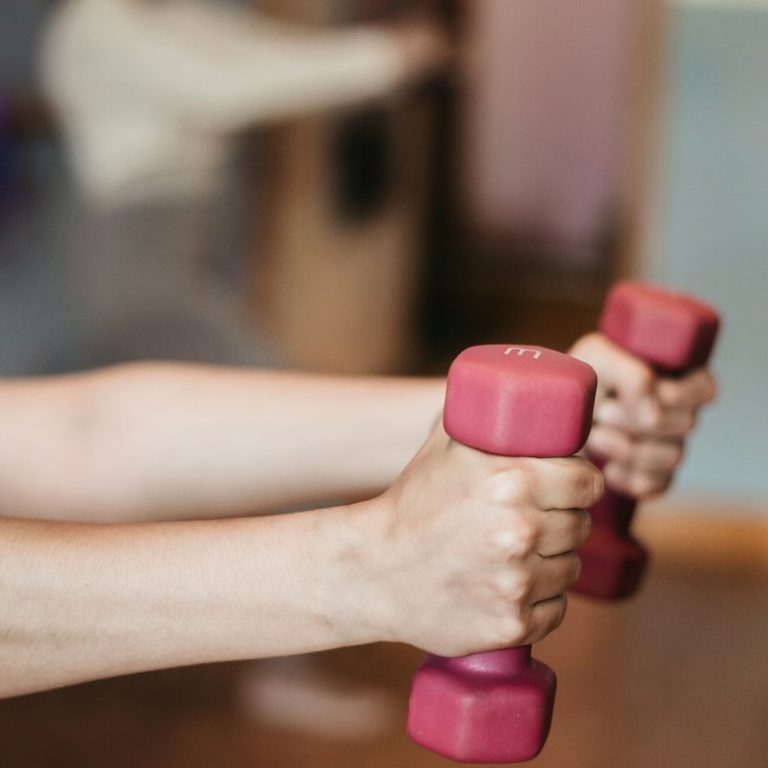
Neoprene is a softer rubber, not a tougher one. The Amazon Basics Neoprene Dumbbell Set feels fine for light circuits and recovery work, but the coating wears down quickly under heavy sets and rough handling.
Urethane: The Long-Haul Material
Urethane is rubber’s tougher cousin. It doesn’t have that chemical smell, it resists cutting and tearing far better, and it holds up to years of racking and dropping. Commercial gyms use urethane because the dumbbells survive hundreds of people a day. At home, a urethane set can easily last a decade.
There’s a lesser-known benefit too: urethane heads are slightly slimmer than rubber heads at the same weight. That gives your fingers a little more room when the dumbbell hangs at your side, and the compact shape makes storage easier. It feels great when your grip is fried.
You pay for that durability. Urethane sets run noticeably higher than rubber equivalents. The PowerBlock Elite EXP 5-90 Adjustable Dumbbells use steel plates with a urethane coating, and the finish still looks close to new after heavy use.
So What Should You Buy?
You don’t need urethane to train at home. On a tight budget and lifting on a rubber mat or carpet? A quality rubber-coated set like the CAP Barbell will get the job done for years. If you hate smells, train on hardwood or tile, or plan to keep the same set for five-plus years, urethane is worth the jump.
Check current prices on Amazon for these sets and see how the gap looks today. And if you’ve already trained with any of these materials, drop your experience in the comments.
Rubber-Dumbbell Options That Make Sense for a Home Gym
If your home gym is in a basement or a carpeted room, rubber-coated fixed dumbbells beat bare iron on almost every point that matters. The coating dampens the clang, adds grip, and keeps the heads from scraping your floor when you set them down. That’s not a marketing pitch; it’s a difference you notice on the first rep.
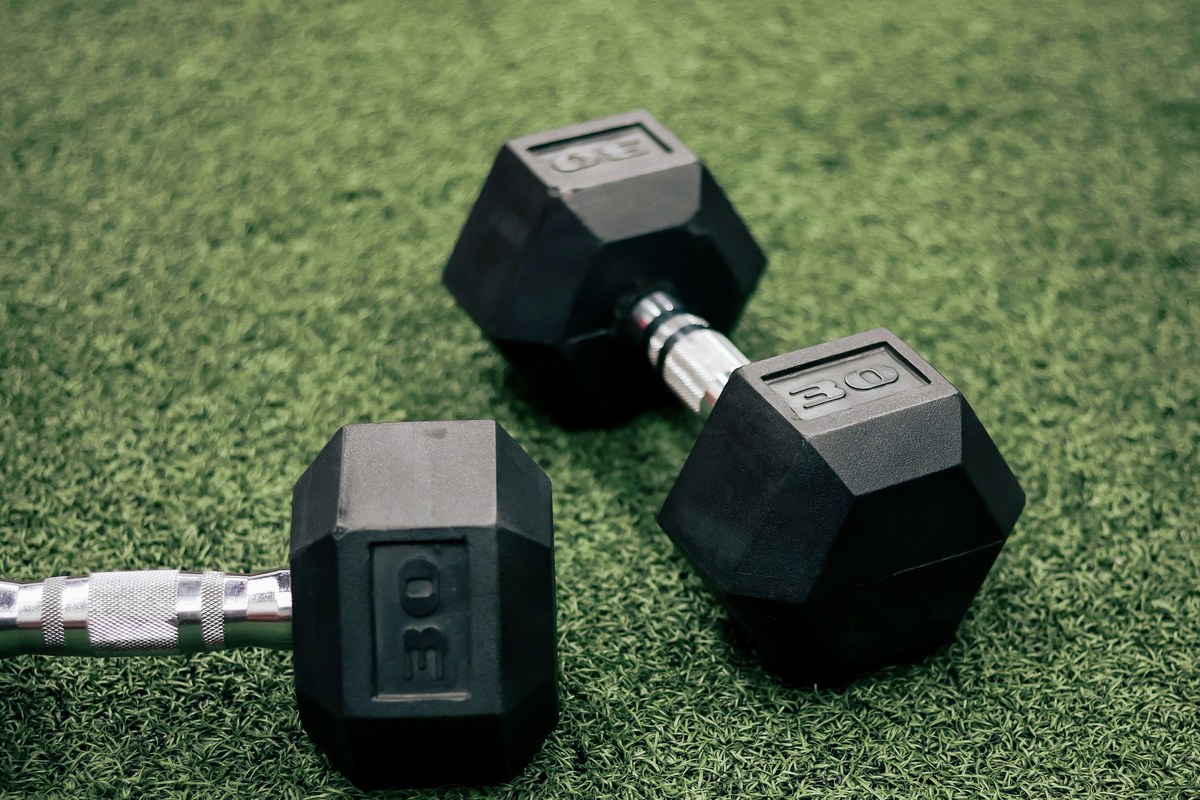
The CAP Barbell Coated Hex Dumbbell Set is the set I point people to for a garage or basement setup. The heads are cast iron with a rubber-like coating, and the hex shape keeps them from rolling under the bench. I grabbed a pair for my own garage setup and the coating had a light new-rubber smell for about a week; after that it disappeared. At around $200 with a 4.4-star average from over a thousand reviews, it’s one of the better values in fixed dumbbells.
What the CAP set doesn’t give you is a knurled handle. The grip is smooth, so lifters coming from bare iron will notice it in their forearms. For most home training—presses, rows, curls—that’s not a dealbreaker. The coating also adds a little friction when your palms get sweaty.
Neoprene Dumbbells Are a Different Animal
The Amazon Basics Neoprene Dumbbell Set is the budget pick for light rehab work and high-rep circuits. The neoprene sleeves feel comfortable, and at about $60 for a set, the price is hard to argue with. But be clear about what you’re buying: neoprene scuffs and tears if you drop it, and the vinyl end caps can crack under repeated abuse. These are not built for heavy strength training.
If you only use 5, 8, or 10-pound weights for shoulder rehab, mobility work, or light workouts, the Amazon Basics set does the job cheaply. Keep them on a rack or shelf instead of tossing them on the floor, and they’ll hold up.
Where Rubber Falls Short
No rubber coating on a fixed dumbbell survives forever if you keep dropping weights from overhead. The bond between coating and cast iron chips or peels at the corners with enough impact. Save rubber-coated dumbbells for controlled presses, rows, and curls. If your programming includes frequent drops, you’re better off with an adjustable set like the Bowflex SelectTech 552 Adjustable Dumbbells or a dedicated dropping platform.
That’s the trade-off. Rubber-coated fixed dumbbells make sense when you want floor protection, quieter workouts, and a secure grip without paying urethane prices. The CAP hex set delivers that in a durable package. The neoprene Amazon Basics set only makes sense for very light work. Match the material to your training, and you won’t be replacing them in a year. Check current prices on Amazon before you commit, and if you’ve trained with rubber-coated dumbbells, tell us how they’ve held up in the comments.
Urethane: Worth the Higher Price for Long-Term Durability
Walk into any commercial gym that’s been running for more than five years and look at the dumbbell rack. It’s almost all urethane. There’s a reason for that.
Rubber and cast iron wear down. Cast iron chips when you drop it on concrete. Rubber blends, especially the cheaper ones, peel and shred after a few years of daily abuse. Urethane is a dense molded polyurethane that shrugs off impact far better than rubber and never corrodes like bare iron. I train in a gym where dumbbells have been slammed into each other and the floor for a decade straight, and those heads are still perfectly smooth.
That smoothness matters more than people think.
Once a rubber-coated head starts peeling, the exposed metal edge chews up your palms during heavy presses. That’s not a minor annoyance — torn calluses can sideline you for a week. Urethane doesn’t do that to you. The heads stay smooth even after hundreds of drops onto rubber mats, which is why competitive lifters and anyone doing high-volume strength work gravitate toward it. If you’re pressing heavy dumbbells for sets of ten or carrying them until your grip gives out, a rough coating is the last thing you want grinding into your hands.
Cleaning is another real difference. A damp cloth takes care of urethane in seconds, and it doesn’t absorb sweat the way rubber does. After a few months in a hot garage, cheaper rubber develops a smell you can’t fully wash away.
The trade-off is price, and it’s a big one. Urethane can run two to three times the cost of cast iron per pound. A full set from 10 to 50 pounds can clear a thousand dollars without breaking a sweat. Cast iron or rubber-coated hex covers the same ground for roughly half. The premium only makes sense if you train hard and plan to keep the same dumbbells for a decade.
If you want polyurethane coating in an adjustable format, the NUOBELL Max 80 Adjustable Dumbbells deliver that. The plates are polyurethane-coated, so you get the smooth finish and easy wipe-down, and the dial system replaces an entire rack. I’ve been using a similar style for about a year and mine still look fresh. The downside is speed: changing weights takes longer than grabbing a fixed dumbbell, which gets annoying when you’re supersetting.
If you’d rather keep your budget in check, the CAP Barbell Coated Hex Dumbbell Set gives you a rubber-coated hex head at a fraction of the cost. The rubber is thicker than the cheap neoprene you see on budget sets, and the hex shape stops them from rolling away mid-set. For most beginner and intermediate lifters, this is the smarter buy.
So who actually needs urethane?
You, if dropping dumbbells is part of your training and you don’t want chunks missing from the heads after year one. You, if you’re building this set for the long haul and plan to reduce, reuse, and never replace. You, if you train in a shared space and want something that doesn’t smell, doesn’t mark the floor, and wipes clean in seconds.
If you’re just starting out, skip it. A good coated hex set will feel solid under load and carry you through years of training. Urethane is a luxury. That doesn’t make it bad, just be honest about why you’re buying it.
Before you decide, check the prices on Amazon — dumbbell prices swing more than people expect, and a solid discount can change the calculation. And if you’ve trained with urethane dumbbells long-term, drop a comment about your experience. I’m curious whether most people actually notice the feel, or just appreciate that the heads still look new.
Cast Iron and Adjustable Dumbbells: Best Value by Space and Budget
If your buying decision has come down to budget and floor plan, cast iron and adjustable dumbbells solve the two biggest home-gym problems: price per pound and square footage. I’ve owned all three styles in different garages and apartments, and each one fits a distinct training space.
The cheapest way to load a home gym is still bare cast iron. The Yes4All Adjustable Dumbbells 80LB give you a full 80 lb pair for around $280 — about $3.50 per pound. That’s hard to beat. But bare iron scratches floors and rusts if left damp after a sweaty session, so budget for a mat and a rack. I used a similar set in my first garage gym; the knurling felt fine for presses, but the plates rattled on quick curls unless I gripped tight. Minor, but worth knowing.
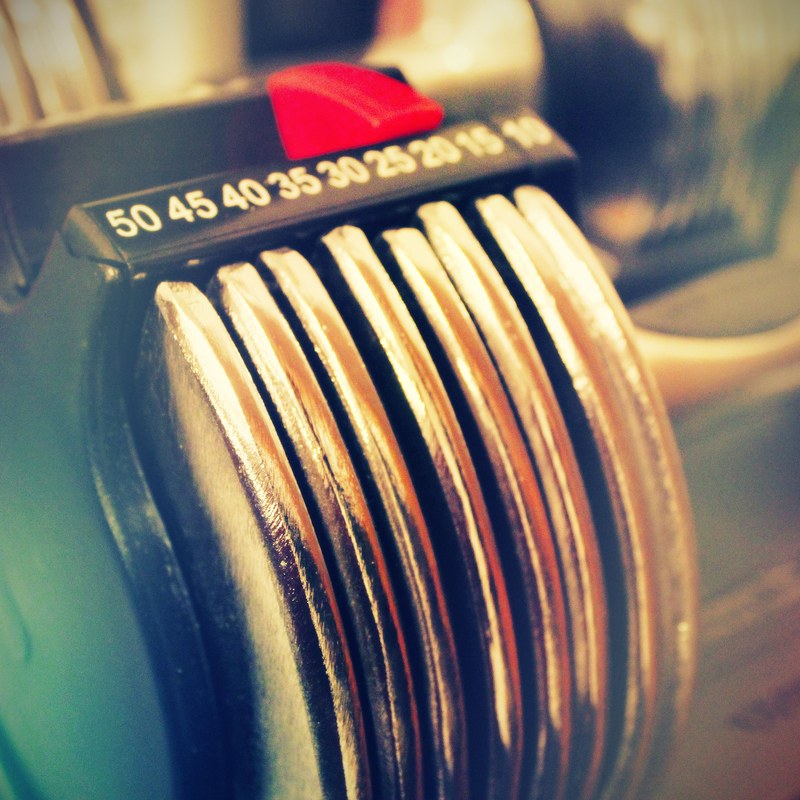
If floor space is tight, adjustables are the obvious move. The Bowflex SelectTech 552 Adjustable Dumbbells replace an entire rack of fixed weights, going from 5 to 52.5 lb with a simple dial. At $429 they’re pricier than the Yes4All, but they take up about the footprint of a loaf of bread. The tradeoff is length: at heavier settings the dumbbell extends noticeably, so press mechanics feel different than with a hex head. I used these in a small apartment, and the speed of switching weights made supersets far more consistent.
Need more headroom? The PowerBlock Elite EXP 5-90 Adjustable Dumbbells expand up to 90 lb, and the $599 price gets you a range that can carry you from beginner to advanced. The square block design feels odd at first — I wouldn’t drop them on a hard floor — but the adjustment is fast and intuitive. One catch: the center of mass sits differently during overhead presses, so try a few reps before committing if strict form matters.
For the most traditional feel, the NUOBELL Max 80 Adjustable Dumbbells look and handle like fixed dumbbells. The knurling is close to commercial-grade, and the 5–80 lb range covers most home lifters. At $649, it’s the most expensive set here, but the balanced shape makes pressing and rows more stable — no plate gaps or spinning collars to fight. I found them much easier on the wrists than block-style adjustables.
So which should you buy?
- Most weight per dollar: Yes4All Adjustable Dumbbells 80LB — around $280 for 80 lb, provided you have a rack and a mat.
- Smallest footprint: Bowflex SelectTech 552 — perfect for closets and apartments, up to 52.5 lb.
- Longest progression runway: PowerBlock Elite EXP 5-90 — up to 90 lb, with a tool-like design.
- Closest to a commercial dumbbell: NUOBELL Max 80 — balanced, comfortable, and expensive.
If you mostly do high-rep, lighter work, the Amazon Basics Neoprene Dumbbell Set and CAP Barbell Coated Hex Dumbbell Set are cheaper alternatives — around $60 and $200 respectively. They won’t take you past 50 lb, but they’re quiet, floor-friendly, and fine for mobility or recovery sessions.
Prices shift often, so check current prices on Amazon before committing. If you already own one of these sets, comment below and say whether you’d buy it again. Real-world feedback beats any spec sheet.
Medical & Editorial Review: This article was reviewed by Liam Smith, founder of Apexfito, for accuracy and safety. Content is for educational purposes and is not a substitute for professional medical advice. Consult your physician before starting any exercise or nutrition program.