How to Build a Home Gym You Won’t Outgrow: Strength Machine Setup Guide for Beginners
What Outgrowing a Home Gym Actually Looks Like
Nobody lists resistance bands on Facebook Marketplace because they stopped wanting to be strong. They list them because the bands quit being the right tool. That’s a different problem than quitting, and it’s the one worth solving before you spend another dollar.
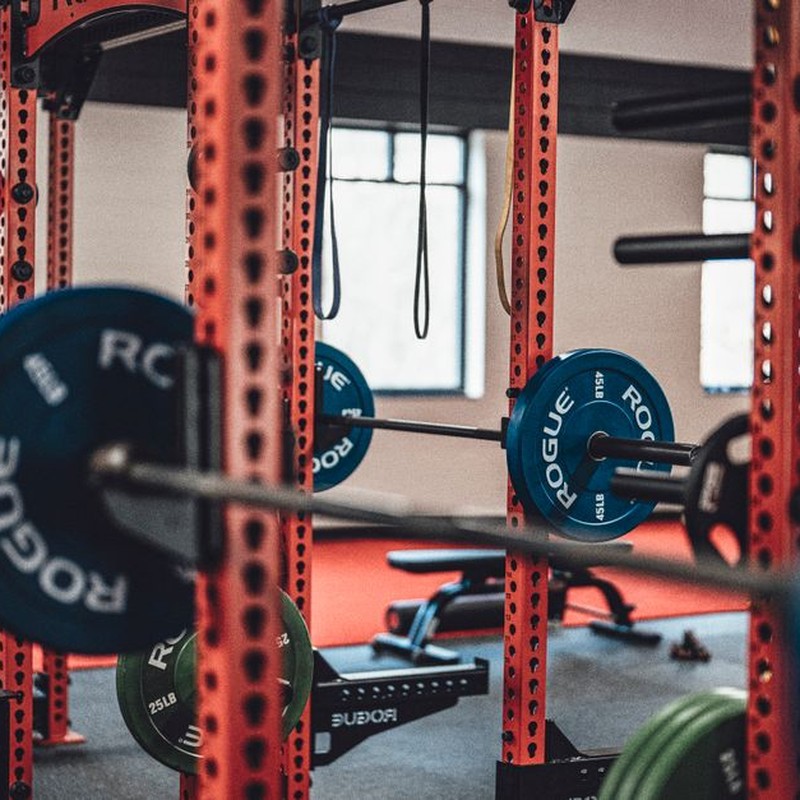
Progressive overload is the mechanism behind every strength gain you’ve ever made. To keep adapting, a muscle needs more resistance, more range of motion, or a harder position to hold. Something has to get more difficult over time. If your setup can’t add load, progress flattens even when your effort doesn’t. You train hard, you feel beat up, and the numbers on your main lifts sit there like they’re bolted down.
The classic starter kit is bands, a few fixed dumbbells, a doorway pull-up bar, and a bench. Nothing wrong with any of those tools. I still keep bands hanging next to my rack for warm-ups and pull-up assistance. The issue is that fixed dumbbells come in fixed weights. Once you can press the 25s for clean sets of 12, the rack has nothing left to hand you. The movements stay useful. The loading options don’t.
The Manual ran a piece on September 20, 2026 about building a home strength setup you won’t outgrow, and its central argument is the one worth taping to your wall: buy for the lifter you’ll be in three years, not the one unboxing today. Garage Gym Reviews published its 2026 roundup of personally tested home gyms two days earlier, on September 18, and the machines that survive those lists tend to share one trait. They can accept more weight later.
Three ceilings, and only one of them is about money
Strength ceiling. The equipment works fine, but there’s no way to make it heavier. A weight stack tops out, the heaviest band loop is still too light, or the frame isn’t rated for the load you’re ready to move.
Footprint ceiling. The equipment could grow, but your room can’t. Nothing else fits alongside it, so the next purchase has to replace it instead of joining it. You buy twice and sell once at a loss.
Motivation ceiling. This is the sneaky one. If setup takes four minutes, the rack lives in a dark corner, or you have to move a car to use it, you’ll skip sessions. Annoyance beats discipline more often than anyone likes to admit.
Space kills more setups than budget does. Door frames set the limit on pull-up bar height. Basement joists sit lower than you think, so measure at the lowest point, not the average. Garage door tracks drop a couple of feet from the ceiling. Apartment ceilings in older buildings are often under eight feet. I watched a friend buy a tall power rack before checking the joists above the spot he’d picked. That turned into a return, not a training session.
Resale belongs in the math, and most buyers skip it. Here’s an illustrative example rather than a promise: plate-loaded and selectorized machines tend to hold value, while plastic-and-band kits tend not to. Say a $700 plate-loaded cage resells for $400 four years later. That works out to roughly $75 a year. A $200 band-and-dumbbell bundle that resells for $40 runs about $40 a year and capped your progress the entire time you owned it. Real resale prices swing with your local market, the condition of the gear, and how long you’ll wait for a buyer, but the direction of that spread shows up again and again.
Three machines show how differently this plays out. The Marcy Smith Cage Machine SM-4903 is plate-loaded, so you add weight as you get stronger instead of waiting on a bigger stack. The Powertec Workbench Compact Home Gym keeps a tighter footprint while still loading plates, which helps if you’re fighting a space ceiling instead of a strength ceiling. The Marcy Home Gym Machine SM-4008 is a selectorized stack machine, meaning you pin a weight and train with no plates to load or store, but its ceiling is set at the factory and you can’t raise it later. Compare the loading method on each listing and check the current price on Amazon before you commit.
If you’re in the US or Canada, check three things before you fall for any listing: ceiling height at the exact spot the machine will sit, floor type (a concrete slab handles dropped weight, a second-floor apartment in a wood-frame building does not), and whether you can assemble and reposition the thing solo. Assembly alone is not a macho thing, it’s a logistics thing. A machine you can’t move on your own is a machine that never moves again.
Here’s the practical takeaway. If your current setup can’t get heavier, wider, or easier to live with, it’s already finished, even if you aren’t. Check current prices on Amazon for the machines above, and tell me in the comments which ceiling got you: strength, footprint, or the annoying one.
The Three Machine Categories That Cover the Most Ground
Visit a home gym that has survived ten years and you notice the same pattern. Not a showroom of specialty machines, but one or two pieces that handle the repetitive work: pressing, rowing, pulling down, squatting, curling. Everything else becomes decoration that gets listed on Marketplace by year three.
So here is the map. Three categories, what each one does well, and where each one stops being enough. These are not ranked. They solve different problems, and the tradeoffs matter more than the marketing copy.

1. Selectorized multi-gyms: one frame, one stack
This is the category most beginners picture when they hear home gym. A single frame, a vertical weight stack, and a pin you pull out and reinsert to change the load. A cable routes through pulleys to a press arm, a lat bar, a low row station, and often a leg extension or curl.
Friction level is close to zero. No plates to load, no setup between exercises, no deciding what comes next. I ran a full circuit on a borrowed selectorized unit for a few months in my garage, and what stuck with me was how often I actually trained. Twenty minutes, done, no excuses available. On a Tuesday night when you are flat and unmotivated, that ease matters more than any clever programming.
Now the limit, and it is a real one. The weight stack is the ceiling. Once you can press the entire stack for twelve clean reps, that movement stops progressing unless the unit accepts add-on plates, and many do not. That is not a knock on the category. It just means you should buy for the top of the stack, not the bottom of it.
A quick disclosure before the links start: the product links in this section are affiliate links. If you buy through one, this site earns a small commission at no extra cost to you. The picks and the caveats below are mine.
The Marcy Home Gym Machine SM-4008 illustrates this category well, priced around $499.99 with a 4.3 out of 5 rating on Amazon. To be precise about the mechanics, since a lot of listings blur this: the SM-4008 is a selectorized stack machine, not a plate-loaded one. The stack ceiling described above applies to it directly, so go in knowing roughly where your press and pulldown numbers will top out.
Before ordering, check two things most buyers skip. How much cable travel the chest press actually offers, and whether the frame shifts when you row aggressively. A short cable path on a press station is the most common complaint I see on units in this price band.
What it does well: full-body circuit in one footprint, minimal assembly drama, and a price that leaves room in the budget for a bench and a few dumbbells.
2. Smith cage and rack systems: the plate-loaded path
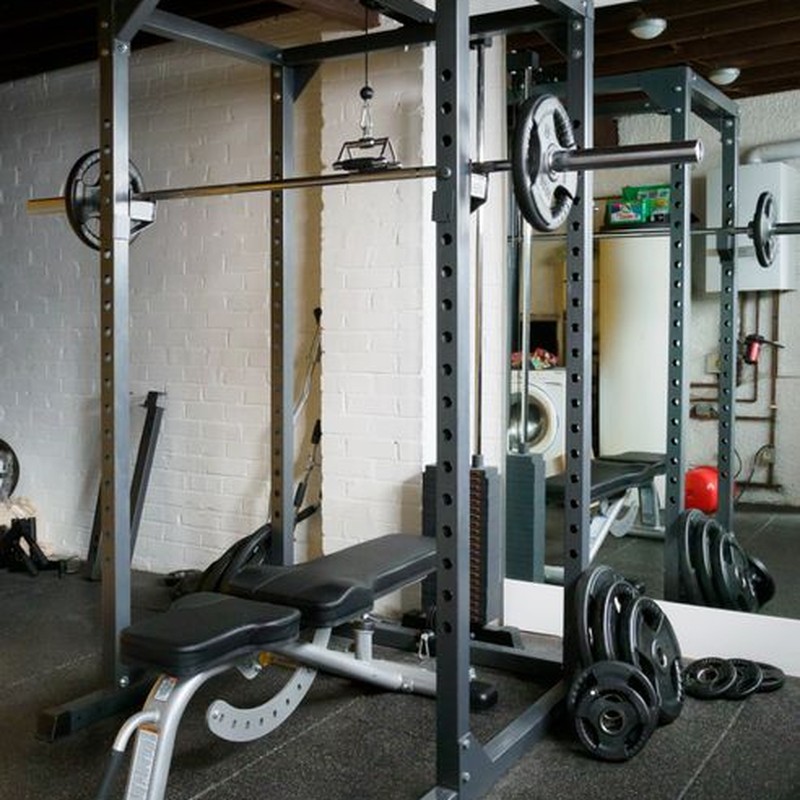
Here the load comes from plates you slide onto a bar rather than a pin in a stack. The bar travels on fixed guide rails, and the frame doubles as a rack for squats, bench press, and pulls.
I want to be precise here, because this is where beginners get conflicting advice. Adding plates has no ceiling. A bar does not have a maximum. A rack does not care how strong you get. So if you want one purchase that still challenges you in year eight, this is the category that keeps working. It is the single biggest reason these rigs outlast everything else in a home gym.
The Marcy Smith Cage Machine SM-4903 runs about $699.99 and holds a 4.4 out of 5 rating. That roughly two-hundred-dollar step up from a $499 multi-gym buys a much higher strength ceiling, and for plenty of people it means never shopping for a replacement machine at all.
One honest caveat. Rails fix the bar path, so your stabilizer muscles do less of the work than they would under a free bar. For a beginner training alone, that is a real advantage, because you can push near failure without a spotter. If your long-term goal is a raw powerlifting total, you will eventually feel the difference and want a free bar in the mix too.
3. Compact workbench-style gyms: built for tight rooms
Press station, cable or pulley setup, and a bench sharing one footprint, usually without the tall upright frame the other two require. This is the category for renters, low basement ceilings, and anyone splitting the room with a car or a washer and dryer.
The Powertec Workbench Compact Home Gym lands around $499.00 with a 4.4 out of 5 rating. If floor space rather than budget is your tightest constraint, it deserves a serious look. Where it bites: many workbench designs use leverage arms instead of a stack or a bar, so the resistance curve feels different and changing loads takes more fiddling. That is fine for your first few years. It gets restrictive once you are chasing a heavy squat.
Retire this myth
Free weights are for real lifters and machines are for beginners. Both build strength. Machines just make it easier to train hard when you are alone, tired, and short on time, which describes most home sessions. Pick based on how you will actually use the thing at 9 p.m. after work, not on what a forum told you. A machine you touch four days a week beats a barbell you walk past.
Cross-check the specs before you order
Garage Gym Reviews published a 2026 roundup of personally tested home gyms in September 2026, and that is the kind of hands-on testing worth reading before you commit. To be straight with you: my notes on the three machines above come from listed specs and buyer feedback, not from me assembling each unit in my garage. So treat that review as your second opinion on frame thickness, weld quality, and warranty terms. Those details never show up in product photos, and they separate a machine that lasts fifteen years from one that wobbles by month eight.
Prices on all three move around, so confirm the current number before you buy, and leave a comment with your own setup. If you already own one of these, other readers would get a lot from hearing how it has held up after a couple of years of real use.
Matching the Machine to Your Room, Budget, and Body
I have watched three friends buy a home gym in the last two years, and two of them made the same mistake. They fell for the machine first and measured the room second. One of them wrestled a plate-loaded press through the front door, up the stairs, and into the spare bedroom, only to find the ceiling was four inches too low for a standing press. He sold it six weeks later at a loss.
Measurements come first. Every time. Here is the checklist I hand people before they open a single product page.
Three numbers before you shop
- Ceiling height at the highest point of the movement. Not the ceiling in the middle of the room — the ceiling directly above where your hands or the bar will travel. Measure that spot standing on the floor you will actually train on. If a machine lists an assembled height of 82 inches, you want a few inches of clearance at that exact point, not just at the doorway.
- Total floor footprint, including you. A power rack footprint runs roughly 4 feet by 4 feet. A cable machine can span 6 feet with the arms extended. Add the space your body occupies: a clear zone of about 3 feet in front of and behind anything you press, pull, or squat on.
- Every doorway between the truck and the final spot. Standard interior doorways are 30 to 32 inches wide, and most exterior doors are 36. Some cage machines ship in boxes wider than the assembled frame. Measure the narrowest opening on the path, and check stairwell turns while you are up there.
Write those three numbers on a sticky note and put it on your laptop. Every product gets checked against them before you read a single review.
The floor is part of the machine
A concrete garage slab does not care what you put on it. Plate-loaded steel, a heavy stack, a rack bolted to the ground — a slab takes all of it without complaint.
A second-floor wood-framed room is a different conversation. Residential floors are commonly engineered somewhere in the neighborhood of 40 pounds per square foot of live load, though that figure varies with the age of the house, how it was built, and your local code. A 200-pound machine plus a 200-pound person moving dynamically over a small footprint concentrates a lot of weight in one spot, and I am not qualified to tell you whether your joists are fine with it. If you live in an older house, an apartment, or a townhome with a shared ceiling, get a contractor or structural engineer to look at it before delivery day. That visit costs less than repairing a joist, and the delivery window is a terrible time to learn you guessed wrong.
If you do put a machine upstairs and the floor checks out, spread the load anyway. A rubber mat over a plywood base does more than protect your floors — it distributes the pressure over a wider area.
Noise is a budget line item, not an afterthought
If you share a wall or a floor, rubber tiles are not optional. They are the price of staying on good terms with the people below you. A three-quarter-inch rubber mat with a plywood layer underneath kills most of the thud from set-down plates and the clang of a stack bottoming out.
Machine choice matters too. A smoother cable path and a stack with well-machined guide rods run quiet. Bare metal on hardwood amplifies every rep.
Garage Gym Reviews made noise a recurring note in their 2026 testing of home gyms, and The Manual’s September 2026 breakdown of home strength setups lands on the same idea from a different angle: the machine that gets used is the one that does not make you feel like a bad neighbor.
What each tier actually buys you
Two price points keep showing up in the current market, and they sit close enough that the difference is easy to miss. Prices and star ratings move constantly, so treat these as reference points and confirm the current numbers before you order.
Around $500 you are in the door. The Marcy Home Gym Machine SM-4008 sits near $499.99 and covers a full-body multi-gym with a weight stack, leg developer, and lat pulldown. It is a legitimate starting point if your room is tight and your goals are general strength. The Powertec Workbench Compact Home Gym lands around the same price and leans harder into a small footprint and plate-loaded flexibility.
Around $700 the math changes. The Marcy Smith Cage Machine SM-4903 runs roughly $699.99 and gives you a Smith machine, cable crossover, and cage in one frame. More importantly, you can keep adding plates or attachments without replacing the unit. That is the expandability premium, and it is usually worth paying if you have the ceiling height and the floor space to support it.
None of these fits every room. The right answer is the one that matches the three numbers on your sticky note.
Stacks versus plate-loaded: the long-term decision
A weight stack is faster to adjust. You pull a pin, you move on. It is tidier, quieter, and usually takes less floor space. The catch is that you are capped at the stack’s maximum. Some machines let you add a stack upgrade later. Many do not.
Plate-loaded means you buy iron a pair at a time. That is friendlier to a monthly budget, and it lets you keep progressing past the point where a stack would have topped out. The tradeoff is loading time, storage space, and more noise if you set plates down hard.
If you already know you will still be lifting in five years, plate-loaded is usually the more forgiving path. If you want to walk in, pull a pin, and train, a stack is the honest choice. Both are fine. The one that stops working is the machine you can’t add resistance to.
Your body is the last measurement
Seat and pad dimensions rarely show up in marketing photos, and they are the reason people return machines. A press arm built around a 5-foot-4 frame puts the handles in a different place than one designed for 6-foot-2. Before you buy, find the seat height, back pad width, and handle spacing in the specs. Then sit on something similar at a store, or measure your current setup and compare. Not every model adjusts, and some that claim to adjust move an inch or two at most.
If you are tall and the machine lists a fixed seat height, check the return policy before you order. Same goes if you are on the shorter side and the frame is built around a taller reference.
Warranty and parts, in five minutes
Read the warranty page and hunt down the parts list. Frames typically carry long coverage, often a decade or more. Cables, pulleys, and pads are the pieces that actually wear. A machine with a great frame warranty and no way to order a replacement cable two years from now is a machine you will be fighting with instead of training on. Save the manual and the order number somewhere you can find them.
Do not buy the bundle
Package deals pad the order with accessories that look like value and quietly raise the price of the one piece you wanted. Compare the standalone machine price to the bundle price. If the gap is bigger than the cost of the accessories you would genuinely use, order the machine alone and add the rest later, once you know what you are actually missing.
Weighing it against a membership
Plenty of people justify the purchase by doing the break-even math. A family gym membership in many North American markets runs somewhere in the $100 to $150 a month range, which would put a $500 to $700 machine in payback territory in roughly three to five months. That math is entirely market-dependent. If you pay $25 a month at a community center, the break-even stretches way out. If you pay $180 for a family plan and never go, the machine starts looking cheap the day it arrives.
Check current prices on Amazon before you commit — the tiers move, and a model that was $699 last season can drop during a sale week. If you have already built a home gym and learned something the hard way, drop it in the comments. The next person reading this will thank you.
Building the Upgrade Path Instead of Starting Over
Affiliate disclosure: this section includes an affiliate link. If you buy through it, we may earn a small commission at no extra cost to you.
The home gyms that survive are the ones that grow by addition. The ones that die get replaced. I watched this happen twice on my own street: someone buys an all-in-one, uses it for a year, decides it isn’t enough, sells it for $200, and starts over. Almost every time, the whole mess traces back to one decision — what you bought as the core.
If the core is right, everything after it is an upgrade. Plates, a barbell, a bench, adjustable dumbbells, a lat bar — each one bolts onto a machine you’re keeping. If the core is wrong, every accessory is money spent on a dead end. The Manual’s September 2026 piece on home strength setups makes the same argument: your first big purchase should be the thing you build around, not the thing you’ll want to replace in 18 months.
So what makes a core growable? Three things: it accepts weight you can add in small increments, it doesn’t lock you into proprietary attachments, and it has at least one cable or pulley station. The Marcy Home Gym Machine SM-4008, the Marcy Smith Cage Machine SM-4903, and the Powertec Workbench Compact Home Gym all show up in current 2026 roundups, including Garage Gym Reviews’ latest list, and each one takes a different approach to how it loads.
Pay attention to that part. Not every machine loads the same way. Some run off a selectorized weight stack, which is quick and convenient but caps out at whatever the stack ships with. Others take Olympic plates on a bar or on leverage arms, which means the machine keeps growing every time you buy another pair of 45s. A few combine both. Check which one you’re actually buying before you order, because that choice decides what your upgrade path looks like for the next five years.
Loading is the first upgrade, and usually the cheapest. Here’s the order I’d follow:
- Loading. Olympic plates bought in pairs let you keep adding weight to a plate-loaded machine without touching the frame. Score some on the used market and you’re adding 90 pounds of capacity for roughly the price of a couple months of gym dues.
- Movement variety. A lat pulldown bar, a row handle, or a landmine attachment turns one cable station into five or six exercises. I added a landmine to my rack for about the cost of two months of membership and picked up chest-supported rows, single-arm presses, and rotational work without buying a second machine.
- Floor and storage. Interlocking rubber tiles protect the concrete, cut the clanking, and make the space feel like a gym instead of a garage with a machine in it. A plate tree and a bar holder keep the floor clear so you aren’t stepping over iron to reach your bench.
Order matters. Flooring and storage come before more iron, and attachments come before a second machine. Nine times out of ten, the fix for outgrowing your setup is a $40 handle, not a $700 machine.
Myth worth killing: a home gym has to be a mirrored showroom. The people I know who’ve actually trained at home for years have one good machine, a bench, some plates, and a clear floor. That’s the whole setup. No neon, no wall of dumbbells, no dedicated shake bar. The Instagram version isn’t the version that gets used on a Tuesday night in February.
Second myth: you’ll save money right away. You won’t. Month one hurts — a $500 machine is $500, plus plates, plus tiles, plus a weekend of your life. The crossover comes later, and how fast depends on what you were paying before and how many people in the house actually train. One person replacing a cheap gym membership takes a while. Two or three people replacing family memberships tilts the math much faster. Either way, go in expecting year two, not month two.
Maintenance is what keeps the investment alive, and it takes about five minutes a month:
- Wipe down cables and pulleys, and look for fraying where the cable bends over the pulley.
- Go around and tighten frame bolts after the first few weeks of use — they will loosen.
- On a selectorized stack, keep the guide rods lightly lubricated with silicone spray so the pin slides clean.
- Check pads, seats, and upholstery for cracks before they turn into tears.
One more reality check before you order: unboxing. A cage or multi-gym arrives heavy and in several boxes, and assembly realistically takes an evening or a full weekend with two people. Budget the time before you click buy, not after. I’ve seen more home gyms sit in cardboard for a month because nobody planned for the assembly.
Safety note, and this one matters: stay within the load rating printed in your manual, set the safety catches or spotter arms where they’d actually catch a failed rep, and anchor a cage to the floor if the instructions call for it. If you’re assembling alone, get a second pair of hands for anything overhead.
Before you buy anything, pull up current listings and check price and stock, since both move around week to week — that’s as true on Amazon as anywhere else. Prices on the Marcy Smith Cage Machine SM-4903 and its competitors can swing by a hundred dollars or more depending on the month. Then come back and tell us what you went with and what you’d do differently. Real setups from real garages beat any spec sheet.