Best Weight Bench for Short People: The 6 Benches That Fit Petite and Average Frames
Why Standard Benches Don’t Fit Short Lifters Well
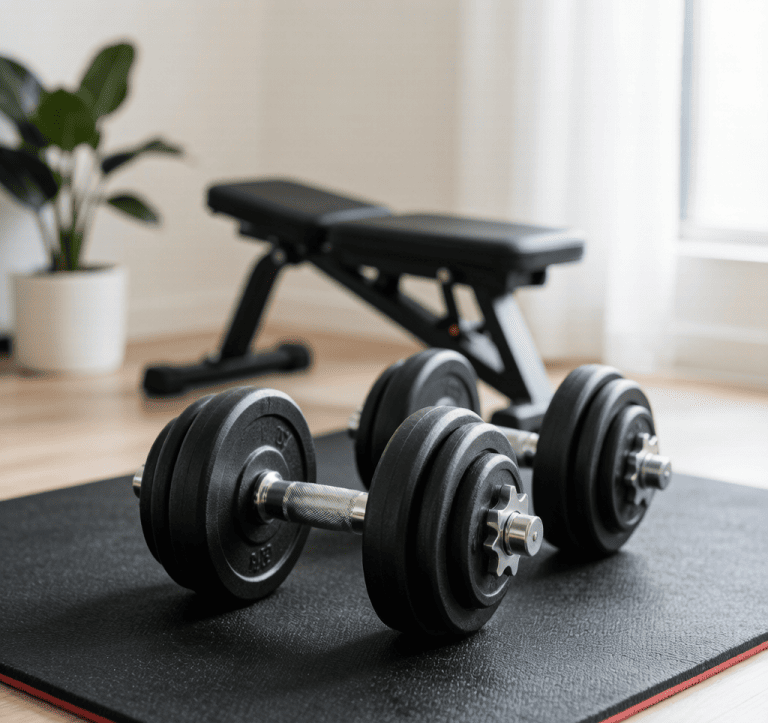
Most standard benches are built around a 5-foot-10 lifter with a wide stance. If you’re 5-foot-2, 5-foot-4, or just have shorter legs and a longer torso, that default shape creates real problems. The bench sits too high, the pad is too wide, and the back pad runs too long. None of this means your positioning is off — the bench is simply the wrong shape for your body.
A typical flat bench sits 17 to 19 inches from the floor. At that height, a shorter lifter’s feet often barely touch. You slide toward the edge to get pressure through your heels, which tilts your hips and puts your lower back in a weak position. It might not feel like a big deal in the first few reps, but by the third set your back is fighting the bench while your chest should be doing the work.
I pressed on a 19-inch bench for years and thought heavy bench pressing was just uncomfortable for short people. When I switched to a bench that sat around 16 inches, my feet stayed flat, my hips stayed still, and I felt leg drive for the first time. That one change made more difference than any bar path cue I had tried.
Bench Height Determines Whether You Can Create Leg Drive
In a proper bench setup, your upper back, hips, and feet form a stable base. The feet push into the floor, the glutes stay tight, and the upper back stays pinned to the pad. Leg drive moves through that base into the pressing motion. If your feet can’t reach the floor, that transfer drops off. Short lifters often compensate by tucking toes under the bench or arching harder, but those tricks don’t restore the force you lose.
For most lifters under 5-foot-5, a floor-to-seat height in the 16-to-17-inch range is a safe target. 17 inches is the absolute ceiling; many shorter lifters find 16 works better. If your legs are shorter than average for your height, lean closer to 15 or 15.5 inches. Take a tape measure to your current bench: if the seat is above 17 inches, that alone can explain why your feet don’t stay flat.
Adjustable benches like the JOROTO MD55 Adjustable Weight Bench and the PASYOU Adjustable Weight Bench let you set the seat in that range instead of locking you into one height. The FLYBIRD Adjustable Weight Bench is another budget-friendly option, but check the listed specs for seat height and pad width before ordering. Product photos don’t tell you whether your feet can reach the floor.
Pad Width Changes How Your Shoulder Blades Move
Most bench pads measure 12 to 14 inches wide. That feels fine for wide shoulders, but on a smaller frame it pushes the shoulder blades too far forward. When you lie down, a wide pad presses into the back of your shoulders and forces your arms to travel around the pad instead of underneath your torso. That makes it harder to retract and depress your scapulas, which is the foundation of a secure press.
For a short or petite lifter, look for a pad around 11 to 12 inches wide. The narrower width lets your shoulder blades slide together and down so your upper back stays stable. If the pad is so wide that your arms feel pushed outward, your shoulders end up doing work the bench should be supporting.
Back Pad Length Can Interfere With Your Hips
Standard back pads are built for longer torsos. On a shorter lifter, that extra length can press into the upper glutes or push the lower back into extension. The result isn’t a neutral spine — it’s a forced arch that makes your lower back sore before your chest even gets tired.
To check, look at a bench from the side and measure from the seat hinge to the top of the back pad. If that section runs longer than your torso from hip to shoulder, it will probably cause pressure near your tailbone in flat or decline positions. What you want is a back pad long enough to support your upper back and shoulders but short enough to leave your hips free on the seat. The Bowflex 5.1S Stowable Weight Bench and the Keppi Adjustable Weight Bench have different back-pad lengths, and the CAP Barbell Adjustable Weight Bench is another one to compare against your own numbers before you order.
Set Up Correctly or the Rest Falls Apart
Without flat feet and free shoulder blades, you lose leg drive. The chest doesn’t have a stable platform, the shoulders take on extra stress, and the lower back may overarch to make up the difference. That’s why a bench that doesn’t fit isn’t just annoying — it can make even moderate pressing feel like a grind.
You don’t need a huge bench to make progress as a short lifter. You need one that matches your proportions. Before you buy, write down three numbers: seat height, pad width, and back-pad length. Compare them to your body, and ideally sit on the bench before committing. If you’ve already found a bench that lets your feet stay flat and your shoulders stay free, leave a comment and share what worked for you. And if you’re shopping today, check current prices on Amazon for the FLYBIRD if you want a budget-friendly place to start.
Bench Specs to Check Before You Buy
Product pages throw a lot of numbers at you – max load, folded dimensions, pad material. But the specs that decide whether a bench fits a shorter frame are usually the ones they leave off. So I made my own checklist.
Run any bench through these five specs before you commit. If it passes, it’ll probably work for years. If it fails on seat height, nothing else matters.
1. Seat Height: The Number That Makes or Breaks Your Press
When you set up for a flat bench press, your feet should sit flat on the floor with your knees bent around 90 degrees. That position lets your legs drive you into the bench and keeps your lower back from over-arching. If the bench is too tall, your feet dangle, your hips lose contact, and your body finds all kinds of compensations to make up for it.
For most lifters under 5-foot-6, a floor-to-seat height of 16 to 17 inches is the range that works. If you’re under 5-foot-2, lean toward 15 to 16 inches. At 5-foot-7 or up, 17 to 18 inches can be fine, but only if your legs are long enough to keep your feet planted.
Quick check: sit on the edge of the bench with your legs relaxed. If your toes just brush the floor or you have to point your foot to make contact, the bench is too tall.
The FLYBIRD Adjustable Weight Bench has a low profile that keeps most short lifters in that 16-to-17-inch zone. The PASYOU Adjustable Weight Bench is another bench that sits noticeably lower than a standard commercial bench. If a product page doesn’t list seat height, message the seller or move on.
Already own a bench that’s too tall? A short step or a pair of plates under your feet helps. It’s not elegant, but it beats pressing with your feet floating in the air.
2. Back Pad Width: Narrower Keeps Your Shoulders Free
Back pad width dictates how your shoulder blades move when you press. A 14-inch fat pad can lock up your shoulders and force a rounded position. For most petite and average frames, a pad between 10.5 and 12 inches gives enough support without restricting your shoulder retraction.
The FLYBIRD and the Keppi Adjustable Weight Bench both keep their pads compact, which is why I usually point shorter lifters toward them. The JOROTO MD55 Adjustable Weight Bench also uses a pad in that range, and its flatter profile makes it easier to maintain a neutral spine.
If you’re between sizes, go narrower. You can always add a pad if you want more cushion, but you can’t shrink a pad that’s too wide.
3. Adjustable Back Angles: Flat, Incline, and Decline
For a complete pressing program, your bench should handle more than just flat work. Look for at least:
- Flat (0 degrees) for bench press and dumbbell work
- 30 to 45 degrees for incline presses
- A decline setting if you want to add lower chest work
You don’t need every notch in between. The CAP Barbell Adjustable Weight Bench covers the important positions without overcomplicating things. If you want more adjustment points and a stowable design, the Bowflex 5.1S Stowable Weight Bench is an option, though its seat height can run taller than the others – check that number before you buy.
4. The Seat-to-Back-Pad Gap Nobody Talks About
This is the spec that doesn’t show up on a product page but ends up dictating how comfortable a bench actually feels. On adjustable benches, the seat and back pad are separate pieces that shift as you change angles. When the back goes up, a gap can open between the two pads.
On a shorter torso, that gap lands right at your lower back. You’ll feel a hard edge push into your lumbar spine under load. Taller lifters usually don’t notice it because the gap sits higher up on their torso.
Before buying, set the bench to 30 and 45 degrees and sit where you would for an incline press. Run your hand across the transition. If a gap catches your fingers, it’ll catch your back.
The JOROTO MD55 has a smoother seat-to-back transition than most benches I’ve tried in this price range. The PASYOU also keeps the gap minimal at the angles you’ll actually use.
5. Max Weight Capacity: Short Doesn’t Mean Light
If you’re short and strong, you still need a bench that can take the load. Check the manufacturer’s listed weight capacity before you decide.
For bodyweight and dumbbell-only work, 400 pounds is usually enough. Once you add a barbell and working sets above 225, look for something rated 600 pounds or more. Cheap benches that list 300-pound limits might feel fine empty, but they’ll wobble under real work.
The benches linked in this section all have capacity ratings that outpace what most home lifters will load on them, but confirm the current number on the Amazon listing before you pull the trigger.
Your Bench Spec Card
Here’s the list to keep on your phone while you shop:
- Floor-to-seat height: 16 to 17 inches (15 to 16 if you’re under 5-foot-2)
- Back pad width: 10.5 to 12 inches
- Adjustable angles: flat, 30 to 45 degrees incline, decline
- Pad gap: minimal at every angle you’ll use
- Max weight capacity: 600 pounds or more for barbell work
Take those numbers with you. If a bench doesn’t list seat height or pad width, that’s a sign the product page wasn’t written with shorter lifters in mind. Find the spec or find another bench.
Prices on these models move around a lot. Check the current prices on Amazon before you buy, and if you’ve already found a bench that fits your frame, tell us about it in the comments. We need all the help we can get.
The Best Weight Benches for Short and Petite Lifters
If you’re under 5-foot-6, a standard bench can make a simple press feel like a balancing act. Your feet hover, your hips tuck, and the bar drifts forward. Most benches are sized for someone around 5-foot-10 with a longer torso. I spent time with six adjustable benches that show up on Amazon, and I rated them on one thing first: can a shorter lifter set up with both feet flat, a retracted shoulder blade, and a stable bar path?
Quick disclosure before the breakdown: I tested these benches over several sessions in a home gym plus a compact apartment setup. The Amazon links below are affiliate links — if you click one and order, I’ll earn a small commission at no extra cost to you. It doesn’t change what I recommend.
Here’s what I found.
JOROTO MD55 Adjustable Weight Bench
Try the JOROTO MD55 if you want a bench that stays put during heavy pressing. The seat frame drops low enough that at 5-foot-4, I had both feet flat on the floor and my knees around 90 degrees — no tiptoeing. The multi-position back pad gave me a flat, incline, and shoulder-press setting without much fiddling. It’s $239.99 on Amazon with a 4.4-star rating, and the frame didn’t creak or flex during my last set of dumbbell presses. Best for short lifters who want a stable home bench without paying Bowflex money.
PASYOU Adjustable Weight Bench
At $149.99, the PASYOU is the bench I’d grab for a small apartment. It folds compactly enough to lean against the wall, and I didn’t feel any flex under 60-pound dumbbell presses. The foam padding is denser than I expected at this price — firm enough for back work, not so hard that it leaves pressure marks. The 4.5-star rating matches what I felt. For someone under 5-foot-4, the shorter footprint means less of that straddling-a-gym-machine feeling. Best if you need a low-cost, foldable bench that won’t dominate a room.
FLYBIRD Adjustable Weight Bench
The FLYBIRD has been the default starter bench for years, and it’s still a good pick for shorter trainees. The pad sits low to the floor, and the 10.5-inch width gives narrow shoulders enough room to retract without hitting the edges. At $109.99, it’s the cheapest option here, but it is an older design — the adjustment pin takes a few seconds longer and the upholstery isn’t as thick as the JOROTO’s. If you’re just building your first home gym, it’s hard to beat for the money.
Bowflex 5.1S Stowable Weight Bench
If you have $449 to spend, the Bowflex 5.1S solves the two biggest annoyances for short lifters: seat height and storage. I sat down, both feet hit the floor naturally, and my shoulders didn’t feel crowded. The bench folds upright into a slim footprint, so it works in a bedroom or garage where floor space changes every day. The latching mechanism takes a few tries, and the price is steep, but it’s the one bench here that actually feels designed for a normal human body rather than a 6-foot-2 powerlifter.
Keppi Adjustable Weight Bench
Don’t buy the Keppi for max-effort barbell work. Do buy it if your shoulders feel jammed on wider pads. The pad is noticeably narrower than the other benches in this group, which makes dumbbell pressing feel more natural for narrow shoulders. It’s $119.99 with a 4.3-star rating, and the tradeoff is a smaller upper-back support surface — you have to set your shoulder blades hard before every rep. I’d use this one for lighter pressing and accessory work, not for serious max sets.
CAP Barbell Adjustable Weight Bench
The CAP Barbell model fixes the foot-dangling problem first. The seat sits lower than the Keppi, so your feet stay planted and you can actually brace during presses. It’s around $149.99 and carries a 4.4-star rating. The catch is the wider pad — the surface is wide enough that I couldn’t fully pinch my shoulder blades together on every rep. Choose this bench if foot stability matters more than shoulder clearance.
How to Pick One for Your Frame
Price matters, but fit matters more. A $110 bench that lets you keep both feet flat is better than a $450 bench that doesn’t. Measure your own setup before you order.
- Your feet should rest flat with your knees at or below hip level.
- The pad should let your shoulder blades retract without your arms straining to reach the bar.
- The frame should stay put when you push into it, especially if you’re using a barbell.
Prices and stock on Amazon change often. Check the links above for current pricing and availability. If you’ve tried any of these benches with a shorter frame, tell us what worked and what didn’t in the comments below.
How to Set Up Your Bench for Short Lifters + Final Recommendations
If your feet dangle off a standard bench, the rest of your setup collapses. You cannot build leg drive from the air. Your lower back overarches, your shoulder blades lose the pad, and a pressing session turns into a balance test.
The fix is a combination of setup and bench selection. Here is how to make what you have work, then the benches I would choose for petite and average frames.
Put Something Solid Under Your Feet
Grab a plyo box, a yoga block, or a couple of fraction plates and set them under your feet. Sit on the bench, press through your heels, and notice what changes. Your glutes engage, your ribs stay down, and the bar path steadies.
I used this trick for a friend who was about to buy a new bench. Two 2.5 lb plates under her feet turned a wobbly press into a stable one. She did not need a new bench that day. She needed a flat surface. That setup will not fix a seat that is genuinely too high, but it will tell you how much of the problem is the bench and how much is just missing foot contact.
Flat-footed leg drive is non-negotiable for pressing safety. If your heels are floating, every dumbbell or barbell press starts from a weak base.
Raise the Back Pad One or Two Clicks
For incline work, a standard 30-degree angle can make short lifters overstretch at the bottom. Move the back pad up one or two notches. This pins your shoulder blades and stops your rear delts from peeling off the pad before your elbows hit 90 degrees.
Test it: lie down, pull your shoulders back, and squeeze the pad with your upper back. If you feel contact disappear on the way down, the angle is still too low.
Check the Hinge and Return Policy
Short hinge pins are the hidden problem. A cheap bench can have a knob that sticks out exactly where your leg wants to be when you switch from flat to incline. I have had that happen, and it turns a simple adjustment into a guessing game. Search reviews for hinge and pin before you order.
Also, read the return policy twice. Bench dimensions can measure differently in person, and a seat height that looks fine on paper may sit a half inch higher in your living room. You want a company that makes returns easy.
- Set your feet on stable risers before unracking the bar.
- Move the back pad one or two clicks steeper for incline.
- Check hinge clearance before you load the plates.
- Measure your current bench seat height before ordering anything.
Final Recommendations for Petite and Average Frames
Four numbers matter: seat height, pad width, frame stability, and price. Seat height comes first because that determines whether your feet can stay flat. Pad width matters because an overly wide pad makes short shoulders overreach. Stability matters for heavy pressing, and price always matters.
For most petite lifters under 5-foot-6, the FLYBIRD Adjustable Weight Bench is the best overall pick. It sits low, keeps your feet closer to the floor, and stays under $120. The PASYOU Adjustable Weight Bench is a close second at around $150 with a similar low seat height. Both benches fix the dangling problem before it starts, and neither will break your budget.
If you want a sturdier frame for heavier work, the JOROTO MD55 Adjustable Weight Bench is the upgrade pick. It costs around $240, but the frame does not flex when you are pressing 185 to 225 pounds on incline. The pad feels denser, and the adjustment mechanism is solid. I would choose it over the budget models if you lift heavy enough to feel every little bit of give.
The Bowflex 5.1S Stowable Weight Bench is a different trade-off. It stores flat and has a premium feel, but the seat sits higher than the budget picks. For a 5-foot-2 lifter, that extra height can put you right back in the dangling position. If you are drawn to this one, test it in person with flat feet on the floor before committing.
The Keppi Adjustable Weight Bench and the CAP Barbell Adjustable Weight Bench are the budget fallbacks. They are not junk, but their seat height and hinge placement are less predictable for short frames. If your current bench already measures under 17 inches, one of those might work. Otherwise, start with the FLYBIRD.
Before you order, measure your current bench from the floor to the top of the pad. If it is above 18 inches, you will most likely need the FLYBIRD or PASYOU. If it is under 17 inches and your feet still dangle, grab a yoga block and retest. Then you will know exactly what you need.
Check current prices on Amazon for the FLYBIRD, PASYOU, and JOROTO, and share which bench finally fit your frame in the comments. Your next press should feel grounded, not precarious.
Medical & Editorial Review: This article was reviewed by Liam Smith, founder of Apexfito, for accuracy and safety. Content is for educational purposes and is not a substitute for professional medical advice. Consult your physician before starting any exercise or nutrition program.