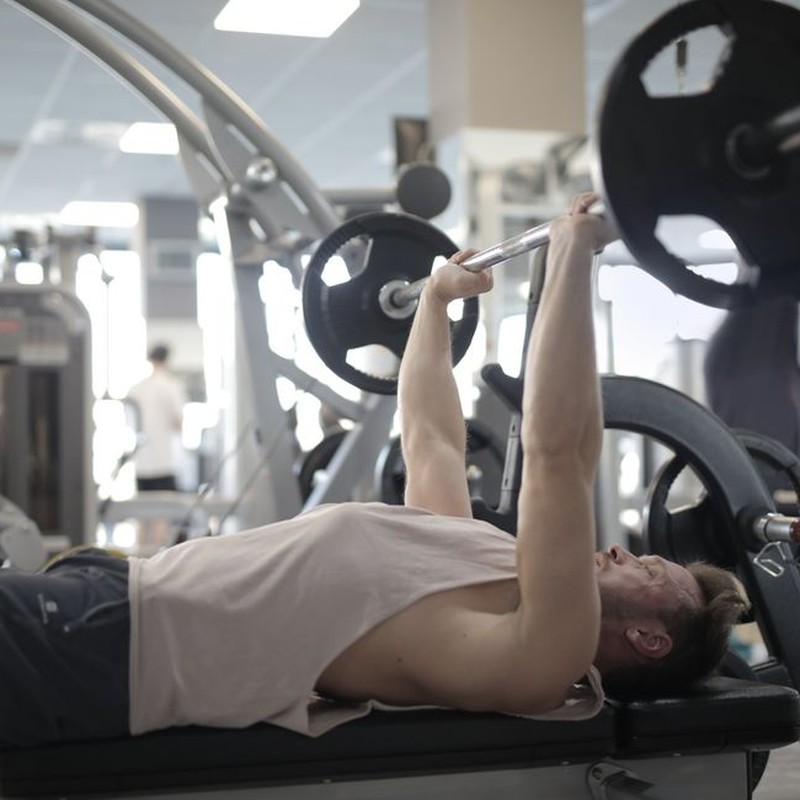
Is a 500 lb Weight Bench Enough for Home Lifters? How to Read Weight Limits and Pick a Stable Bench
What a 500 lb Weight Rating Tells You (and What It Hides)
Disclosure: Some links below are affiliate links. If you buy through them, I may earn a commission at no extra cost to you.
Weight capacity is the first spec I check on a bench, but I’ve learned to read it as a ceiling, not a promise. A 500 lb rating is almost always a static-load limit. It means the frame held 500 lb while the weight was sitting still on the pad. It doesn’t model what happens when you unrack aggressively, grind out a slow eccentric, or drop the bar back onto the uprights. All those actions can create force spikes well past the printed number.
Your body weight counts toward the limit. If you weigh 200 lb and you’re holding a 225 lb barbell, the bench is already supporting 425 lb before you move a rep. Add the acceleration of a missed rep or a sloppy rerack, and the effective load can exceed 500 lb. I had a bench like this once. The frame held, but the rear leg flexed enough that I never pushed a heavy set to failure.
The rear leg is where budget benches usually fail. Manufacturers can hit a 500 lb static rating with a narrow rear stance and thin steel, especially on adjustable benches where the hinge adds another moving part. I trained on an inexpensive adjustable bench for a year, and on heavy sets the rear leg twisted enough to make me cut the set short. The frame didn’t collapse, but the stability was not there. That’s not a failure of the rating. It’s a failure of geometry.
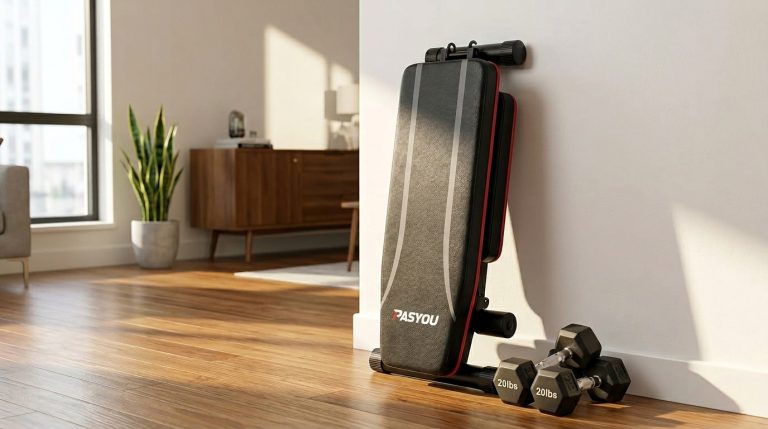
So before I trust a rating, I look at the base and hinge. The JOROTO MD55 Adjustable Weight Bench has a wide, low-profile base for the price, and it feels more planted than its spec sheet suggests. The FLYBIRD Adjustable Weight Bench has stuck around for years because its V-frame distributes load efficiently. On the budget side, the PASYOU Adjustable Weight Bench is tempting at around $150, but I’d measure the rear leg spread and hinge pin thickness before buying. A wide frame with a 500 lb rating will outperform a narrow frame with a 700 lb rating.
For the math, use this formula: add your body weight to your heaviest loaded barbell, then multiply by 1.2 to get the capacity I’d want for a home bench. The 1.2 buffer covers eccentric force, rerack impact, and the occasional missed rep. If you weigh 200 lb and want to press 225 lb, your static total is 425 lb, and with the buffer you’re at 510 lb. That puts a 500 lb rated bench below the margin I’d recommend. If the same lifter sticks to around 205 lb on the bar, the total is 405 lb, and 500 lb leaves enough room. The cutoff isn’t about experience levels; it’s about your specific bodyweight plus the barbell.
Before you buy, flip the bench over. Check the rear leg’s steel cross-section, the welds around the hinge, and how the seat bracket attaches. A two-inch difference in base width can make a much bigger difference in stability than a hundred pounds of rated capacity. The label hides those details, so use it as a starting point, not the final word. I’d rather take a well-built 500 lb bench with a wide stance than a flimsy 700 lb bench that rocks on every set. Check current prices on Amazon before you decide, and if you’ve already trained on one of these benches, share your experience in the comments.
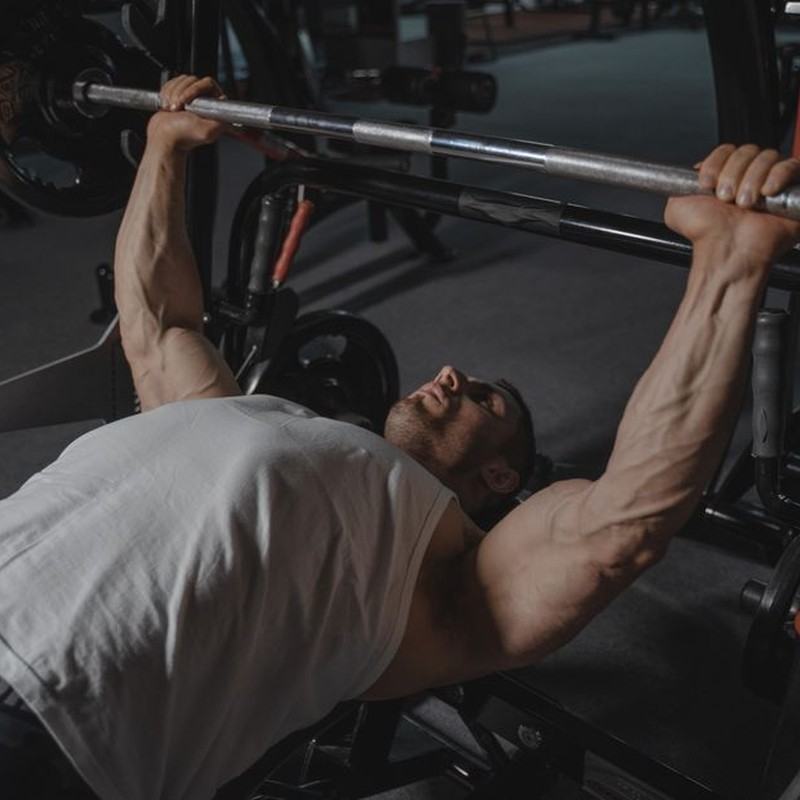
Bench Math: What Capacity Do You Actually Need?
Most people look at a bench’s weight limit once, nod, and move on. But that number only means something if you know what you’re actually putting on the bench. Your body weight counts. The bar counts. Every plate counts. The bench doesn’t care whether the load is mostly muscle or mostly iron — it just cares about the total.
Here’s the formula I use with anyone shopping for a home bench:
Bodyweight + heaviest load you’ll support + 20% safety buffer = minimum capacity to shop for
Use your heaviest planned working top set in that calculation, not a one-rep max from a calculator. If you train with a top set of 225 for reps, plug in 225. The heaviest weight you’ll actually load is what matters. The 20% buffer covers the difference between a static weight rating and a real set — the slow eccentric, the pause, the slight bounce out of the bottom. It also covers a year of loading and unloading. In my experience, benches asked to sit near their rated limit tend to develop wobble and squeaks sooner than benches with more headroom. I’ve seen budget frames start creaking around the pivot bolts after a few months of heavy presses.
Run the numbers with two examples.
A 160 lb lifter pressing a top working set of 135 lb: 160 + 135 = 295. Multiply by 1.2 and the target is 354 lb. A 500 lb-rated bench clears that by almost 150 lb. That’s the kind of headroom you want.
Now a 220 lb lifter pressing 275 lb: 220 + 275 = 495. Multiply by 1.2 and the target jumps to 594 lb. A 500 lb bench could hold the load on paper, but it misses the target by roughly 100 lb. Every heavy set becomes a trust exercise with a frame that has none of the 20% buffer left.
Since most budget benches list a 500 lb rating, I use one simple cutoff: if the formula gives you 450 or less, a 500 lb bench has enough room. If the formula puts you above 450, treat a 500 lb-rated bench as undersized and look for a heavier frame. The extra 50 lb buys you a little grace for the way the rating is tested — static load, not a fatigued lifter bouncing a heavy set.
That contrast explains why the FLYBIRD Adjustable Weight Bench shows up in so many home gyms. At about $110, it’s rated for 500 lb, and it handles the 354 lb case comfortably. If your formula number sits at 450 or below, the FLYBIRD is still in range. The Keppi Adjustable Weight Bench sits around $120 and is worth a look if you want another budget frame in the same class.
In the middle, the PASYOU Adjustable Weight Bench and the CAP Barbell Adjustable Weight Bench both run about $150. They feel sturdier than the cheapest benches on Amazon, but sturdier isn’t the same as a higher rating. For formula numbers up to around 450 lb, they’re worth the upgrade. Still, check the manufacturer’s capacity before you order.
If your formula number lands above 450, you’re in a different tier. That’s when I look for thicker steel, a wider base, and serious cross-bracing. I spent some time on a friend’s JOROTO MD55 Adjustable Weight Bench recently, and the difference was obvious: no shimmy on the descent, no creak at lockout. It runs around $240. The Bowflex 5.1S Stowable Weight Bench sits at the premium end of that spectrum at roughly $450, and it folds away without feeling flimsy.
Two more data points: a 185 lb lifter repping 185 should shop for at least 444 lb. A 240 lb lifter with a 315 top set should shop for at least 666 lb. That’s what a safety margin costs, and it’s cheaper than replacing a wobbly bench in a year.
One more thing: a 500 lb rating is a static number. A fast rep, a slight bounce off the chest, or racking the bar aggressively all create forces the rating doesn’t fully capture. That doesn’t make rated benches unsafe. It means the limit on the sticker is closer than the limit you feel in the moment.
So before you order, weigh yourself, write down the heaviest set you plan to hit, and run the formula. If 500 lb clears your target with room to spare, a bench like the FLYBIRD is a legitimate budget pick. If your number is too close to 500 — or above the 450 cutoff — move up a tier and pay for the frame instead of the brand.
Check current prices for these benches on Amazon, and if you’ve run the numbers for your own setup, share what you bought and how it’s held up in the comments.
How to Test Bench Stability Before You Commit
A 500 lb capacity rating looks reassuring on a spec sheet, but it won’t tell you whether a bench twists under a loaded bar. I’ve pressed on benches rated for 300 lb that felt rock-solid at 225, and others rated for 600 lb that swayed the moment the bar came out of the rack. The rating measures what the frame survived in a test, not how it behaves when you’re grinding out a heavy rep.
So before you compare capacity numbers, run the twist test. Stand at the front of the bench, grip the pad where it meets the frame, and shake it hard side to side. Not push down — twist. Lateral force is what exposes weak frames. When you press, any slight imbalance from grip, arm strength, or bar drift sends side-to-side force through the bench. If the pad moves more than a fraction of an inch or you feel a clunk, that bench won’t stay stable under heavy pressing.
I’ve done this exact test on the FLYBIRD Adjustable Weight Bench and the Keppi Adjustable Weight Bench. They’re within the same price range, but the difference is obvious once you crank on the pad. The FLYBIRD’s simpler frame geometry doesn’t flex much at the pad connection. The Keppi sits on a slightly taller base, and you can feel more play when you twist it. Neither is a bad bench for light work, but if you plan to work at 80% of your one-rep max, pick the one that barely moves.
Next, look at the footprint — the actual floor contact area. A wide, long base spreads the load and resists tipping; a narrow base feels tippy even if the steel is thick. Measure the front-to-back distance between the feet if you can. For most lifters, anything under about 30 inches starts to feel short under a loaded barbell, though your own height and setup will change that.
Leg length and angle matter too. Short vertical legs transfer load straight down and feel solid. Angled or splayed legs widen the stance but can wobble at the joints if the welds are sloppy. The Bowflex 5.1S Stowable Weight Bench shows how a folding bench can still feel stiff — the base locks into place when deployed, and the wide legs don’t flex. That’s part of why it costs $449.
Rubber feet deserve way more attention than they get. Hard plastic feet slide on smooth floors when you push back into the bar. Rubber grips, but it also compresses. The best benches use large, replaceable pads. The CAP Barbell Adjustable Weight Bench has wider feet than most at its price, which gives it a planted feel on carpet and rubber flooring.
Steel wall thickness is the spec nobody lists, but you can feel it. Budget benches often use 2 mm or even 1.5 mm tubing. Stepping up to 3 mm steel adds meaningful weight, and a heavier bench is usually a stiffer bench. As a rough guideline, many 50-lb benches use lighter tubing, while a 75-90 lb bench generally has more metal doing work for you. But total weight also depends on pad size and adjustability, so don’t treat the scale as the final word. Pick up one end. If it feels like hollow conduit, that’s a red flag. If it makes you mutter “yeah, that’s substantial,” you’re on the right track.
Hinges and locking pins are where cheap benches fail first. Flip the bench through its full range of incline positions and listen. Click each lock into place and push down hard on the pad. A good hinge has a positive detent — it clicks in with authority and doesn’t rattle. Slop in a hinge turns into a pad that moves while you press.
If you want to see what the extra money buys, the JOROTO MD55 Adjustable Weight Bench and the Bowflex 5.1S Stowable Weight Bench bookend the range. The JOROTO, around $240, has a frame that feels noticeably sturdier than the sub-$150 options I tested, including the PASYOU Adjustable Weight Bench at $150 and the CAP Barbell at $150. The Bowflex costs nearly twice as much but offers the build quality and folding design if you need to reclaim floor space. In this guide I’m focusing on what to check at the store or on delivery, not just the specs on a product page.
Garage concrete is rarely flat, and a bench with four rigid rubber feet can rock on minor dips. Some designs let the feet pivot slightly to maintain contact on uneven surfaces. If you’re setting up in a garage or basement, bring a small level when you test a bench. Set the pad flat and see if it sits true without rocking.
Capacity ratings are a useful starting point, not a promise. A 500 lb rated bench with thin steel, a narrow footprint, and loose hinges will feel less secure under 185 lb than a 300 lb rated bench with a wide base and thick tubing. Run the twist test, check the feet and hinges, and don’t be afraid to compare two benches side by side in the same room.
If you’re buying online, look for video reviews that load the bench and shake it, and check the return policy before ordering. Then do the twist test the day it arrives — if it fails, send it back. And if you already own a bench, do the test tonight. Leave a comment below with the bench you use and how much you trust it.
So Which 500 lb Bench Should You Buy?
The 500 lb rating is a starting point, not a contract. You still have to run your own numbers: bodyweight plus the heaviest load you’ll actually put on the bench. That total, plus a safety margin, tells you whether a 500 lb bench is enough or whether you should move up to a heavier frame.
I learned this the hard way. A few years ago I trained in a detached garage on a budget 500 lb-rated bench. It felt fine for the first few months. Then I hit 225 lb for paused reps, and the whole frame swayed sideways every time I unracked. I lowered the bar back to the pins and never pressed on that bench again. A wobbly bench doesn’t just feel bad; it can put your shoulder in a bad position or force you to bail awkwardly.
Step 1: Calculate your real working load
Take your bodyweight and add the heaviest weight you plan to handle on that bench. For barbell work, that means the bar plus plates. For dumbbell work, it means the heaviest pair you’ll press. Do not use your one-rep max unless you genuinely train at that intensity. Use the top set you expect to hit in a normal workout.
Example: you weigh 200 lb and your top bench set is 185 lb. Your total is 385 lb. That sits inside a 500 lb capacity, but it’s not a huge margin. Now take a 250 lb lifter pressing 225 lb. That’s 475 lb total, just 25 lb shy of the label. I would not trust a standard lightweight bench with that load.
Step 2: Apply the 20% buffer rule
Static load ratings are measured in a lab, not in your living room. A bench might hold 500 lb when the load is placed gently and evenly. It behaves differently when you bounce a rep off your chest, rack the bar hard, or fail a rep and drop the weight. An uneven floor makes things worse.
The practical fix is the 20% buffer rule: keep your bodyweight-plus-working-weight under 80% of the advertised rating. For a 500 lb bench, that’s about 400 lb. If your total is under 350 lb, you have a generous margin. If your total lands between 350 and 450 lb, you’re in the gray zone where bench construction starts to matter more than the label. If your total goes above 450 lb, the 500 lb rating is nearly used up before you add any dynamic stress. That’s when you need a heavier bench.
Step 3: Match the bench to your numbers and your space
Once you know your total, the choice gets simpler. Here’s the way I think about it.
- Total under 350 lb and limited floor space: look at the Keppi Adjustable Weight Bench or the CAP Barbell Adjustable Weight Bench. The Keppi folds up tight enough for a bedroom corner, and the CAP has a slightly wider rear stabilizer that helps during dumbbell work. Neither is built like a tank, but at your working loads that’s fine.
- Total between 350 and 450 lb: the PASYOU Adjustable Weight Bench and the FLYBIRD Adjustable Weight Bench are the most practical middle ground. I’ve pressed on the FLYBIRD in a small home gym, and it felt more planted than the ultra-light options. The PASYOU is a newer design with a similar footprint and slightly wider pad, which helps if you have broad shoulders.
- Total above 450 lb: skip the 500 lb cheapies entirely and buy the JOROTO MD55 Adjustable Weight Bench. It has a triangular support structure, a wider base, and the kind of stability you need when your bodyweight plus the bar is already pushing the limits of a standard bench. It costs more, but it’s the difference between a bench that holds your heavy sets and one that makes you nervous on every rep.
Match the bench to your training style, not just your weight
Lifting style changes how much margin you actually need. A lifter who does controlled pause presses can run closer to the rated capacity than someone who uses a bounce off the chest or slams the bar onto the J-hooks after every set. I’ve seen a 160 lb lifter make a 500 lb bench wobble by racking the bar with so much force that the whole frame shook. My training partner, who weighs 180 lb and presses 225 lb with a slow tempo, feels rock solid on the same bench. Be honest about how you train.
Safety matters most near the rated limit. If your numbers put you in the upper half of a bench’s capacity, do not press heavy without spotter arms or a spotter who knows how to pull the bar. A weight bench is not a safety device. The frame can hold the load in a static test and still shift when you’re grinding through a tough rep.
Storage and budget are the real filters
Storage changes the pick more than most people realize. If the bench has to lean against a wall or slide under a bed, the Keppi or CAP wins because they fold small. If you have a dedicated corner, give up the folding convenience and get the JOROTO or the Bowflex 5.1S Stowable Weight Bench. The Bowflex costs more, but it has a wide base and a fold-up design that still saves floor space when you need it.
Budget is the last filter, and it should not be the first. A $120 bench and a $450 bench are different tools. If your total working load is 300 lb and you mainly do dumbbell presses, a budget bench is fine. If your total is 420 lb and you’re pressing heavy barbell work, saving for the JOROTO or Bowflex is the smarter move. Buying a bench that’s already near its limit is how you end up replacing it in six months.
Here’s my straightforward advice: the JOROTO MD55 is the pick for heavier lifters who want a bench that feels like commercial gym equipment. The Keppi and the CAP Barbell are the smart buys for compact spaces and lighter loads. Between those extremes, the PASYOU and FLYBIRD offer the best balance of price and stability. Check current prices on Amazon before you commit, and if you’ve already trained on any of these benches, share your experience in the comments.
Medical & Editorial Review: This article was reviewed by Liam Smith, founder of Apexfito, for accuracy and safety. Content is for educational purposes and is not a substitute for professional medical advice. Consult your physician before starting any exercise or nutrition program.


One Comment