How Long Does It Take to See Results From Working Out? A Realistic Beginner’s Week-by-Week Timeline
Full disclosure: Some links in this article are affiliate links. We may earn a small commission at no extra cost to you if you make a purchase through them. Our recommendations are based on what real users report, not on commission size.
The First Week: Expect Changes You Can’t See Yet
You’re a few workouts in, and the mirror still shows the same person. That’s expected. In the first seven days, the interesting stuff is happening out of sight: your nervous system is learning to talk to your muscles, and your body is starting to adapt to work it hasn’t done before.
Your brain is building new wiring
Every new exercise forces your brain to recruit muscle fibers in a pattern it hasn’t used much before. Your first squat looks shaky because your brain is still deciding which quad fibers to switch on, and when. By your third or fourth session in the same week, that pattern starts to smooth out. You brace better, your balance improves, and the movement feels less foreign.
This is why beginners can add reps or use a slightly heavier dumbbell within days, even though no visible muscle has appeared yet. That early progress comes mostly from the nervous system learning to fire muscles in sync, not from new tissue growth. I’ve watched complete beginners go from wobbly lunges to smooth reps in a single week of practice. Their quads didn’t change; their brains did. Keep a simple workout log from day one, even if it’s just weight and reps, because that baseline makes every later week easier to track.
Soreness peaks around 48 hours
Delayed onset muscle soreness, or DOMS, usually feels worst about two days after a workout. It comes from unfamiliar loading creating small tears in muscle fibers, plus the inflammation that follows. The soreness is a sign the work was new, not a sign that the workout was great. A beginner can feel wrecked after a light circuit, then repeat the same workout a week later with almost no soreness.
I once had a friend try a 20-minute lower-body circuit at home and end up barely able to sit down the next morning. By day two, stairs were brutal. By day four, she was fine. Nothing was wrong; she had just asked her muscles to do something they weren’t used to doing.
Use soreness as a guide, not a report card. If you’re stiff but can move normally, a short walk or gentle stretching helps. If walking hurts or a joint can’t move through its full range, take another rest day and do less next time.
The scale can creep up — that’s water
Microtears trigger an inflammatory response, and your body holds extra fluid around the damaged fibers to help repair them. After a week of strength training, especially lower-body work, it’s completely normal to see the scale jump a pound or two. That jump is not fat. It’s water and repair materials doing their job.
If you weigh yourself at all this week, keep it to once or twice and treat the number like a weather report, not a final grade. Better yet, skip the scale for the first few weeks and rely on progress photos and a tape measure every three weeks.
Don’t chase the burn
A common beginner mistake is thinking a workout only counts if you can barely lift your arms afterward. That mindset tends to backfire. Some of the biggest early gains happen in your nervous system, not your chest or quads, so real progress can happen without that deep muscle burn. Controlled reps, good form, and stopping a couple of reps before failure give your nervous system the stimulus it needs.
You don’t need to train to total exhaustion seven days a week. Some muscle tension is fine; hobbling out of the gym is not. You’re trying to build a habit, and habits survive on consistency, not burnout.
The changes from these first seven days set the foundation for the timeline below. Each new phase of visible results is built on the same neural and physiological groundwork you’re laying right now.
Weeks 1-12: A Realistic Week-by-Week Timeline
The honest answer to “when will I see results?” has three parts. You feel changes in the first week. You see performance changes in the first month. Visible body changes usually show up between weeks eight and twelve. Here’s what that looks like week by week.
Weeks 1-2: The “feel” phase
This phase is about feeling better, not looking different. Better sleep is the most common first change. You might also notice you need a little less time to catch your breath between sets. That’s your nervous system syncing with your muscles.
Your sleeves and waistband won’t change yet. That’s normal. Actionable goal: show up for three to four workouts and rate your energy daily instead of weighing yourself.
Weeks 3-4: The numbers move
By the third week, your brain has figured out the exercises. It starts recruiting more muscle fibers for each rep. That’s why you’ll likely add 5-10% to your lifting weights or hold a pace that used to leave you winded. That 5-10% is a conservative estimate — some beginners see larger jumps, especially if they’re new to lifting. But it’s mostly neural adaptation, not new muscle yet. The National Strength and Conditioning Association points out that early strength gains come from improved motor unit recruitment.
Cardio changes often feel even more obvious. A walk that used to spike your heart rate might turn into a light jog. A bodyweight squat you had to break into two sets becomes one smooth set.
Actionable goal: write down every workout. Next week, try one more rep or add the smallest weight increment you have. Keep form clean.
Weeks 5-8: First visible changes
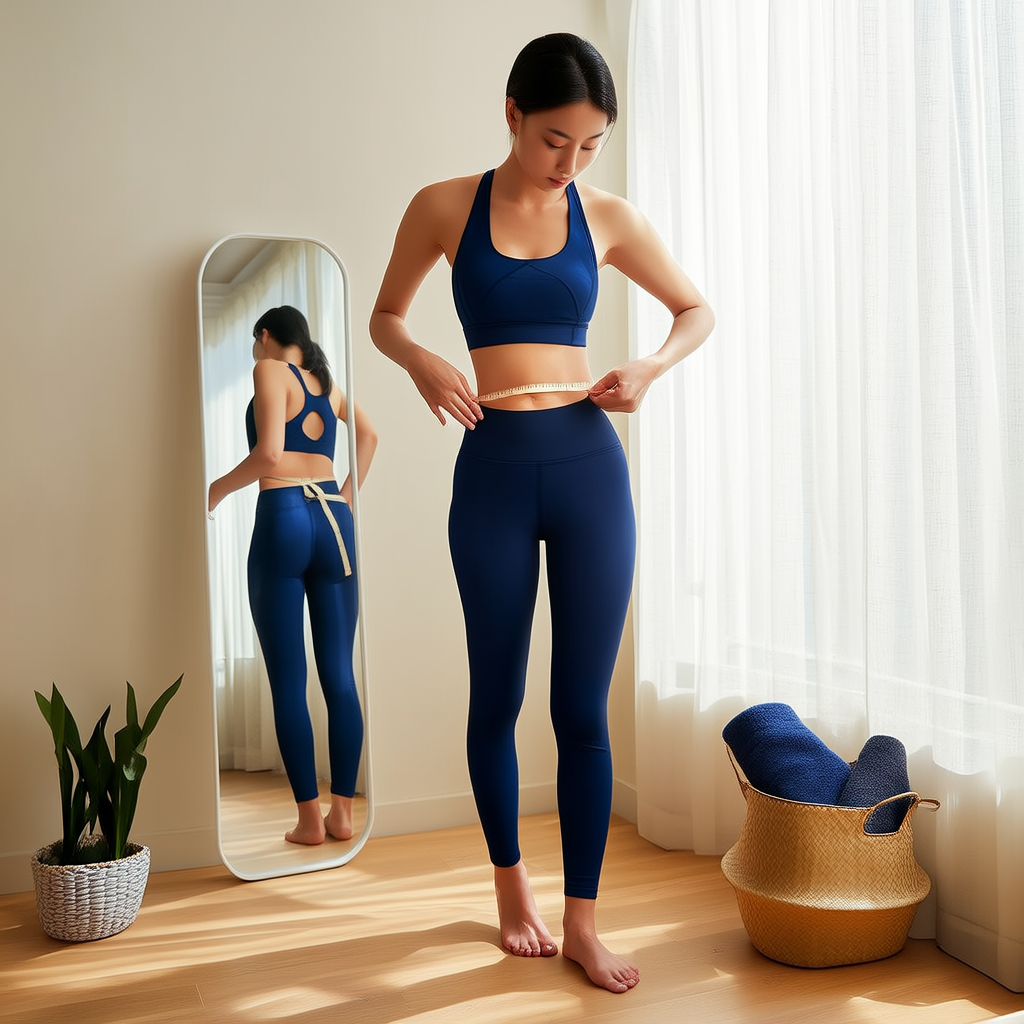
Somewhere around week five, muscle protein synthesis has been elevated long enough to add a small amount of tissue. If you’re in a calorie deficit, you might see your waist measurement drop anywhere from 0.5 to 2 inches, depending on your starting point and how steep your deficit is. Your arms and shoulders may look firmer even when relaxed.
This is body recomposition: losing fat while gaining a little muscle. The number on the scale might stay flat for weeks, but your clothes start fitting differently. That’s why measuring your waist every two weeks is more useful than daily weigh-ins.
Actionable goal: take progress photos in the same spot, same lighting, same clothes. Front, side, back. Then put them away until week 12.
Weeks 9-12: Other people notice
By the twelve-week mark, the changes aren’t just real — they’re visible to people who see you regularly. Ultrasound studies show measurable increases in muscle thickness after eight to ten weeks of resistance training, and those changes become clear to observers by week 12. The exact timing depends on your starting point, protein intake, sleep, and whether you’re eating at a deficit, maintenance, or surplus.
If you’ve been in a mild calorie deficit, a waist reduction anywhere from 1 to 3 inches is realistic by week 12, depending on where you started. If you’ve been focused on gaining muscle, expect looser-fitting shirts across the shoulders and a firmer posture rather than a lower scale weight.
Lay your week 12 photo next to your week 1 photo. Look at your shoulders, waist, hips, and jawline. If you don’t see a difference, check your records: have you been adding reps or weight every couple of weeks? Sleeping seven to nine hours? Getting enough protein? Taking rest days? That’s where most plateaus come from.
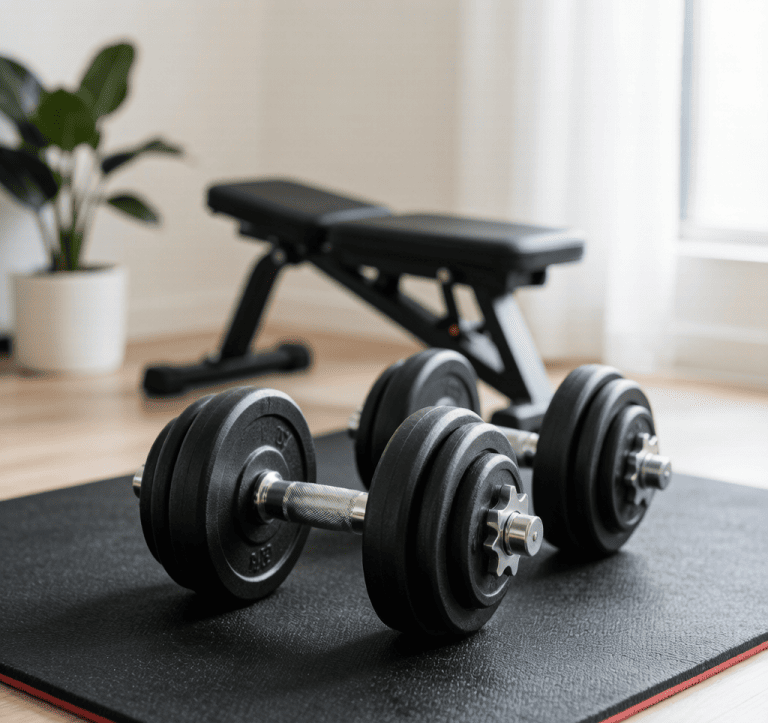
If you need equipment like a pair of adjustable dumbbells or a workout bench, check current prices on Amazon before you buy. And once you hit your week 12 photo, come back and share what changed first for you in the comments.
Fat Loss and Muscle Gain Don’t Follow the Same Clock
You’re three weeks into a new routine. You’ve made it through most of the workouts, you’ve tried to eat a little better, and the scale is still sitting on the same number you started with. Before you convince yourself that this training stuff isn’t working, take a closer look at the two things happening inside your body.
Fat loss and muscle gain don’t run on the same clock. In fact, they can cancel each other out on the bathroom scale, which makes the first few weeks confusing for almost every beginner.
Stored body fat holds about 3,500 calories per pound. If you create a daily deficit of roughly 500 calories, the simple math puts you on track to lose about a pound of fat per week. A bigger deficit can push that to two pounds. I’m using the word roughly on purpose because individual metabolism and hormones affect the exact rate, but that 3,500-calorie rule is still the foundation of fat loss.
Here’s the catch: that prediction only measures fat. When you start lifting, your muscles soak up more water, your glycogen stores refill, and you begin adding a little lean tissue. All of that has weight. So you could lose three pounds of actual fat in three weeks and see barely any movement on the scale because water, glycogen, and new muscle took its place.
Body recomposition is common in beginners
Within the first few months of training, it’s possible to lose fat and gain muscle at the same time. That’s called body recomposition, and it’s far easier to achieve when you’re new to lifting than after years of training. Your body is learning to use food more efficiently, and if you’re eating enough protein and doing full-body strength work, it can build while it burns.
This sounds great, but it creates a weird situation: your waist gets smaller while the scale stays the same. I’ve seen it happen with clients more times than I can count. One woman dropped four inches off her hips over eight weeks while her body weight didn’t change at all. She was doing it right. The scale just couldn’t tell her about it.
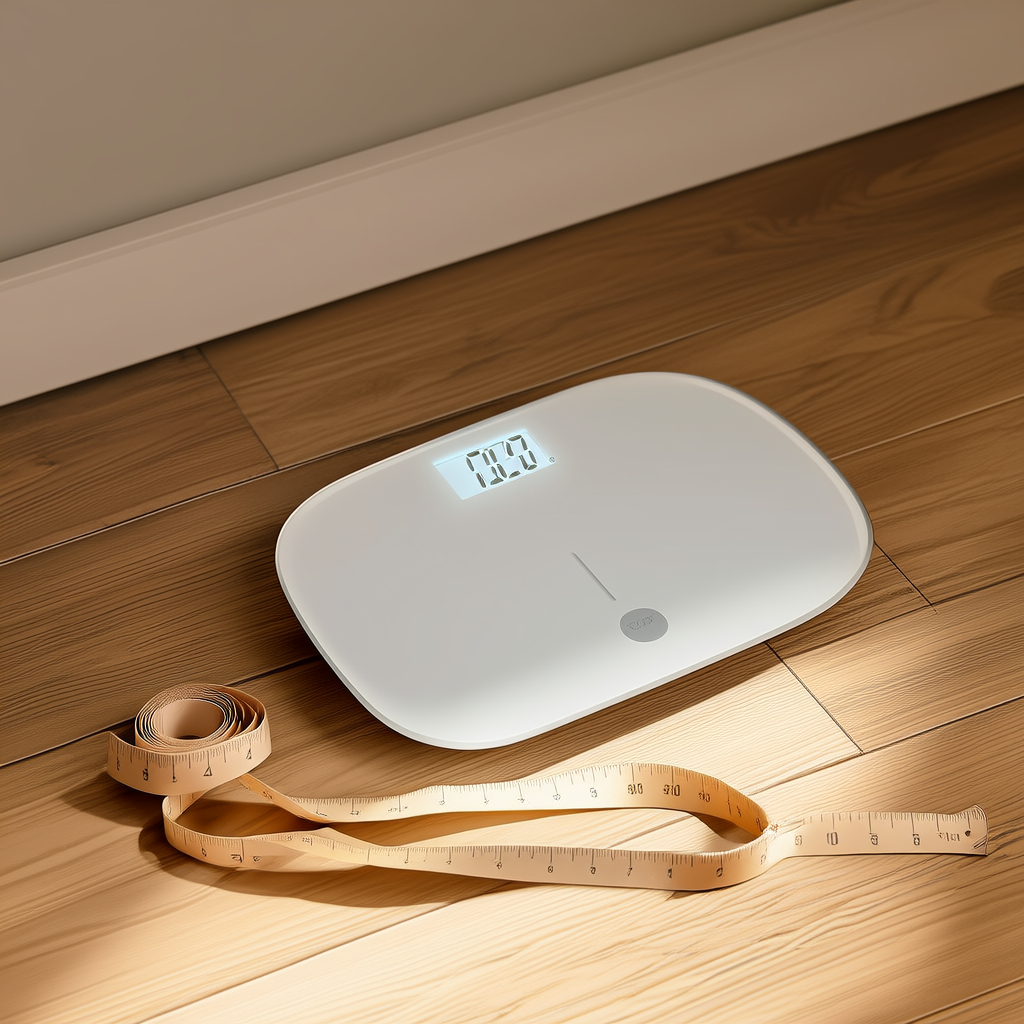
That’s why I rarely tell beginners to judge progress by a single morning weigh-in. If you are going to weigh yourself, look at the weekly average rather than any one day. Better yet, use a measuring tape around your waist and hips every couple of weeks, and let the fit of your pants add its opinion.
Your first muscle gains are mostly water and glycogen
There’s one more reason three weeks won’t show a dramatic physical change.
The early strength improvements you feel are real, but they’re mostly your nervous system figuring out the movement patterns and your muscles pulling in extra glycogen. Glycogen is a stored form of carbohydrate that draws water into the muscle with it. That extra volume can make your muscles look fuller and slightly harder before any actual new muscle tissue has formed.
This can also show up as a small scale jump in the first week. If you’ve been waiting to see a lower number, that jump is far more frustrating than a flat one. But it’s not fat. It’s fuel and fluid, and it’s a sign your muscles are responding to the training.
Visible changes take closer to three months
So what should you realistically expect at three weeks? More energy, better exercise form, and maybe an extra rep on each lift. You might feel more solid, and everyday tasks might feel easier. But visible body composition changes usually take longer.
For most beginners, close friends start to notice around the three-month mark, and people who see you less often need even more time. That may sound discouraging, but it’s also a relief. It means the lack of visible change in week three isn’t a sign of failure. It just means the changes are still small and spread out.
Use the first few weeks to collect honest data: how much weight you can lift, how your waistband fits, how your energy feels during the day. Those markers change before the mirror does.
If you want to track with simple tools, a flexible tape measure and a body composition scale are both on Amazon—check the current prices there. And if you’ve been training for at least six weeks, share what changed for you in the comments. Your timeline might be exactly what someone in week three needs to hear.
How to Measure Progress and Stay Consistent Past the 12-Week Mark
After the first couple of months, the quick wins fade. The scale stalls. The mirror doesn’t show much new. That’s not a sign you’re doing anything wrong — it means your body has adapted to the training you’ve been doing. To stay motivated, you need a different kind of feedback: specific, repeatable measurements that show the small changes happening underneath the surface.
I’ve been on both sides of this. I’ve trained for months and felt like nothing was changing, and I’ve watched friends quit right before their results showed up. The difference wasn’t effort. It was knowing what to track.
Take Weekly Photos From the Same Spot
Pick a spot in your home with steady light. Use the same time of day, the same clothes, and the same phone angle. Take a front and side shot every week, and save them in a folder labeled “Progress.” You don’t need to look at them every day — just keep the habit.
Compare month to month, not week to week. I can’t tell you how many times I’ve felt stuck, then pulled up a photo from a month earlier and noticed my shoulders looked broader or my waist looked a little clearer. That’s the kind of evidence your brain needs when the scale won’t cooperate.
Log Performance, Not Just Looks
Pick two or three movements you plan to repeat for months. For example, track your top three lifts — like goblet squats, push-ups, or dumbbell rows — or, if you run, track how far you cover in a set time. A 20-minute run distance is just one example; any repeatable test works. Write down the number each session.
These numbers move before the mirror does. Your nervous system and muscles become more efficient within weeks of training, even when visible size changes lag behind. I remember the day I added five pounds to my goblet squat and didn’t look different in the mirror at all. But I felt stronger, and that feeling kept me coming back.
Measure With a Tape Measure Once a Month
A tape measure catches changes that photos miss, especially around your waist, hips, and chest. Do it on the same day every month, first thing in the morning, with the tape snug but not tight.
Changes of half an inch to a full inch (about 1 to 2 cm) are meaningful. If you see that kind of movement over four weeks, you’re heading in the right direction even if the scale hasn’t budged. You don’t need an expensive scale to track progress — a basic body tape measure costs a few dollars and does the job.
How to Stay Consistent Without Burning Out
Set one weekly non-negotiable, not seven. That could be “show up for three workouts” or “get 8,000 steps most days.” Write it on a sticky note or keep it in your phone.
When motivation is flat, focus on the habit instead of the outcome. I’ve had mornings when I didn’t want to train, so I told myself I’d just do one warm-up set. Once I started, I usually finished the whole session. That trick works because it lowers the barrier to action.
Another thing that helps is giving yourself a longer runway. People who stay consistent for years don’t get attached to any single workout. They build a system that repeats. You’re not trying to be perfect for twelve weeks — you’re trying to become someone who trains on okay days and busy days too.
When You Hit a Plateau
A plateau is your body’s way of saying it has adapted to your current workload. It’s not a reason to panic — it’s a signal to change something small. Add a few minutes to your run, add two extra reps to a set, or take an extra rest day.
Your logs help you spot plateaus early. If your 20-minute distance hasn’t moved in three weeks, that’s your cue. If your waist measurement has stayed the same for two months, check your food choices, not just your workouts.
Progress isn’t a straight line. Some months you’ll set a personal record. Other months you’ll just hold the line. Both count.
So start today. Take the photo, write down your top three lifts, and keep a tape measure in your bathroom. If you want a tape measure or digital scale, check current prices on Amazon, then share your own progress and experience in the comments. In another twelve weeks, you’ll have a folder full of proof that you kept going — and that proof carries you further than any single workout.
Medical & Editorial Review: This article was reviewed by Liam Smith, founder of Apexfito, for accuracy and safety. Content is for educational purposes and is not a substitute for professional medical advice. Consult your physician before starting any exercise or nutrition program.