The Biggest Fitness Myths, Debunked: What Actually Works for Fat Loss and Muscle
Full disclosure: Some links in this article are affiliate links. We may earn a small commission at no extra cost to you if you make a purchase through them. Our recommendations are based on what real users report, not on commission size.
Spot Reduction Isn’t Real: How Fat Loss Actually Happens
If you’ve ever done 100 crunches hoping to shrink your belly, you’re not alone. The idea that working a specific muscle burns the fat on top of it makes intuitive sense. But your body doesn’t read fitness articles. It has a different system for releasing stored fat, and it ignores your wish to change one trouble spot.
Fat loss is systemic. When you’re in a calorie deficit, your body breaks down triglycerides from fat cells all over your body and sends them into the bloodstream to be used as energy. The fat you lose during a walk or a lifting session comes from a mix of regions, not from the muscle you just trained. Genetics decide the order your body follows. For some people, belly fat is the first to go; for others, it’s the last stubborn area. You don’t get to vote.
Several studies have tested spot reduction directly. In a 2011 study published in the Journal of Strength and Conditioning Research, participants did specific abdominal exercises five days a week for six weeks. Their belly fat didn’t decrease significantly compared with a control group that didn’t do the exercises at all. Similar results show up in other muscle groups. I’ve trained people who hammered their glutes for months and were confused about why their hips didn’t change. It’s not that the exercises weren’t working. It’s that you can’t out-target a systemic process.
Targeted exercises still have a place. Planks and leg raises can strengthen your core and improve posture.
But they won’t remove the fat layer covering those muscles. The visible change you want comes from dropping total body fat, and that takes a three-part approach.
First, set up a modest calorie deficit. Aim to eat about 300-500 calories less than your maintenance level each day. This is enough to lose about 1-2 pounds per week without leaving you exhausted or starving. You can do this by swapping liquid calories, reducing portions of calorie-dense foods, and increasing protein and vegetable intake. A food scale and a tracking app help for the first few weeks until you recognize proper portion sizes.
Second, lift weights for your whole body. Full-body strength training two or three times per week builds muscle that helps you look leaner as fat drops. Squats, deadlifts, push-ups, rows, and overhead presses send a strong signal to your body to hold onto muscle while in a deficit. Compound movements are especially efficient because they work multiple muscles in one session. You don’t need a gym; bodyweight exercises and dumbbells at home work fine.
Third, walk more. Daily walking doesn’t feel like hard exercise, but it adds up. I’ve seen clients get excellent results by simply walking 30 to 45 minutes on top of their workout schedule. That’s roughly 7,000-10,000 steps a day for most people. Walking increases your daily energy expenditure without adding the fatigue that extra cardio sessions bring. It’s also low impact, so it’s easy to stick with.
Here’s what a simple weekly setup looks like:
- Monday: Full-body strength workout (squats, push-ups, rows, core)
- Tuesday: Walk 30-45 minutes or easy bike ride
- Wednesday: Full-body strength workout (deadlifts, overhead press, lunges, core)
- Thursday: Walk 30-45 minutes
- Friday: Full-body strength workout (split squats, bench press, pull-ups or lat pulldowns, core)
- Saturday: Walk 30-45 minutes or active rest
- Sunday: Rest or light leisure walk
Notice what’s missing: no special diet pills, no ab-focused killer circuits, no doing 600 crunches before bed. The exercises in the plan above work large muscle groups and burn more total calories per session. And because you’re following a calorie deficit, your body has to pull from fat stores for fuel. Over weeks and months, your waist shrinks because total body fat drops, not because you overworked one muscle.
Patience is often the deciding factor. Fat loss can be slow, and your body may lose from some places faster than others. I once trained with a guy who carried most of his weight in his lower belly. After eight weeks of dieting and training, his face, arms, and chest were noticeably leaner, but his belly looked almost unchanged. Three weeks later, it finally started to shift. The process was working the whole time. It just wasn’t visible yet. Give this plan at least eight weeks before deciding whether it works.
Why Lifting Weights Won’t Make Women Bulky
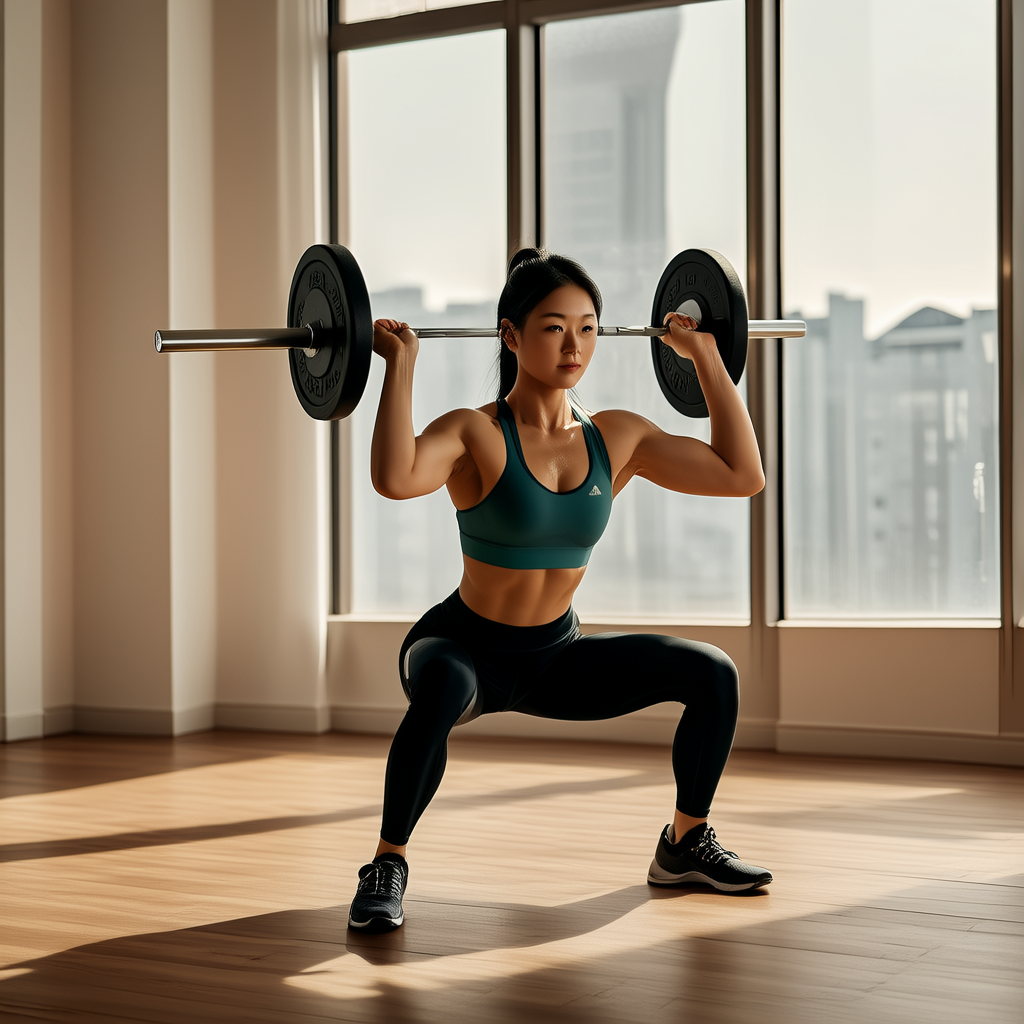
I’ve lost count of how many women have told me they want to strength train, but they’re afraid of getting huge. That bulky myth is alive in gyms, especially among people who’ve never tried lifting. Here’s what the science and years of coaching have shown me: women who lift consistently become stronger, firmer, and more defined. They don’t accidentally turn into bodybuilders.
The main reason is hormonal. Testosterone drives most of your body’s muscle-building machinery, and women’s natural levels are nowhere near men’s. A typical woman’s testosterone range is around 15 to 70 ng/dL. A man’s normal range is roughly 300 to 1,000 ng/dL. That gap is enormous. Even after a hard workout, a woman’s testosterone rises only slightly and stays far below the level needed for rapid muscle growth. To build bodybuilder-level bulk, you’d need years of deliberate, high-calorie, high-volume training, and often anabolic steroids. Natural resistance training won’t produce that.
To be clear, lifting can add some muscle. That’s not a problem. A bit more muscle along your shoulders, arms, glutes, and thighs is what makes you look athletic and firm rather than soft. Muscle is denser than fat, so it takes up less space. You can weigh the same after a few months of lifting and still drop a clothing size. Even male lifters who aggressively chase size find that muscle grows slowly. Women have far less hormonal support for fast gains, so you’re not one workout away from looking like the Hulk.
I had a client who avoided any weight over 8 pounds for her first month. Once she let herself try 12s, then 15s, she didn’t blow up. Her arms looked more sculpted, her waist looked tighter, and she felt better in her clothes. Another client of mine was preparing for a family event. After eight weeks of simple strength training, she fit into jeans that had been sitting in her closet for years. The scale barely moved, but those jeans buttoned with room to spare. That’s the power of losing fat and gaining muscle at the same time.
Strength training also helps your metabolism, though the effect is more modest than many social media posts suggest. Muscle burns more calories at rest than fat, so a few extra pounds of muscle raises your resting metabolic rate. That might add a few dozen calories each day, not hundreds. It nudges fat loss in the right direction, but it doesn’t give you permission to eat noticeably more.
If you want that firm, athletic look and the metabolic benefit, you don’t need a gym full of equipment. Progressive overload is the simplest way to make your body adapt. That just means you ask your muscles to do a little more over time. Dumbbells, resistance bands, or bodyweight exercises all work. I used this setup at home during a stretch without a gym, and it worked well for maintaining and even gaining muscle.
- Schedule two or three full-body sessions per week, with a day off between them. Monday, Wednesday, and Friday works well.
- Choose compound movements: goblet squats, dumbbell rows, push-ups, glute bridges, band pulls, or lunges.
- Do three rounds of 10 to 12 reps per exercise, resting about a minute between rounds.
- When the last rep feels easy, add a couple of reps or a little more resistance. That’s progressive overload.
You can progress bodyweight exercises too. Push-ups get harder as you move from a counter to the floor. Glute bridges can become single-leg glute bridges. Lunges can turn into split squats. Keep giving your muscles a reason to adapt, and you’ll keep seeing changes.
If you’re ready to start, all you need is a pair of dumbbells or a set of resistance bands. Check current prices on Amazon before you commit; you’ll often find a simple set for less than you’d spend on a few protein bars. Then run this routine for four weeks and come back to the comments. Tell me how your clothes fit, how strong you feel, and whether the bulky myth finally died for you.
Meal Timing Myths: Does Eating Late Make You Gain Weight?
You’ve probably heard the warning: finish dinner before 7 p.m., or every bite turns to fat overnight. That rule gets repeated so often it sounds like straight physiology. But it isn’t. Your metabolism doesn’t clock out when the sun goes down, and there’s no fat-storage switch that flips at sunset. Weight change comes down to total calories across days, not the hour on the kitchen timer.
Still, the research on meal timing is worth a closer look. In most controlled studies, when people eat the same number of calories, spreading them later in the day has little effect on fat loss for most people. Some time-restricted eating trials show benefits, but those benefits mostly come from eating fewer calories, not from some special power of eating earlier. And in many of those trials, participants naturally cut snacks because they had a strict eating window.
That’s the nuance that gets lost. The clock isn’t the problem. The typical after-dinner snack is. Chips, ice cream, cookies, a glass of wine or a couple of beers — these are easy to overdo because they’re not filling and they’re usually eaten on the couch while you scroll. A single night of extra snacks won’t show up on your waistline. But if it becomes a habit, the math adds up fast. A few hundred extra calories each night can mean an extra 1,200 to 2,000 calories by Sunday. That’s real weight gain over time.
I see this pattern with clients all the time. They’ll eat a light dinner, then have ‘just a small’ bowl of ice cream at 10 p.m. Two weeks later, they’re confused about why the scale hasn’t moved. The late-night snack isn’t some metabolic crime — it’s just extra daily calories they forget to track. Once we account for those snacks, the progress picks back up.
Sleep changes the picture a bit. A heavy, spicy meal right before bed can cause heartburn or restless sleep, and a poor night’s sleep makes you hungrier and more drawn to carbs the next day. So if you tend to eat a huge meal late, it’s worth moving that meal earlier. But that’s about sleep quality and next-day appetite, not about storing fat because the clock says 10 p.m.
If you’re actually hungry at night, eat something. The goal is to satisfy the hunger without blowing your daily calories. Here’s a template I give every client who asks about eating after dinner. Each option takes less than five minutes and lands around 150 to 200 calories:
- Single-serving non-fat Greek yogurt (about 100 calories) with half a cup of berries
- Half a cup of cottage cheese with a sprinkle of cinnamon
- Four or five slices of rolled turkey breast with cucumber rounds or baby carrots
- A hard-boiled egg and a small apple
These snacks give you quick protein, some volume, and enough fiber to take the edge off hunger. I’ve tried all four at home when the late-evening munchies hit, and they do the job without wrecking the day’s intake.
Before you grab something, do a quick boredom-versus-hunger check. Drink a glass of water, wait ten minutes, and ask yourself if you still want the food. If yes, pick one of the snacks above. If no, you were probably just thirsty or looking for a break.
Keep a few of these staples on hand so you’re not wandering toward the pantry at night. If you want to stock up, check current prices on Amazon for Greek yogurt, cottage cheese, or turkey slices. And if you have a go-to evening snack that keeps you satisfied without derailing your goals, share your experience in the comments below.
Soreness Isn’t the Scoreboard: Better Ways to Gauge a Workout
You know the scene: you wake up after a workout and your legs file a formal complaint. Every step down the stairs reminds you of yesterday’s session. Most of us have been trained to think that soreness equals success. I used to judge my workouts that way too.
It doesn’t. Soreness, especially delayed-onset muscle soreness (DOMS), happens after unfamiliar eccentric work—the lowering phases of movements you haven’t done in a while. A new hiking trail, a first kickboxing class, or a weekend spent moving furniture can leave you wrecked. The discomfort tells you the work was novel, not that it built muscle or burned significant fat. In fact, you can get brutally sore from an activity that was far too easy to create useful muscle.
I once helped a friend move a couch up three flights of stairs. The next morning I could barely hold a coffee mug. Did I gain muscle from that haul? Not really. The effort was unfamiliar, so my body overreacted. Meanwhile, a well-structured leg day with heavy squats might leave you barely sore at all once your body adapts to the movement.
So if soreness isn’t the scoreboard, what is?
How Hard Should a Set Feel?
Most strength and muscle gains come from sets that are hard but not exhausting. If you constantly grind to absolute failure, fatigue piles up and eats into your next workout. The simpler approach is to choose a weight you could lift two or three more times with good form, then stop.
That two-or-three-rep cushion is called reps in reserve. It leaves your nervous system enough stimulus to adapt without crushing recovery. Your technique stays cleaner, your risk of injury goes down, and you stay fresh enough to come back stronger next session. For fat loss, the same principle applies. You don’t need to feel wrecked to burn calories. You need consistent effort across sessions you can actually repeat.
Better Signs of Progress
- Weights or reps go up. One extra rep with the same dumbbell is progress. Five more pounds on the bar is progress. Write it down.
- Technique feels smoother. When a movement starts to feel coordinated and automatic, your nervous system is learning. That counts.
- Your energy improves. Clients often tell me they take the stairs without getting winded or carry groceries without stopping. That’s a real, measurable change.
- Your measurements change. Clothes fit differently, the scale moves, or your waist measurement drops. Those numbers reflect fat loss directly.
These markers beat soreness every time because they show adaptation, not just novelty.
When you catch yourself doing more reps than last week or feeling less winded on the stairs, that’s the signal. Something changed, even if you don’t ache.
That’s the real conclusion to this myth-busting tour: the best workout is one you can repeat, recover from, and gradually challenge. Fat loss and muscle growth come down to steady energy balance, enough protein, consistent training, and decent sleep, not to chasing soreness, avoiding carbs at night, or hoping crunches will melt belly fat. Once you stop using pain as proof, progress gets easier to see.
If you train at home and want a low-cost way to add progressive overload, resistance bands handle presses, rows, and squats without taking over a room. Check current prices on Amazon, give them a few weeks, then come back and share your experience in the comments. I’d love to hear what changed when you stopped treating soreness as the scoreboard.
Medical & Editorial Review: This article was reviewed by Liam Smith, founder of Apexfito, for accuracy and safety. Content is for educational purposes and is not a substitute for professional medical advice. Consult your physician before starting any exercise or nutrition program.