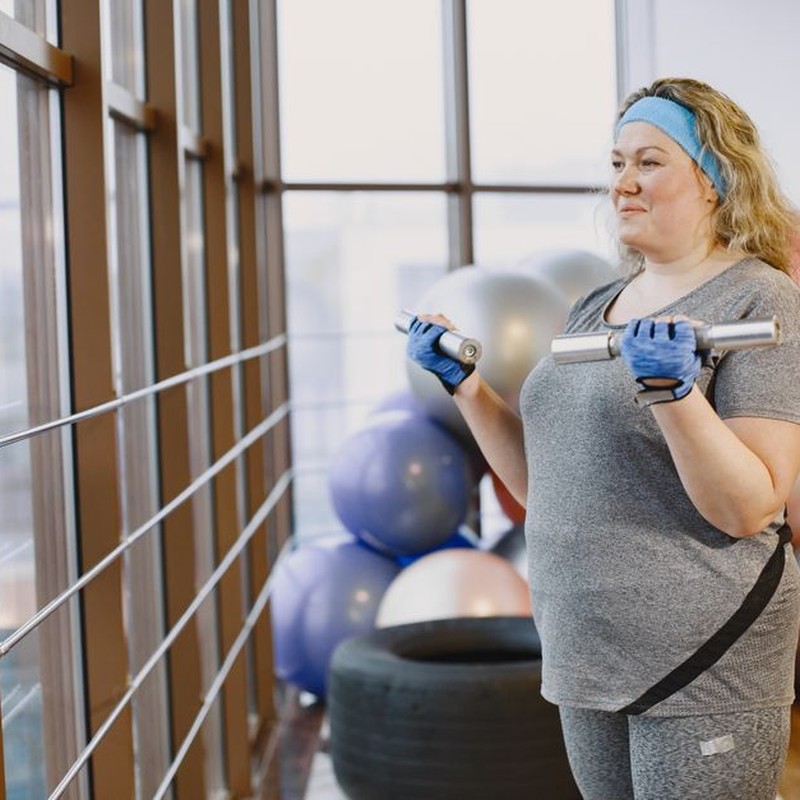
Strength After 40: Why Midlife Is the Window to Protect Your Muscle Before Sarcopenia
What Muscle Loss Actually Looks Like in Your 40s and 50s
You probably haven’t noticed much. That’s the thing about midlife muscle loss — it doesn’t announce itself. There’s no morning where you wake up weaker. Instead there’s a Tuesday when you grab two bags of groceries and think, huh, that felt heavier than usual. Or you stand up from the low couch in your parents’ living room and your hand finds the armrest before you decided to put it there.
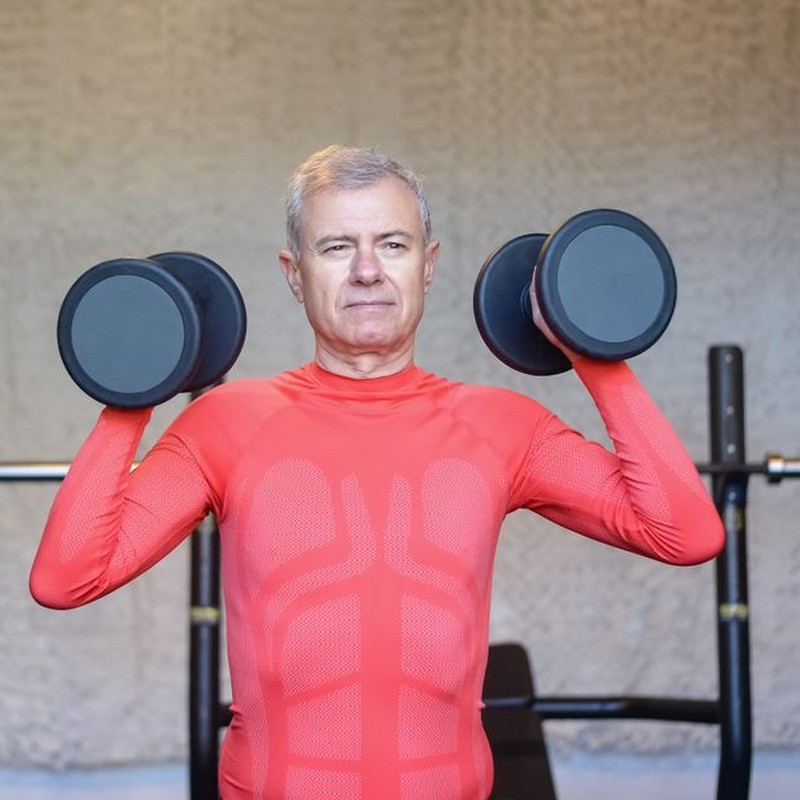
Those tiny moments are the real early signs. Not a diagnosis. Not a number on a scan. Just ordinary life getting a little more effortful in ways you explain away as being busy, being tired, being forty-seven.
Muscle mass and strength both start slipping from midlife onward. The slope is gentle enough to hide inside normal daily life for years, which is exactly why it matters.
Why the gap between “fine” and sarcopenia is the whole story
Sarcopenia is generally defined as low muscle mass combined with low strength or poor physical performance. It’s a clinical threshold, and thresholds are useful — they tell doctors when to intervene. But a threshold implies a floor. You don’t fall through a floor from the ceiling. You walk toward it for a long time first.
By the time someone meets that definition, function has usually been sliding for years. Strength tends to leave before size does, and performance — walking speed, how easily you rise from a chair, how well you catch yourself on a curb — can erode while every checkup still comes back normal.
A paper published in Cureus in October 2026, “Muscle Health Before Sarcopenia: A Primary Care Approach to Preserving Strength, Function, and Healthy Longevity From Midlife,” argues that primary care should be treating muscle health as a midlife concern, not a retirement-age one. That puts the work in your forties and fifties, while the drift is mild and your response to training is still strong.
Looking the same is not the same as being the same
Here’s where a lot of people get misled. Visible muscle size and functional strength don’t move in lockstep.
You can look largely unchanged in the mirror and still be losing the strength that keeps you upright when you trip. Muscle quality — how much force a given amount of muscle can produce — and your nervous system’s ability to recruit that muscle both change with age and with inactivity. Someone can hold onto a decent silhouette while quietly getting worse at getting out of a chair.
I’ve watched this play out with people I train. A guy in his early fifties, lean, still looked like he lifted in college. First session, I asked him for a simple bodyweight squat to a bench. He sat down fine. Coming up, his knees caved inward and he had to push off his thighs. Nothing about his appearance predicted that.
That’s the gap worth caring about. Not whether you look strong. Whether you can do the things that keep you independent.
The encouraging part
Muscle responds to training at every age. That’s not a motivational line — it’s the reason the midlife window is worth using at all.
In your forties and fifties, you’re early enough that a fairly small amount of work compounds into a very different trajectory by seventy. Two strength sessions a week, held for a decade, isn’t a small intervention. It’s the difference between needing a hand off the floor and never thinking about it.
The people who do well long-term aren’t the ones who train hardest in any given month. They’re the ones who never fully stop. Midlife is a good place to build that habit — not because you’re in crisis, but because you’re in time.
Five-Minute Checks That Show Where You Stand
Before you run any of these: if you have a diagnosed balance disorder, a recent injury, or joint pain that gets sharper the more you move, run the list past your doctor or a physical therapist first. Nothing here should hurt, and nothing here is a pass-or-fail exam. Use a wall, a counter, or a chair whenever you want one.
If you read the first section, you already met two of these tests: the floor get-up and the grip-and-carry. I’m folding them in here so the whole set lives in one place and you’re never comparing results from two different versions of “the checks.” Five tests, no equipment, repeatable every 8 to 12 weeks. The number you write down today matters far less than the number you write down three months from now.
1. Chair stand test
Sit in a firm chair that doesn’t sink, cross your arms over your chest, and count how many times you can stand fully upright and sit back down in 30 seconds. Same chair, same shoes, roughly the same time of day each retest. I keep mine in a notes app with the date, because I will absolutely forget the number otherwise.
For context, the 30-second chair stand is a common clinical screen, but the published thresholds are built around older adults, so don’t read them as a verdict on a 47-year-old. A rough reference point: if you’re in your 40s or 50s and you’re landing in the low teens, that’s worth paying attention to. Your own trend beats any cutoff.
2. Floor get-up
Sit on the floor, legs crossed or stretched out in front of you, then stand up. Don’t time it. Count how much help you needed — a hand on the floor, a knee, the couch, the wall. That support count is the data. Needing one or two points of contact is normal and fine. Needing the couch, the wall, and a grunt is a signal that hip and core strength have drifted. Use a mat and keep a sturdy chair within arm’s reach.
3. Grip and carry
Grip strength is one of the standard clinical markers for muscle function, and the accurate way to measure it is a hand-grip dynamometer. Some gyms and clinics have one; most homes don’t. So use two practical proxies instead.
The carry: load two grocery bags roughly evenly, one in each hand, walk about 30 feet at a normal pace, set them down, and note whether you had to switch hands, stop to rest, or make two trips where one used to do.
The grip: can you still open a tight jar without handing it to someone, or turn a stubborn doorknob on the first try? For what it’s worth, the jar was the thing that flagged a change for me first, and it was the last thing I expected to notice. But be clear about what this is — a proxy, not a measurement. It tells you something, it doesn’t tell you a number.
Skip the carry if you have a hand, wrist, elbow, or shoulder injury that’s still healing, and don’t push through sharp grip pain. Ache in the forearm after a heavy load is fine. Sharp, electric, or one-sided hand pain is a doctor conversation, not a training problem.
4. Walking speed
Mark out a known distance — your hallway, the driveway, a quiet stretch of sidewalk — walk it at your normal everyday pace, and time it. Not a power walk. The pace you’d use crossing a parking lot with your hands full.
Gait speed shows up constantly in aging research because it reflects a lot at once: leg strength, balance, confidence, and how efficiently you’re moving. Slower over the years isn’t automatically a problem, but it’s a trend line worth watching instead of dismissing as “I’m just busy.” Repeat the same route every few months so the comparison actually means something.
5. Single-leg balance
Stand near a counter or sturdy chair, lift one foot off the floor, and hold for up to 10 seconds. Then switch sides. Keep a hand hovering over the counter, and compare left to right — that gap is often more interesting than the total. Balance tends to slip before strength loss becomes obvious in daily life, which makes it one of the more useful early flags.
The list nobody writes down
This isn’t a test so much as an honest inventory, and it’s the part I’d keep if I could only keep one. Think about what you’ve quietly stopped doing. Taking stairs one at a time instead of two. Avoiding the floor because getting back up is annoying. Asking your partner to lift the cooler into the trunk. Skipping the top shelf at the grocery store. Steering around the icy patch on the driveway without thinking about it.
Those are functional data points, and most of us never mention them to anyone, including our doctors. Three or four on your list tells you more than any single score you wrote down this morning.
What to do with the results
One mediocre score means very little by itself. People vary, and age is only one input. Here’s the sequence I’d follow if a number came back worse than you expected:
- Write it down with the date, including which side you tested and what you were wearing.
- Retest in 8 to 12 weeks, the same way, before you draw conclusions. Single dips happen — bad sleep, a cold, a brutal work week.
- Start or restart twice-a-week strength work with dumbbells or bands. The plan in this article covers exactly that, and it’s the only thing on this list that changes the trend line rather than just measuring it.
- If two tests moved the wrong way at the same retest, or one test has dropped twice in a row, bring the log to your doctor.
Any notes app, paper log, or sticky note on the fridge works fine. Just date it. Six months from now, that scribbled number will be more useful to you than anything you read about muscle health, this article included.
And get a clinician involved when you see any of these: weakness that shows up on one side only, a fall or a near-fall, a new fear of falling that’s changed how you move around your own house, needing your arms to push up out of a chair, or grip and carrying clearly getting harder. Primary care is exactly where this conversation belongs, and the October 2026 Cureus review on muscle health before sarcopenia makes that case directly.
If you run these five this week, drop your baseline numbers in the comments. Seeing what other people in their 40s and 50s are working with is oddly motivating, and it makes the retest harder to skip.
A Beginner Strength Template You Can Run Twice a Week
Two sessions a week. At least one rest day in between, so Tuesday and Saturday, or Monday and Thursday, whatever fits your actual week. Budget 25 to 35 minutes per session. That is the entire commitment, and for a beginner in their 40s or 50s it is enough to start moving the needle on strength.
The recent Cureus review on muscle health before sarcopenia makes the point that midlife is where the curve starts bending, which means the training itself does not have to be heroic. It has to be repeatable. Here is the template I would hand to someone who has never picked up a dumbbell.
Five minutes before you start
Walk around the block, march in place, or shuffle up and down the hallway for two or three minutes. Then do ten arm circles each direction, ten bodyweight squats to a chair if you need the target, and ten slow band pull-aparts or shoulder dislocates with a broomstick. That is it. Five easy minutes raises your tissue temperature and lets you feel which movements are stiff today before you load them.
When you finish, walk for five or ten minutes. Nothing formal, no stretching routine you have to memorize. A short walk after lifting keeps the habit loop closed and gives the next session a natural place to fit.
Six patterns, every session
Both workouts hit the same six movement patterns, just with different variations on each day. You learn the shapes fast and the whole thing runs on autopilot by week three.
- Squat or sit-to-stand — goblet squat with one dumbbell at your chest, or lower yourself to a chair and stand back up without using your hands.
- Hip hinge — Romanian deadlift with dumbbells, or a band pull-through anchored around a door or post.
- Push — floor press with dumbbells, band chest press, or an incline push-up with your hands on a counter or step.
- Pull — one-arm dumbbell row with a hand on a chair, or a band row with the band anchored at chest height.
- Loaded carry or step-up — suitcase carry with one dumbbell in one hand, or a step-up onto a sturdy step or low bench.
- Core or calf — dead bug on the floor, or a standing calf raise off a step edge holding something for balance.
Day 1
- Goblet squat, or a chair sit-to-stand if you are starting from scratch
- Romanian deadlift with dumbbells, or a band pull-through
- Floor press, or an incline push-up
- One-arm dumbbell row, or a band row
- Suitcase carry
- Dead bug or standing calf raise
Day 2
- Box squat or sit-to-stand
- Band pull-through or dumbbell Romanian deadlift
- Band chest press or incline push-up
- Band row or a chest-supported row
- Step-up onto a sturdy step or low bench
- Standing calf raise or dead bug
Do 2 sets of each, 8 to 12 reps, and rest 60 to 90 seconds between sets. For carries and step-ups, count seconds or reps rather than trying to match the dumbbell math. If you are squeezed for time, cut a set instead of the whole session.
How heavy should the weight be?
Pick a load you could probably lift three or four more times after your last rep. That is the whole rule. If you finish a set thinking you had five or more left in the tank, go heavier next time. If your form falls apart around rep six, go lighter.
Two sets is deliberate. Beginners make progress on surprisingly little volume, and two honest sets beat four sloppy ones. Once two sets feel easy across the board, add a third to the first two exercises and leave the rest at two.
How to progress without changing the plan
This is the step most people skip. Each week, try to add a rep or two to each exercise. When you can hit 12 to 15 reps on every set with clean form, move up to the next dumbbell size or a thicker band. The reps drop back to 8, and you climb again. That up-and-down cycle is where beginner strength actually comes from, and it repeats for months.
I ran this setup in my garage last winter with one pair of adjustable dumbbells and a loop band. Same six exercises, same two days, small increases written in a notebook. Nothing dramatic happened week to week. But the numbers moved in exactly the pattern above: steady rep additions for a few weeks, a load jump, a reset to 8, then climbing again. Your starting weights and your rate of increase will differ from mine, and that is fine. What matters is that the direction stays the same over months, not that any single session feels impressive.
Write it down
Log the exercise, the weight, and the reps you actually got. A notes app on your phone works fine. Progression at this stage comes from small increases stacked over months, not from one brutal session that leaves you sore for a week. You cannot stack what you do not remember.
No dumbbells yet?
One long loop band covers rows, presses, pull-throughs, and squats, and it packs into a carry-on. Band tension rises when you shorten your grip or step further from the anchor, so adding resistance is mostly a matter of hand and foot position. If you are ready to buy, check current prices on Amazon before you commit.
If you have neither dumbbells nor bands, run the same template with bodyweight variations: chair sit-to-stands for squats, single-leg hip hinges with your hands on a counter for the hinge, incline push-ups for the press, a towel row around a sturdy table leg or a backpack row for the pull, a slow step-up for the carry slot, and a dead bug for the core. You progress by adding reps, slowing the lowering phase to three or four seconds, or elevating your feet slightly rather than by adding weight.
If a joint complains
Regress the movement rather than pushing through it. Swap full squats for box squats. Trade floor presses for incline push-ups. Slow the tempo down instead of adding load. Joint pain that sharpens or lingers is a signal to change the exercise, not to grit your teeth through six more reps.
Start with Day 1 this week. Get through the six movements, write down what you did, and come back for Day 2 after a rest day. If you try the band version at home or the dumbbell version, tell me how it went in the comments. The versions readers actually stick with are the ones worth recommending to everyone else.
Protein, Recovery, and Habits That Hold Up for Decades
Training is the stimulus. Everything else — protein, sleep, whether you actually show up next week — decides whether that stimulus turns into muscle you keep. A Cureus review published in October 2026 argued that primary care should be paying attention to muscle health long before sarcopenia gets a diagnosis. The same logic works in your own kitchen and on your own calendar.
Four things matter most for people in their 40s and 50s.
Protein: aim higher, then spread it out
The old advice was to hit a minimum protein number and stop worrying. Muscle-health literature commonly cites a higher range for this stage of life — roughly 1.2 to 1.6 grams per kilogram of body weight per day — though it is a range researchers keep debating, not a settled requirement. For someone at 175 pounds, that works out to about 95 to 127 grams a day.
One thing before anything else: if you have kidney disease or a related condition, talk to your doctor before you change your protein intake. That conversation matters more than any general recommendation you will read online, including mine.
For everyone else, the bigger problem usually is not the daily total. It is the timing. Plenty of people eat almost nothing at breakfast, a light lunch, and then a huge dinner. Your body can only put so much protein toward muscle repair in one sitting, so the dinner dump does not fully cover for the empty morning.
A palm-sized portion at each meal handles most of it:
- Breakfast: two or three eggs, a bowl of Greek yogurt, or cottage cheese with fruit
- Lunch: chicken, tuna, or tofu over rice or greens
- Dinner: fish, lean beef, tempeh, or beans with a grain and vegetables
I added a scoop of plain Greek yogurt to my mornings a few years back, mostly to get protein in when I was not hungry yet. It changed my afternoon appetite more than any snack ever did.
Sleep is where the repair happens
You do not build muscle in the gym. You build it while you are asleep. Most adults do best with 7 to 9 hours, and chronically short sleep blunts the strength gains from the same workout — the training is there, the recovery is not, and the numbers stall.
If your sleep is a mess, fix that before you add a third lifting day. I have watched people add volume to make up for poor recovery and end up weaker six weeks later. A consistent wake time and a dark room will do more for your muscle than another set of curls.
Walk on your off days
Twenty to thirty minutes of walking on your days off keeps your heart and joints in the picture without digging into recovery from lifting. Low impact, free, and easy to keep when motivation dips. Mine happens right after lunch, mostly because I know I will not do it later.
Two sessions a week, for a year
This is the part that matters most. Two sessions a week for a year beats six weeks of a perfect program followed by nothing. I have watched friends cycle through new programs every January — strong for a month, gone by February, starting over from the same place the following year.
Pick two days you can actually keep. Tuesday and Saturday. Monday and Thursday. Treat them like appointments you do not cancel. Progress will feel unremarkable month to month, which is exactly what decades-long muscle looks like.
What you actually need to start
A pair of adjustable dumbbells or two loop bands covers the entire template in this article. No rack, no bench, no gym membership required to protect your strength. If you are shopping for a set, you can check current prices on Amazon. Affiliate disclosure: purchases made through links on this page may earn us a small commission at no extra cost to you.
Pick one thing this week — a protein-forward breakfast, a walk after lunch, or two lifting days you do not skip — and build from there. If you have already started training, tell us in the comments what is working for you.