Daily Protein Intake: How Much Protein You Really Need for Muscle Growth
Full disclosure: Some links in this article are affiliate links. We may earn a small commission at no extra cost to you if you make a purchase through them. Our recommendations are based on what real users report, not on commission size.
Why Protein Is the Building Block Your Muscles Can’t Fake
Early in home training, I thought the hard part was showing up. I followed the workouts, resisted the easy excuse of skipping, and expected to see changes after a couple of months. Nothing moved. My training was fine. My protein intake was not.
Your muscles are always being remodeled. Training creates small tears in muscle tissue, and your body responds by repairing those areas, making them bigger and stronger over time. That repair process is called muscle protein synthesis. It only builds new tissue when it has enough raw material, and the raw material is protein.
Picture your muscle tissue as a brick wall. Daily wear knocks out a few bricks. A repair crew shows up to fill the gaps, but they need new bricks. If you do not supply bricks, the crew stands around and the wall gets thinner. This is why protein is central to gaining muscle, not an optional side dish.
Leucine acts as the trigger
Protein contains amino acids, and one amino acid does most of the work to switch on muscle protein synthesis: leucine. Based on current sports nutrition research, you need about 2 to 3 grams of leucine per meal to get a strong muscle-building response. In whole-food terms, that usually works out to 25 to 40 grams of protein per meal.
Practical examples:
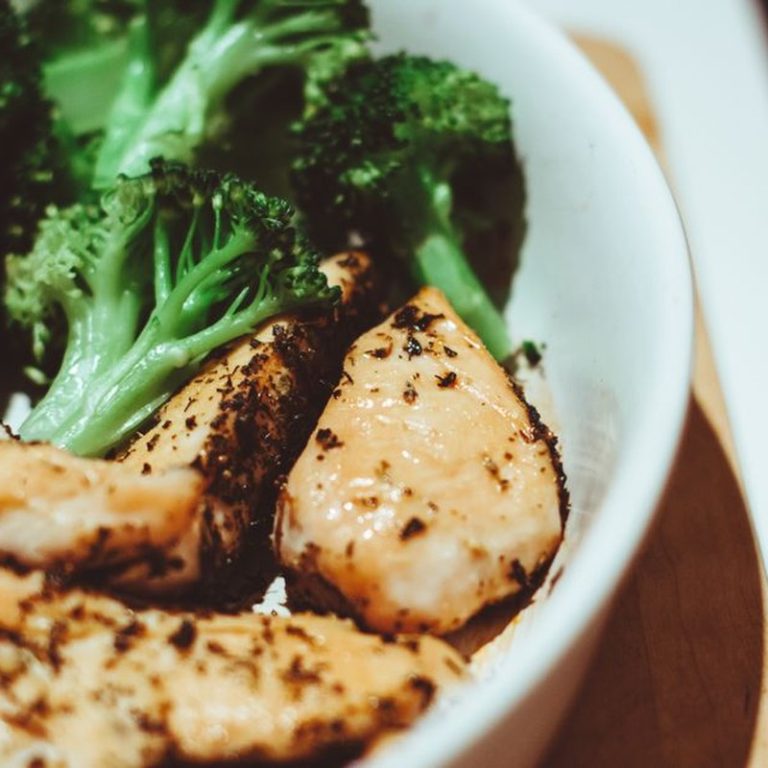
- Roughly 120 grams of cooked chicken breast gives you about 36 grams of protein and close to 2.6 grams of leucine.
- A 150-gram serving of lean beef lands around 35 grams of protein and 2.7 grams of leucine.
- Five whole eggs give you about 30 grams of protein and around 2.5 grams of leucine.
- A scoop of whey or soy protein powder can reach 30 grams of protein, which usually covers the leucine target.
You do not need to weigh every meal forever. Those examples are rough guides. The practical point is simple: spread your food into meals that each contain a solid protein source.
Meal timing also matters. If you eat one giant 150-gram protein dinner, your body gets one strong spike of muscle protein synthesis, then spends the rest of the day without enough materials. Splitting protein across three or four meals keeps the repair signal switched on for more hours.
Total daily protein is the foundation
The leucine trigger works best when your overall daily intake is adequate. A commonly used target for muscle gain is about 1.6 to 2.2 grams of protein per kilogram of body weight per day. That range comes from sports nutrition research and works for most home gym beginners who are training consistently.
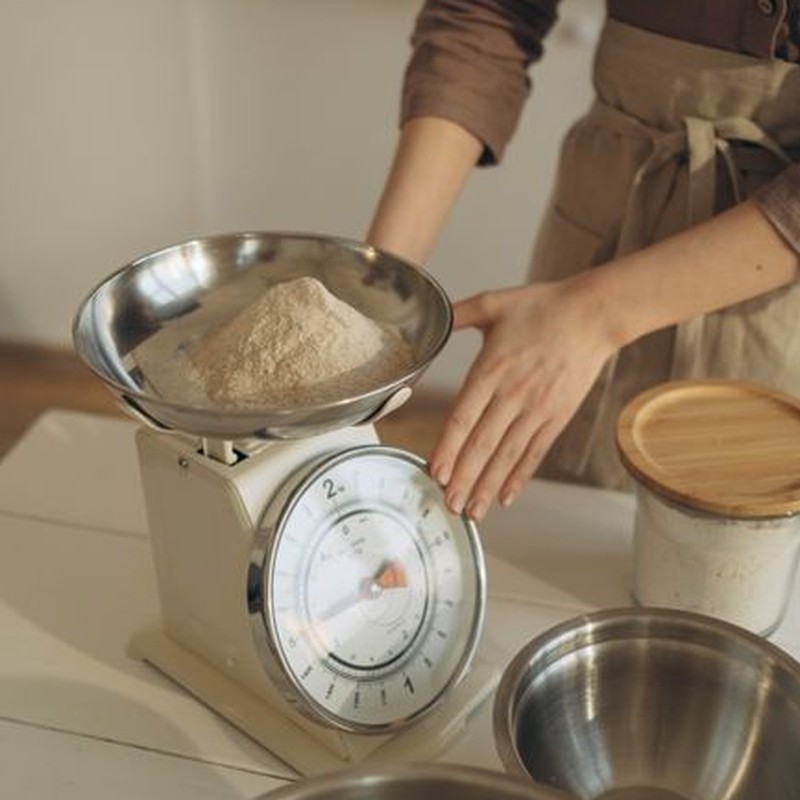
To see where you stand, track your food for three normal days. Use a food scale for chicken, check the label on Greek yogurt, and write down rough protein totals. Most people discover they are closer to 60 or 80 grams per day when they need twice that amount.
Total daily protein also protects your calorie surplus. To add lean tissue, you need to eat slightly more energy than you burn. But a surplus without enough protein tends to pile on fat rather than muscle. I saw this happen when I tried to bulk on bread and peanut butter. The weight went up, my waist went up, and my bench barely moved. Adding a chicken breast or shake at dinner changed the outcome.
Start with three meals that each contain 25 to 40 grams of protein. Add a 15- to 20-gram protein snack if your daily target is on the higher side. Count that total against your body-weight goal, and that number becomes your starting point for the next step.
How Much Protein You Should Eat Per Day: A Simple Calculator
Here is a practical way to set your daily protein target. Take your current body weight in pounds and multiply it by 0.7 to 1.0. If you use kilograms, multiply by 1.6 to 2.2 grams per kilogram. Use your current weight, not your goal weight, and use the number you actually weigh on an average day.
Here’s a quick lookup table for three common body weights:
| Body weight | 0.7-1.0 g/lb | 1.6-2.2 g/kg |
|---|---|---|
| 150 lb (68 kg) | 105-150 g | 109-150 g |
| 180 lb (82 kg) | 126-180 g | 131-180 g |
| 200 lb (91 kg) | 140-200 g | 146-200 g |
If your body weight falls between these numbers, do the multiplication yourself. It takes ten seconds, and the answer will be more useful than a generic app total.
Where should you land inside that range? For a home gym beginner training three or four times a week, I’d split it this way:
- Training days: 0.9 to 1.0 grams per pound of body weight.
- Rest days: 0.7 to 0.8 grams per pound.
- Cutting calories: 1.0 gram per pound.
Here’s what that looks like for a 180-pound lifter: a rest day at 0.7 g/lb is 126 grams, and a hard training day at 1.0 g/lb is 180 grams. The gap is 54 grams, about two scoops of whey or two 4 oz chicken breasts. It sounds like a lot, but you don’t need to eat one giant 54-gram meal. Split it into a shake after training and one extra portion of chicken at dinner, and you’ve covered it.
The gap matters because protein is the one macro that most home gym beginners get wrong. I’ve done this myself with a chicken bowl: I guessed 45 grams, weighed the chicken, and the bowl had 31 grams. I’ve also watched people track for the first time, and a 30 to 40 percent gap between guess and reality is common. The cause isn’t complicated. Portion sizes are hard to judge by eye, and protein from milk, nuts, and sauces hides in meals.
So track what you actually eat for three or four normal days. Use a food scale and a simple nutrition app. Don’t change your meals to impress the app. Weigh the meat, yogurt, eggs, and nuts, and log everything. For meat, match the weight to the entry you’re using. Weigh raw and use a raw entry, or weigh cooked and use a cooked entry. Don’t mix them.
Here’s a common mix-up: a 4 oz raw chicken breast cooks down to around 3 oz. If you log the cooked weight as raw, you’ll underestimate your protein and think you have less room in your day than you do. That mistake stacks up over a week.
For days without a scale, keep a few portion references in your head:
- 4 oz cooked chicken breast: about 35 grams.
- 6 oz Greek yogurt: 15 to 18 grams.
- 3 large eggs: 18 grams.
- 1 scoop whey protein: 20 to 25 grams.
- 1 cup milk: 8 grams.
After three or four days, look at your average. If you’re 30 to 40 grams short, don’t turn that into a whole new diet. Pick one meal and add a reliable protein source. Breakfast is usually the easiest place to start. Two large eggs add 12 grams, a glass of milk adds another 8, and a scoop of whey after training adds 20 to 25 grams. Those small adds close the gap without cooking a separate meal.
Write your target down and put it where you’ll see it. Training day? Use the upper end. Rest day? Use the lower end. The range exists because your body needs more on hard days and when calories are low. The important part is hitting that range consistently, not perfectly.
How to Spread Protein Across Meals for Maximum Muscle
I used to treat my post-workout shake like the most important meal of the day. I’d mix 50 grams, slam it after my last set, then eat a small breakfast and a normal lunch. It took months to realize my muscles were getting fed in one big burst instead of a steady stream.
Your body responds to protein in bursts. After a meal with enough protein, muscle protein synthesis — the process that repairs and builds muscle — stays elevated for a few hours, then fades. If your day looks like toast in the morning, a small salad at lunch, and a meat-heavy dinner, you leave your muscles without a building signal for hours at a time.
Shoot for 4 to 5 protein feedings
Aim for 4 to 5 protein-containing meals or snacks, spaced a few hours apart. That typically means breakfast, lunch, a snack, dinner, and maybe a shake before bed. This schedule gives your body regular chances to build muscle without trying to shovel 120 grams into one meal.
- Breakfast: 25–40 grams of protein
- Lunch: 25–40 grams
- Snack: 15–25 grams
- Dinner: 25–40 grams
What does that look like in real food? About 5 ounces of cooked chicken breast, 1.5 cups of Greek yogurt, a can of tuna, 1.5 cups of cooked lentils, or a scoop of whey in a glass of milk. If you use your hand as a rough guide, a palm-sized portion of meat is around 25–30 grams, which is close enough for most of us.
The post-workout shake is convenient, not magic
A shake after training is easy and gets the job done. I use one most mornings because I don’t feel like chewing eggs at 6 a.m. But it’s just one part of the day. If you drink a shake and then go six hours before your next real meal, you’ve missed the point. The shake works best when it fills a gap in a day that already has protein at breakfast, lunch, and dinner.
The old 30-minute anabolic window made solid eating feel urgent and stressful. For anyone eating regular meals, the window is much wider. The actual mistake isn’t a missed shake. It’s letting too many hours pass with no protein at all.
Start by fixing breakfast
If your protein target feels overwhelming, don’t rewrite your whole diet. Just add 25 grams to breakfast. Most beginners I talk to eat far too little in the morning — cereal, toast, maybe a coffee — and then try to catch up at dinner. That makes the daily target almost impossible to reach without feeling stuffed.
Twenty-five grams at breakfast can look like two eggs plus a cup of Greek yogurt, a protein shake blended with milk, or oatmeal made with milk and topped with cottage cheese. Pick one and repeat it until it’s automatic. Once that’s in place, the rest of the day gets easier.
Here’s a sample day:
- Breakfast: 3-egg omelet with a cup of Greek yogurt (about 34 g)
- Lunch: Chicken rice bowl with 5 ounces of cooked chicken (about 35 g)
- Snack: Protein shake with milk (about 30 g)
- Dinner: Ground beef tacos with 6 ounces of cooked 90/10 beef (about 40 g)
That lands around 140 grams for the day. For someone in the 160–180 lb range, that sits in the muscle-building target of roughly 0.7–1 gram per pound of body weight. Weigh more or less? Adjust the serving sizes so each meal stays between 25 and 40 grams.
Spread your protein out and you’ll feel like you’re working with your body instead of against your kitchen schedule. It’s the most practical habit I’ve found for making muscle gain feel sustainable.
Your Next Move: Set a Target, Track It, and Check Prices
You have the science. Now you need a number that fits your real life. I’ve spent years fiddling with protein targets, and I’ve missed plenty of days. The days I actually wrote down a target were the days I stuck with it. That’s the whole trick.
Step 1: Calculate your daily protein number and write it down.
Use 0.7 to 1 gram per pound of bodyweight (about 1.6 to 2.2 grams per kilogram). If you weigh 180 pounds, that puts you at 126 to 180 grams per day. Not sure where to start? Pick the lower end. Try it for two weeks, then add an extra serving of Greek yogurt or an extra egg if your energy or recovery tells you to move up.
Training in a home gym doesn’t change this math. Your muscles still need the same building blocks. Write your target in your phone, on a whiteboard, or in a training app. Writing it down isn’t magic. It just makes the target feel real enough to act on.
Step 2: Spread it across breakfast, lunch, dinner, and one snack.
This is what a realistic day looks like for someone with a 135-gram target:
| Meal | Example | Protein |
|---|---|---|
| Breakfast | 3 eggs, 3/4 cup Greek yogurt, toast | ~30 g |
| Lunch | Chicken breast, rice, broccoli | ~40 g |
| Snack | Protein shake with one scoop | ~25 g |
| Dinner | Ground turkey pasta | ~40 g |
That sample day lands around 135 grams. If your target is higher, add a second snack or bump up the meat portion at dinner. If your target is lower, skip the shake and use smaller portions. The goal is not to hit the exact same number every day. It’s to stay in the zone most days.
A one-scoop protein shake makes the snack easy because most scoops are around 25 grams. You can also use cottage cheese, a glass of milk, or a handful of jerky. Pick what you’ll actually eat at home.
Step 3: Track for a few days, not forever.
You don’t need to weigh every chicken breast for the rest of your life. Use an app like MyFitnessPal or Cronometer for a few days and see where you land. When I did this at home, I found my breakfast was only 12 grams. No wonder I was hungry by 10 a.m. Two scrambled eggs and some yogurt fixed that.
After a week of tracking, most people know what their meals are worth. Then you can stop logging and just follow the pattern.
Step 4: Check current prices on Amazon for your region.
Protein powder prices change often, and a tub can change by several dollars from one week to the next. Check current prices on Amazon (US) or Amazon (Canada) before you buy. If you use one scoop a day, a larger tub can last about two months, so a few dollars of difference adds up.
You don’t need the most expensive brand. You need one you’ll actually use. Compare price per serving, not just the tub price. That saves you money and keeps your pantry from becoming a graveyard of half-empty containers.
Step 5: Leave a comment and share your experience.
What is your protein target number? What do you usually eat in a day? If you’re still stuck, ask your question here. Chances are another beginner has the same one. Sharing your routine helps people who are just getting started, and it gives me a better idea of what to cover next.
Set your target today, check the prices, and start tomorrow. A few small decisions now will pay off for months.