Does BMI Still Matter? Why Waist Size May Tell a Better Story
Full disclosure: Some links in this article are affiliate links. We may earn a small commission at no extra cost to you if you make a purchase through them. Our recommendations are based on what real users report, not on commission size.
What BMI Measures, and What It Quietly Leaves Out
Body mass index is about as simple as health math gets. Weight in kilograms divided by height in meters squared. Work in pounds and inches and you multiply your weight by 703 first, then divide by your height in inches squared. No calipers, no scans, no blood draw. Just a ratio you can run on your phone in ten seconds.
That simplicity is why it became a global screening tool. BMI was built to describe large groups of people, not to deliver a verdict on one individual. Researchers use it to track broad population shifts, like whether a country’s average weight is climbing. Point a population average at a single body, though, and a lot of detail falls out of the frame.
Two people can share a BMI of 27 and have almost nothing else in common. One is a recreational lifter carrying dense muscle and low body fat. The other carries more fat and less muscle. Same number, very different risk profiles.
Here is what the formula cannot see:
- Muscle versus fat. The ratio treats a pound of muscle and a pound of fat as identical. They are not, and neither are the health outcomes attached to them.
- Where fat is stored. Fat under the skin behaves differently from fat packed around the organs. The visceral kind is more strongly linked to metabolic problems, and BMI has no idea which one you have more of. A BBC Science Focus report from October 2026 dug into the biggest factors controlling where your body stores fat — genetics and hormones both play a role — and none of that shows up in the number.
- Fitness level. Cardiorespiratory fitness, muscle strength, and how much you move day to day all matter for health. A regularly active person with a higher BMI can be running cleaner metabolically than a sedentary person with a lower one.
- Blood pressure, blood sugar, cholesterol. These are direct readouts of how your body is functioning. You can sit in the normal BMI range with prediabetes, or in the overweight range with completely clean bloodwork.
The argument is live right now. In October 2026, News24 published an expert breakdown asking whether BMI still matters, framing it as something that may no longer be an accurate health indicator on its own. Google Trends shows US searches for bmi running above their 12-month average — a recent average of 85.3 against 79.8 for the year. People are clearly rethinking how much weight this one number deserves.
I watched a friend go through this. She started strength training and her BMI crept from 24 to 26. Her waist measurement did not change. Her energy went up. Her doctor was not concerned. The scale could not tell that story. Her tape measure and her bloodwork could.
So how do you use BMI without letting it run your mood?
- Measure on a schedule, not a whim. Same time of day, same scale, ideally in the morning after the bathroom and before eating. Daily fluctuations mean nothing. The trend across weeks and months means something.
- Calculate it, write it down, move on. Recheck every few months rather than every morning. A soft tape measure for the waist runs a few dollars on Amazon if you do not own one, and pairing that with your BMI gives you a far more useful picture than either number alone.
- Stack it with other data. Waist circumference, resting blood pressure, fasting glucose, cholesterol if you have recent labs. A higher BMI with a small waist and clean markers tells a different story than the BMI label by itself.
- Bring it to a professional when there are other flags. A family history of diabetes, high blood pressure, or trouble with stairs and daily tasks are reasons to talk through the whole picture with your doctor instead of staring at a calculator result.
BMI is not useless. It is incomplete. It measures weight relative to height, and in a clinical setting that can be a legitimate early flag worth checking. Next time you see your number, ask what else you know about your body. If you have lived the mismatch between a rising BMI and a steady waistline, share it in the comments.
Why Waist Size Answers a Question BMI Can’t Ask
BMI is one number: weight divided by height squared. It flags potential problems. It cannot tell you where your fat actually sits. Two people with identical BMIs can carry completely different risk. One stores fat under the skin around the hips and thighs. The other stores it deep in the abdomen, wrapped around the liver, pancreas, and intestines. The second pattern is the one that keeps doctors up at night.
Where your body puts fat is mostly out of your hands. Genetics set the blueprint. Hormones move things around during puberty, pregnancy, menopause, and long stretches of stress. Age nudges fat inward even when the scale doesn’t budge. Sex matters too: men tend to build visceral fat earlier, while women often store more of it subcutaneously until menopause flips the pattern. BBC Science Focus covered this in October 2026, and the practical takeaway was blunt. Spot reduction doesn’t work. Crunches won’t shrink your midsection. Neither will a thousand side bends. Your body pulls fat from wherever it wants, in whatever order it wants.
Waist size measures the region where the risky fat lives. That’s the whole point.
Not all fat behaves the same way. Subcutaneous fat, the kind you can pinch on your hips and thighs, is fairly quiet stuff. Visceral fat acts more like an active gland. It releases inflammatory signals and hormones that interfere with insulin and add strain to the heart. That’s the link between a growing waistline and blood sugar or cardiovascular problems, even when BMI looks perfectly normal. A BMI of 24 with a 42-inch waist is a different situation from a BMI of 24 with a 32-inch waist. Same number on the chart. Different body underneath it.
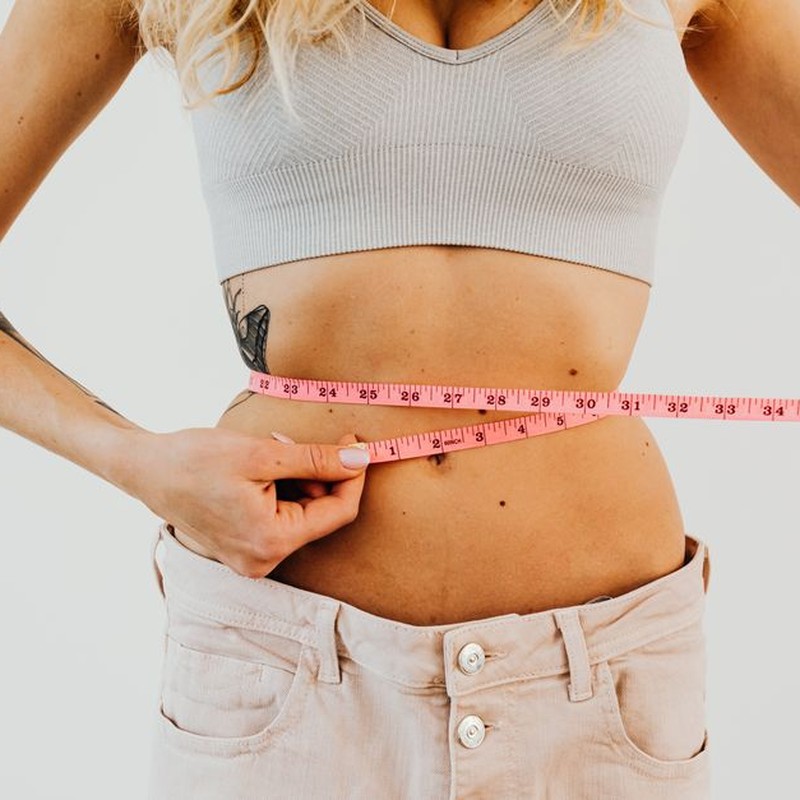
The measurement itself takes about thirty seconds. Most people do it wrong because they guess at the landmark. Here’s the protocol I use and recommend.
- Find the top of your hip bone. Not your belt line. Not your belly button. Those spots land in different places on different bodies. Press your fingers into your sides until you feel the bony ridge of your pelvis. That’s your starting point, and the tape goes there.
- Stand relaxed. Feet together, weight even, arms down. Don’t slouch and don’t arch your back to look taller.
- Breathe out normally. No sucking in. No holding your breath. Let your belly do what it does on an ordinary exhale.
- Wrap the tape snug. It should touch your skin without pressing into it. If it leaves a red mark, it’s too tight. If you can slide a finger under it without effort, it’s too loose.
- Read the number at the end of a normal breath out. Use a mirror or have someone help if you can’t see the tape clearly.
Do it twice. If the two readings differ by more than half an inch, take a third and use the middle one.
What do you do with the number? Health agencies generally flag rising risk above roughly 40 inches (102 cm) for men and 35 inches (88 cm) for women. Those aren’t cliffs. Risk climbs gradually as your waist grows. A man at 38 inches isn’t automatically in the clear, and a man at 41 inches isn’t doomed. Treat the thresholds as markers worth a conversation with your doctor, not a pass-fail grade.
Many clinicians also use a simpler screen: keep your waist under half your height. A 5-foot-10 person is 70 inches tall, so the target is under about 35 inches. A 5-foot-4 person, 64 inches, aims for under 32. This ratio travels well across ages and body types, and it’s easy to remember without pulling up a chart.
One reading in isolation tells you almost nothing. Trends carry the signal. I measure once a month, first thing in the morning, before food or coffee, with the same tape in the same spot. I log it in a notes app so I can see the line, not just the dot. If my waist creeps up an inch over three months while my weight holds steady, that’s a nudge to look at sleep, stress, and how much I’m actually moving. If it drops half an inch over six months, that’s real progress even if the scale never moved. The scale lies sometimes. A tape measure is harder to fool.
You don’t need anything fancy. A basic soft measuring tape costs a few dollars online. Check current prices on Amazon, then hang it on a closet door instead of burying it in a junk drawer where it will never be seen again. If you’ve already been tracking yours, share what you’ve noticed in the comments. What changed, and what didn’t?
None of this is about judging yourself. It’s about getting better information about the body you actually have. BMI still earns its place as a fast screening tool for large populations. Your waist hands you a second data point that answers the question BMI never asks: where is your fat, and what is it doing while it sits there?

When BMI Is Still Worth Checking
Lately the headlines swing hard in one direction: BMI is outdated, toss it. A News24 piece from October 2026 framed it that way, and I get the impulse. But dumping BMI entirely is its own kind of mistake, and it is one I see constantly in fitness circles online.
BMI is cheap, fast, and reasonably consistent across large groups of people. That is not a marketing claim. It is the reason researchers and public health agencies still use it. If you want to compare obesity rates in Ontario in 1995 against 2025, you cannot put 40 million people in a DEXA scanner. You can pull height and weight from medical records. BMI was built for that job, and it still does that job well.
Where it gets messy is the jump from population data to one person standing on a scale in an exam room.
Your trend line matters more than the number itself
For one person over years, BMI can show a direction of travel. If your number has climbed 4 points since 2019, say from 24 up to 28, that pattern is worth a conversation even if nothing feels wrong yet. Four points over six years is slow enough that no single year looks dramatic. That is exactly why it gets ignored.
Same logic in reverse. If your BMI dropped two points because you started lifting and eating more protein, the number alone cannot tell you whether you lost fat or muscle. Waist circumference fills that gap.
Three myths worth retiring
Myth 1: BMI is worthless. This is the overcorrection. In a clinic with fifteen minutes and no body composition equipment, BMI is a decent first pass. It flags who might need a closer look: a waist measurement, bloodwork, a conversation about activity. Incomplete, not worthless.
Myth 2: I lift weights, so BMI does not apply to me. Partly true, mostly wishful. Whether BMI misclassifies you depends on how much muscle you actually carry and how lean you are. A guy who lifts twice a week with a BMI of 31 is not automatically the exception. I have watched plenty of men assume their number was all muscle without ever measuring anything. If you have trained consistently for years, you are visibly lean, and your waist is small relative to your weight, you have a real case. If you lift twice a week and your waist has grown along with your weight, muscle probably is not the whole story.
Myth 3: A high BMI means you are unhealthy, and a normal BMI means you are fine. Both are wrong, and this one matters most. Normal-weight people can carry risky amounts of visceral fat around their organs. Heavier people can have clean labs and strong cardiorespiratory fitness. Reporting on why the body stores fat where it does, including a BBC Science Focus piece from October 2026, lands in the same place: two people at the same BMI can have very different risk profiles depending on whether fat sits under the skin or around the organs.
Which numbers to actually track
Pair BMI and waist with a few other measurements. Get these checked at an annual physical, or ask your doctor to add the ones that are not standard for you:
- Blood pressure
- Fasting glucose or A1C
- A lipid panel (HDL, LDL, triglycerides)
- Waist circumference, measured at the top of your hip bone
Then add one honest, non-scale measure: what you can physically do. Three flights of stairs without stopping? Carrying groceries up a hill? Twenty minutes of chasing your kids around without needing a breather? That capacity predicts long-term health about as well as anything on the list above, and it costs nothing to test.
A soft measuring tape runs a few bucks on Amazon if you do not own one, and a basic scale with waist tracking is not much more. Check current prices before you buy, since they swing by brand and by week.
If your BMI is stable, your waist is in a healthy range, your labs are clean, and you can do the physical things you want to do, you are in good shape, even if your BMI sits in a range that makes you raise an eyebrow. If two or three of those are drifting the wrong way, that is your signal, no matter what any single number says. Tell me what you have noticed in your own data in the comments. The patterns people spot in themselves are usually more useful than a chart.
How to Track Both Numbers Without the Anxiety
Tracking your body only works if you can stand doing it. I have watched people build elaborate spreadsheets in January and quit by March, not because the plan was bad but because every scale reading turned into a grade on their character. So here is the version I hand to clients, and the one I run on myself.
Weigh yourself once a week at most. Pick a day and keep it boring: morning, after the bathroom, before you eat or drink anything. One number on one morning tells you almost nothing. If you want data you can act on, average four or five weekly weigh-ins across a month and compare that average to last month’s. That number moves for reasons you actually care about.
Daily swings of 2 to 4 pounds are normal and mostly uninteresting. Salty takeout, a hard workout, a rough night of sleep, and menstrual cycle timing will all shove the number around. I once gained three pounds overnight after a bowl of ramen and lost every ounce of it by Wednesday without changing a thing. If the scale jumps, do not rewrite your whole approach. Wait for the monthly average.
For waist, measure once a month in the same spot, level with your navel or wherever your clinician measures, with a soft tape sitting flat against your skin. Do not suck in. Do not pull hard enough to dent. Write the number next to the date.
Then these are the levers that actually shift body composition over time:
- Strength train two or three times a week. Muscle is the tissue BMI misreads, and it is the tissue that keeps your metabolism, joints, and blood sugar working long term. Starting from zero? Bodyweight squats, push-ups, and rows count. Home or gym, just be consistent.
- Put a protein source at every meal. This is the easiest single lever for holding onto muscle while fat comes off, and it makes hunger noticeably easier to manage. Eggs, Greek yogurt, chicken, tofu, canned tuna, lentils. The form matters less than the habit.
- Walk 7,000 to 9,000 steps most days, and protect your sleep. Neither burns a dramatic number of calories or shows up on a chart in a satisfying way. Both quietly influence appetite regulation and how your body handles fat storage over time.
None of that is exotic, and that is the point. BBC Science Focus reported in October 2026 on the biggest factor controlling where your body stores fat, and much of it comes down to biology you did not choose. The levers you can pull are the unglamorous ones above. That same month, News24 ran an expert Q and A questioning whether BMI is still an accurate health indicator on its own. One ratio cannot carry all that weight, and US search interest in BMI has actually climbed over the past year, which tells you plenty of people are asking the same question.
Which brings up the last habit, and the most useful one. Bring your log and your recent lab work to a clinician instead of diagnosing yourself off a chart you found online. Waist measurement plus blood pressure, bloodwork, family history, and how you actually feel is a conversation. Risk is not a lookup table, and a good clinician treats your numbers as context rather than a verdict.
Keep that waist log somewhere you will see it every few months rather than every morning. Six months of dated measurements beats a daily scale habit for useful information, every time.
If you do not own a soft measuring tape, check current prices on Amazon. A basic one costs less than lunch and lasts for years. Then come back and leave a comment with what changed for you once you started tracking your waist alongside your weight. Mine was that I stopped panicking over Tuesday.